Born on January 20, 2002 in Le Mans (France), Tiphaine Gingelwein belongs to the same generation as Romain Valadier-Picard and, on a different register from the 2025 world vice-champion, confirms that this generation — slated to sit their baccalauréat the year of Covid, one year ahead for Tiphaine — has real substance.
It was a fellow teacher of Russian language who tipped us off. “I recently had a remarkable student at Inalco. You should read her thesis.” Indeed, reading the 209 pages of that document proved a delight, all the more so in these bellicose times of fixating on the speck in our neighbor’s eye while proudly denying the planks cluttering our own.
Fewer blinkers to brandish, and more carnations to offer. There is in Tiphaine’s approach something of the situational intelligence and the modesty advocated by Malian writer Amadou Hampâté Bâ (1901–1991) in “À l’école du caméléon,” a short text drawn from Sur les traces d’Amkoullel l’enfant peul (Actes Sud, 1998), a posthumous collection of some of the Master’s finest oral lessons: “When the chameleon arrives somewhere, it takes on the color of the place. This is not hypocrisy; it is, first and foremost, tolerance, and then good manners. Clashing with one another fixes nothing. Nothing has ever been built through fighting. Fighting destroys. Therefore, mutual understanding is a great duty. We should always seek to understand our neighbor. If we exist, we must accept that the other exists too.”
For several months, we exchanged — on the basis of this major piece of writing and her itinerant experience — with her, who nothing had predestined to walk the Caucasus from Chechnya to Armenia, by way of the Georgia from which she was able to attend the recent European Championships and lay a few markers for the future. A future in which her gaze, so full of inner verticality, will deserve to be heard. – JudoAKD#052.
A French version of this interview is available here.
We are in early January 2026 when this interview really begins. We last exchanged in the autumn, at the time the article on Theódoros Tselídis was published. You were then between Armenia and Georgia, with a convalescing knee that allowed you to do uchi-komi in Armenia but certainly not randori in Georgia. Where do things stand since then?
I finished my work in Armenia and moved to Georgia ten days ago. I continue exploring wrestling halls, judo dojos and traditional wrestling arenas in the region, and questioning practitioners for my thesis. As for the recovery, I need to have tests (MRI and isokinetic test) done in Georgia to consider a more serious return. I still have some after-effects but things are moving in the right direction. I no longer wear a brace on a daily basis and have no more pain. Towards the end of my time in Armenia we even tried throws and it was fine… I move around a lot in Georgia, as sport is more scattered there than in Armenia. This weekend I was in Batumi, and next week I plan to head into the Racha mountains.
How did you come to judo?
I grew up in the Berry from the age of two and a half, in a village called Allouis, right next to the town of Mehun-sur-Yèvre, where my parents put me in judo when I was almost four. Neither of my parents is a judoka and I am the eldest in the family. They enrolled me because I was a bit boisterous as a child. I have never stopped doing judo. I have a deep attachment to my first judo teacher, Michel Baratin, who remained my teacher until I left for higher education and with whom I am still in regular contact.
Does he still teach there?
No. When I was in Year 8, he had to leave the club due to a conflict with the board. I stayed a few months with the new coaching staff but, not appreciating their methods, I eventually followed him to Saint-Germain-du-Puy, about fifty minutes’ drive from home. From Year 10, I was boarding in Bourges, which was closer and allowed me to train during the week. I always trained three to four sessions per week.
Were you into competition?
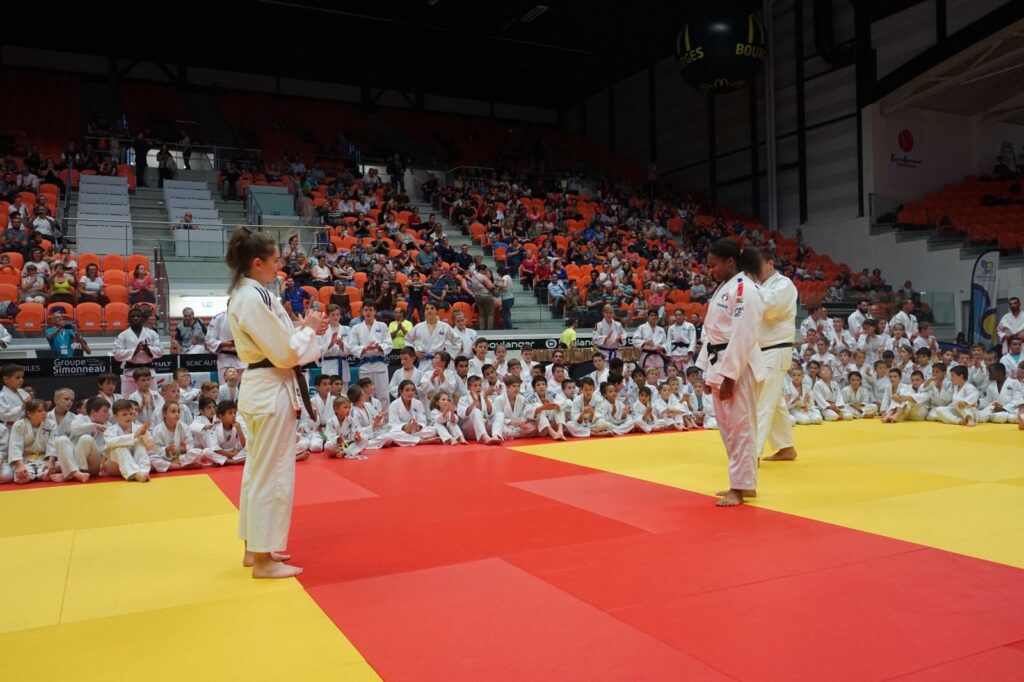
I was never very keen on competition, no. That said, I did achieve some results at the minimes-cadets level and was a member of the Cher team for the French departmental team championships in 2015 — I think at the time there was no individual championship.
What puts you off about competition?
I handle rather poorly the pressure I put on myself, and I think judo offers an enormous range of other possibilities for practice beyond pure competitive sport. I would add that because of the tensions with my former club, I was sometimes poorly refereed, which also took away my desire to enter competitions.
And what was it that brought the Russian language into your life at some point?
After middle school, I wanted to go to a school that was somewhat far away. Since I had excellent academic results, I could apply for whatever options I wanted. To get into Bourges, you had to choose options that weren’t offered at our local secondary school. Somewhat by chance and without having really looked into it, I chose Russian at the Lycée Marguerite de Navarre, telling myself it would be an option with few takers and that I’d have some peace and quiet.
Was that the case?
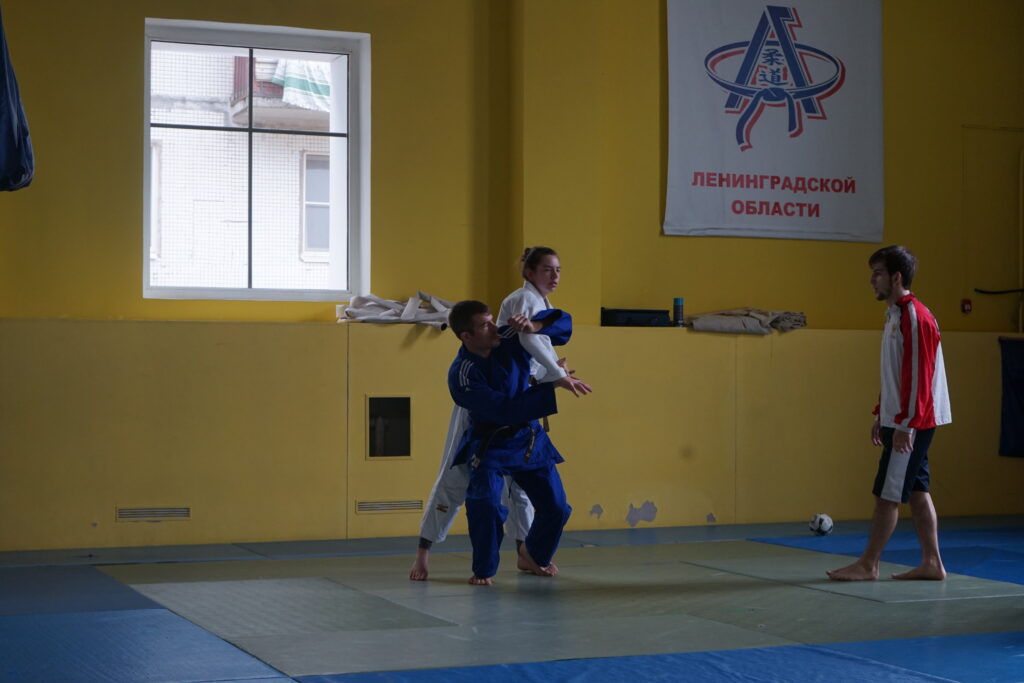
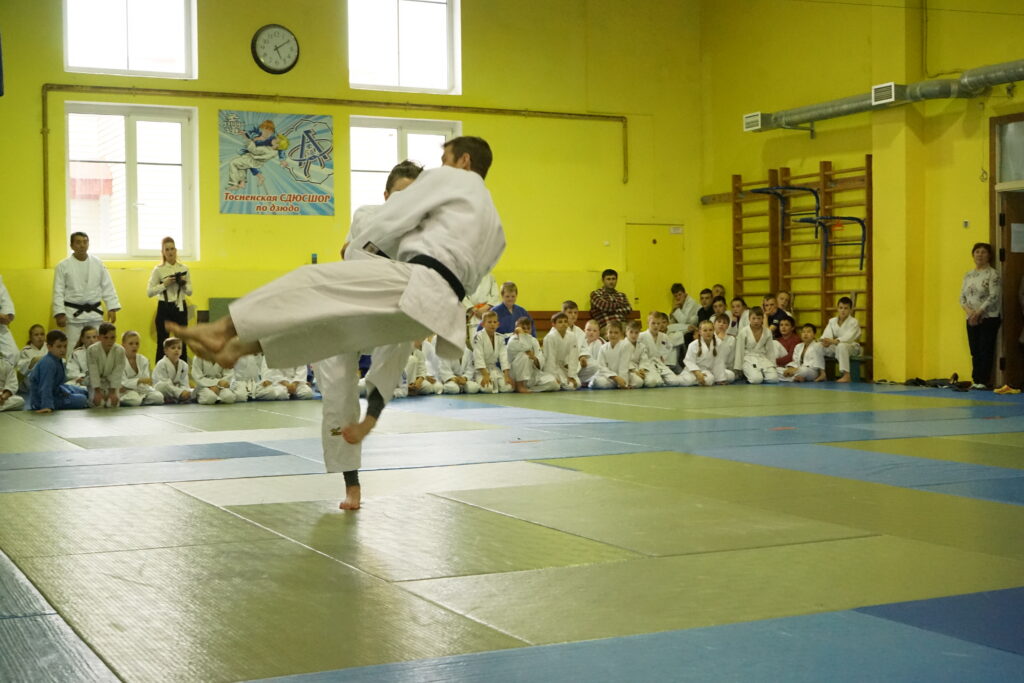
Actually, right from the start of the year, Cécile Pillet, the Russian teacher — with whom I am also still in contact — mentioned a school exchange that existed between our school and a school in a town on the outskirts of Saint Petersburg. As soon as she found out I did judo, she immediately mentioned a judo school director she knew in the town. In the end, in February 2017, at barely fifteen years old, I went on an exchange to Russia — but with a few adjustments: instead of staying with a family like my classmates, I was housed in the dormitory of the Tosno judo school, with the judokas.
Brilliant!
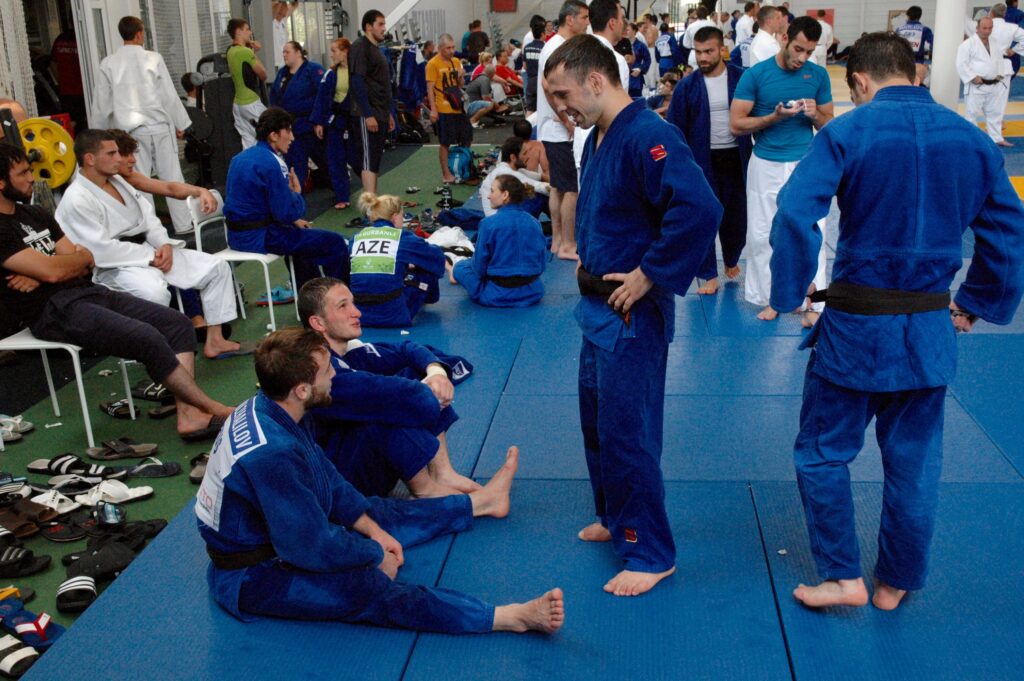
In that school there were naturally Russian practitioners from the town, but also a number of Caucasians — mostly Chechens — and a few Dagestanis, who lived in that dormitory, under the leadership of Said Chimaev, the school’s director, himself Chechen. That is how I discovered judo in Russia and the Caucasus, and the Caucasus itself — because despite our difficulties communicating, I got along well with one of them who looked after me when I fell ill and who drew pictures for me on a sheet of paper to describe his village in Dagestan, which his family had been forced to leave because of the Chechen wars.
A very concrete first point of contact…
That first stay was in reality not very easy, as some of the boys were rather unfriendly at first. My Russian level was really insufficient and I had left to train with a ligament tear in my foot that did not improve there…
Did you maintain ties with these people afterwards?
Said and one of his sons came to France in spring 2017, where they met my teacher Michel. Said and Michel got on very well despite the language barrier, and Michel was invited to a training camp with them in Chechnya, in Grozny, then in a town in Kabardino-Balkaria at the foot of Mount Elbrus called Terskol.
Did you go with him?
I didn’t go, no. On the other hand, I went back to that school three times with Michel and his daughter: in spring 2018, in autumn 2018 and in spring 2019. I then went back alone in the winter of 2021–2022. Over time, my Russian improved considerably, and we formed lasting bonds with Said, his family and the school’s athletes. In parallel, I earned my black belt in November 2018 at sixteen, with the competition specialization.
I imagine those stays then influenced your choices of direction…
At the end of secondary school, having done a science baccalauréat with a maths specialisation, I decided I had more to explore on the Russian side than in the hard sciences, and I chose to enter Inalco (the National Institute of Oriental Languages and Civilisations) in Paris to do a LLCER (Languages, Literatures and Foreign and Regional Civilisations) degree in Russian, to see where it would take me. But I was already a Russian speaker, so I chose to study Georgian in parallel, because I wanted to study the Caucasus but there were no Chechen classes. Georgian struck me as an interesting language and culture, especially since judokas there have a strong reputation. I thought it could always come in useful.
What place did judo occupy in your life at that time?
My studies were somewhat disrupted because of Covid (in Years 1 and 2 of my degree). During my studies, I trained at the judo section of the SCPO (Sporting Cheminots de Pratique Omnisports) in Ivry, where teacher Stéphane Emard promotes a more traditional approach very much oriented towards technique, katas, culture and jiu-jitsu, and where shiais/competitions are not the central element. In Year 3 (2021–2022) I was selected for a university exchange year at Moscow State University.
With judo on the menu there as well?
Yes, as I joined the university’s sambo-judo section under coach Igor Kovalevski, whom I greatly appreciated, and where I made many friends — including one thanks to whom I went on a trip to the Urals in the depths of January with a friend, all the way to Ufa, where he was from.
“The video Zalimkhan Karimov had shown me of his village. These are the first images I ever saw of the Caucasus. I hope that one day I will be able to visit that village, as it was that conversation that set me on the path to this region.”
That year 2021–2022 was also the year the war in Ukraine began…
Yes, and indeed, unfortunately, when the war started, I was told to leave Russia, leaving some of my belongings behind — including my judogi. I began a Master’s degree at Inalco while resuming judo at the SCPO. It seemed obvious to me to work on the Caucasus and Chechnya, but my Master’s 1 thesis topic was about the architecture of new Chechen mosques — not sport at all. But in the course of my research, I was referred to Frédérique Longuet-Marx, an anthropologist specializing in the North Caucasus who wrote Chroniques caucasiennes, a magnificent book about her research memories in Dagestan. In conversation with her, she told me that my experience of training within a community of Chechen judokas was quite atypical and that I should perhaps look into that direction for future research.
Which you did, then…
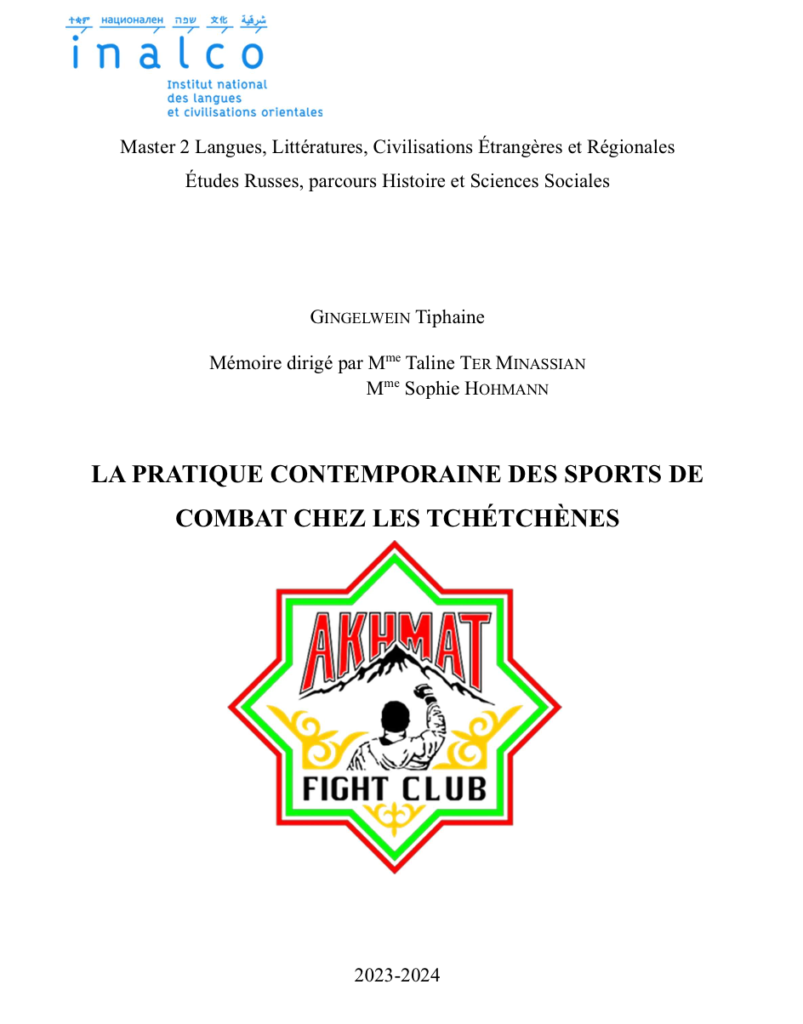
Yes, that is how my Master’s 2 thesis project took shape. It draws on my own experience and the conversations I had with the boys I spent time with at the judo school, but also on various contacts and observations in Chechnya and among the diaspora communities. The thesis examines the place of combat sports among Chechens — because today there is a real cliché of the Caucasian, and more specifically Chechen, MMA fighter. It was an opportunity to interrogate the link between this image, the warrior imagery, the Chechen relationship to strength, courage, gendered roles and religion, through the lens of sport.
A vast programme!
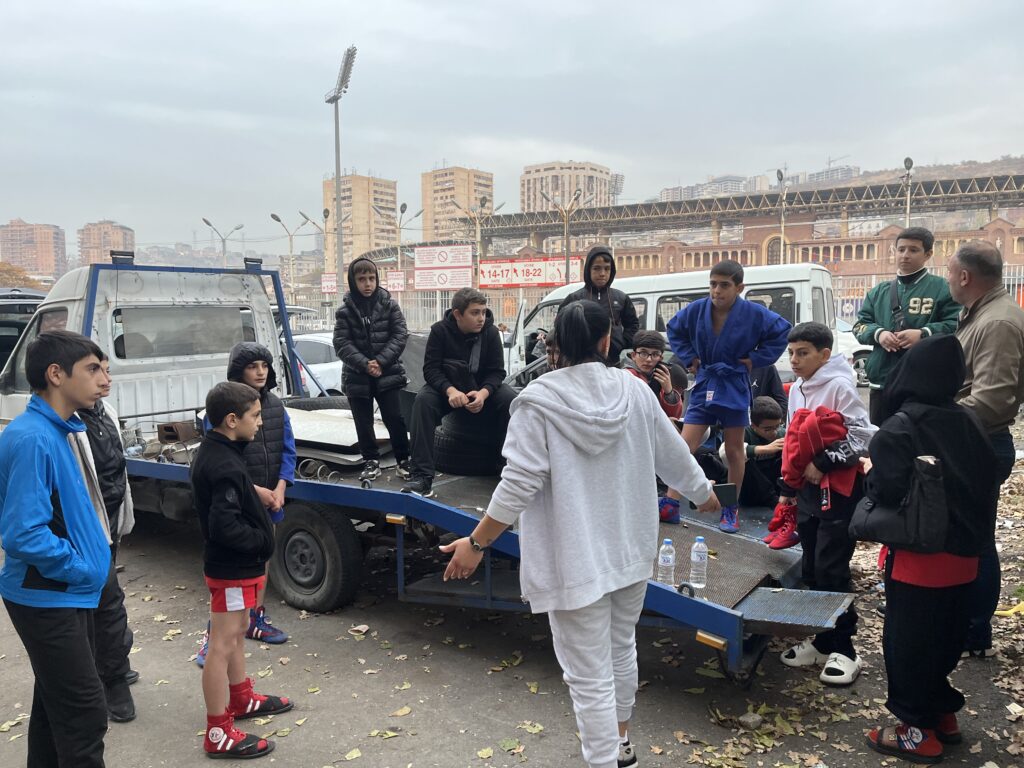
The stay I am currently undertaking in the South Caucasus follows on from that thesis — I am now doing a PhD in STAPS (Sciences and Techniques of Physical and Sports Activities), within the Cultures, Education and Societies laboratory (LACES) at the University of Bordeaux’s Doctoral School of Societies, Politics and Public Health (EDSP2). Given the impossibility of doing fieldwork in Russia and the North Caucasus, I am studying the Southern part, which raises different but equally fascinating questions, and which can also be explored through combat sports — here I focus on wrestling (freestyle, Greco-Roman, judo, sambo, traditional wrestling) since these are the most popular disciplines or those yielding the best results.
In the introduction to your thesis, you also mention the singularity of your status as a woman and as a non-Muslim. Given the international tensions of recent months, does your status as a French person also prove to be a factor in the equation? How do you navigate all of that?
With the Russians, I have lost some contacts, but not because of my nationality or political disagreements. Some of my friends, including one of the young athletes I mention in the thesis, have been sent to the front, or have been arrested for taking a stance against the war. With others, communication is increasingly limited — not only because time passes (I have not set foot in Russia since March 2022), but also because the regime censors certain social networks such as Facebook, Instagram and, more recently, WhatsApp.
In the South Caucasus, I don’t necessarily encounter problems regarding my nationality. French people are generally well regarded there. In fact, since I communicate mostly in Russian, people take me for a Russian. But they are delighted when they find out I’m French. The main problem in the region, regardless of the fact that I’m French, is the Armenian-Azerbaijani conflict (and the resulting tense relations between France and Azerbaijan), which confronts me with a few logistical difficulties — and only logistical ones. With people I have nothing but good relations; some are even willing to help me get around those difficulties, as the teams cross paths with me from time to time and appreciate my presence.
One thing your work highlights is how much sporting performance cannot be understood without factoring in parameters such as history, geography, demography, sociology and, perhaps above all, cultural and religious codes. Ezio Gamba, who knows the subject well having led the Russian judo team from 2008 to 2024, uses a nice expression to sum this up: he speaks of his athletes’ mental code. Staying with judo: what is the mental code of a Chechen judoka, at this stage of your research?
If we can equate mental code with moral code — since we are talking about judo — we can speak of the Chechen code of honour, which must certainly influence the athletes’ behaviour and way of thinking. It is called the Къонахалла (Q̇onaxalla in the transliteration I use). Къонах (Q̇onax) is the ideal of the valorous and honest Chechen man in service to his people, capable of judging when to act and when to hold back. This code can quite naturally find its application in sporting practice, particularly in combat sports and judo, since it implies that Chechen men must be able to defend their family, their clan and their people. This is how many of the practitioners — professional and amateur — I have interviewed justify the popularity of combat sports among Chechens.
It also seems that for a Chechen to be a well-rounded and respected athlete within the Chechen community, he must demonstrate more than just sporting qualities. He must also embody moral values. This is why athletes can, in a sense, acquire the status of Q̇onax, and I think in particular of the late Buvaisar Saitiev, who is not a judoka but who is genuinely regarded as a role model by many practitioners including judokas. It does not seem to me that Chechen judokas have reached such a level of recognition as to be so designated.
In your work, you introduce also the notion of vaynax. Could you say more about that here?
For the vaynax(s), in my thesis I had used a transliteration from Chechen that gives this spelling, but the word is also used in Russian with a slightly more commonly accepted transliteration: vaynakh(s). It is an ethnolinguistic designation.
In the Caucasus there is enormous ethnolinguistic and religious diversity. One of the language groups used there is the Caucasian/Caucasic group (the label is contested), which in fact brings together families that do not necessarily share a common origin, and includes the Kartvelian languages (Georgian and related languages), the Abkhaz-Adyghe languages (Northwest Caucasus plus Abkhaz) and the Nakh-Daghestanian languages (Northeast Caucasus — Chechnya, Ingushetia, Dagestan).
It gets technical!
Yes. And within this last group, the “Nakh” part refers to the Chechens, Ingush and Bats (plus the Kists if one distinguishes them from the Chechens), who are related peoples. It is somewhat hard to know whether nakh/vaynakh is an autonym or a term invented by the Russians in the 19th century to designate this cluster of peoples, because the Chechen autonym is admittedly close, but the Ingush refer to themselves differently. In Chechen, Chechen — nokhchi, vay nokhchi du — “we are Chechens” (whereas the Ingush call themselves ghalghay). Presumably (vay)nakh is a distortion of “(our) people,” which was then used by the Russians to designate these related peoples.
Be that as it may, the Vaynakhs are essentially the Chechens and the Ingush (the Bats and Kists are in Georgia). They share closely related languages, traditions and legends, and tribal organisation (into teyps/clans). They are grouped together, for instance, when speaking of the deportation of the Vaynakh peoples in 1944.
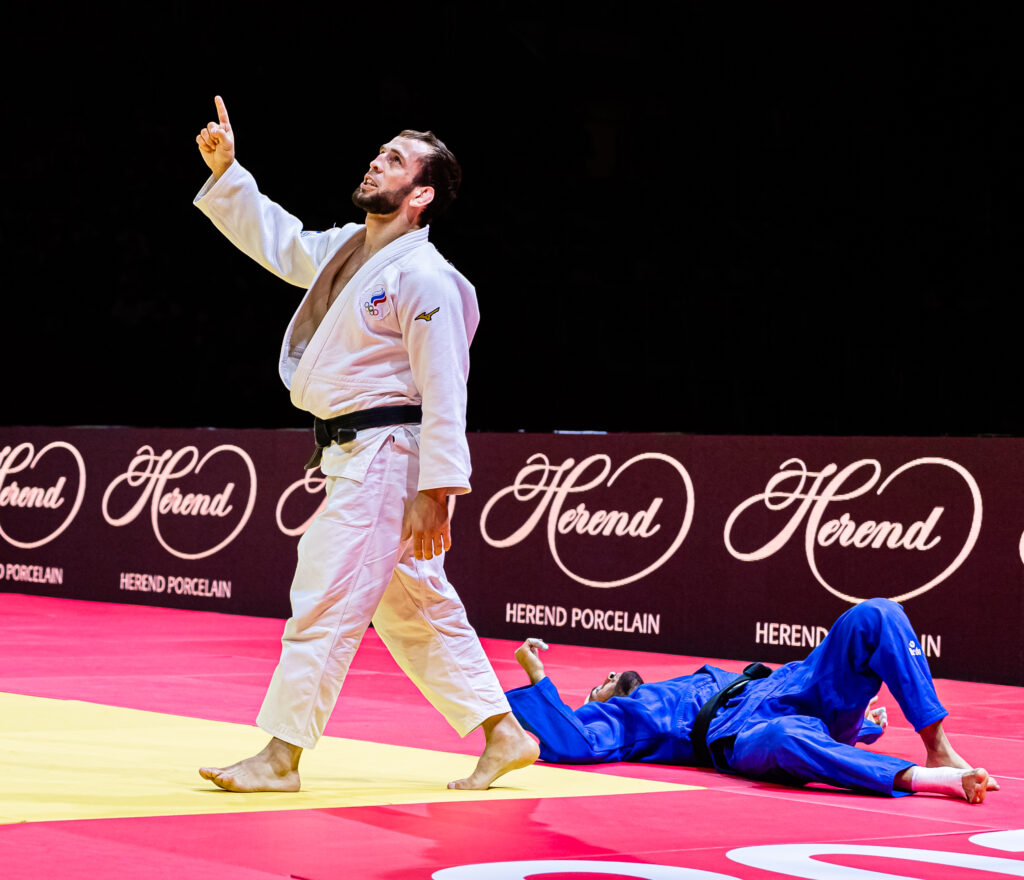
Among those you cite in your thesis, there is one I have often written about: the U66kg Yakub Shamilov. During the first part of his career, Yakub frequently cracked in bouts he was dominating with ease. One day in Sochi, one of his coaches told me it was in his Chechen DNA to take every risk, to go for the most spectacular throw, even at the risk of being countered and losing a bout he was winning comfortably. Is that something you observe too — this absence of calculated thinking in a fight?
What I describe remains very idealised and theoretical. I would also like to draw a distinction between the high-level athletes I follow without having personally trained with them on the mat, and those with whom I trained regularly — some of whom were on the Russian national team, but never at the same level as Yakub. I have some indirect connections to Tamerlan Bashaev, as I know quite well part of his family living in France. It does not seem to me that Tamerlan fits this idea of the Chechen charging headlong into close combat at the expense of fight strategy. He is a judoka I personally appreciate greatly for his humility and composure. There must certainly be an element of individual temperament that would account for Yakub’s setbacks.
Possibly — especially since another time in Düsseldorf, after another of Yakub’s collapses, the same coach told me that for him the solution wasn’t psychological — a hypothesis that would no doubt have been favoured in France, for example — but technical: how and where to place his hands to control the opponent, etc.
Perhaps he functions that way off the mat too, and practical instructions like those you describe compensate for that tendency. Not knowing his behaviour, I cannot say. There is a whole imaginary around the bellicose, warrior-like, not-very-reflective Chechen, which has its roots in the armed conflicts on Chechen territory, but which is ultimately very essentialising and overlooks the fact that self-control and dignity are also values promoted by the Chechen code of honour. Mind you, in many interviews, practitioners do tell me they get into fights in the street fairly often — but that it is “normal” for them, that this is how older generations instil in younger ones the necessity of knowing how to defend themselves. But I cannot assert that this translates into the way bouts are managed at the top level.
Fair enough…
If I look at the boys I trained with, I observe different ways of being in their judo, corresponding to different personalities. Those who tended to fight in the way you describe Yakub were actually behaving the same way off the mat. Perhaps Yakub fits that profile. Others, more closed-off or reserved, did not show such “aggressive” judo. So I don’t think there is a morally particular Chechen judo as such. Nor physically, unlike the Georgians for instance, who are very much influenced by their traditional wrestling.
What one can say, however, is that training methods are not the same as here, or even as in other regions of Russia. The boys tended to describe training in Chechnya as very tough and demanding from childhood, with absolute respect owed to the coach. Coming back to the mental/moral code: in spending time with these young men off the mat as well, I was sometimes able to observe behaviours that contradict what is said or done on the mat and in front of the coaches. But this has to be put in context: it was not in Chechnya, and I am a foreigner.
To close on Shamilov, it seems it worked, because Yakub eventually — several years later, in the year he turned thirty — earned a world medal and an Olympic qualification. Is that type of gradual career progression common among Chechen athletes?
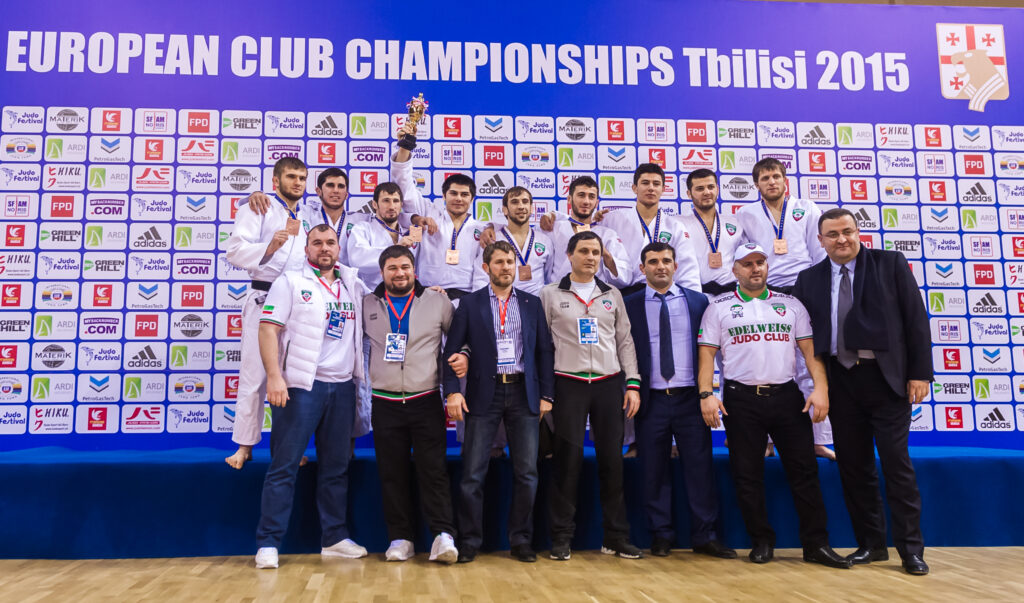
I’m not sure it’s a common pattern, no. In fact, most of the Chechens I know in Russia do not pursue a sporting career past thirty if they have no results. They generally stop in their early to mid-twenties, as they start a family and work. Of the boys I was around at the judo school between 2017 and 2022, who were born between 1994 and 2002: one returned to his village, got married but has recently redirected towards sambo; one works as a coach at the same school; one left Russia; and the others went back to get married in Chechnya and stopped training. But it was a particular community of boys from the same village, sent to the same coach three thousand kilometers away, who cannot keep them indefinitely. Perhaps the boys who train at Edelweiss (the Grozny club to which Yakub is affiliated) can combine sporting practice with a family and an income, and afford to perform later. Though Yakub already had results at junior level and on the international circuit before he turned thirty.
You explain quite early in your work that you prefer the term “combat sports” over “martial arts,” partly for cultural reasons. In the Chechen case, could practitioners of combat sports also be practitioners of martial arts without knowing it?
Here I’m putting on my doctoral hat — hoping my thesis director won’t rap my knuckles, as we don’t always agree on definitions! To put it briefly, there is a whole debate around the classification of disciplines, with criteria that can vary from one researcher to another. For my part, if we adopt an etymological approach that emphasises the martial or sporting nature of the practices, given the current state of those practices and the way practitioners themselves conceive of them, I prefer to speak of combat sports.
Could you elaborate?
Among the criteria that distinguish martial arts from combat sports are the potentially lethal dimension, the symbolic and competitive dimension, and the stability of the environment in which practice takes place. In my study, the lethal dimension is absent. Practice is more competitive than symbolic, and the environment is generally stable. That is why, in my view, it falls under combat sports. One could argue around the practitioners’ own representations, since many link their practice to martial purpose, to the defence of their homeland or their people — and that is a legitimate point. But in practice, their activity is generally competitive, not martial or symbolic.
In fact, whether a discipline is a martial art or a combat sport depends on the period, the context, the objective and the practitioners themselves. Given the current state of things, I think I am less mistaken speaking of combat sports rather than martial arts, for the given population and in the given contexts.
You had to navigate many obstacles: being a woman, a non-Muslim, the 2022 war… What were the assets, on the other hand, that allowed you to carry this project through? Having been identified and speaking Russian, for instance?
Indeed. I have a good capacity for memorizing languages, which proves very useful. I don’t speak Chechen, but I can pronounce the letters and I recognize a few phrases, a few words, certain concepts that don’t always have a literal translation in Russian or French. This shows my interlocutors that I have a minimum grasp of their culture, and it creates a certain trust — they are more inclined to engage with me. It was especially apparent among the diaspora, where the Chechen community is often poorly represented in the media. The fact that I know my subject shows them that I am not going to say anything and everything, or interpret their words however I please. On the same principle, being a practitioner myself also facilitates interactions with athletes, who can see that I know what I’m talking about.
You also have to find the right point of entry…
Caucasian communities have great respect for “elders” and figures of authority. If you are accepted by such a figure, it becomes much easier to find your place and engage with the other members of the group. Co-optation is very important. The downside for research, though, is that if you have to rely on co-optation, it can be difficult to gain access to varied groups.
And yes, being a woman does create difficulties, but it also grants access to subjects that will always remain closed to my male colleagues. In her Chroniques caucasiennes, Frédérique Longuet-Marx quotes George Charachidzé speaking to her of the “world of women” in the Caucasus and its inaccessibility to male researchers. As a guest, I have access to the men’s world. But as a woman, I also have access to the women’s world, to their testimonies. On that front, it is therefore an asset.
How does the Russian sporting and federal world in general, and the Chechen world in particular, manage to ease the frustration of its athletes in cases of exclusion from international competitions (cf. the 2024 Olympics) or potential visa refusals?
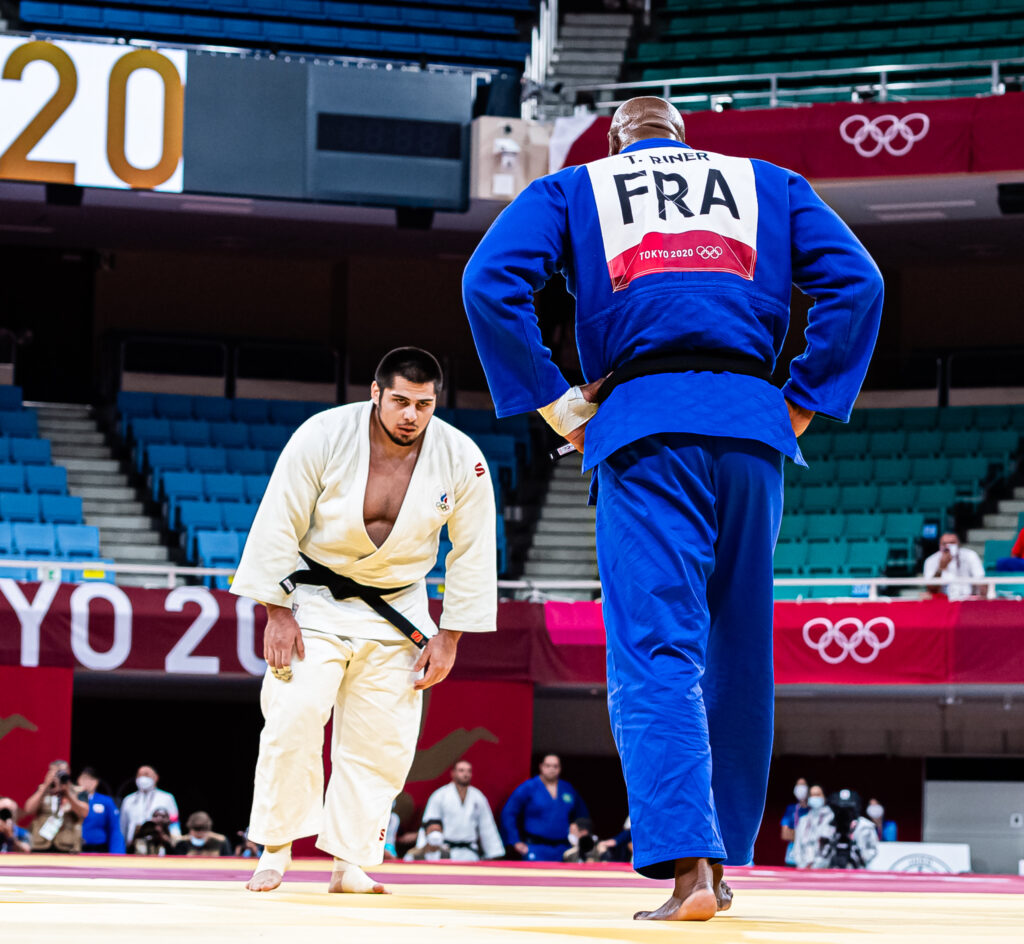
I suppose they don’t always succeed — because rather than see their career put at risk by suspensions and boycotts, some choose to change sporting nationality. I think this shows that at some point they see no other perspective under the Russian flag, and that Russian officials can no longer offer them solid guarantees for their career. Certainly not all of them make that choice. I think of the UAE judo team, which has taken on a large number of athletes who previously represented Russia. I know this first-hand, as I helped sort out a small logistical issue with them at the Paris Grand Slam 2025 and discovered they were all Russian-speaking… But they have recently welcomed Ukrainian judoka Lytvynenko, which raises questions about cohabitation within the team.
Yes, that’s quite a subject in itself…
I can see that Lytvynenko posts stories on Instagram training with the boys on the team, so they seem to be coexisting reasonably well. I would add that having managed them at the Paris Grand Slam 2025, some are a bit gruff, but coach Victor Scvortov, who is Moldovan, manages them well. I had to liaise with them over a logistical issue: they were due to share a bus with the Israeli team, which had arrived with a security detail. Now a few months earlier, there had been the Makhachkala airport incident. I asked Scvortov whether it might be a problem for the boys — most of them being North Caucasians — to find themselves alongside Israelis and potentially some military personnel. He told me that if there could be another solution, that would be better… So geopolitical problems are not limited to Russia-Ukraine. The sensitivities of ethnic minorities within Russia must also be taken into account.
On the question of changing nationality — how is that perceived on the home-nation side?
Nationality changes are received in varied ways. I think of wrestler Chermen Valiev, who is Ossetian and took Albanian nationality in 2024. In 2025 he wins the European championship against Sidakov, who is also Ossetian but still represents Russia. The medals are presented that day by Mikhail Mamiashvili, president of the Russian Wrestling Federation. There was an altercation between them as, in handing him his medal, Mamiashvili reportedly accused him of being a traitor to the nation… On the other hand you have the case of Chechen wrestler Razambek Zhamalov: he took Uzbek nationality in 2024, won the Olympics under the Uzbek flag, and was nevertheless welcomed as a hero on his return to Chechnya… Then again, there are already many Chechen athletes who don’t represent Russia, due to the diaspora, so perhaps the relationship is different…
Indeed…
As a result, despite the example of Zhamalov, I would have tended to expect Chechen authorities to be more forceful about potential nationality changes — especially towards Western countries. But boxer Artur Beterbiev now represents Canada and yet remains a colossal icon of Chechen sport, so I’m not entirely sure.
To return to your question: sporting nationality changes are generally not commented on by Russia’s official institutions. Some athletes make that choice, others don’t — that’s how it is. Perhaps there would be more criticism if genuine Russian judo stars — Arbuzov or Tasoev, for example — were to decide to change nationality.
The institutions have inevitably been far more vocally critical in public of the IOC and international federations’ decisions to exclude Russian athletes, or to ban them from competing under the flag and anthem. Now that they have been allowed to represent the Russian flag and anthem again, one has to contend with the reluctance of certain countries — Ukraine first and foremost — and the tightening of visa policy towards the Schengen area for Russian nationals.
I remember that right at the start of the war in Ukraine, JudoInside in particular had reported on the couple formed by a Ukrainian European champion in 2022 and his partner from the Russian team. Do you know where they stand today?
I know there is also another couple: the U73kg Makhmadbek Makhmadbekov, who changed sporting nationality and won the Paris Grand Slam 2026 under UAE colours, and his partner the U57kg Kseniia Galitskaia, 2021 junior world champion, who still represents Russia… The Ukrainian-Russian couple — that’s Iadov and Bobrikova, isn’t it? I hadn’t followed, but I can see online that she left the Russian team and settled in Ukraine.
I can also say that at the Paris Grand Slam, I crossed paths several times with Ukrainian judokas, with whom we started speaking in Russian without it causing any issue as the conversation went on — as long as I don’t impose the language from the outset, they had heard me talking with the Azerbaijanis in Russian. Last year that had greatly intrigued a certain Ivan/Vanya, who asked me all sorts of questions about what I was doing in Russia, why I had gone there, and who was very happy to discuss it. And then I had a whole group of Caucasians coming to joke with me between randoris at the post-Grand Slam training camp — the Azerbaijanis, the Ukrainians, the Georgians… So even if there are conflicts and tensions, Russian ultimately remains a language of communication across a whole region of the world. You can denounce it as a colonial language, and some do. Lytvynenko surely speaks Russian with her teammates, or at least with Scvortov.
You therefore have the privilege of approaching Chechen society through its feminine side as well. What do you discover when observing things from that angle? Were there any preconceptions you had that fieldwork called into question?
Among Chechens, it is indeed mostly women who tell me about tragic events, testimonies of war, shattered dreams, and so on. And — something I also see in the South Caucasus — they are often for me a safe place.
Meaning?
Sometimes I struggle to interpret the behaviour of athletes I’ve encountered. At the judo school, there was a boy who refused all physical, visual and verbal contact with me, whereas the others did not treat me that way. When I asked a woman from the family at whose home I often went to eat, she explained to me why he behaved like that. For him it was not disrespect. It was cultural…
Interesting…
Being able to rely on women also proved useful these past months in Armenia. I received a great many unwanted approaches, some of which were genuinely disrespectful or made me uncomfortable, but I didn’t know whether it was all in my head, whether I was behaving in a way that made them feel they could act like that, whether I was overreacting. The coaches I raised the topic with found it rather amusing. Then I made friends with some women with whom I could discuss it and from whom I found both explanations and support.
As for Chechen women, I’m not sure I had any real preconceptions, since before my first stay in Russia I wasn’t really aware of Chechens as a people. Everything I came to understand was drawn on a blank page, so to speak. In the diaspora as among Chechen families in Russia, I met veiled Chechen women, and others who were not, who are active in politics, who are in further education, who are homemakers, who have “secret” hobbies (which they hide from their family). There is no single profile of a Chechen woman. That said, it is true that they do work hard — they cook, they clean, they manage the children. I have seen quite a few testimonies about the lot of the daughter-in-law, which is rather thankless.
When I think of the Chechen women I spent time with, I think of the conversations I had in the kitchen with the women of the family where I used to have dinner when I was at the judo school, of the women of another family with whom I was invited for an evening (the men had gone to the sauna and I was not invited, and I spent the whole night talking with them), but most of all of one of my friends at university, with whom I spent a great deal of time and who gave me so many answers whenever I had a question about Chechnya and Chechens… In fact it is generally I who challenge people’s preconceptions about Chechens. I didn’t have many when I arrived there, and now I try — with my experience and knowledge — to nuance the things one hears said about Chechens.
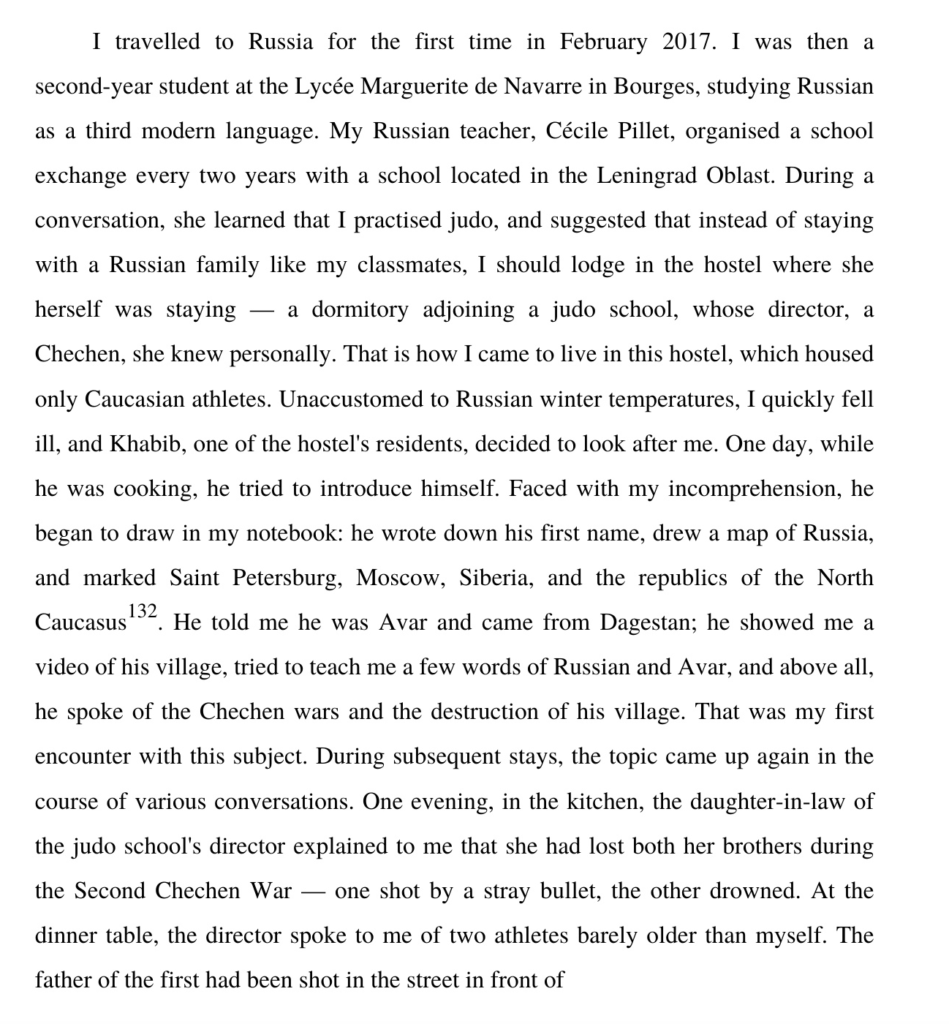
I very much like two quotations on page 132 of your work, where you mention that Frédérique Longuet-Marx, in her Chroniques Caucasiennes, recalls the words George Charachidzé addresses to her: “You have an advantage over me — you have access to the world of men and the world of women. I will never have access to the world of women.” And then, further on: “With women, one very quickly gets to the ‘real’ questions, the ones that concern the intimate; men essentially play a social role.” Is that not the red thread running through your entire inquiry?
I’m not sure that the difference in position between Chechen men and women — and more broadly in the Caucasus — is the red thread of my work. In any case it is something that keeps coming up, yes. Partly because I notice and observe this difference from the outside, and partly because it applies to me as well.
As I said before, I fully agree with George Charachidzé and Frédérique Longuet-Marx about the existence of these two worlds and the intimate character of the women’s world. I had more occasion to observe this when I was in Russia and we were invited into Chechen families. He would go to the sauna or do the barbecue with the men, while his daughter and I could stay with the women — and the conversations did indeed have a more intimate quality: family, motherhood, and so on. This is still the case today in the South Caucasus. If in one of the sporting structures I visit there are women — generally on the administrative side — at some point I will always be invited for tea or coffee, and it is they who will ask me whether I’m married, whether I have a boyfriend, a family, whether I feel comfortable in the Caucasus…
Women have also offered me a different sensibility on accounts of war. The first person who spoke to me about the Chechen wars was the boy who looked after me when I was sick in February 2017 in the dormitory of the judo school. And he was not the only one to bring up the wars with me. I have accounts from different men of different generations with different personal histories — Chechens from Chechnya but also from the diaspora in France. And I have a point of comparison between the men’s and women’s discourses on the war. They do not focus on the same things, and that is what is interesting. The women who spoke to me about it tended more to evoke specific, concrete, tragic moments. Among the men there was always a certain distance from the narrative. Except for one of the wrestlers from the INSEP, whose account was almost funny — which created a jarring effect that has stayed with me.
Where do you situate yourself in relation to all of this?
Beyond the discourses themselves, I find myself straddling these two worlds — since as a foreign guest, I am not entirely subject to the same rules. That was the case with the Chechens, and I can see in the South Caucasus as well that I can receive different treatment. I have a friend and colleague who is a photographer, and who worked on Georgian child wrestlers. He published a photo book for which I wrote a text. He returned to Georgia last month with a colleague to shoot a film. The filming took place during real wrestling training sessions, and I could observe that the children and the coaches had a different approach when it came to me. We even laughed about it. The children started coming to say hello after two or three days, whereas they had been greeting the boys from the start. As for the coaches, I generally find it easier to connect with them because I’m the interpreter [Smiles]. But there is a kind of affectionate paternalism they don’t express towards the boys. For instance, I will always have a chair and a coffee without having to ask. But one also has to juggle with unwanted attention [Smiles]…
Given the sensitivity of international relations today, have you encountered any resistance from France these past months as your work has progressed? Have people tried to dissuade you from returning physically to that region? Or on the contrary, are you encouraged to do so, given the nuance you can bring to all this complexity?
When I left for Armenia at the end of August 2025, my grandmother was convinced I would never come back and that I was going to be kidnapped or killed in the Caucasus. I know my parents have given up on the idea of keeping me in one place. They have come to terms with it and admit they cannot stop me from wandering. Right now it’s fine. It was more fraught right after the war began.
Why?
Because the return was very abrupt and psychologically hard for me. I lost friends, lost projects, and my belongings are still there. My loved ones found it hard to understand what attachment I could have for a place at war, from which I had just been expelled. Even though I don’t support the actions of the state, I have memories and friends there, so I inevitably feel an attachment. That led to some misunderstandings and conflicts.
Of what kind?
The kind where I explained to a fellow judoka in France one day what my thesis was about, and he replied: “But Chechens — they’re terrorists!” So some people are convinced I’m crazy, and presuppose political opinions I don’t hold. Since March 2025 and my first fieldwork stint for the PhD, I have set up a WhatsApp channel with my family and friends where I describe my encounters, what I’m doing, and send photos. I try to regularly explain the history of the places, regions and people, so that they understand how the region works and why I find it interesting. And since they can read my updates regularly, they know I’m fine and they leave me in peace [Smiles].
What about the academic world following your work?
One of my co-supervisors is not a Caucasus specialist, so he is gradually discovering the region through what I tell him, and is fascinated by it… At the institutional level, I sometimes receive advice or recommendations from embassies. I generally make sure to be in contact with them. I had to request a research mission authorisation from the University that awarded me the doctoral contract in order to carry out my fieldwork. From what I was told, during the deliberations for awarding the contract, they had some reservations about the feasibility of the PhD project, given that it is a difficult region requiring solid knowledge of the cultures and languages, an ability to navigate national and Soviet histories and geopolitical issues, and an awareness of what one can and cannot say or do. When I replied to one of their questions that I had regularly lived in a dormitory with Chechen athletes and that they were one of the most difficult peoples to approach in the Caucasus, it convinced them of my ability to manage in the South Caucasus. I do have a clause in my mission order stipulating that if they formally prohibit a particular country or region, I may not go there. So far, that has not happened. And even if my family sometimes thinks I’m reckless, I am cautious. I have “safe” contacts in the places I go to. I don’t go somewhere unless I am expected there.
The 2026 World Championships in Baku are on the horizon this autumn. Unlike the 2018 edition, which was also held there, will there be Armenian judokas this time?
There are several hypotheses. First hypothesis: there is no eligible Armenian senior judoka, so no problem arises. In my view this is quite probable, since Armenia does not have a large senior judo team — if Armenian athletes do not achieve a European or world result (meaning a podium or a fifth place) before the age of eighteen, they are called up for two years of military service (one and a half years since January 2026). They very rarely return to sport afterwards, and too few achieve results to form a senior team — though one should keep an eye on U60kg Vahé Aghasyan, European U23 champion; Davit Abrahamyan, who just finished fifth at the Europeans at U66kg; and Gor Karapetyan, who was 2022 cadet world champion…
Second hypothesis: there are judokas who could potentially participate, and relations between Armenia and Azerbaijan continue moving towards a semblance of improvement — they have signed a peace agreement, there have been first official visits, the border has opened to initial freight transport… So we shall see.
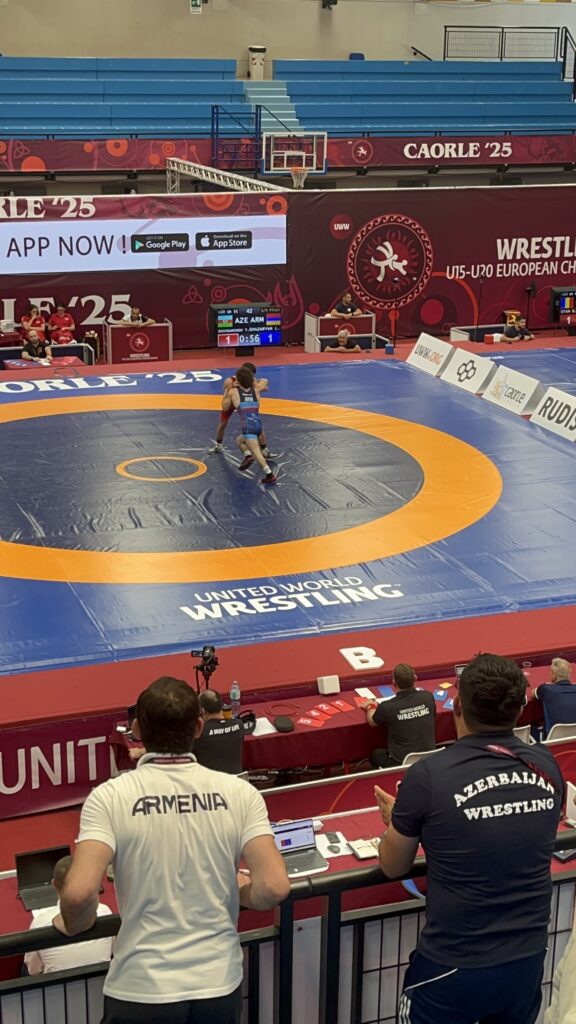
Third hypothesis: there are judokas but the situation remains too tense. The U17 European Wrestling Championship will be a crash test — it is also organised in Baku, but in July, and Armenians will be selected; whether they will be allowed to attend remains to be seen. The Armenian coaches I put the question to don’t know yet. Precedents are not very encouraging. Armenians had been able to attend the European Games in 2015, and that seemed to go well, but with the fate of Karabakh things became complicated again. Our French wrestler of Armenian descent, Gagik Snjoyan, withdrew from the Olympic qualification tournament in Baku in 2024 (there are quite a few articles on the subject), and the Azerbaijani weightlifters who came to the European Weightlifting Championships in Armenia in 2023 left the competition mid-way through because their flag was set on fire during the opening ceremony.
Your work connects many of the dots of History. On page 40, you recount what judo historically owes to sambo in this part of the world: “Judo, sidelined following the death of Oshchepkov during the Stalinist purges, is in a sense kept alive by the practice of sambo. When judo became an Olympic sport at the 1964 Games in Tokyo, the USSR set out to develop this sport on a large scale, and sambo and judo schools were founded in the various republics of the Union. Thus, Hussein, by opening his school in 1966, was one of the pioneers of judo in Chechnya”… There seems to be a genuine porousness between talking about judo in Chechnya and evoking Dagestan, the Stalinist purges, sambo and the various diaspora communities…
I think that evoking anything to do with Chechen culture — above all sport — without placing it in its historical and geographical context makes no sense. For judo to arrive in Chechnya, it first had to appear in Russia/the USSR, via Vasili Oshepkov, a Russian orphan raised in Japan since he was born in Sakhalin — half of which was then occupied by Japan after the 1905 war. He learned judo there under Kano, made several trips back and forth to Russia/the USSR, then eventually became a military sports instructor in Moscow. It is with him and a few of his colleagues and students that sambo developed in the 1930s. But it was the period of the purges, and since he spoke Japanese, he was accused of being a spy — he was arrested and died. Judo was then set aside in favour of sambo, until judo was included in the Olympic programme in 1964 and then again in 1972. So, in the second half of the 1960s, judo practice had to be developed throughout the USSR, and this task was entrusted to people who had received sambo training.
Fascinating!
One of the entry points for judo into Chechnya — which I studied more closely in my thesis — is the school of Staryïe Atagui/Yokkha Atagha, where the boys I lived with in Tosno are from. Students of Oshepkov — Arkadi Kharlampiev and Ivan Vasiliev — were teaching sambo in Leningrad, where Hussein Tataev learned sambo; he then returned to Chechnya to open a sambo and then judo school in 1966. Schools also opened at that time in Grozny. Furthermore, all of this coincides with the return of Chechens from deportation starting in 1957, so sport was being (re)built in full swing, and many of those building it were born or raised in Kazakhstan.
In the 1990s came the war — halls were bombed, destroyed, young men were at the front, so sport could not properly continue. Yet it was in 1996 that the Chechens had their first Olympic champion, in freestyle wrestling — Buvaisar Saitiev. But he was born and grew up in Khasavyurt, in Dagestan, not far from the Chechen border, where there is a large Chechen community. Even today Khasavyurt is a very highly regarded wrestling school. I have less of a sense that this is the case in judo, but there are quite a few Chechens from Khasavyurt who perform in wrestling, and boxer Beterbiev is also from there.
In the French freestyle wrestling team, where most of the boys are Chechen, quite a few were born around Khasavyurt in the 1990s and told me that besides going to wrestling, there wasn’t much else to do. And on the other side of the border, in Chechnya, there was the war. In his post-podium interview in 1996, Saitiev says something very moving — I quote it in the thesis: “Of course, all the inhabitants of Russia are happy about my victory, they wave flags, they sing the anthem. But I know that those who are happiest for me are my compatriots [Chechens]. They are going through very difficult times. If I have been able, in some small way, to help them take their minds off things a little, I will be very happy.”
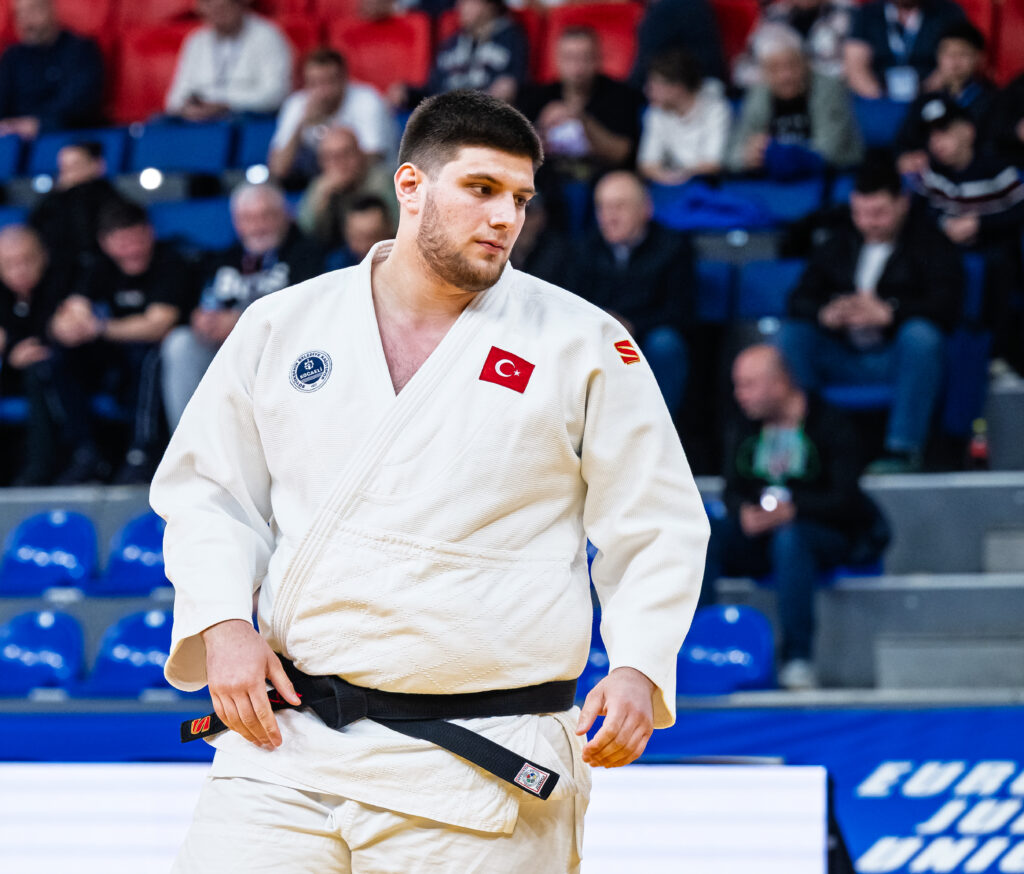
The war also drove many Chechens to Western Europe and the formation of a large diaspora, which remained invested in combat sports. In France there is the freestyle wrestling team I mentioned, quite a few MMA fighters (the Younousov brothers, “Baki”). There are some judokas — Saparbaev in France, Batchaev and Gazaloev in Belgium. In Turkey too, though they often took Turkish names, making them harder to spot [Smiles]. There is Bektas Demirel and his sons, and Selim Tataroglu and his son Ibrahim, who has just won the Upper Austria Grand Prix and stood on the podium at the Tbilisi European Championships. Members of the diaspora mostly do wrestling, though. Because of the strong community ties, several social media accounts keep a running list of all the Chechens representing Russia and various diaspora communities at every major sporting championship. For instance, there was recently the U23 European Wrestling Championship — and thanks to the Chechen_wrest account on Instagram, I know that eleven Chechens took part representing five different countries.
So the war and the diaspora it caused have marked the Chechen sporting landscape — on one hand locally, in terms of infrastructure and all that followed (Kadyrov’s rise to power, the instrumentalisation of combat sports, etc.), and on the other hand in the host countries, where Chechens have made a major mark in sports that were not necessarily part of the local culture or tradition of success. So it’s important to keep all of that in mind to understand the geography of Chechen sport.
My thesis is moving precisely towards a reflection on the notions of heritage and legacy, and sambo fits fully within that in the post-Soviet space. What do we do with this discipline and its strong Soviet-Russian identity (today the sponsors of the International Sambo Federation are Russian companies)?
Good question.
I have some elements of an answer for Russia, Armenia and Georgia, where I have trained and explored the question. There is the story that certain actors themselves told me, which I indeed cite in my thesis. In Russia, judo is well developed and produces results — but for example, when I was studying in Moscow, I had to be enrolled in the sambo section in order to practice judo (and in practice, I was doing sambo). And you can see traces of sambo in the names used for judo techniques, as it is common to use Russian rather than Japanese terminology — a bit like in French at the time with the Kawaishi method: hip throw, and so on. But in Russian. This can be seen in Armenia too. There, judo has very few results, there are only sambo sections, and most of the judokas I know also compete in sambo. But generally speaking, Armenia still has a very Soviet sporting landscape in terms of its organisation.
How does it work in Georgia?
In Georgia, on the contrary, given the situation of Abkhazia and South Ossetia, there is a real rejection of Soviet-Russian traces. But the density of judokas is such that sambo is also practiced. That said, there are ultimately few sections dedicated solely to sambo. I went to Poti, where the coaches are sambists, and they told me they love sambo — but there is so little you can do with it in Georgia that they are obliged to go through judo. The anti-Russian feeling sometimes makes itself felt at competitions: at the national championship, the mats bear the logos of sponsors Rosneft and Rossambo — and the letters “ROS” had all been scraped off… So yes, judo historically owes a great deal to sambo in the former USSR, but I think it remains interesting to examine that question today.
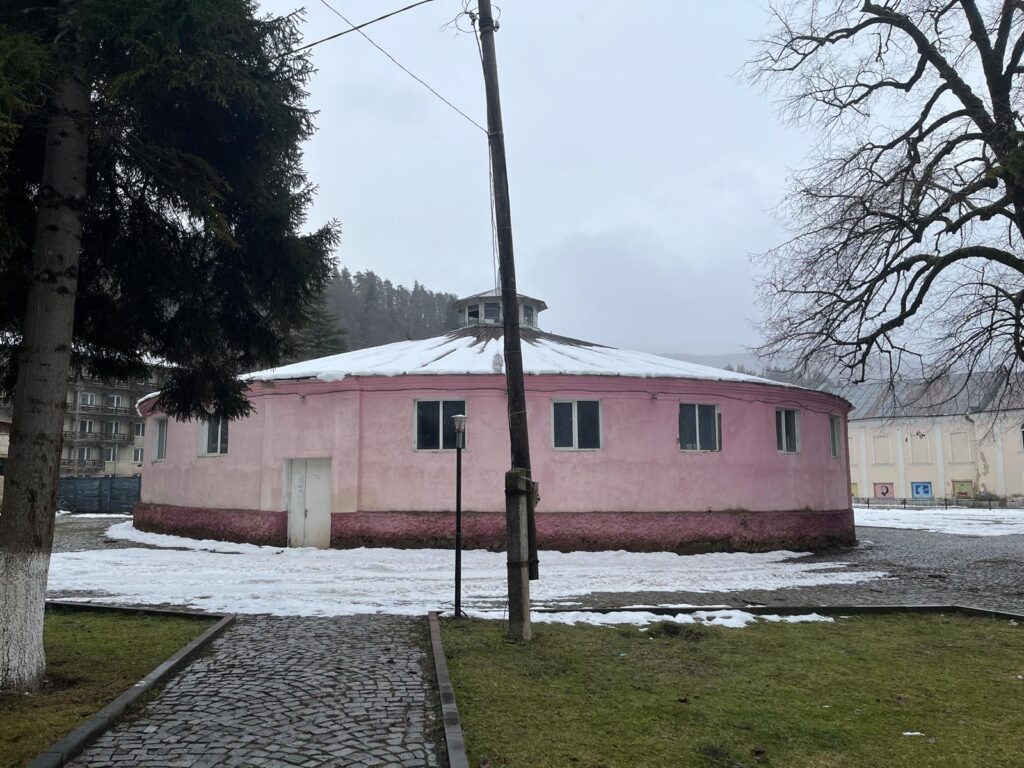
On page 52, you write: “It should be noted, however, that the Soviet and then Russian physical education system has been subject, since the late 2010s, to criticism describing it as archaic and highlighting the psychological consequences on children who are constantly pushed towards performance”… In 2016 in Spain, I interviewed Dmitry Morozov, who was then head of the Russian men’s judo team, and he confirmed as much. What is the situation, ten years later?
It’s been a while since I was in Russia, so I can’t really say… To offer some pointers: sporting practice — and judo in particular — is not really conceived as a leisure activity. It is above all a competitive pursuit, so children are inevitably pushed to perform. Moreover, the belt grading system — based on observations I had made at the time — follows the Russian sporting classification, which is itself dependent on results. So to earn a brown belt you need to be a KMS (Candidate Master of Sport), and for a black belt — MS (Master of Sport). I no longer remember exactly, but these already require regional (okrug — noting that France as a whole can sometimes fit inside a single okrug) and national podiums. So inevitably, in order to progress, you need results.
You also quote on page 53 Degi Bagayev, Honoured Coach of the USSR and a founding figure of freestyle wrestling in Chechnya after the return of the Chechens from deportation in 1957: “We would find a free patch of grass in a park and begin training. You think that frightened anyone?”
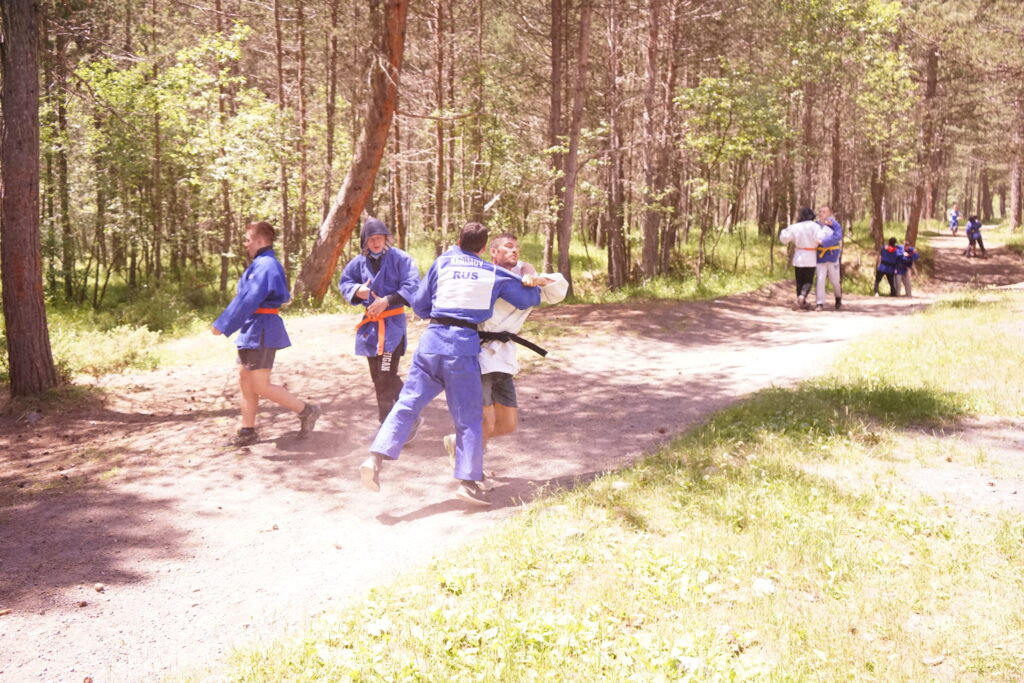
Outdoor training, especially in summer, I see very often! Not necessarily judo or wrestling directly (or at least oppositional exercises), but strength and conditioning, running, uchi komi — anything that lends itself to it. Even with brand-new facilities. So no, that hasn’t changed — except it’s no longer out of necessity. And I don’t think that’s a bad thing.
Page 73: “This example is representative of the Russian politico-sporting system, which Lukas Aubin describes as sportokratura, which in Chechnya is compounded by another process: kadyrovisation“… You mention further on that Austrian judoka Shamil Borchashvili, after his Olympic bronze at the 2021 Tokyo Games, dedicated his very first words of thanks to Ramzan Kadyrov… Could you elaborate?
I’ll share an article by Lukas Aubin which also provides explanations specific to sport. As he says in the article, kadyrovisation is the construction of a national narrative favourable to the Kadyrov family. I would go further and say it is the monopolisation of the public and political space by the Kadyrov family. There are studies that count the number of family or clan members of the Kadyrovs in governing bodies — I quote them in my thesis.
As I mentioned, before working on sport I also worked on the “Kadyrov Mosques,” which I consider another example of kadyrovisation: mosques are rebuilt during the post-war period and given Kadyrov names. This summary of my first thesis shows clearly how every aspect relating to those mosques is captured by the Kadyrov family: names, funding, project management, sermons. And the same applies to sport. That is what I mean when I speak of kadyrovisation.
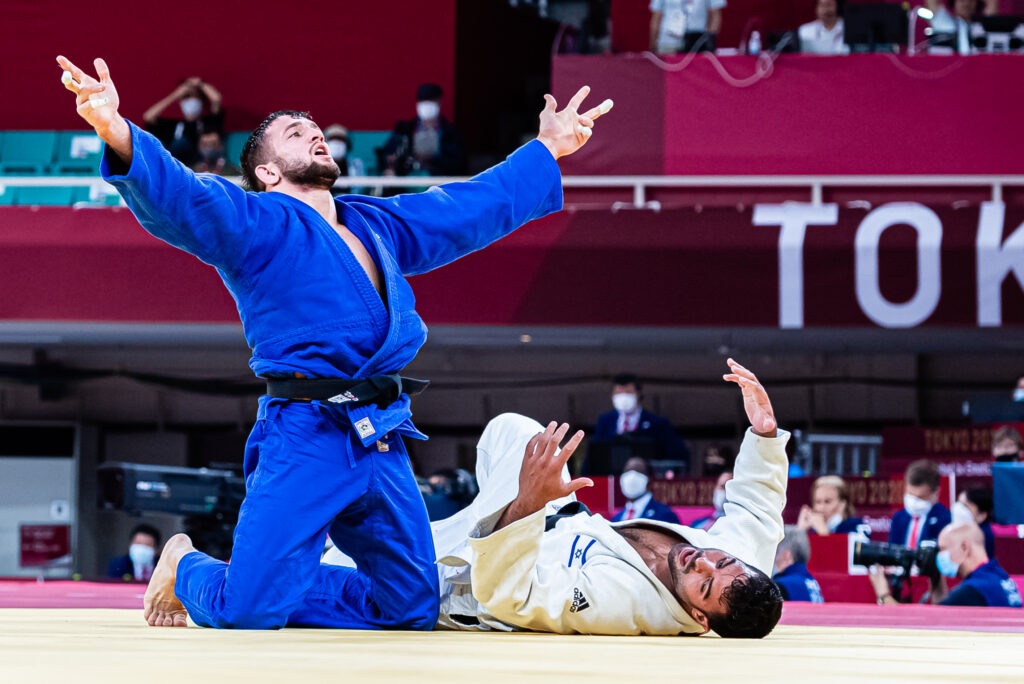
On page 87, you recall the French freestyle wrestling selection at the 2023 U23 European Championships. The team consists of Adam Biboulatov, Khamzat Arsamerzouïev, Mohamed-Amine Sangariev, Magamed Deliev, Rakhim Magamadov and Adlan Viskhanov. All six selected athletes are of Chechen origin. You then write that “the composition of the French team provokes a large number of indignant reactions in Russia, whose team cannot take part in this competition due to the sanctions imposed in the context of the war in Ukraine. Mikhail Mamiashvili, president of the Russian Wrestling Federation, makes the following comment: ‘These people grew up there, not one of them has ever represented Russia. The French go to gay pride parades, the Chechens must fulfil their role as men in their place.'” Quite a statement…
Mamiashvili is accustomed to rather inflammatory outbursts. I mentioned his confrontation with Chermen Valiev on the podium at last year’s European Wrestling Championships. I don’t have other official-level examples off the top of my head. But I do sometimes encounter remarks of that kind myself during fieldwork. This summer at the U20 European Wrestling Championships, an Armenian coach was grumbling that Western Europeans (French, Italians, Spanish) would be better off playing football than coming to wrestle. A few hours later he was scandalised because a spectator had an earring. And when I was in Armenia, wrestlers asked me on several occasions whether it’s true that in France men can marry each other. It reminded me of how often people asked me about “gays” and “migrants” (meaning everyone who isn’t white and Christian) when I was in Russia… So it clearly preoccupies them.
Masculinity in the Caucasus is a whole subject in itself, and in many respects it differs from what we know. Mamiashvili’s comments are rooted partly in that context, but also in the geopolitical frustration of seeing athletes originating from territories under Russian administration win medals for European countries — and who can therefore be perceived as traitors. The remark about the French and their “gay pride parades” is a blend of both factors.
What effect does it have to see yourself described as a “friend” in the caption of a photo of you on the wall of a local school, as you mention on page 83?
Your question sends me into a brief introspection. Honestly, I find my face awful in that photo and it bothers me that it should be that one. Also, I feel a little embarrassed to appear on that wall alongside people whose captions list European results, national podiums, titles galore — while the best they can write next to mine is “black belt and friend.” On the other hand, I know it means I have a place in the history of that place, and that moves me. I know that one of the Chechen boys I was in contact with for my thesis — who arrived there after my last visit — went looking for information about me and sent me a photo of that pride wall, where I apparently still featured. It also makes me sad, because my stays there came to a very abrupt end.
Why?
I had a visa for April 2020 — but Covid. I made a quick visit in the winter of 2022 — but the war. And since then I have not been able to go back. I tell myself that photo will eventually be taken down, as that board is not fixed. What I fear most is not being able to return before all the people who knew me there have moved on. I’m not sure many of the boys I lived with are still there. I think there may be just one, and he has become a coach. Of all people, it’s the one who used to ignore me in order to comply with Chechen norms. And the director is getting on in years. How much time do I have to return before this chapter closes for good?
Could you develop the concept of “musculinity” that you mention on page 107 and its influence on Chechen practitioners?
I believe I evoked musculinity specifically in the case of boys born in the 1990s who were telling me about Van Damme and other actors as a model that gave them the desire to do martial arts. I borrowed the term from Yvonne Tasker — herself cited by Anne Gjelsvik in From Hard Bodies to Soft Daddies […] (I love the title), to be found in the thesis bibliography — where she discusses the masculine aesthetic in American action films. I no longer remember the text in detail, but the 1990s had a specific type of “musculine” hero, where masculinity was also expressed through a muscular body. The masculine tropes in films shifted after that — at least that is the conclusion of her study. In Chechnya, the body is supposed to be partly covered, including for men, and one is not supposed to be given to admiration or worship of it. So it is almost ironic that this particular form of masculinity should have been an argument. It is not something I have heard from younger practitioners. Of course, the body, the relationship to the body and its aesthetics matter to athletes — that I observe more in the South Caucasus today. But it’s not something I am particularly seeking to theorise.
You also evoke the figure of the wolf…
The symbolism of the wolf is very powerful for Chechens. It is a national animal and is reproduced everywhere, including in sport. I have a passage in the thesis analysing the nicknames given to athletes and the logos of clubs and sport-related bodies, and this symbolism is very frequently present. It is a proud, free, wild, strong and resilient animal, with which Chechens identify. And sport is one of the spaces where this symbolism finds expression.
Page 144: “This is for instance the case of Asia Khamzatova, who was USSR champion in 1979, or of Shumisat Mamayeva, who practiced in the 1980s and 1990s. The latter had even disguised herself as a boy in order to be able to register in the judo section of the village of Samashki.” Having already written on this subject — interviewing her daughter but also Jimmy Pedro, Kayla Harrison and Marti Malloy about her — this strongly reminds me of the story of Rusty Kanokogi in the USA…
For Shumisat, I draw that from an article published on the Chechen sports encyclopaedia, which is a republication of an article from Vesti Respubliki. To summarise: she took up judo simply because there were no other sections available in her village (Samashki — which would be a very particular place during the First Chechen War; I’ll let you look into the massacre there as well, of which I heard accounts during my work). And since they did not accept girls, she dressed as a boy and registered. When the coach discovered she was a girl, he did not dare turn her away, especially since she trained as well as the other judokas. Her parents were not initially aware, but they were themselves former athletes, and when they found out they did not stop her from doing judo either. In re-reading the article I notice that the surname given is Khajmukhambetova — I’m not sure why I wrote Mamayeva in my thesis… Perhaps she married in the meantime and they updated the article?
Page 145, you write a very interesting paragraph on the weight of religion: “Chechens are, in their overwhelming majority, of Muslim faith. The Republic of Chechnya is one of the seven republics of the Russian Federation ‘with a Muslim majority,’ meaning populated more than 50% by ‘ethnic Muslims’ — a term designating peoples whose history and culture are deeply marked by Islam. According to the 2010 census, Chechnya is 97% populated by ethnic Muslims. Although Islam had been present in the North Caucasus since the 8th century, mainly in Dagestan, it spread to Chechnya during the 19th century, thanks to the preachers and warlords Sheikh Mansur and Imam Shamil. For the latter, religion was a means of unifying the North Caucasian peoples against the Russian Empire, which was seeking to conquer the region.” Is that something you still feel today?
Islam obviously still holds an important place for Chechens today. And Imam Shamil is a figure I became aware of before studying him, through the boys. So these historical figures who were simultaneously religious and military leaders still occupy a place in Chechen affective memory. As for religion more broadly, it is important but takes diverse forms.
Meaning?
Meaning that between Kadyrov-inflected Islam, the Islam of those who lived through the USSR and therefore a surface atheism, the Salafism that gained a foothold in Chechnya, Sufism, and all of this intertwined with pre-Islamic Chechen norms — the result is in fact a rather varied landscape depending on location and generation. In my specific case, when I was living with the boys, I remember one of them reciting the Quran in the judo hall during our rest periods. I also know that there were at times conflicts within the group along religious lines. And religion does impose certain limits in sport, as I wrote in my thesis: on women’s practice, on practices that are generally admissible even for men (strikes, dress codes), and on the issue of sponsors — cf. the photo of Saaïev in the final pages of the thesis. So yes, religion is always a topic. But this is not unique to Islam. In the former USSR, as I understand it, the phenomenon has been studied — the return of religion after Soviet atheism. I also observe many manifestations of Christian religion in sport in Georgia and Armenia. In late April 2026, I even discovered a village where the coach reads Orthodox prayers before every training session. That was the first time I had seen that.
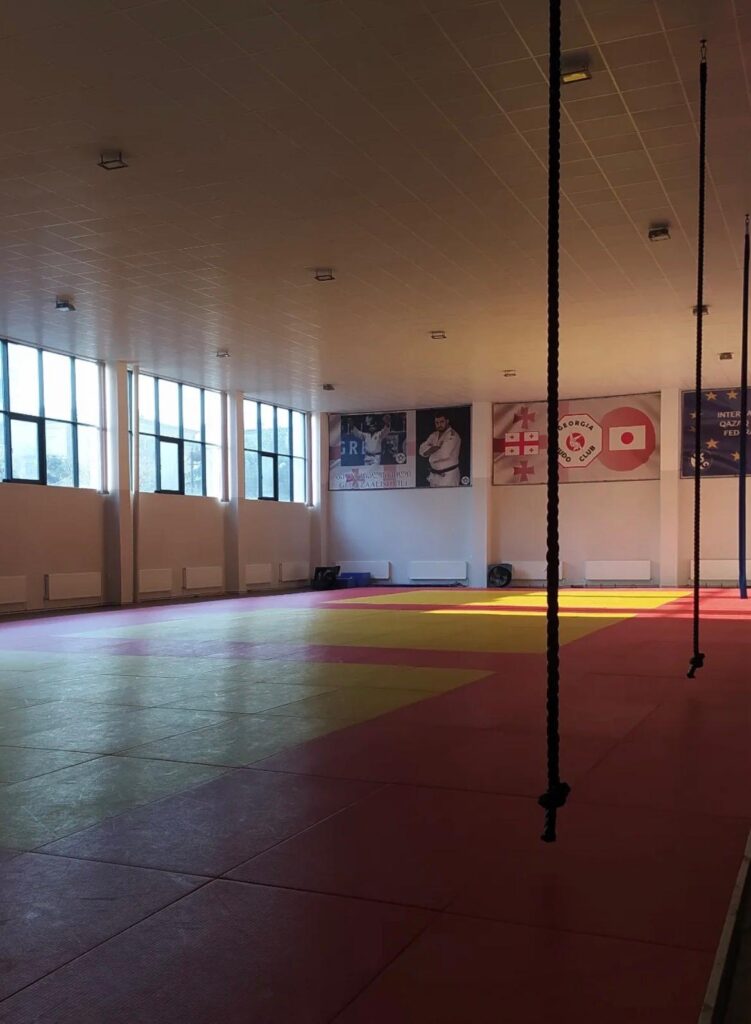
Page 159, you write: “I was not able to deepen each of the questions raised by the topic studied. It would thus be conceivable to continue the study of combat sports among Chechens by addressing more financial questions, such as the athletes’ choice of sponsors, or the debate surrounding mixed martial arts — a highly prominent discipline internationally, offering great economic opportunities, but one that runs counter to traditional Chechen ethics. We might also wonder about a potential sacred dimension of sporting practice among Chechens, which could be analysed in relation to their religious rituals — in particular the zikr (‘invocation,’ ‘remembrance’) performed by the Sufi brotherhood the Qadiriyya, to which the Kadyrovs and a part of the Chechen population belong. Indeed, this ceremony — in which the faithful seek to draw closer to Allah by invoking His name — takes, within this brotherhood, a physical and even sporting form, with believers running, jumping and clapping their hands to the sound of their invocations.” If you could add one or more appendices to your original work today, what themes would you wish to emphasise?
Specifically on sport, I would have liked to go there and exchange with Chechen girls who practice sport. I have a fellow doctoral student, Loujaine Laamal (I cite her thesis), who was able to go there and spend time with girls on the ground. She continues to work on Chechens. I think she will be led to address questions that strike me as interesting regarding Chechen history, culture and politics.
In expanding my work to the South Caucasus, where I also find myself interviewing people who lived through conflicts and the upheaval of the USSR’s collapse, I find these personal accounts — these “small histories” — deeply fascinating when pieced together they form the “grand narrative.”
I would have liked to collect more accounts from that generation that lived through the USSR, its fall and the wars. I would also have liked to pay more attention to places, and to visit them myself. I find it fascinating in the South Caucasus to go to spots that are somewhat off the beaten track (or not), and explore sports halls dating from the early 20th century or the Soviet period. In the interviews I conducted with old Chechen coaches, they told me that most of the halls had been bombed during the war. But are there ruins? How have those places been preserved, transformed, salvaged?
With everything you have learned along the way — both about judo and in terms of your research — what advice would today’s Tiphaine give to the Tiphaine who, at the age of four, tied her very first white belt?
The advice is not only for me. I think it is a reflection that could be useful to anyone — but there are so many ways to be involved in judo beyond high-level performance that everyone can find their place in it.
It took me time to accept that I don’t have the psychology for competition, and it is sometimes frustrating or difficult to explain that to people who only conceive of sport in those terms. I may be a poor competitor, but I am not without knowledge — I have a great deal of technical understanding that can be appreciated. In Armenia, my coach Mkhitar Khachatryan had me conduct the belt grading examinations for his students, which I greatly appreciated. Sharing on those technical points is already a form of giving.
More broadly, these sports create a closeness, and I could never have opened that door onto Caucasian cultures without judo — especially with Chechens. So my first “piece of advice” is to keep in mind that judo is a very wide world, and that it can also broaden our own.
Then — it may sound trite — but listening to yourself and believing in yourself. It may seem surprising, coming from someone who spends her time alone in the Caucasian mountains on the edge of mats where she has to manage interactions with sometimes rather rough athletes, but I also have fairly little self-confidence. That said, I am also very stubborn, and that compensates. When I was thirteen or fourteen, I once crossed paths with an official from my regional committee at a family event, and he dared to tell me that as long as he remained on the committee, he would never let me earn my black belt (there were various conflicts in that department and I’m glad to have left). Two years later he was obliged to award it to me. And ten years on, I think my path in judo is not entirely wasted — and that it is quite a satisfying riposte on my part.
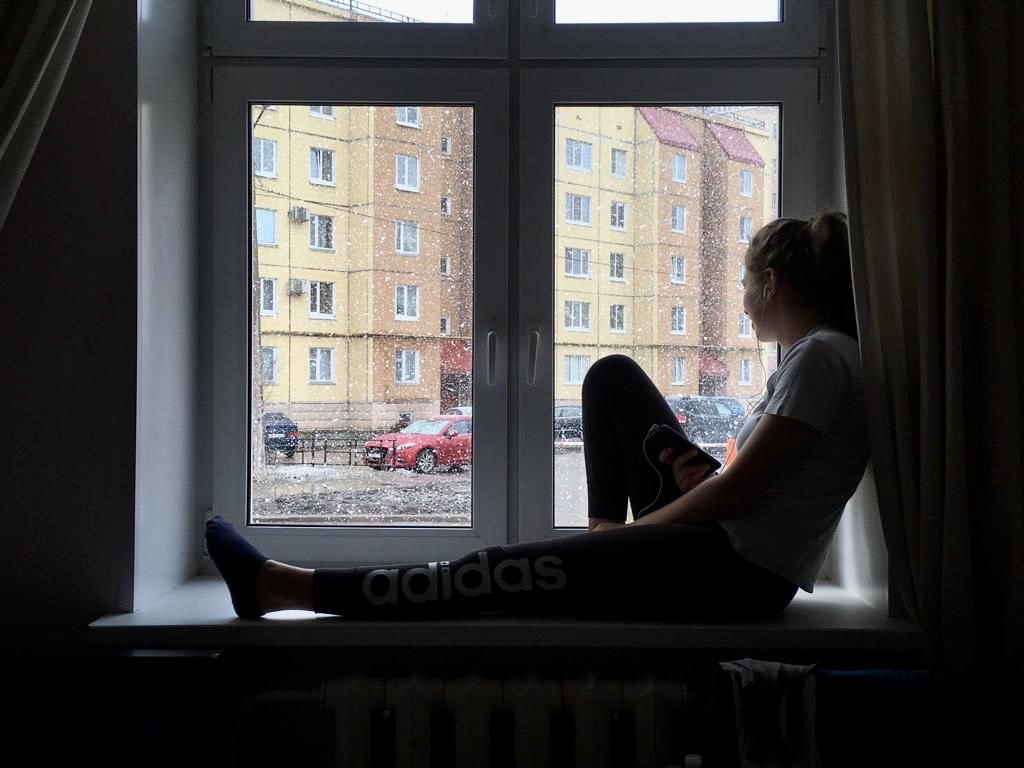
I never thought I would devote my life to judo or sport — it is the case for now, but what will come next? I wanted to become a cancer researcher. Learning Russian was an impulse. Going to do judo with Chechens in Russia was too. As was deciding to build my studies around the Caucasus — I cancelled my preparatory class applications the day before the deadline on Parcoursup. It led me to meet people who have given me knowledge, an open mind and perspectives I would never otherwise have had. So it doesn’t matter if everything doesn’t go as planned — the important thing is to take what’s there to be taken. And I think I still have a great many things to take and… to learn. — Interview by Anthony Diao, winter–spring 2026. Thanks: Angelina Biktchourina. Opening picture: from the dormitory window of her judo school in Russia in 2019. ©Tiphaine Gingelwein/JudoAKD.
A French version of this episode is available here.
More articles in English:
-
- JudoAKD#001 – Loïc Pietri – Pardon His French
- JudoAKD#002 – Emmanuelle Payet – This Island Within Herself
- JudoAKD#003 – Laure-Cathy Valente – Lyon, Third Generation
- JudoAKD#004 – Back to Celje
- JudoAKD#005 – Kevin Cao – Where Silences Have the Floor
- JudoAKD#006 – Frédéric Lecanu – Voice on Way
- JudoAKD#009 – Abderahmane Diao – Infinity of Destinies
- JudoAKD#008 – Annett Böhm – Life is Lives
- JudoAKD#010 – Paco Lozano – Eye of the Fighters
- JudoAKD#011 – Hans Van Essen – Mister JudoInside
- JudoAKD#021 – Benjamin Axus – Still Standing
- JudoAKD#022 – Romain Valadier-Picard – The Fire Next Time
- JudoAKD#023 – Andreea Chitu – She Remembers
- JudoAKD#024 – Malin Wilson – Come. See. Conquer.
- JudoAKD#025 – Antoine Valois-Fortier – The Constant Gardener
- JudoAKD#026 – Amandine Buchard – Status and Liberty
- JudoAKD#027 – Norbert Littkopf (1944-2024), by Annett Boehm
- JudoAKD#028 – Raffaele Toniolo – Bardonecchia, with Family
- JudoAKD#029 – Riner, Krpalek, Tasoev – More than Three Men
- JudoAKD#030 – Christa Deguchi and Kyle Reyes – A Thin Red and White Line
- JudoAKD#031 – Jimmy Pedro – United State of Mind
- JudoAKD#032 – Christophe Massina – Twenty Years Later
- JudoAKD#033 – Teddy Riner/Valentin Houinato – Two Dojos, Two Moods
- JudoAKD#034 – Anne-Fatoumata M’Baïro – Of Time and a Lifetime
- JudoAKD#035 – Nigel Donohue – « Your Time is Your Greatest Asset »
- JudoAKD#036 – Ahcène Goudjil – In the Beginning was Teaching
- JudoAKD#037 – Toma Nikiforov – The Kalashnikiforov Years
- JudoAKD#038 – Catherine Beauchemin-Pinard – The Rank of Big Sister
- JudoAKD#039 – Vitalie Gligor – « The Road Takes the One Who Walks »
- JudoAKD#040 – Joan-Benjamin Gaba and Inal Tasoev – Mindset Matters
- JudoAKD#041 – Pierre Neyra – About a Corner of France and Judo as It is Taught There
- JudoAKD#042 – Theódoros Tselídis – Between Greater Caucasus and Aegean Sea
- JudoAKD#043 – Kim Polling – This Girl Was on Fire
- JudoAKD#044 – Kevin Cao (II) – In the Footsteps of Adrien Thevenet
- JudoAKD#045 – Nigel Donohue (II) – About the Hajime-Matte Model
- JudoAKD#046 – A History of Violence(s)
- JudoAKD#047 – Jigoro Kano Couldn’t Have Said It Better
- JudoAKD#048 – Lee Chang-soo/Chang Su Li (1967-2026), by Oon Yeoh
- JudoAKD#050 – Hermann Monne – Burkina, a Land Already Peopled
- JudoAKD#051 – Mariana Esteves – A Chronicle of Life Passing By
- JudoAKD#053 – Victor Scvortov – Born Again Under a Lucky Star
- JudoAKD#054 – Eric Gervasoni – From Moves to Movies
- JudoAKD#055 – Mihael Žgank – Coming Home Is Where the Real Journey Starts
- JudoAKD#056 – Patrick Grosperrin – Laterality, a Little-Known Lever of Performance
- JudoAKD#057 – Rest in Peace, René Nazaret (1936-2026)
- JudoAKD#058 – Alexandre Paysan – We Saw Him in the Vercors, Bungee Jumping…
- JudoAKD#059 – Habib Alouache – Teaching Joy
- JudoAKD#060 – Diyora Keldiyorova – Another Giant Leap for (Wo)Mankind
Also in English:
- JudoAKDReplay#001 – Pawel Nastula – The Leftover (2017)
- JudoAKDReplay#002 – Gévrise Emane – Turn Lead into Bronze (2020)
- JudoAKDReplay#003 – Lukas Krpalek – The Best Years of a Life (2019)
- JudoAKDReplay#004 – How Did Ezio Become Gamba? (2015)
- JudoAKDReplay#005 – What’s up… Dimitri Dragin? (2016)
- JudoAKDReplay#006 – Travis Stevens – « People forget about medals, only fighters remain » (2016)
- JudoAKDReplay#007 – Sit and Talk with Tina Trstenjak and Clarisse Agbégnénou (2017)
- JudoAKDReplay#008 – A Summer with Marti Malloy (2014)
- JudoAKDReplay#009 – Hasta Luego María Celia Laborde (2015)
- JudoAKDReplay#010 – What’s Up… Dex Elmont? (2017)
- JudoAKDReplay#011 – Zakopane, or Lives Passing By (2017)
- JudoAKDReplay#012 – Thierry Frémaux (1/2) – About The Legend of the Great Judo (2016)
- JudoAKDReplay#013 – Thierry Frémaux (2/2) – Judo in the Light (2021)
And also :
- JudoAKDRoadToLA2028#01 – Episode 1/13 – Summer 2025
- JudoAKDRoadToLA2028#02 – Episode 2/13 – Autumn 2025
- JudoAKDRoadToLA2028#03 – Episode 3/13 – Winter 2026
- JudoAKDRoadToLA2028#04 – Episode 4/13 – Spring 2026
JudoAKD – Facebook – Instagram – X (Twitter).