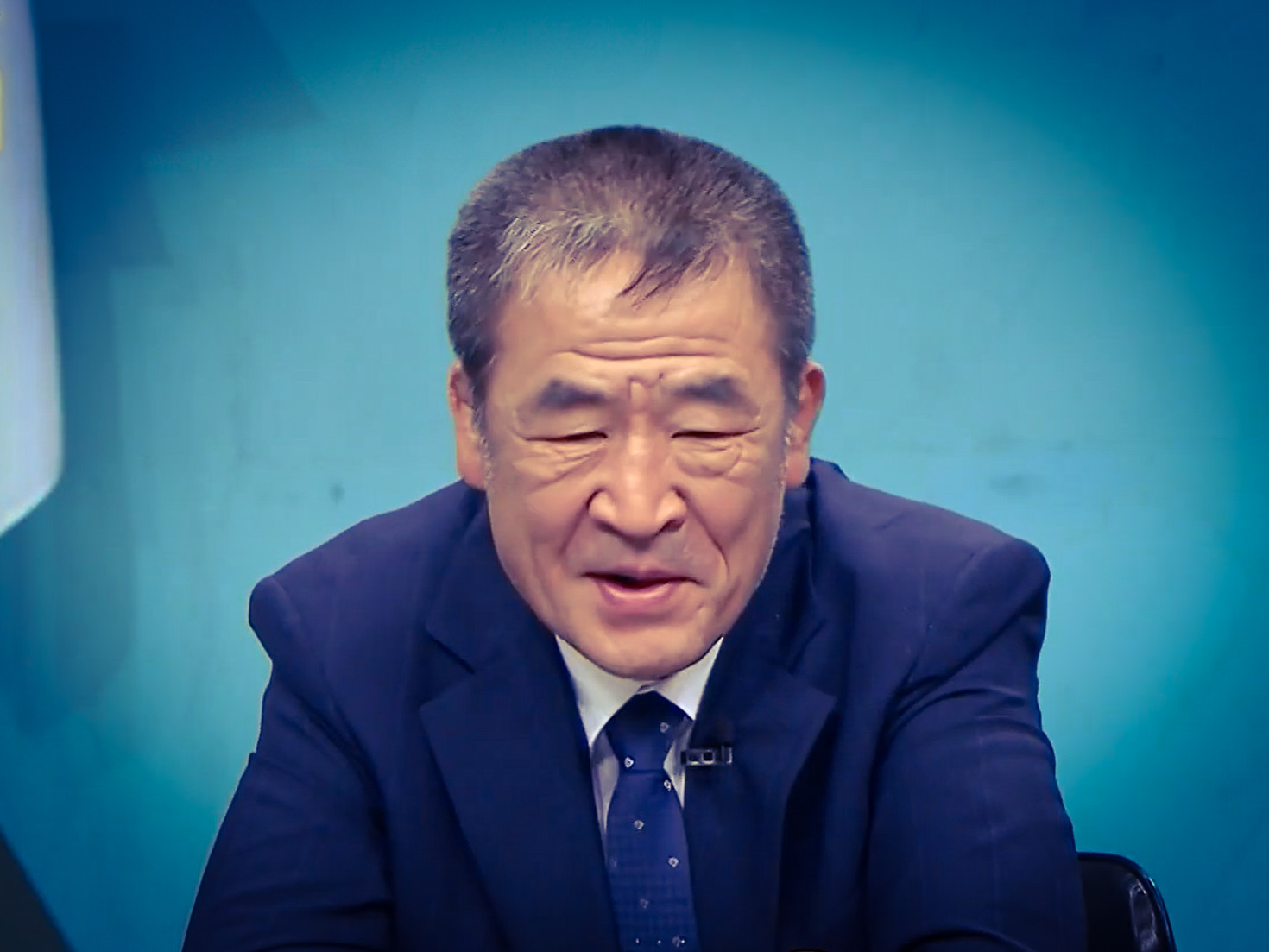
Born on July 12, 1967 in Pyongyang (North Korea), Lee Chang-soo/Chang Su Li won a world medal in the U71kg category in 1989. He passed away on January 20, 2026 at the age of fifty-eight. His singular trajectory was poorly known in our latitudes. A memorial injustice now rectified by the ever-perceptive Oon Yeoh who, from Malaysia where he teaches judo to the fortunate members of the Kuala Lumpur Judo Centre, never misses an opportunity, under his Judo Crazy banner, to highlight the discipline and those who embody it. We are publishing with his permission the following tribute. – JudoAKD#048.
The name “Lee Chang-soo” might not ring a bell. But if you say, “Chang Su Li”, judo fans from the late 1980s and early 1990s would know exactly who you are talking about. Lee, 58, who died of a heart attack on January 20, was a rising star in world judo in 1989 when he suddenly disappeared off the judo map. Little of his tragic judo story in known outside of high-level judo circles in North and South Korea.
In the 1989 World Championships in Belgrade, there were two players that were creating a sensation. One was Japan’s then-rising star Toshihiko Koga, who had come in third in the 1987 World’s and (surprisingly) did not medal in the 1988 Olympics. He was determined to make his mark in Belgrade.
The other was North Korea’s Lee (AKA Chang Su Li), who had blitzed his way through the preliminary rounds, defeating opponents Kieran Foley (IRL) and Olivier Cantieni (SUI) with a dazzling display of judo throws and groundwork. Lee then faced the reigning Olympic Champion Marc Alexandre (FRA) in the quarterfinal but he wasn’t fazed by that. He got a submission from the Frenchman with a dynamic rolling strangle that he made look easy. This set him up for a highly-anticipate semifinal against Koga.
Lee had fought – and lost – to Koga twice before. The first time they met was in the preliminary rounds of the 1986 World Junior Championships where Koga pinned him. The second time was in the bronze medal match of the 1987 Senior World Championships where Koga threw him with ippon-seoi-nage for ippon.
Interestingly, both Koga and Lee had fought, and lost to, Mike Swain of the USA in that competition (Swain went on to become World Champion that year).
Lee’s fighting style had evolved so much over the past two years ago that live commentator Neil Adams thought it was a different Korean player that Koga had defeated in 1987. Noting that Koga had fought a Korean for a bronze in the previous World Championships, Adams erroneously said: “… this one looks (like) a different kettle of fish.”
Their semifinal match was a tough one with lots of heavy gripping. Lee’s strong and awkward left-handed stance prevented Koga from doing his trademark ippon-seoi-nage. But Koga eventually threw him for ippon with an innovative one-handed morote-seoi-nage that stunned the world. “Goodness me, I don’t think I’ve ever seen a technique like it!” remarked live commentator Adams. Lee was seen smiling as he left the mat because he knew how good a throw that was.
Lee went on to win a bronze medal throwing Hungary’s Bertalan Hajtos with uchimata within a few seconds from the start of the match.
His good showing in Belgrade made Lee a bit of a hero back home in North Korea. At his peak, Lee enjoyed all the privileges of an elite athlete in a Stalinist country, from a Mercedes Benz car, the prized membership of the Workers Party of Korea, and financial rewards. “Those who won any medal were given an apartment,” Lee told Reuters.Many international judo fans expected to see more of Lee at international events, but he suddenly disappeared.
There is little coverage of this but both Lee and Koga competed in the 1990 Asian Games in Beijing. And both lost to the same South Korean: Chung Hoon. This time, it was Lee who would make it to the final. But there he lost to Chung, and this completely upended his world. Lee actually did better than Koga at this event, getting a silver compared to Koga’s bronze. But losing to a South Korean was unacceptable to the authorities back home, where he was forced to do hard labor because of his defeat to Chung.
Lee’s banishment was reversed when Jang Song-thaek (the uncle of North Korea’s leader Kim Jong-un), who was in charge of the sports department, decided to give him a second chance. “Athletes liked Jang Song-thaek very much,” Lee told Reuters.
Lee was chosen to compete in the 1991 Barcelona World Championships at the new weight of -78kg. He won his first match and lost his second one. While in Spain, Lee chose to defect, first to Germany, then on to South Korea.
In a TV appearance there, Lee revealed: “After losing to South Korean athlete Chung Hoon during the Asian Games and winning a silver medal, I was forced to mine coal all day in a 670-meter underground shaft with my back bent. Being sent to the coal mine for a single loss made me feel betrayed. Although I could survive as a meritorious athlete, I felt I could not have children.”
According to Al-Jazeera, which did a short documentary on Lee, his then-pregnant girlfriend was forced to have an abortion.
Unable to punish Lee directly, the North Korean regime punished his family, sending his older brother to a lumber camp where he died and the rest of his family to a coal mine. “There’s nothing I can do for now,” Lee told Reuters.
One year after defecting to South Korea, Lee married a Taiwanese judoka and they had three sons, all judokas coached by Lee himself. “I want to show them the man that was so tortured has raised his sons this well and will not just stand down,” Lee told Reuters. “That is a start of my revenge.”
Lee, who never got the chance to compete in the Olympics (North Korea did not compete in the 1988 Seoul Olympics and he had defected before the 1992 Olympics), wanted one of his sons to win an Olympic gold. “I will make my sons win an Olympic gold medal and make North Korea the one who regrets,” he told Reuters in 2012.
One of his sons actually became a top-level competitor. Lee Moon-jin won gold at the 2019 Abu Dhabi Grand Slam where he countered Georgia’s Luka Maisuradze for ippon in the final. Moon-jin, however, did not go for the 2020 Olympics (Lee Sungho was the -81kg representative).
The late Lee had worked as a coach for the Korea Racing Authority as well as for the South Korean national team. He stepped away from coaching after the 2020 Tokyo Olympics. – Original text reproduced with the kind permission of Oon Yeoh (Judo Crazy), winter 2026. Opening picture: ©Oon Yeoh Archives/JudoAKD.
A French version of this article is available here.
More articles in English:
-
- JudoAKD#001 – Loïc Pietri – Pardon His French
- JudoAKD#002 – Emmanuelle Payet – This Island Within Herself
- JudoAKD#003 – Laure-Cathy Valente – Lyon, Third Generation
- JudoAKD#004 – Back to Celje
- JudoAKD#005 – Kevin Cao – Where Silences Have the Floor
- JudoAKD#006 – Frédéric Lecanu – Voice on Way
- JudoAKD#008 – Annett Böhm – Life is Lives
- JudoAKD#009 – Abderahmane Diao – Infinity of Destinies
- JudoAKD#010 – Paco Lozano – Eye of the Fighters
- JudoAKD#011 – Hans Van Essen – Mister JudoInside
- JudoAKD#021 – Benjamin Axus – Still Standing
- JudoAKD#022 – Romain Valadier-Picard – The Fire Next Time
- JudoAKD#023 – Andreea Chitu – She Remembers
- JudoAKD#024 – Malin Wilson – Come. See. Conquer.
- JudoAKD#025 – Antoine Valois-Fortier – The Constant Gardener
- JudoAKD#026 – Amandine Buchard – Status and Liberty
- JudoAKD#027 – Norbert Littkopf (1944-2024), by Annett Boehm
- JudoAKD#028 – Raffaele Toniolo – Bardonecchia, with Family
- JudoAKD#029 – Riner, Krpalek, Tasoev – More than Three Men
- JudoAKD#030 – Christa Deguchi and Kyle Reyes – A Thin Red and White Line
- JudoAKD#031 – Jimmy Pedro – United State of Mind
- JudoAKD#032 – Christophe Massina – Twenty Years Later
- JudoAKD#033 – Teddy Riner/Valentin Houinato – Two Dojos, Two Moods
- JudoAKD#034 – Anne-Fatoumata M’Baïro – Of Time and a Lifetime
- JudoAKD#035 – Nigel Donohue – « Your Time is Your Greatest Asset »
- JudoAKD#036 – Ahcène Goudjil – In the Beginning was Teaching
- JudoAKD#037 – Toma Nikiforov – The Kalashnikiforov Years
- JudoAKD#038 – Catherine Beauchemin-Pinard – The Rank of Big Sister
- JudoAKD#039 – Vitalie Gligor – « The Road Takes the One Who Walks »
- JudoAKD#040 – Joan-Benjamin Gaba and Inal Tasoev – Mindset Matters
- JudoAKD#041 – Pierre Neyra – About a Corner of France and Judo as It is Taught There
- JudoAKD#042 – Theódoros Tselídis – Between Greater Caucasus and Aegean Sea
- JudoAKD#043 – Kim Polling – This Girl Was on Fire
- JudoAKD#044 – Kevin Cao (II) – In the Footsteps of Adrien Thevenet
- JudoAKD#045 – Nigel Donohue (II) – About the Hajime-Matte Model
- JudoAKD#046 – A History of Violence(s)
- JudoAKD#047 – Jigoro Kano Couldn’t Have Said It Better
- JudoAKD#050 – Hermann Monne – Burkina, a Land Already Peopled
Also in English:
- JudoAKDReplay#001 – Pawel Nastula – The Leftover (2017)
- JudoAKDReplay#002 – Gévrise Emane – Turn Lead into Bronze (2020)
- JudoAKDReplay#003 – Lukas Krpalek – The Best Years of a Life (2019)
- JudoAKDReplay#004 – How Did Ezio Become Gamba? (2015)
- JudoAKDReplay#005 – What’s up… Dimitri Dragin? (2016)
- JudoAKDReplay#006 – Travis Stevens – « People forget about medals, only fighters remain » (2016)
- JudoAKDReplay#007 – Sit and Talk with Tina Trstenjak and Clarisse Agbégnénou (2017)
- JudoAKDReplay#008 – A Summer with Marti Malloy (2014)
- JudoAKDReplay#009 – Hasta Luego María Celia Laborde (2015)
- JudoAKDReplay#010 – What’s Up… Dex Elmont? (2017)
And also :
- JudoAKDRoadToLA2028#01 – Episode 1/13 – Summer 2025
- JudoAKDRoadToLA2028#02 – Episode 2/13 – Autumn 2025
- JudoAKDRoadToLA2028#03 – Episode 3/13 – Winter 2026
JudoAKD – Instagram – X (Twitter).