[FRA – Cet article est une traduction en anglais d’un article paru au printemps 2017 sur le site Internet du bimestriel français L’Esprit du judo.
ENG – This article is an English translation of an article published in spring 2017 on the website of the French bimonthly magazine L’Esprit du judo.]
As a complement to the portrait of Polish judoka Pawel Nastula published in EDJ69 (August–September 2017) — a version of which is available online in English — and to the video bonus available below, here is a look back at a final training camp for part of the Polish national team ahead of the European Championships in Warsaw. It took place last April, just days before the event. A travel diary that reads like an orthographic nightmare — or a waking dream for Scrabble addicts, so heavily loaded with –w, –x, –k, –y and –z are the local surnames — featuring a melancholic young mother, a naturist sauna, a grumpy priest, a toddler mascot, grandparents smashing winners at ping-pong, and early-morning hill runs in the icy dawn. A look back at “a few kilometres of life in pink” (“des kilomètres de vie en rose”) that speak of yesterday, tomorrow and, above all, today. – JudoAKDReplay#011.
©Anthony Diao/JudoAKD
Thursday, 13 April 2017
It is nine o’clock sharp in the conference room of the Olympic Sports Centre in Zakopane. In a week’s time, Poland will host its first senior European Championships since Wrocław in 2000. We are at the Slovakian border, 400 km south of Warsaw, at the foot of the ski-jump where Kamil Stoch — double gold medallist at the last Sochi Winter Olympics — trains. Along with the spots of Giżycko in the north-east, Cetniewo on the Baltic coast, Spała in the heart of the country, Szczyrk on the Silesian south side and Wałcz in western Pomerania, this town at the foot of the Tatra mountains is one of the six headquarters of contemporary Polish judo…
At the appointed hour, a good number of the 144 seats in the amphitheatre are filled with magenta and white tracksuits. All the European squad members have gathered for the official team presentation, with the exception of O100kg Maciej Sarnacki. The thirty-something self-taught judoka preferred to stay home in Olsztyn, at the other end of the country, to train with his father Wojciech — a sign ahead of others of the deep divisions that make up the daily life of this squad, of which the mismatched tracksuit tops from one “clan” to another are just an early warning sign.
The usual pleasantries, rallying speeches, declarations of intent and official photos done, the whole group soon heads down to the venue’s basement for a makeshift training session designed primarily to give the cameramen and photographers present a chance to capture some shots for their respective outlets. Net across the ceiling, flickering neon lights, sepia press cuttings on the wall — the 330 square metres of worn tatami bear witness to generations of glorious fighters who have passed through here.
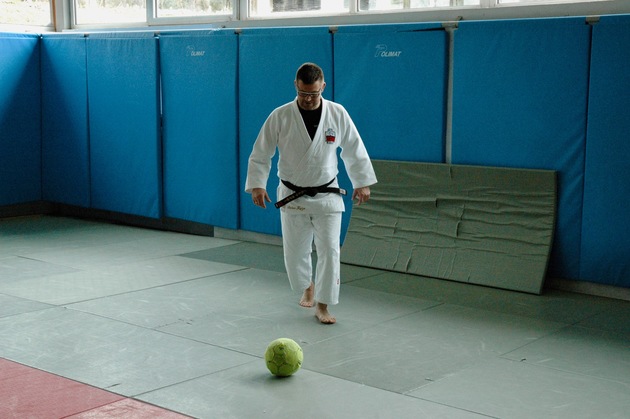
Today is a rest day after a heavy sequence that began a few days earlier at the international training camp of their Hungarian neighbours in Tata. At 10:30, Pawel Nastula’s white Toyota coupé with tinted windows follows the blue Vivaro of Artur Klys — a nine-seater Opel of the kind driven by most club coaches around the world, its odometer reading “about 40,000 km a year”, according to its experienced driver. Destination: the Torna Bania thermal baths, about twenty minutes away, where, surprisingly, swimwear is banned at the entrance to a (mixed!) area that includes a sauna and a pool with rust-coloured, mineral-rich water.
Another pool, outdoors, offers an unobstructed view of a distant farm chimney belching thick black smoke. “This industrial and domestic pollution is a recurring problem in this region,” laments Artur Klys, who has taken over from his partner Katarzyna to accompany their fearless Bronek, three and a half years old, on the venue’s vertiginous water slide.
Based in Kraków, Artur and “Kate” — or “Kasia”, depending on the day — have been married since 2009. He was the U66kg of the heroic Polish university team at the World University Championships in December 2006. She, under her maiden name Pilocik, reached the final of the 2007 Belgrade European Championships against France’s Emane, before doing it again five years later under her married name against the Dutch Bosch, and then taking bronze at the 2014 Chelyabinsk World Championships against another Dutch judoka, Kim Polling — just 426 days after giving birth to their son Bronisław [cf. EDJ68].
Stark naked in the sauna and then the bath where men and women mingle in perfect calm, Pawel — knock-kneed and with a battered nose — closes his eyes and savours the invigorating jets against his aching vertebrae…
Drizzle and all, the return to the cafeteria of the Zakopane Olympic Centre is made in a state of advanced torpor, despite the noise of the cartoon Bronek is watching on his mum’s smartphone. During the meal, discreet folded notes circulate at the coaches’ table. These are the morning blood test results, used to assess the athletes’ deficiencies seven days before their goal — hence the plasters on earlobes or fingertips that most of the starters are sporting.
After eating, Zuzia Komarek, one of the sparring partners for the U57kg Anna Borowska, takes young Bronek to the local cinema while the starters take a nap. “He’s used to it,” Artur says fondly, walking them to the car park, “because he’s been travelling with us since he was six months old. The girls adore him and take turns spending time with him. He’s part of the team now.” The rest of the day passes in socks-and-sandals mode, mostly in the rooms, since “rest is part of training.”
Friday, 14 April
At 7:30, Artur Klys and the sparring partners head out for a run in the icy park next to the COS. A daily challenge for the coach, but a matter of honour in his approach to motivating the troops. In another life, Artur underwent an operation on his right knee and five operations on his left knee, including two cruciate ligament procedures.
Fifth at the 2006 European Championships but injured in the final stretch before the 2008 Olympics, he retired for the first time at 26 — both to listen to his body and to seize a professional opportunity: “The headmaster of the school where I wanted to teach had asked me to choose between my high-level career and the post.” It was also around that time that he had grown closer to “Kate”, four years his junior, who had caught his eye at their very first joint training camp — he was 19 and she 15 when he told his friends that “that girl would be [his] wife.” Despite a brief comeback in 2009 and 2010, his body reminded him of its limits again and forced him into early retirement…
At breakfast, Pawel Nastula — perpetual toothpick in the corner of his mouth, often with his back to the room to avoid some of the demands that come with being the local Usain Bolt — asks after several top French judokas from his generation, with Djamel Bouras and his great rival Stéphane Traineau at the top of the list. As snippets of conversation build up, the Polish legend increasingly resembles the character tormented by Louis de Funès in Hibernatus: having gone from the pinnacle of world judo to the parallel peaks of MMA, the “Revenant” seems to be emerging from a long night.
At the next table, Bronek — named in homage to Bronisław Wolkowicz, beaten by Japan’s Koga in the second round of the Atlanta Olympics — eats, as usual, standing on his chair, despite being repeatedly told off by Artur’s parents. Artur has in fact stepped away to bring a plate of ham to his room for his dog Bimba.
A surprise when the day’s programme is announced. Part of the national team trains from 9:00 to 10:30, the other part from 11:00 to 12:30, and it is not a boys/girls split since both groups are mixed. “I know it seems absurd but that’s how it is — we don’t have the same programmes,” comments Artur, lowering his voice a few seconds before opening the first session.
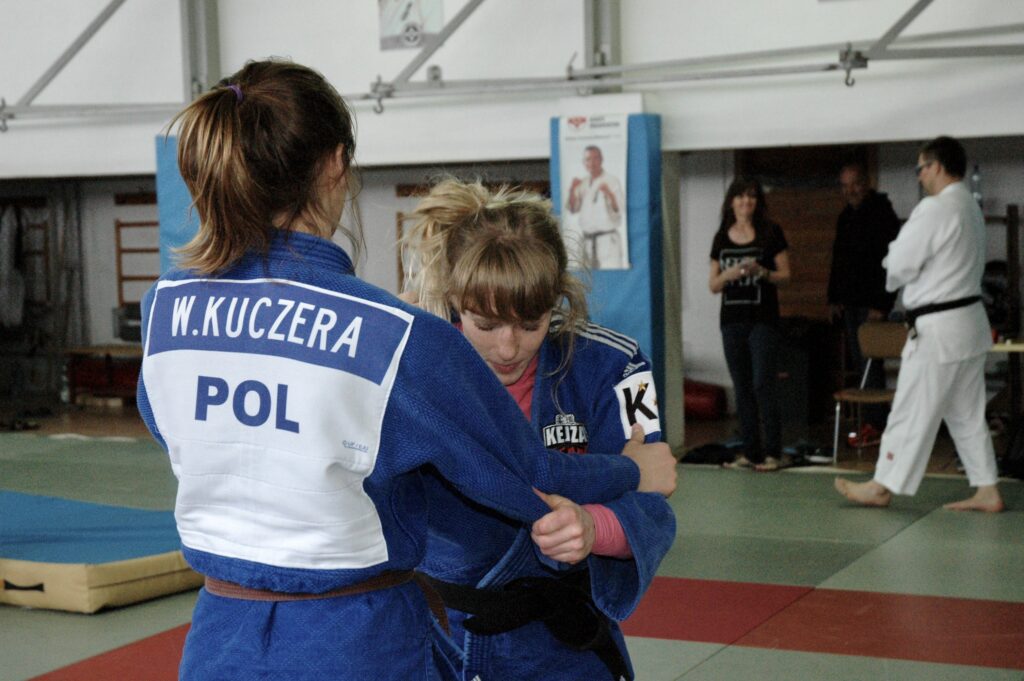
His group, which he co-runs with Pawel and Artur Kejza, includes four starters for the upcoming European Championships: his wife Katarzyna in the U70kg, 2014 junior European champion at U57kg Anna Borowska, U63kg Karolina Talach (a transfer from Gdańsk and winner of the Zagreb Grand Prix in 2016), and the promising and determined U90kg Piotr Kuczera — third at the Europeans in 2016, having notably beaten Greece’s Iliadis and Serbia’s Kukolj, and who had lost only once in three international outings at that point in 2017 — against France’s Gobert in Casablanca — while winning the Rome World Cup by beating top names such as Russia’s Igolnikov, 2016 junior European champion, and Korea’s Gwak, 2015 world champion and Rio bronze medallist…
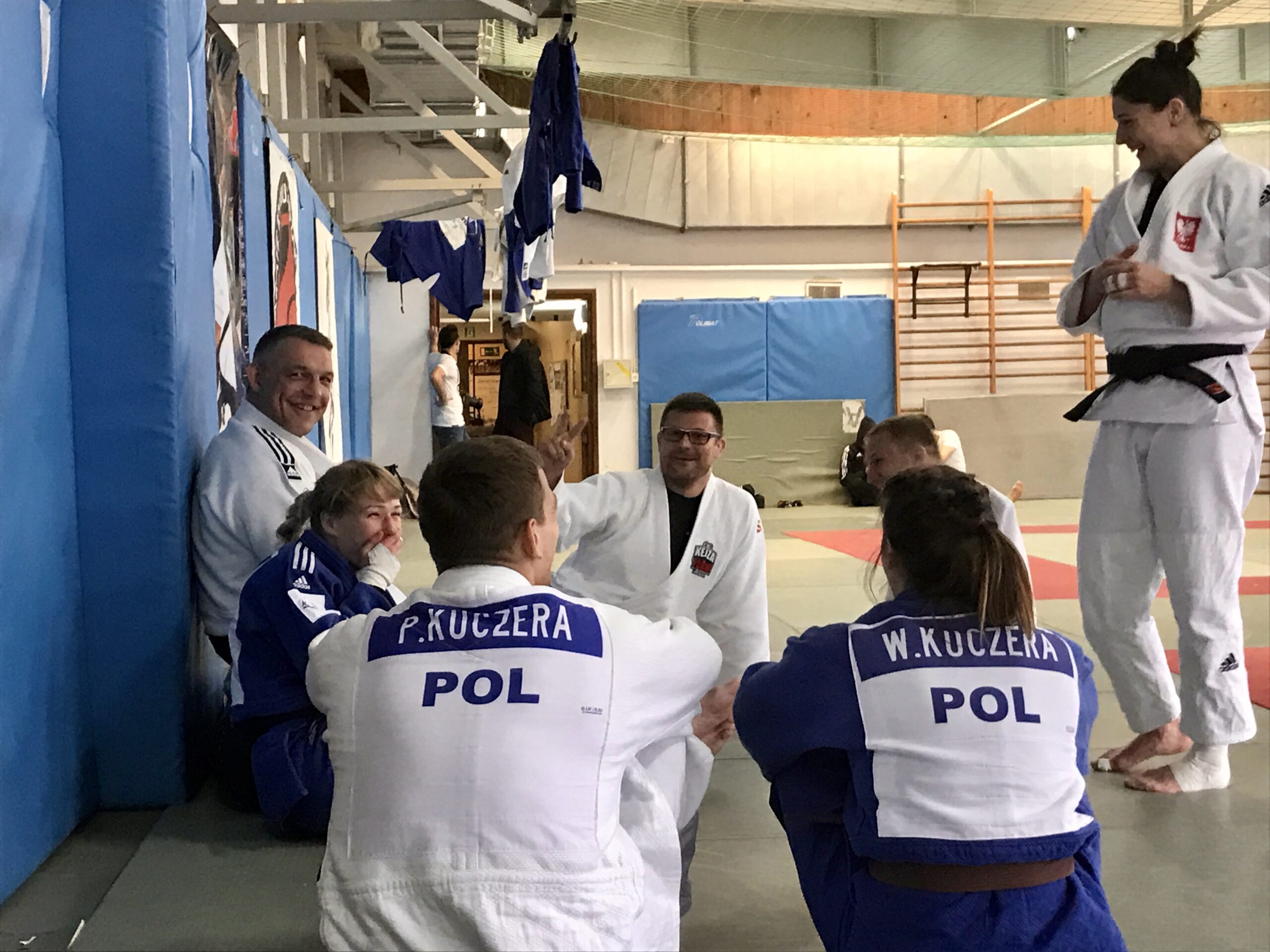
At this stage of the preparation, everyone has their dedicated sparring partner, with two understudies on rotation as backup. The warm-up consists of interval exercises and speed-ladder drills. It ends with a fairground-style game, two by two: try to slap the other person while protecting your own cheek with one hand. Quite effective for working on footwork, coordination and the camaraderie of the Terence Hill and Bud Spencer variety. The whole session is filmed by a local TV channel preparing a documentary on Pawel, who is hanging back this morning as he “prefers to be cautious” four weeks after a shoulder arthroscopy. At 11:00, the second group — the larger one — runs through rondades, flips, headsprings and uchi-komi.
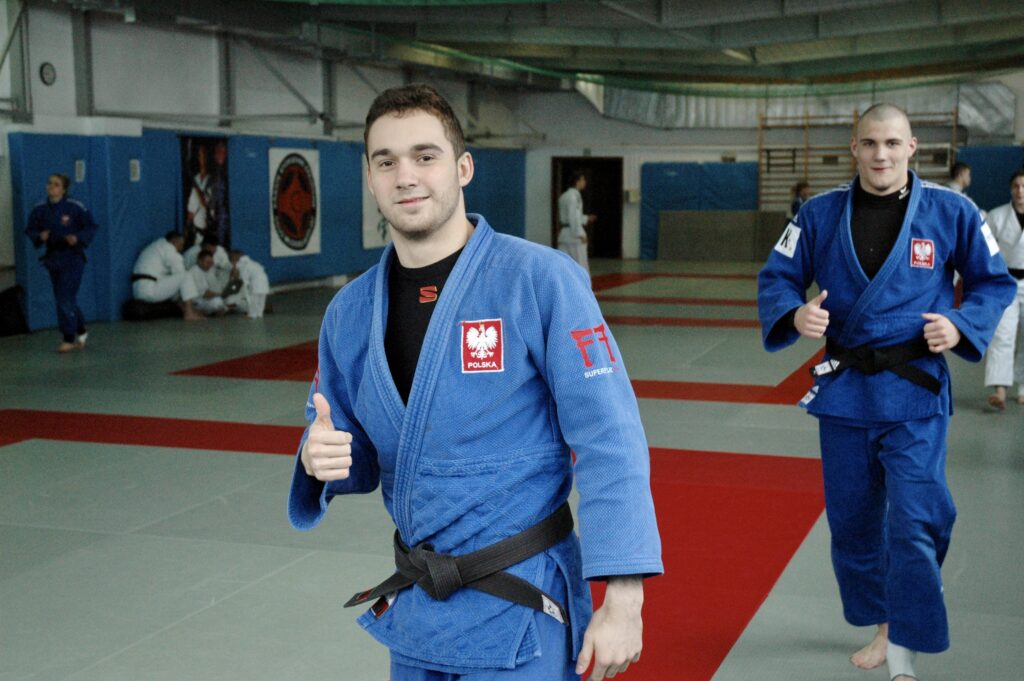
At lunchtime, Artur answers questions for Polish TV as part of the documentary on Pawel Nastula. Bronek makes a cheered appearance at the window with his grandfather, while Pawel — waiting any minute for his wife Joanna and their younger daughter Monika to arrive by road for the weekend (the eldest, Marta, will arrive separately with her boyfriend) — shows a video on his smartphone of himself and his daughters in his sports coupé: sunglasses on, cap tilted, elbow out the window, Rae Sremmurd blasting — Pawel and his Pawelettes going hard. Later, he will make the most of the quiet afternoon to go to the gym — an ethic of effort that, curiously, does not stop him from taking the lift rather than the stairs to his room on the second floor every single day. “It’s to spare my knees,” he smiles, pressing the call button…
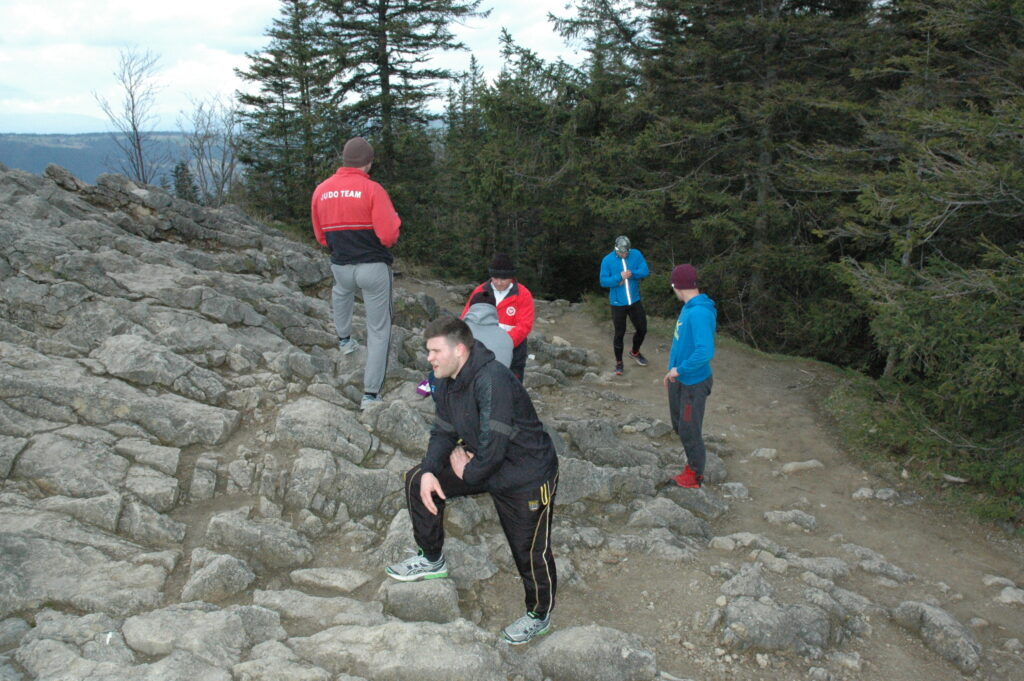
At 16:00, the second group — the largest in terms of squad numbers — sets off for a “brisk oxygenating walk.” The starters stroll hands in pockets in recovery mode, while the substitutes tackle a steep twenty-minute sprint ascent, past exposed roots, stone-carved staircases with 180° turns and pebbles skittering off into the void under every footfall. At the top, U100kg Mariusz Krüger and U66kg Mateusz Garbacz collapse on the rocks, wrecked by the gradient and the ferocity of the effort, while their coach notes pulse rates and takes blood samples by pricking his athletes’ fingertips.
Łukasz Błach — this 33-year-old U81kg judoka who missed qualifying for the Rio Olympics by one place, and whose father Wiesław is one of the four sports directors of the European Judo Union — reads these landscapes he knows like the back of his hand from countless training retreats: “That’s the Sleeping Knight mountain,” he says, pointing into the distance at a cliff not unlike, in France, the Nivolet cross as seen from the main roads of Chambéry. “Look at the shape — similar, isn’t it? In the old days we used to climb barehanded to the big cross you can see at the summit. Door to door, it was a three-hour run from the training centre.”
The conversation in comparative judo continues as the descent back to the training centre unfolds, in an increasingly biting cold. That evening, there is a chance to swap French and Polish magazines with Łukasz and Marian Talaj — Olympic bronze medallist in Montréal and an experienced coach ever since. The two men share a meal with another coach, Piotr Sadowski, a seven-time Polish champion some twenty years ago, whose apparently stern expression — often encountered on the circuit — suddenly reveals itself like an epiphany: his plate finished, he patiently spoon-feeds Andrzej, his 29-year-old son with a motor disability, whom he carries on his hip on the stairs and whose wheelchair he makes a point of pushing right up to the edge of the tatami at every session.
At 22:00, the hotel’s internet goes down and a cathedral-like silence soon reigns in the deserted corridors. Only the judogis drying on clothes horses outside the bedroom doors attest at that hour to a human presence in the building.
Saturday, 15 April
Glacial cold for the morning run, which Angel — fittingly named — the devout U66kg finishes well ahead of everyone else. At 9:30, Marian Talaj takes charge of the last session for the second group. “I then have to drive 800 km home to the Baltic coast, before coming back next Wednesday in Warsaw for the European Championships,” smiles the 66-year-old 8th dan.
At 11:00, it’s on to a more modern wing of the building and the start of training in the second dojo, whose tatami are said to be harder and therefore less suitable for nage-komi. Rafał Binda, the attentive physiotherapist, comes to greet the whole group before hitting the road to rush home to Wrocław to his sick daughter’s bedside.
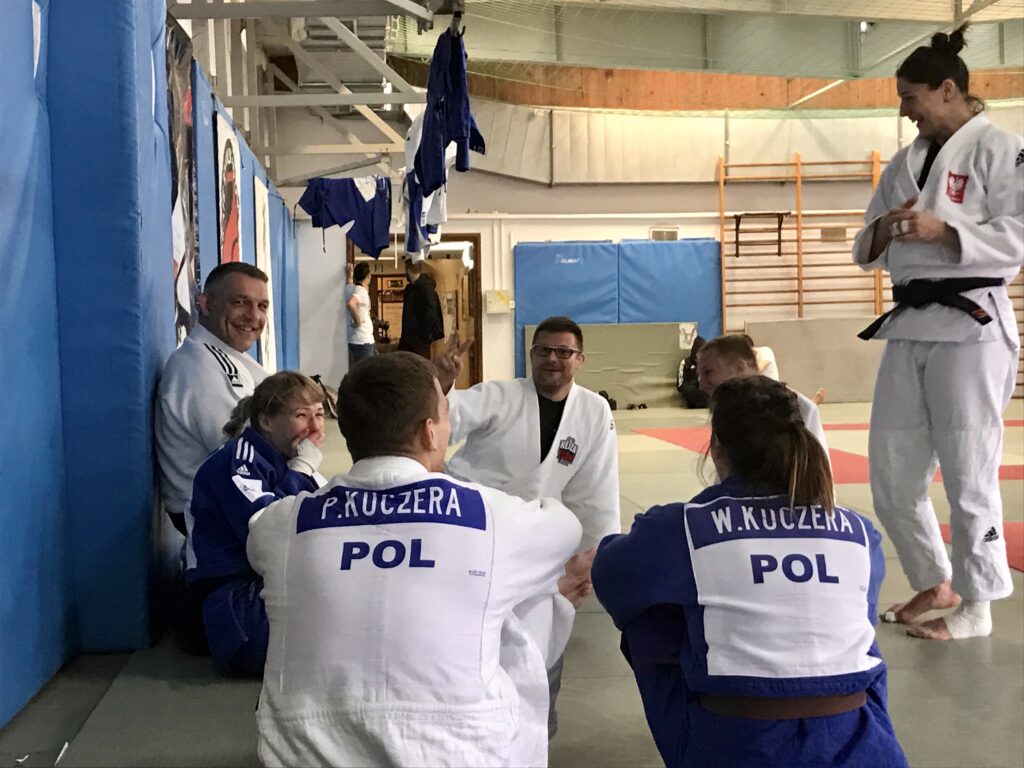
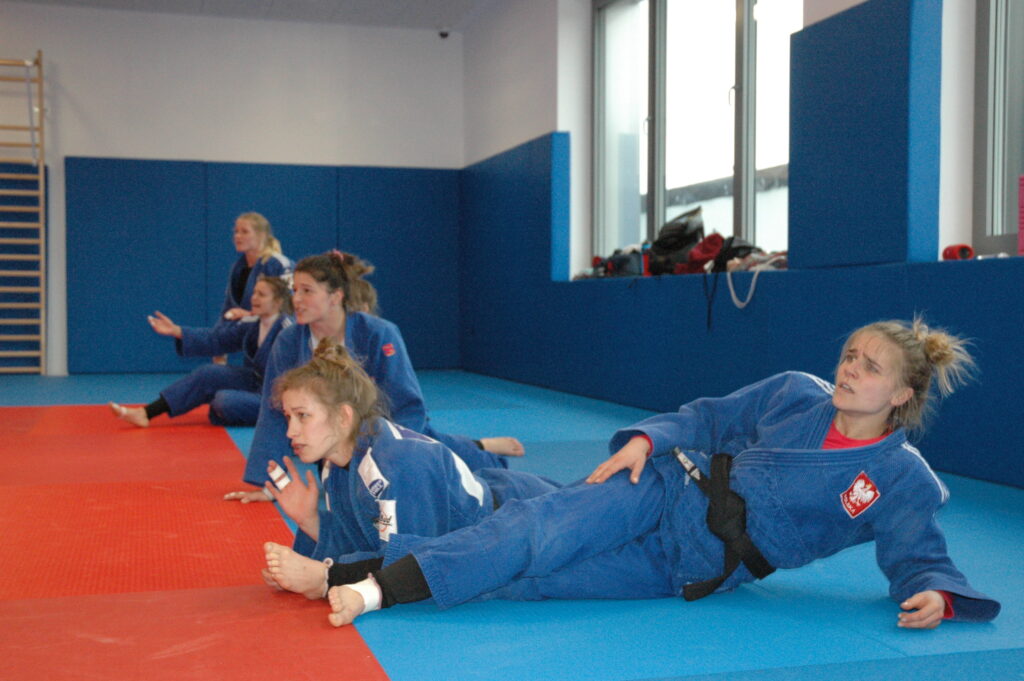
The atmosphere is studious but there’s non-stop banter, led by the booming voice of Artur Kejza who runs the session. In the team-building games, the girls more than hold their own against the boys, and the losers get a playful smack administered with good cheer by the winners. Standing against the wall, hands at collar height, silent and lost in thought, Pawel occasionally acts as DJ, swapping his usual melancholic playlists (“Chi mai” by Ennio Morricone or Robert Mendoza’s piano/violin covers) for “I Feel It Coming” by The Weeknd and Daft Punk, or a local hip-hop track that makes his portable Bose speaker rattle. At 11:57, the moment he takes the floor, the session closes to outsiders.
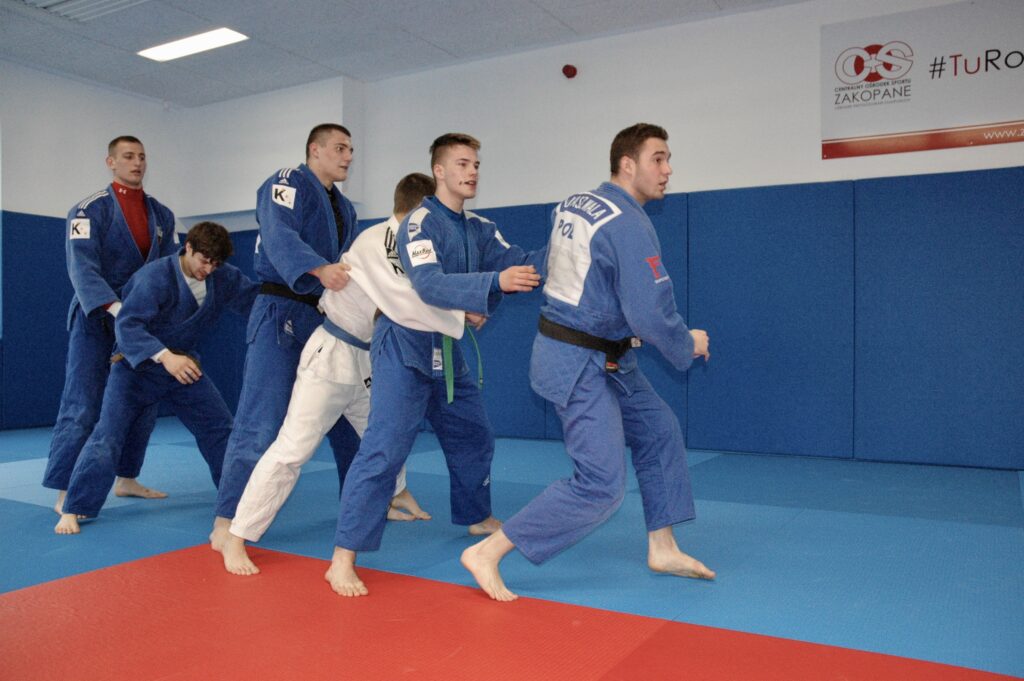
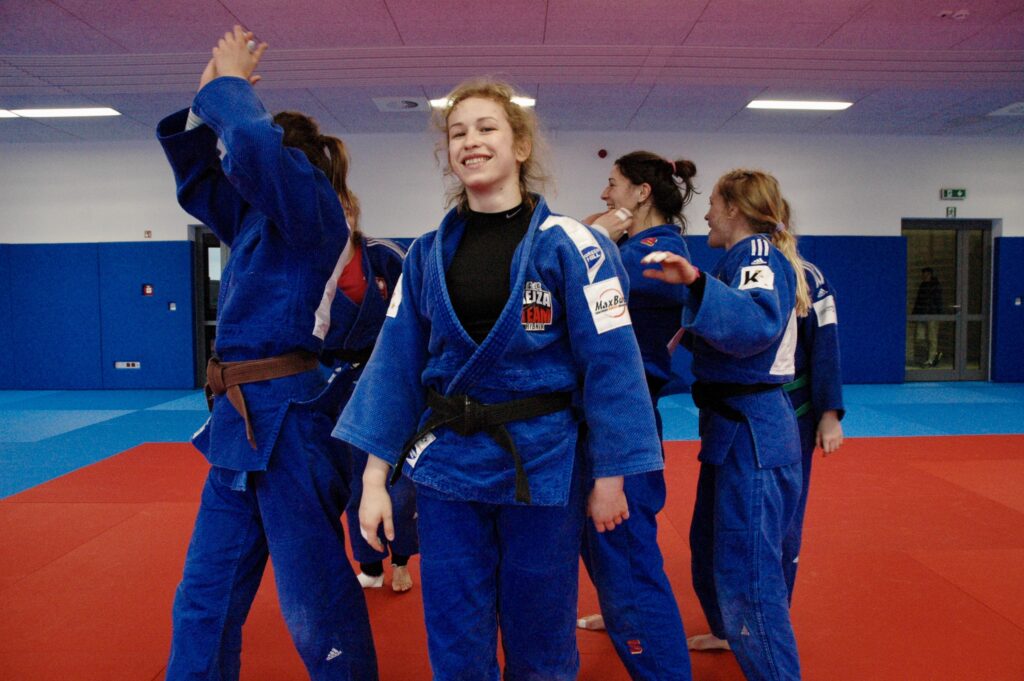
At the 1 p.m. meal, new faces have arrived. These are the partners or parents of the judokas who are staying on. Easter is this weekend, and in this deeply Catholic land, that is sacred. At 2:15 p.m., the group sets off on foot to a wooden church 800 metres away. Angel and a few parents kneel to pray while Łukasz Wała and Pawel Kejza — Artur’s son, whose first name and age (18) speak to the long friendship between the two fathers — remain outside. The two juniors confess with a polite but firm smile to being “rather resistant to all that God stuff”…
Inside, in a setting straight out of an Andrei Tarkovsky film, the priest sprinkles holy water on the pisanka — those baskets of painted eggs, fruit and cakes that will make up the holy breakfast menu the following morning.
During the group photo session on the church steps, surprise! A passing priest, asked by Artur Klys to take the photo, bluntly refuses, claiming without ceremony to be “in a hurry.” Enough to shake anyone’s faith? Not for long, as it turns out, since the next passerby Artur hails proves to be… an old friend of his, whom he clearly hasn’t seen in years. “We’re never going to get this photo taken,” quips Pawel Nastula, who knows a thing or two about posing and photo shoots.
On the way back, some head to the hotel, others wander along Zakopane’s pedestrian street, before returning to the COS where a screening of Ron Howard’s Cinderella Man with Russell Crowe is organised for the evening to keep the troops focused on the goal. Pawel, meanwhile, will quietly slip away with his wife Joanna for a romantic stroll through corners of the village that only they know, having frequented the place for so long.
Sunday, 16 April
The snow that fell heavily overnight gives the low sky of this Easter Sunday the colours of Christmas. No run, but a lie-in and a breakfast that starts at nine. The guests are dressed up: foundation for the girls, immaculate white shirts or pressed polos for the boys. At the end of the table, Pawel Nastula delivers a patriarch’s speech in the ever-hushed atmosphere. Artur Klys’s mother makes sure everyone helps themselves to their slice of sausage and the fruit blessed the day before by the priest.
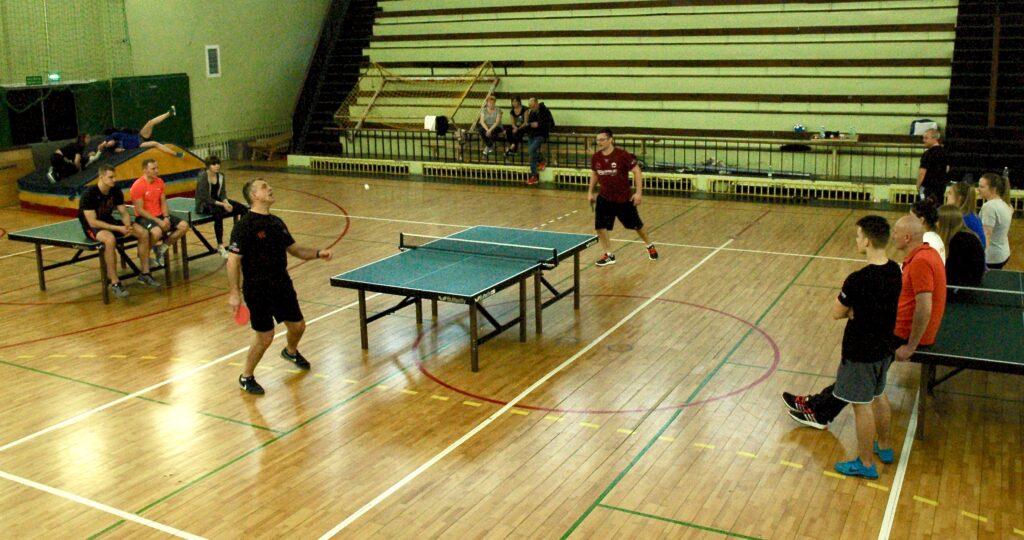
At 11:00, it’s off to the old gym at the north end of the COS for a family ping-pong tournament. Groups of four, then three, semi-finals, final. The coaches challenge their athletes — the heavyweight semi-final between Artur Kejza and Piotr Kuczera goes the way of the mischievous sensei, leaving the six-foot-three judoka — who will go down in history as the last European to have beaten Ilias Iliadis in individual combat — to stew for a moment.
Before each serve, Pawel Nastula moistens his fingers and then the two sides of his bat — red first, then black — adopting the swaying but effective style of a right-handed McEnroe, the other arm hanging almost dead at his side. One moment says more about the mindset of Poland’s last Olympic judo champion than any speech: leading 10–0 in a game going to the best of eleven, and seeing his opponent’s final return go way wide, he prefers to catch the ball in his bare hand and thus let the opponent get back to 10–1, rather than humiliating him with an 11–0…
At the next table, grandfather Klys unleashes Air Jordan-style smashes with legs wide apart despite his former U60kg frame. “He’s always loved ping-pong,” smiles his red-haired wife, who is no slouch herself when it comes to putting her foot down against the younger women in the group.
Outside, the snow keeps falling. Bronek rolls around on the gym mats with Wioletta, Piotr’s little sister with a loud and contagious laugh. The final is played out in a deciding set before a laughing but focused gathering. Artur Kejza wins by the narrowest of margins over a crestfallen Pawel Nastula — “he hates losing,” his wife would confide later, having been the first to go and console him.
The afternoon is a long-reserved slot for quiet, extended conversations in a corner of the deserted refectory. First Katarzyna — when Bronek deigns to let her breathe — then Pawel Nastula, whose two-hour interview in the company of Artur Klys reaches peaks of non-verbal communication. By turns distant through the bay window lashed by snow showers, by turns head-on in the manner of Christopher Lambert in Greystoke, his steel-grey dragon’s gaze, back from so many battles, silently completes what words cannot express [cf. EDJ68 and EDJ69].
At 9:30 p.m., a hushed confab in the corridors of the residence. The idea is to find a spot out of sight of the inside cameras. The plan? Push the sofas around a coffee table and toast Easter, good encounters, and life itself. Average age? Forty, with the athletes “absolutely needing to rest.”
As Artur Kejza pulls beers from his backpack and pours heavy shots of Ballantine’s for the guests (rough estimate: four to five measures of whisky to one of soda), the former U86kg digs out one by one the most embarrassing stories about his old room-mate Pawel Nastula: the paintball game where he tried to hide behind a tree but got his protruding backside riddled with shots; the photo in a black dad-pyjama buttoned right up to the collar and impeccably ironed, completed by a pair of regal slippers that the mock-friend won’t miss a chance to zoom in on with his smartphone and show around… Every time the former Olympic champion — aching all over from the morning’s ping-pong tournament — tries to get a word in, the booming voice of Piotr Kuczera’s coach goes up an octave: “By the way, remind me — who was it that won the ping-pong tournament this morning?”
By the third round, Bronek runs past in the corridor with a water pistol in hot pursuit of the girls from the team who were playing cards in a back room. After putting him to bed and toasting just in time for the fourth round, his father entertains the table in turn and opens his laptop to show videos of his sailing fishing trips on the Baltic Sea with his best friends. By the fifth round, Artur’s parents return from a stroll into town with Bimba and wish everyone good night. By the sixth, Artur is joined by Martin, one of his closest friends, a local snowboarder he grew up with. The two men are each other’s sons’ godfathers. By the eighth round, while the Kuczera parents produce a smoked ham and homemade bread, Martin strongly recommends going the next day to a village a few kilometres away to watch the annual parade of skiers in period costume but well and truly drunk — a local curiosity. In passing, the new two-litre bottle of Ballantine’s will have lasted exactly six glasses — chronometrically, between the red wine and the tenth round of beer. Like an old fox scenting a trap, Pawel Nastula feigns having something to fetch from his room to slip away quietly and not return, leaving his wife to hold the fort for a few minutes before going to join him.
For the others, every attempt to dodge the carnage and creep away discreetly is firmly repressed by Artur Kejza. The hand of the fifth-placed finisher at the 1997 Europeans lands firmly on a shoulder in Doctor Spock fashion: “You’re not going to bed tonight.” Sitting cross-legged at the foot of the coffee table, Kuczera senior spends twenty minutes trying to operate the scissors function on the Swiss Army knife he is using to open beer bottles one after another, while his wife vapes and cries with laughter at Artur’s quips. Above all, an astonishing truth emerges: as the evening wears on, even the French guests gradually get the impression that they have always understood Polish perfectly…
Monday, 17 April
After that collective evening of heavy dinking — pardon, the “friendship drink” — and a short night ended face-up, shoes still on and starfished on unmade beds, making it to the entrance hall for the 7:30 run in the icy park proves a tall order. Surprise: everyone is there and not a single hangover seems to be in evidence. Better still, the troops are all the more awake for it since, just before seven that morning, the girls were subjected to smigus-dyngus. The dyngus? “A local tradition, both on Easter Monday and at this kind of gathering,” explains Artur, eyes still bright from the night before. In cahoots with reception, the boys quietly got hold of duplicate keycards for the girls’ rooms, crept in on tiptoe at dawn and doused them with bottles of water…
Arriving at the park after having to climb over the padlocked gate, the group splits in two: the sparring partners and Artur Klys run, while the Warsaw starters and coaches Pawel and Artur Kejza take a walk with Bimba. On the run, this morning it’s four laps of the icy park, and once again Angel shoots off from the first uphill stretch to finish several minutes ahead…
Back in the COS car park, Pawel and Artur Kejza appear to be sunbathing on the bench by the entrance. Wrong: they have in fact positioned themselves in the front row to watch the dyngus rematch. Armed with plastic bottles and rubber gloves filled with water, the girls who came back early have hidden between two cars and are methodically soaking the boys as they arrive. It ends in a chase and dripping K-ways, to the raucous laughter of Pawel and Artur, who are not the last to keep a noisy score in full “Yo Mama!” mode…
After the previous evening’s flood of alcohol, water has purifying virtues this morning. The mayhem continues at the 9:30 breakfast. Their toast eaten, Bronek and Wioletta Kuczera appear heavily armed with the kid’s powerful water pistol and methodically soak everyone within range, including the kitchen staff. Hidden behind a tray, Pawel and Artur manage by cunning to neutralise the assailants and finish their coffee in peace in a room with dripping walls.
The morning’s training is light. At 2:30 p.m. Artur heads off to lunch outside with his mate Martin. In the afternoon the showers return with a vengeance, giving the place the feel of the Overlook Hotel in Stanley Kubrick’s The Shining. On the way to the sauna with Jakub and André, two ambitious young sparring partners, we pass through the weights room and cross paths with a track cycling team with Māori-level thigh measurements, deep in preparation for their world championships. In the cramped sauna, Karolina and Wioletta use an old credit card to give each other a scrub.
Tuesday, 18 April
This time it is no longer showers but heavy snowflakes covering the car park when the 7:30 run sets off. This morning, the breakfast room is full of cyclists and swimmers, reminding the occasional visitor that this training centre is far from being reserved for judokas alone. Artur Klys is on the phone sorting out the details of the press conference that Kate, Pawel and he are due to give on Wednesday at the Marriott Hotel in Warsaw, on the sidelines of the European Championships draw.
After a final training session consisting mainly of reflex games and nage-komi on their specialities, punctuated by Bronek’s tumbles — who will ask to be taped up like one of the big kids — both Arturs and Pawel congratulate the starters and sparring partners for their commitment throughout these long weeks of preparation. Then they go down the line slapping hands with each of them, saying the appropriate local swear word that is said to bring good luck with 48 hours to go before the start of the event.
A quick half-hour to pack, a few minutes in the lobby to say goodbye to the COS staff — always welcoming, some of whom have been there for twenty years — and then off into the snow. Pawel, for his part, left with a champion’s punctuality: at noon on the dot. “Normally it takes an hour to get to Kraków but today it looks complicated,” warns Artur, the day after the Easter weekend making the journey particularly congested, both because of the snow and the numerous roadworks along the route.
He is regularly kept informed of the detours to watch out for by phone calls from Pawel, who is ten minutes ahead. No matter: from UB40 to Bonnie Tyler and Migos, with Pawel’s Bluetooth as the through-line and long conversations about life on the circuit and life in general, the journey is captivating from start to finish. In the back, Kate and Bronek sleep while Karolina Talach texts.
It will take us four hours to cover those 100 km. In Kraków, a light snack at the station with the Klys family before jumping on the train to Warsaw alongside Karolina. Three hours of travel side by side and many conversations later, it is time to wish each other well for what lies ahead. The U63kg judoka continues to the port of Gdańsk where her sailor boyfriend is waiting for her. She will come back to Warsaw tomorrow evening with her family. On the eve of the European Championships, the hour is one of great expectations. — Reportage and pictures by Anthony Diao/JudoAKD, Spring 2017.
A portrait of Pawel Nastula, Poland’s last Olympic judo champion to date, can be read in EDJ69. An English version is available online here, and a video bonus there.
More Replays in English:
- JudoAKDReplay#001 – Pawel Nastula – The Leftover (2017)
- JudoAKDReplay#002 – Gévrise Emane – Turn Lead into Bronze (2020)
- JudoAKDReplay#003 – Lukas Krpalek – The Best Years of a Life (2019)
- JudoAKDReplay#004 – How Did Ezio Become Gamba? (2015)
- JudoAKDReplay#005 – What’s up… Dimitri Dragin? (2016)
- JudoAKDReplay#006 – Travis Stevens – “People forget about medals, only fighters remain” (2016)
- JudoAKDReplay#007 – Sit and Talk with Tina Trstenjak and Clarisse Agbégnénou (2017)
- JudoAKDReplay#008 – A Summer with Marti Malloy (2014)
- JudoAKDReplay#009 – Hasta Luego María Celia Laborde (2015)
- JudoAKDReplay#010 – What’s Up… Dex Elmont? (2017)
More articles in English:
- JudoAKD#001 – Loïc Pietri – Pardon His French
- JudoAKD#002 – Emmanuelle Payet – This Island Within Herself
- JudoAKD#003 – Laure-Cathy Valente – Lyon, Third Generation
- JudoAKD#004 – Back to Celje
- JudoAKD#005 – Kevin Cao – Where Silences Have the Floor
- JudoAKD#006 – Frédéric Lecanu – Voice on Way
- JudoAKD#008 – Annett Böhm – Life is Lives
- JudoAKD#009 – Abderahmane Diao – Infinity of Destinies
- JudoAKD#010 – Paco Lozano – Eye of the Fighters
- JudoAKD#011 – Hans Van Essen – Mister JudoInside
- JudoAKD#021 – Benjamin Axus – Still Standing
- JudoAKD#022 – Romain Valadier-Picard – The Fire Next Time
- JudoAKD#023 – Andreea Chitu – She Remembers
- JudoAKD#024 – Malin Wilson – Come. See. Conquer.
- JudoAKD#025 – Antoine Valois-Fortier – The Constant Gardener
- JudoAKD#026 – Amandine Buchard – Status and Liberty
- JudoAKD#027 – Norbert Littkopf (1944-2024), by Annett Boehm
- JudoAKD#028 – Raffaele Toniolo – Bardonecchia, with Family
- JudoAKD#029 – Riner, Krpalek, Tasoev – More than Three Men
- JudoAKD#030 – Christa Deguchi and Kyle Reyes – A Thin Red and White Line
- JudoAKD#031 – Jimmy Pedro – United State of Mind
- JudoAKD#032 – Christophe Massina – Twenty Years Later
- JudoAKD#033 – Teddy Riner/Valentin Houinato – Two Dojos, Two Moods
- JudoAKD#034 – Anne-Fatoumata M’Baïro – Of Time and a Lifetime
- JudoAKD#035 – Nigel Donohue – “Your Time is Your Greatest Asset”
- JudoAKD#036 – Ahcène Goudjil – In the Beginning was Teaching
- JudoAKD#037 – Toma Nikiforov – The Kalashnikiforov Years
- JudoAKD#038 – Catherine Beauchemin-Pinard – The Rank of Big Sister
- JudoAKD#039 – Vitalie Gligor – “The Road Takes the One Who Walks”
- JudoAKD#040 – Joan-Benjamin Gaba and Inal Tasoev – Mindset Matters
- JudoAKD#041 – Pierre Neyra – About a Corner of France and Judo as It is Taught There
- JudoAKD#042 – Theódoros Tselídis – Between Greater Caucasus and Aegean Sea
- JudoAKD#043 – Kim Polling – This Girl Was on Fire
- JudoAKD#044 – Kevin Cao (II) – In the Footsteps of Adrien Thevenet
- JudoAKD#045 – Nigel Donohue (II) – About the Hajime-Matte Model
- JudoAKD#046 – A History of Violence(s)
- JudoAKD#047 – Jigoro Kano Couldn’t Have Said It Better
- JudoAKD#048 – Lee Chang-soo/Chang Su Li (1967-2026), by Oon Yeoh
- JudoAKD#050 – Hermann Monne – Burkina, a Land Already Peopled
- JudoAKD#051 – Mariana Esteves – A Chronicle of Life Passing By
And also :
- JudoAKDRoadToLA2028#01 – Episode 1/13 – Summer 2025
- JudoAKDRoadToLA2028#02 – Episode 2/13 – Autumn 2025
- JudoAKDRoadToLA2028#03 – Episode 3/13 – Winter 2026
JudoAKD – Instagram – X (Twitter).