Born on 2 April 1996 in Lisbon (Portugal), Mariana De Carvalho Vidal Reis Esteves Teiga represented Guinea-Conakry in the U57kg category at the Paris Olympic Games, wearing the three colours of red, yellow and green.
Three-time African Champion in 2023, 2024 and 2025, the representative of the country of Sekou Touré, Camara Laye and the legendary Bembeya Jazz National of the no less legendary Sekou “Diamond Fingers” Diabaté honed her skills at Salesianos de Lisboa, where our paths had crossed in the autumn of 2018.
The club, coached by the highly respected Eduardo Garcia and his counterpart Nuno António, is also home to Beatriz Martín, the partner of the former. “Bea” once competed for Spain at the Sydney Olympic Games and has since recovered from two breast tumours, one on the right and one on the left. As Paco Lozano had whispered to us four years earlier, the former Tournoi de Paris medallist had come out of eleven years of retirement for the duration of a veterans’ world championship — which she won — to show their son Eduardo junior, then aged nine, “that with work and effort, success can come.”
Mariana Esteves, one of the driving forces of Salesianos from those years onward, has since seen a great deal of the world, much like Taciana Lima Cesar, her physical trainer, who is herself intimately familiar with the theme of dual nationality, having one day exchanged her Brazilian passport for that of another Guinea — the neighbouring Portuguese-speaking Guinea-Bissau.
The title of this article is a nod to Crónica da vida que passa, a collection drawing on part of the major work of the Lisbon-born writer Fernando Pessoa (1888–1935), as yet untranslated into English, who also penned the following lines in his Book of Disquiet, published posthumously in 1982: “Eternal passengers of ourselves, there is no other landscape than what we are. We possess nothing, for we do not possess ourselves. We have nothing because we are nothing. What hands could I extend, and toward what universe? For the universe is not mine: it is I who am the universe.” Lines that fit Mariana Esteves’s trajectory remarkably well — a woman sometimes compelled to travel alone on the circuit, yet always deeply surrounded, if only inwardly. – JudoAKD#051.
A French version of this article is available here.
You finished fifth at the 2026 Paris Grand Slam for the first time in your career, only losing to the French athletes Sarah-Léonie Cysique and Faïza Mokdar, gold and bronze medallists respectively. What does that result taste like: pride at reaching the final block, or regret at finishing just outside the podium?
It’s impossible for me to feel any regret. I love competing in Paris. Finding myself in that final block for the first time fills me with nothing but pride for everything I’ve been through, and for that day in particular. It’s always sad to finish a competition without a medal, but sometimes you have to be able to see beyond the podium. I fought like never before and I ended the day with a great deal of confidence in the work that’s been done. I had never felt as good as I did that day.
Is this fifth place in a packed arena more meaningful than some of the medals you’ve won elsewhere in front of sparser crowds?
Yes, without a doubt! Competing in Paris in a full arena is very significant. Everyone there has paid to watch the best international judo. And they transmit an energy that is addictive. Of course, they always support the French athletes first, but if they see that an athlete has a good attitude, that she’s trying to throw, that she’s avoiding dangerous situations, they support her too. For someone competing there for the first time, it can feel surreal and difficult to manage emotionally. For me, it has always been a stage I’ve savoured.
How did you come to judo?
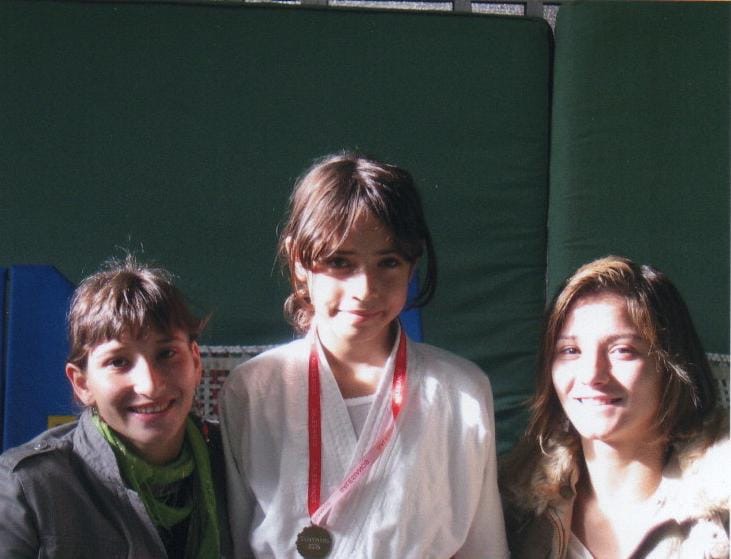
Judo entered my life thanks to my mother’s powers of persuasion. My older brother had been practising since he was three. I, at five, was doing classical dance. My mother asked me if I wanted to do judo and I immediately said no. Then she told me that if I practised judo, I’d be able to walk around on my own in the street. She easily convinced me. In reality, she thought that if I liked going out in the evening like she did, she would at least feel more at ease knowing I could defend myself. She didn’t know that I would end up going out very little in the evening, not for safety reasons but because of the rhythm imposed by the life of an athlete!
Are your parents from a sporting background?
Both my parents played sport when they were young. My mother did figure skating, without ever being very competitive despite her physical abilities. My father played almost every team sport: basketball, handball, rugby, and he even did judo up to first kyu. My parents had a rule that sport was compulsory. That’s why my brother and I have always played sport from a very young age. We both did swimming and horse riding. I also did athletics for three years — I loved cross-country, and the muddier it was, the more I loved it [smiles].
How did your studies fit into your journey?
My maternal grandparents always insisted that I focus on my studies. I remember that they supported my brother and my cousin in sport, and me in my studies. They thought that judo would lead me nowhere. Judo has ultimately taken me to the four corners of the world, allowed me to meet people I consider as family, and even to meet my husband, although he is not a judoka. My life revolves around judo and I have even pursued my studies in that field. At the beginning of my final year of secondary school, I decided to study at the Faculty of Human Kinetics, because it is located in Jamor, where the High Performance Centre is also situated. I wanted to study at university while also being able to train twice a day. I completed my undergraduate degree in Sports Sciences in 2018. Then my master’s in Teaching Physical Education in secondary and higher education in 2022. I am currently preparing a doctorate in Human Kinetics, specialising in Sociology and Sport Management. My thesis will focus on judoka from the Global North who have migrated to the South and qualified for the Olympic Games — like me. I spent two years without studying and I felt that something was missing. I have always needed to do something more outside of judo.
What occupies your mind beyond judo and your studies?
In terms of other passions, I love being in nature. For me, having my feet in the sand or in the countryside has an extraordinary relaxing power. During lockdown, I tried yoga for the first time. I haven’t stopped since. There have been less regular periods because of competitions, but whenever I’m in Portugal, I practise it once or twice a week. It’s a moment for me, with myself, where I learn to be with myself. More than the postures themselves, what is most difficult is the breathing, which has a direct transfer to training and to competition… I also love reading historical novels. Travelling through time without leaving home, with a touch of romance. It’s the best way to learn a little history in a light-hearted way. The ones that move me most are those set during the Second World War. They always manage to make me cry.
It has now been over ten years since you won the bronze medal at the 2015 World Junior Championships in Abu Dhabi. What has your journey been like between 2015 and 2026?
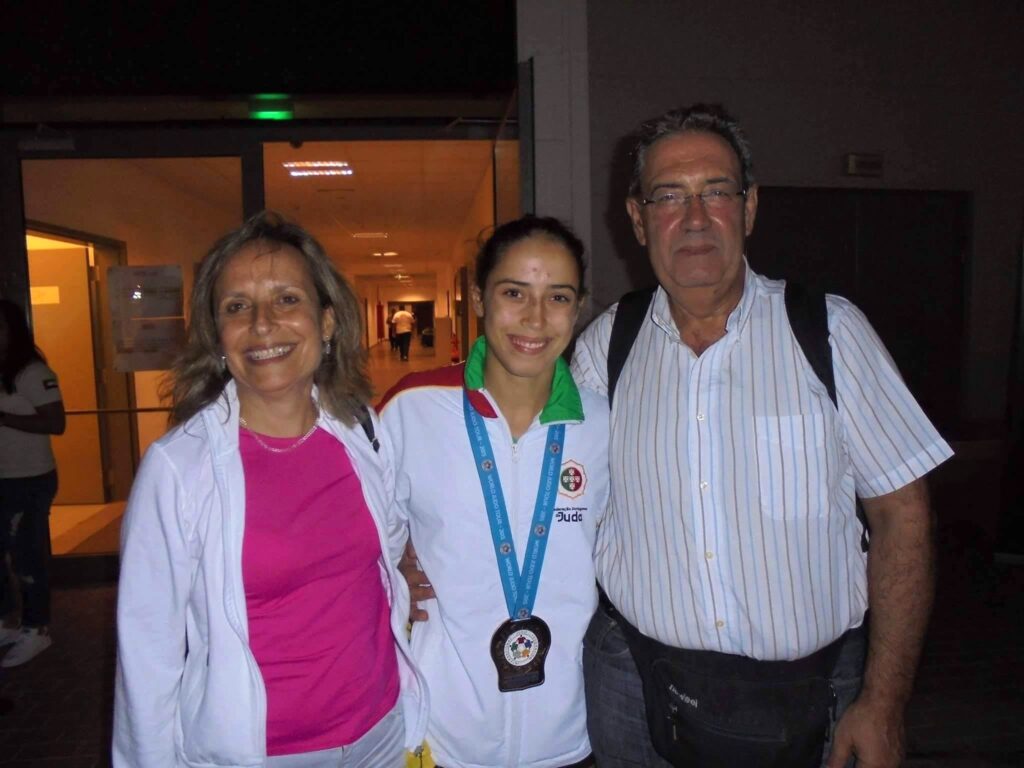
So much has changed between those two dates. It’s hard to sum up everything I’ve been through. In 2015, after those junior world championships, we had organised a convivial lunch to celebrate my medal. That afternoon, Beatriz Martín gave me a package containing a T-shirt from the Sydney Olympic Games [where the former university world champion and Tournoi de Paris medallist had represented Spain in the O78kg category, editor’s note], with a promise that I would bring her one back one day, in turn. In 2015, I was at my peak as a junior. I had my best season in terms of sporting results. Everything was following what people call the perfect path. And then everything changed.
How so?
The following year, I suffered a shoulder subluxation as early as my second bout at the Junior Tournament in Berlin. At the end of 2016, I had to undergo surgery to get rid of the pain in training. The year 2017 was therefore devoted to a gradual return to international competition. The highlight of 2017 ultimately turned out to be my participation in the Universiade in Taipei, where I finished seventh. In February 2018, I competed at the Paris Grand Slam for the first time and, by finishing seventh, I secured Olympic qualification support from the Portuguese Olympic Committee. Support that turned out to be a poisoned chalice.
Why?
Because I entered such an intense competitive rhythm that every competition ended up being a source of despair.
How do you mean?
My weight started getting out of control, my body was no longer responding well to weight cuts, and mentally I entered a negative spiral. The thing is that for a year I had to stay in the U52kg category, otherwise I would lose the support, the salary I was receiving, and the call-ups. Judo became a source of suffering. I was training to lose weight, not to improve. I had got into the habit of not eating dinner so that my weight wouldn’t creep up too much. And every time I came back from a competition, I would go through a period of eating everything I could, to the point of making myself ill. I no longer loved my life, I no longer loved going to training.
How did that period come to an end?
I said goodbye to the U52kg category at the 2019 European Games. At least I managed to close that chapter the way I wanted to… And then, just as I was about to find a competitive rhythm in my new category of U57kg, the pandemic hit.
What you describe about your difficulties staying in the U52kg category reminds me of what Amandine Buchard said on this website about her final season in U48kg. With hindsight, do you think there are things you could or should have done differently, or is this simply part of your path?
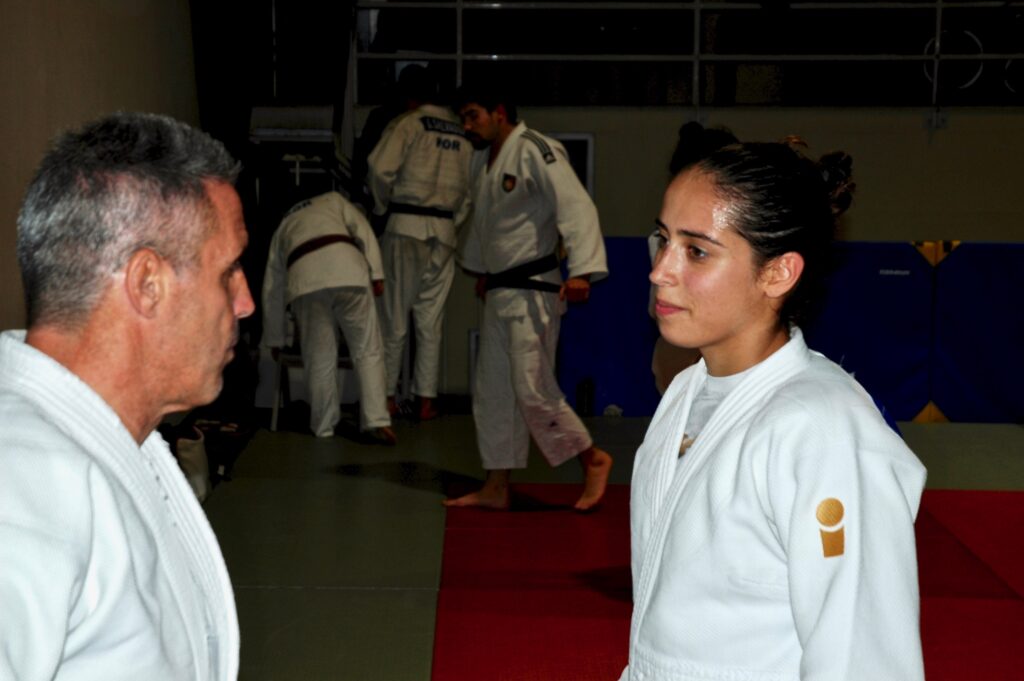
The first thing I should have done was to work with a nutritionist sooner. In 2016, I started struggling more with losing weight and, even though I continued to get results, things would have been different if I had been supported by a nutrition professional. It wasn’t until 2018 that I began working with nutritionists, by which point I was already at breaking point. That helped me to better manage my emotions and recover more effectively, but my body was already showing signs that this category was no longer mine.
The second thing I should have done was move up a category, even knowing that I would lose the Olympic qualification support from the Portuguese Olympic Committee. I should have been stubborn and listened to my body first. I remember that in August 2018, I came out of a session with the psychologist and she told me I was not in a fit state to compete, that she was going to inform my club coach. My coach informed the Federation and I was still forced to compete… I should have refused. At the time, people didn’t talk about mental health as much as they have since the pandemic. But I was getting worse and worse. A terrible feeling that nobody deserves.
What lessons do you draw from that?
I think we cannot allow ourselves to do anything to achieve results. In the end, we never stop being human beings, and one day elite sport comes to an end, but we have to carry on living with our bodies and our minds. We have to take care of them.
I think it’s important to share the moment of rupture with the U52kg. It was in February 2019. I had competed at the Paris Grand Slam. And, by chance, I had fought against Taciana Lima — my current physical trainer. I lost. She knew that in training I was strong, but that with the weight cut I would become physically weak. On the morning of the first day of a training camp, I weighed 57.0 kg. I finished the camp at 59.4 kg. It really isn’t healthy to be two categories above your weight… The following day, in the club changing room, I was pulling on my sweat suit, in tears. This wasn’t the life I wanted… I felt I had reached my limit. I wasn’t happy. And who walked into the changing room at that moment? Beatriz Martín. I poured everything out to her. She immediately told me to take the sweat suit off, that I would never do U52kg again, and to go and speak to my coaches. A weight fell from my shoulders that day.
JudoInside lists you at other competitions in U52kg that same year, though…
I did indeed compete twice more in U52kg. In April, I noticed I was seeded to compete at the European Games in Minsk. I didn’t know when I would have such an opportunity again. And I committed to the goal: saying goodbye to U52kg in a special competition. The Federation ended up forcing me to compete at the European Open in Romania, on the grounds that everyone going to the European Games had to compete beforehand… But that rule was only applied to some of us… They notified me two weeks before and I was six kilos over. Those were two weeks of eating enough to train and drinking very little water. Honestly, I don’t even know how I managed — even my coaches were surprised.
For my farewell to U52kg, I had the honour of fighting Odette Giuffrida. When the draw came out, I was sad because I knew I was in no state to dream of beating her. That afternoon, I confessed to my coach (Nuno António) that I was never going to win — Odette was for me (and remains) one of the greatest athletes of all time, with incredible judo, and I was in pieces. He told me he didn’t like thinking that way, but that our goal the next day would be to lose on penalties (shidos). I managed not to be thrown, and that gave me the feeling of having accomplished my mission. Amid all the complications and negative feelings, I managed to close that chapter feeling proud of myself.
You mentioned that lockdown arrived just as you were beginning to find your feet in the U57kg category. How did you get through that period?
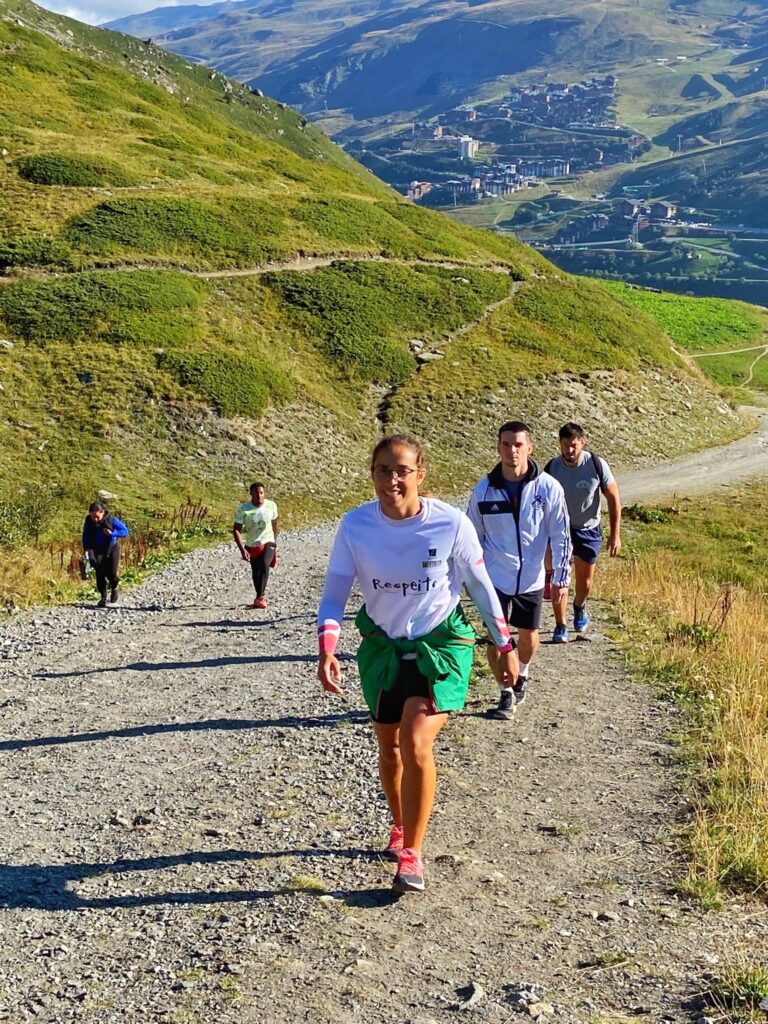
During lockdown, I didn’t have permission to train with the national squad and I lost my motivation. I took the opportunity to focus on finishing my master’s in Physical Education. Let’s say that in 2021 I didn’t consider myself an athlete… I was doing the three weekly judo sessions at the club and nothing more. I fell into an unhealthy routine during my teaching placement year as a Physical Education teacher: I was sleeping five hours, always going out before and after training, my relationship with food had deteriorated, and I was deliberately arriving late to training. My love for judo was being called into question once again. I no longer felt any pleasure being on the tatami. And that is why, in August 2021, I moved to Sainte-Geneviève-des-Bois, in Paris.
What were you looking for with that move?
I moved with the intention of running away from my problems. There’s a Portuguese proverb that says: out of sight, out of mind. I needed to leave Portugal to leave behind what was making me angry and to focus on myself. I moved telling myself I would never go back to Portugal. My goal was to rediscover the pleasure of training and, if I had to end my career as an elite athlete, to at least do so on good terms with judo. Looking back, it was that change that gave me the fire to carry on.
Tell me about it…
The turning point came in September, at a team competition. After that day, I decided to lose weight and go and compete at the senior nationals at the end of the year, which is the qualification event for the national team. I finished second and, for the first time, I could tell myself I was number two in Portugal. I was then called up again for the national training camps and began alternating between Cernache and Paris. I returned to international competition and felt the two-year break.
How do you mean?
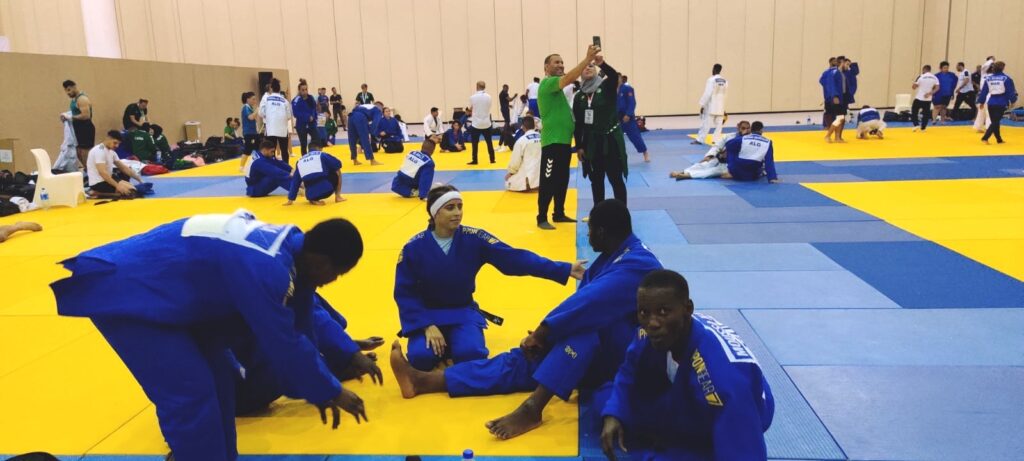
I mean that as number two in Portugal, I expected to be called up with some regularity. But that wasn’t the case. In March 2022, for the Prague Open, I wasn’t called up, whereas another athlete who hadn’t even made the podium at nationals was. I felt a deep sense of injustice after that comeback. It’s something I was unable to accept: unjustified subjectivity. I understood at that moment that if I wanted to compete at the Olympic Games, it would never be under the colours of Portugal. I would never have the opportunity to compete at all the international events I would need to find my competitive rhythm again.
That’s where Guinea entered the equation…
That’s the moment of change, yes. I was chasing my dream and Guinea turned out to be my passport to freedom. I now have the freedom to compete and to climb the rankings. The complications still exist, but on different fronts, partly because of differences in mentality and culture.
For example?
It shows up in particular in the method of planning and organisation, which is minimal or non-existent… These will make good stories to laugh about with your children one day, because in the end everything worked out fine, even if the two years of Olympic qualification were tense and full of doubts.
To what extent?
There were far more days when I cried and thought I wasn’t going to make it than days when I had confidence in myself. At the same time, I never stopped believing in the power of hard work. My first victory at the African Championships in 2023 gave me the courage and the strength to keep going. A day I will never forget, when the tears were finally tears of joy.
Why Guinea, in any case?
My mother was born in Africa and I always knew that door was open to me. Guinea presented itself as an opportunity. I wanted to compete for Guinea and Guinea wanted me. Our wishes aligned and we made it happen. In the end, I had no waiting period before I could compete. The Portuguese Judo Federation let me go without blocking me. In March 2022 I competed in Prague in my last competition for Portugal, and in May I took part in Oran in my first African Championships for Guinea. That change gave me the freedom I needed to find a competitive rhythm again. Something I didn’t have when representing Portugal at that time.
Did you have the opportunity to go to Guinea before competing under those colours?
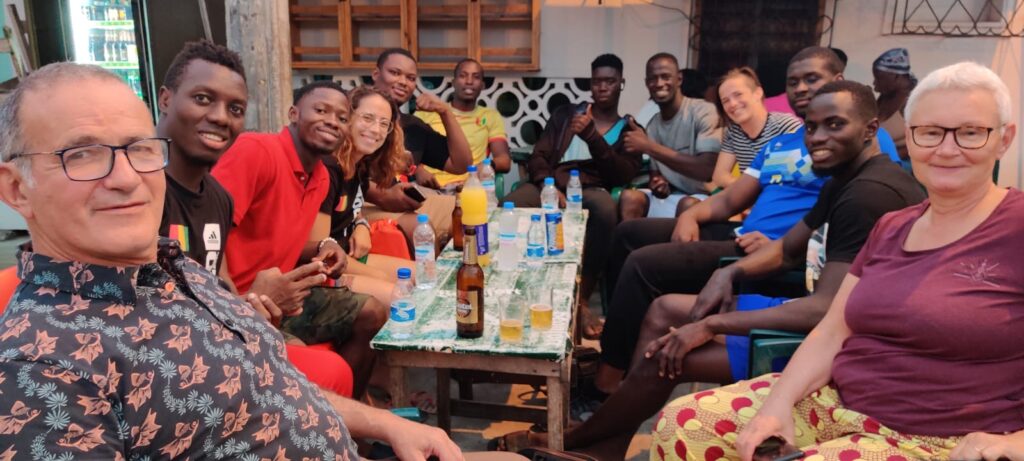
Yes, I had that opportunity. I went to Guinea in May 2022 to get my passport. I was supposed to stay for only a week and ended up spending two weeks there because of delays.
How did that first encounter go?
On the weather front, it was tough. The heat was insane, with crushing humidity. At the afternoon training sessions, I could never manage to do much randori. I immediately felt the lack of sugar… On the other hand, I was welcomed with open arms by everyone. I had never felt so at home, and without ever having had any results there. Everyone wanted to do randori with me and show what they were capable of. Everyone treated me very well — the president of the Judo Federation, the vice-president of the Judo Federation, the president of the Olympic Committee, the national coaches and my team-mates… But it was still two tense weeks of waiting for the passport.
Why?
I kept telling myself I wasn’t going to manage it, because there was a moment when I already had the authorisation from the Portuguese Federation to leave, but I still didn’t have the Guinean passport. I even had the feeling my career was going to end right there.
And then, in the end, it didn’t…
As soon as the wait was over, I knew the time had come to go all in on judo. To find a competitive rhythm again, go to training camps and climb back up the international rankings.
What did you discover about judo with Guinea that you didn’t know with Portugal?
The biggest difference lies in planning. In Europe, you plan and you stick to the plan. In Africa, you try to plan. What is defined at the end of one year isn’t guaranteed to happen at the start of the next. There are a lot of promises that don’t always come to fruition… There’s also a different understanding of how Olympic qualification works. Planning is shaped by political needs rather than by the needs of the athletes. In terms of points, it is sometimes more productive to win bouts on the IJF Tour than to medal at African Opens. I understand that it’s important to compete at African Opens, but since the circuit is so packed with competitions, it becomes difficult, if not impossible, to do all of them. You have to make the right choices. For Africa, the podium photos or even the information on the IJF website don’t really matter. For the government, what counts are medals — seeing them and being able to touch them. That’s another difference I felt.
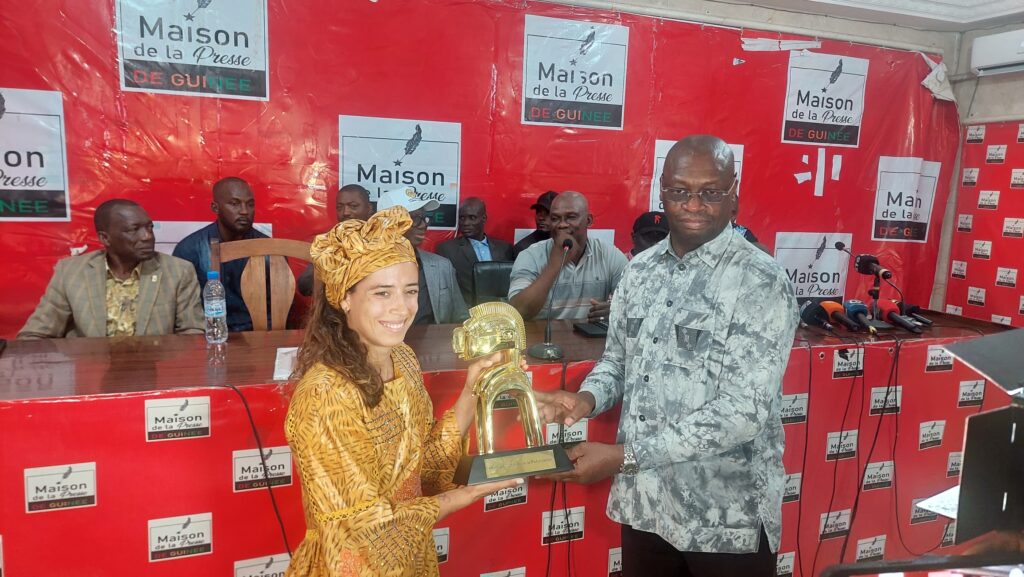
You find yourself alongside ex-German Marie Branser under these colours — she competed for the Democratic Republic of Congo on the previous Olympiad. I imagine these shared experiences strengthen the bond…
It’s easier, indeed, because we are there for each other to confide in. But the challenges are similar. There are enormously talented athletes in Africa who could compete on the IJF circuit but, because of bureaucracy, don’t have the opportunities they deserve. For someone who comes from Europe and is used to planned-in-advance organisation, Africa ends up being a cultural shock on that level. The process of applying for support from the Ministry of Sports is lengthy and sometimes doesn’t come through in time.
How do you manage your training schedule between Portugal and the national team?
We — Marie Branser and I — have good communication with all the members of the Federation and even of the Olympic Committee. Everyone is happy with our performances and we know that we are very important to the country. The fact that we are white women sometimes strips us of credibility, even though we have on our side the experience of years as well as that of Olympic qualification. We are supported by our club coaches who know how an Olympic qualification cycle should unfold. The biggest shock is when political interest takes precedence over our physical and mental health.
How do you mean?
As I told you, there are numerous competitions on the international circuit and it is impossible to do all of them, given the competitive load that represents and the long journeys that disrupt our bodies. At the end of the year, we draw up together a periodisation of competitions and training camps for the following year. The challenge is when new competitions appear that weren’t planned — and the wait until the last minute to find out whether we’ll be competing or not is another challenge in itself… During the two years of qualification for Paris 2024, my parents made a significant financial investment to make sure I competed at the key events. There is a perfectly structured plan, but then there are failures in execution. That’s why you always need a plan B. Living in Portugal makes it easier to travel around Europe in search of places to train. That’s the great advantage we have.
Portugal, incidentally, had very experienced leaders in both U52kg (Joana Ramos, who competed right through to the Tokyo Olympics at the age of thirty-nine) and U57kg (Telma Monteiro, Olympic medallist, five-time world medallist and fifteen-time European medallist, including six titles). Is it a blessing or a curse to grow up in the shadow of such outstanding athletes?
It’s a great challenge. I had the opportunity to train with both of them from the cadet level onwards. I fell against them many times… But it only made me stronger. During the pre-pandemic national training camps, three of my randori sessions would be with Taciana Lima César, Joana Ramos and Telma Monteiro. They were all athletes at the very top of their respective categories. They set the bar very high. And that only gave me more motivation to keep going. They showed that it was possible.
The press revealed that there were quite significant conflicts within the Portuguese Federation in recent years. Did that situation have an impact on your preparation?
Yes, enormously. The conflicts with the Federation played a major role in my desire to leave the Portuguese national squad. I had lost all trust. There was a lack of transparency. The situations that arose gave me even more desire to pursue my dream. At first, I wanted to prove to them that they had made the wrong choices. And above all, I wanted to prove to myself that my place was on the Olympic stage. If I hadn’t had the conflicts I did, I would have accepted the subjectivity of the selection processes and I would certainly have stopped competing at the elite level in 2022. If I am where I am today, it’s also because of everything that happened. And above all because of the way I managed the situation with my team. At the time, it hurt deeply. But now I’m grateful for it. I haven’t forgotten what I went through, but I have forgiven.
Let’s return briefly to that pivotal year in Sainte-Geneviève-des-Bois…
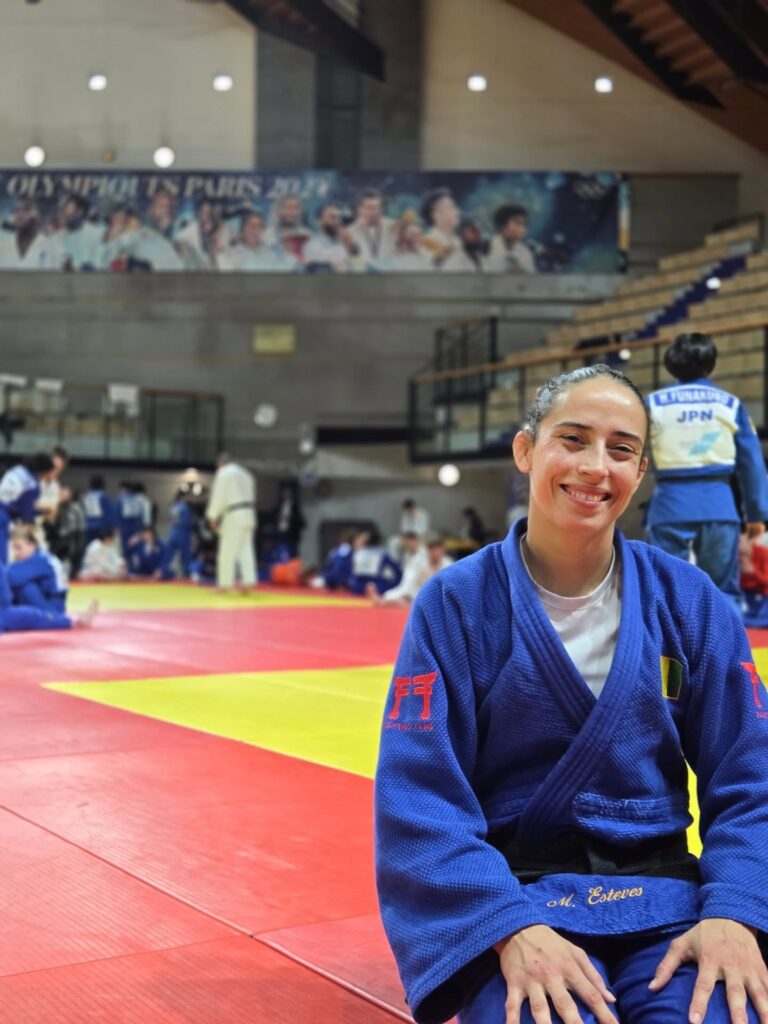
I settled in France without a return date. I never thought I would go back to Portugal. I left ready to leave everything behind, with the sole desire to finally be capable of being happy on the tatami.
How long did you stay there?
In the end I only stayed for a year, until August 2022. With the return to the international circuit and the constant back-and-forth to the airport, it was no longer worth staying. I was alone and transport in Paris is an enormous source of stress. Travelling to the airport not knowing whether the RER would be running or cancelled gave me anxiety. In Lisbon, my father’s house is ten minutes from the airport and I knew I could count on him — that makes things easier and the process less difficult.
Celso Martins, the Sainte-Geneviève coach, is renowned for doing a great deal to support his athletes. What did he bring you at that point in your career?
Celso opened the doors of the club to me and played an important role in my return… Celso is someone who doesn’t need words. He speaks with his eyes and has the gift of knowing how to put his finger on wounds with a unique sensitivity. He wanted to understand the reasons behind my move there, and to see how he could help me.
Were there other people who were important during that period?
The whole group was important to me and played a part in my return to competition. For the first three months, I didn’t speak French. Communication was a little complicated and I spent a lot of time observing and trying to understand the dynamics of the club. At the beginning, I was a shy Mariana. And then I started to speak, to be more playful, and to share stories and moments. It’s to Mathilde Briant that I owe having started speaking French. We lived together and every evening we would tell each other about our day — that helped enormously… I had a genuine sense of belonging at SGS. The fact that I was present at every training session also contributed, I think, to earning respect. I wasn’t just another athlete — I was the most dedicated athlete there.
Really?
I remember that on Fridays, it was David Larose who ran the session. His training was supposed to be for the cadets and I was almost always the only senior there. There was always an hour of technique beforehand. Thirty minutes of foot-sweep work and thirty minutes of open practice. I began to develop a taste for ashi waza work. David makes it look easy, and if I do ashi waza techniques today, there’s a little of him in that.
I had opportunities at SGS that I would never have imagined having. Little by little, I started competing again in individual events as well as team events, and I took part in a training camp in Brazil in Pindamonhangaba. In 2024, I was invited to compete in the Champions League with the team. I felt flattered because I know the club’s unwavering policy — they value the club’s own athletes and, in my case, someone who had been part of it. I feel immense gratitude towards SGS, the president, the coaches and my training partners.
You mentioned another team competition that had helped relaunch your career at that time. Which one was it?
It was the Blob International Judo Open. We finished third. I competed in the U63kg category, with the weigh-in in the morning and a one-kilo tolerance. I had forgotten what it was like to do a weigh-in. There were two of us entered in the U63kg category. Aurore Clémence was with us as a coach and she said that one of us would move up a category and that we would alternate between bouts. I ended up winning both of my fights in the U70kg category. And for one of the U63kg bouts, I had no opponent. I remember thinking I needed to move a lot to tire them out before I could score. I was happy to be there, even in a category I had never thought about competing in. The fight I had in the U63kg category was against Gaetane Deberdt. I remember being thrown with an uchi-mata. I knew she was at the top of her game, that she had just moved up a category. She took me easily and I didn’t like that. It made me want to train to find my competitive rhythm again.
What do you take away from your Paris 2024 experience?
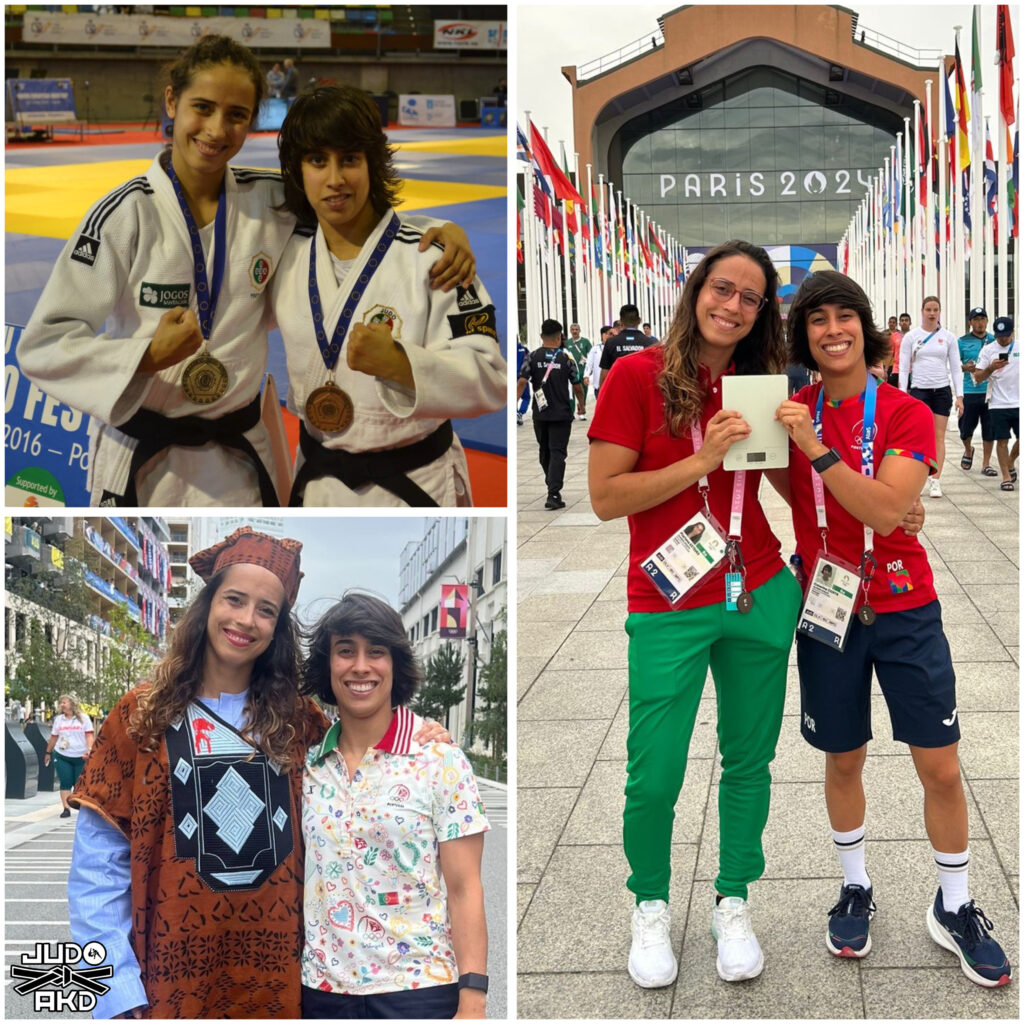
To tell you the truth, at first I felt quite alone in the village. And although it had been a dream since 2012, that made me sad. The dream only made sense when shared. I wanted all those who had walked this road with me to be there by my side to enjoy the Village…
Hadn’t you kept ties with the Portuguese athletes who were there?
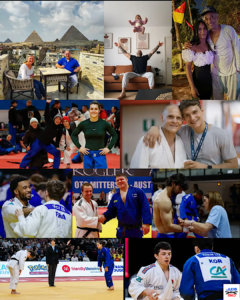
Actually, I arrived at the Olympic village as soon as it opened. There were no Portuguese athletes there yet. I spent the weekend hunting down goodies to pass the time. Athletes started arriving after that. As soon as Catarina Costa arrived, I was over the moon. She is one of my best friends. We have been in judo together since the juniors and, since our second cadet year, we have been inseparable. Even though she had just arrived and her competition was in two days — and I knew we wouldn’t have time to wander around the Olympic village — all it took was being together in her room and taking a photo in front of the Olympic rings for me to feel I was sharing that moment with someone important.
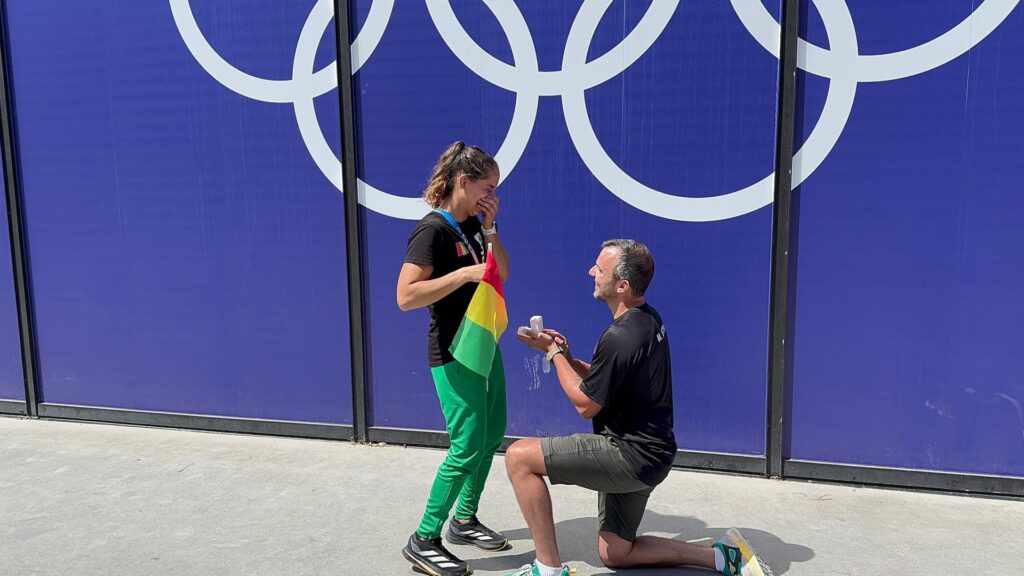
Despite that, on the day of my competition, I was as happy as a child in an amusement park: there was that mix of fear and, at the end, that wonderful urge to do it all over again. Being able to give that moment to my family, my coaches and my friends remains an extraordinary joy. And being proposed to that same day made it the most emotional day of my entire life.
Really? How did it happen?
He proposed between two days of the Games. Coming out of the arena to go for lunch. He had managed to gather together everyone who had come to see me: my parents, my aunt, my coaches and my friends. We were taking a group photo and he asked me to call Taci. At that moment, she asked me if anyone had ever proposed to me — and he, at exactly the same time, got down on one knee. It was her way of being able to witness the scene herself. His original idea had been to propose in front of the Eiffel Tower. But there, it was perfect — with the arena in the background, the symbol of the Olympic Games and the most important people by my side. Everyone knew except me. He had even taken photos with the ring — there’s a whole video diary of it. It was ultimately the day I cried the most tears of joy. I was happy to have fulfilled a dream, to have been capable of creating the opportunity for those close to me — family, coaches and friends — to attend an Olympic Games. And being proposed to straight afterwards made it one of the most important days of my life. I didn’t want that day to end.
That’s beautiful… And it must have motivated you for what was to come!
Not even a little, actually… Once the Games were over, I wasn’t sure I wanted to start all over again. Going through all those complications, the uncertainty over whether or not I would be selected for competitions, requests for financial support or paying expenses upfront… All of that had exhausted me so much that I didn’t want to live through it again. After the Games, I was absent from the IJF circuit for almost two years. I took the opportunity to compete in various team events and tried to understand what I really wanted to do going forward.
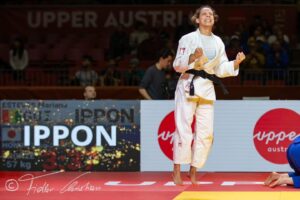
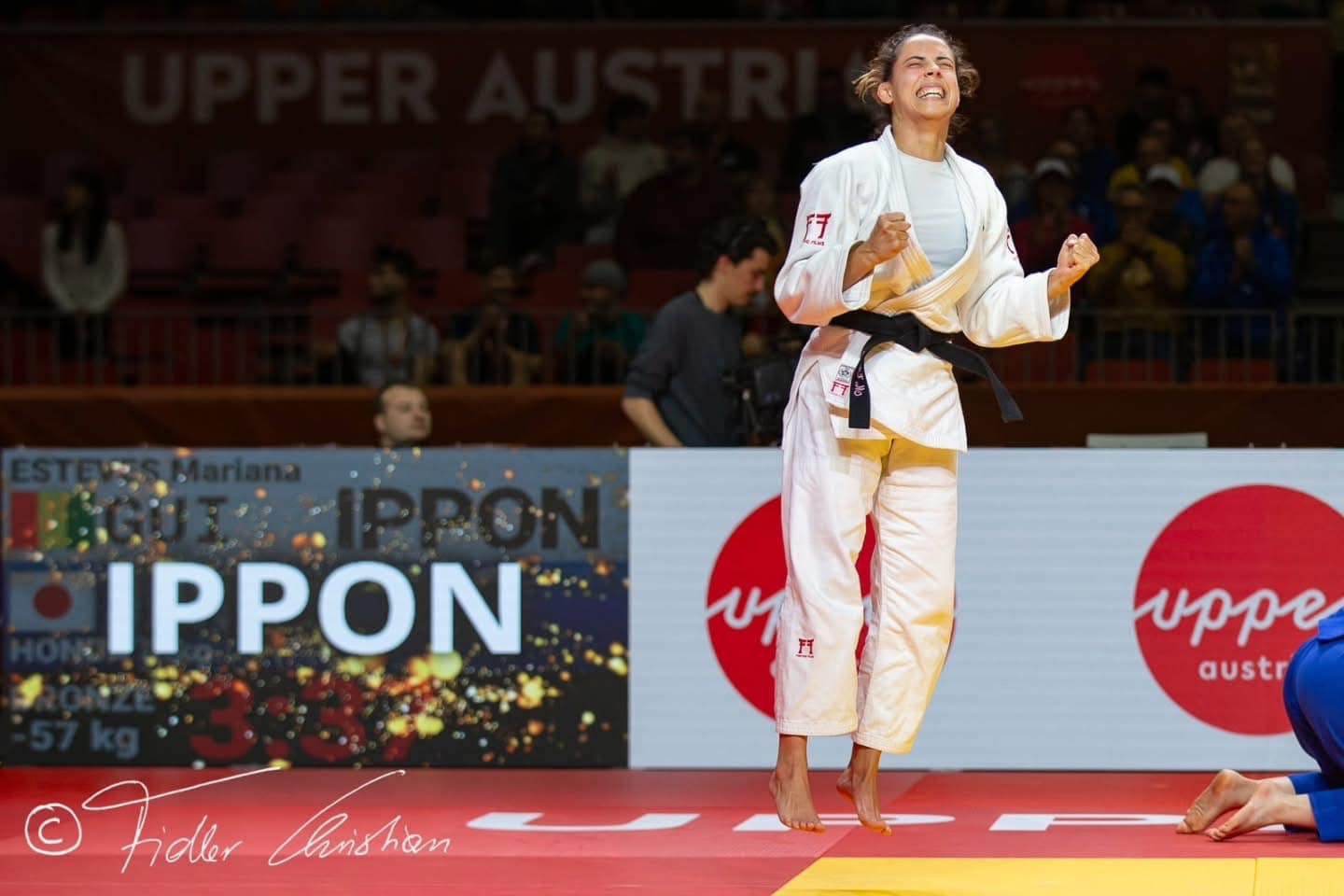
During the first nine months, I tried to become pregnant but fate didn’t will it. My fertile window always coincided with competitions. It was only after winning the bronze medal at the Austria Grand Prix in March 2025 that I understood this was not the moment to stop. I had won my first medal, I had been capable of winning on the ground and also of throwing… And the second confirmation came at the end of April at the African Championships in Ivory Coast, where I felt better than ever. That’s when I decided that becoming a mother would wait until after LA2028.
I find you very courageous for speaking so openly about your desire for motherhood. Other athletes speak about it in private, or during pregnancy or after the birth, but with very rare exceptions, this is the first time that desire has been spoken about openly in an interview. Do you think there’s a social shift happening?
I hope so. There are several subjects that are still taboo, but I believe that talking about them can help people who are going through the same thing. In judo, we’ve started talking about mental health and eating disorders. About motherhood, not so much. We’re starting to see several athletes become mothers and return to elite sport — Clarisse Agbégnénou, Taciana Cesar, Nekoda Smythe-Davis, Hannah Martin, Annabelle Euranie… They have led the way. They have shown that it’s possible, along with the inherent challenges. But that’s when you manage to get pregnant. Nobody talks about what it’s like to try to get pregnant with a deadline. The pressure of it, and at the same time the frustration of each month that it doesn’t happen… With social media and the closeness that exists between athletes, I think sharing this kind of experience can be useful. You never know who you might be helping.
You also mentioned financial pressure. To help the wider public better understand what goes on behind the scenes, what share of your mental load as an athlete does managing logistics represent?
I feel an enormous weight at the thought of having to ask my parents for support and of not being able to be financially independent. I would love to be able to benefit from support from the Guinea Olympic Committee for an Olympic scholarship, or even a solidarity scholarship from the IJF. Perhaps one day I’ll find a sponsor who can support my Olympic qualification financially. Despite everything, I have a few backers who have been important.
Who are they?
Since the 2024 Paris Grand Slam, I’ve had the support of Fighting Films [who is also a JudoAKD partner, editor’s note]. I met Joe Bridge, who believed in my work and in my Paris 2024 and LA 2028 projects, and who has never stopped supporting me in the best possible way. For me, it’s a dream come true. I have always loved the judogi brand and I would never have thought I would have this opportunity. It’s a brand I remember from when I was very young. My father has, if not all, then virtually the entire collection of Fighting Films judo DVDs. I take immense pleasure in being part of that family… I also have a partnership with Terapia Go, a massage clinic that started offering Pilates classes at the end of last year. I met Laurianne, the owner, at her beginnings. I have always entrusted the recovery of my body to her and her whole team.
What did your days look like when you were away from the circuit, during your post-Paris Olympics break?
I had the opportunity to work as a full-time Physical Education teacher for the first few months of 2025. I enjoyed it, but with some reservations…
What reservations?
First of all, I love being able to be with young people and, in some way, helping them to see the world and to guide their goals. But running around trying to follow a school curriculum disconnected from the school’s actual resources? That aspect exhausted me. Will I become a teacher again? I don’t know, but I’m not particularly keen on it. Only if no other opportunities present themselves.
What would you like to do, then?
I would love to be a full-time professional athlete, but I’m obliged to work to pay for everyday living expenses. At the same time, it’s one last push. Right now, I have just over two years left in this reality. I also have to make the most of it and savour every moment, because I know that one day it will end and I’ll miss it.
Right now, I’m starting 2026 on the right foot. I feel like I’m rediscovering the confidence I had as a junior, but more refined, more mature. Age really is a limit only for those who choose to make it one. This year I’m turning thirty and I have never felt so strong physically, with so many technical options, with the ability to be on my own at a competition and to perform. Never having had any other serious injuries has helped.
What are your goals for this Olympiad?
Sportingly, the goal is to be seeded for the Los Angeles Olympic Games. I want to be capable of competing for an Olympic medal. That’s a significant medium-term goal, given that two and a half years go quickly… A long-term ambition is to be eight-time African champion.
Eight times?
It’s a personal challenge, to surpass Taci’s record (my physical trainer), who won it seven times between 2013 and 2020… When I stop competing at the elite level, I think I’ll want to carry on competing at veterans’ level. My club has a tradition in that category and I know it’s always good to have a competitive goal so as not to let a sedentary lifestyle take over.
And on a personal level?
After the Los Angeles Games we want to start a family. After Paris 2024, we tried, but fate didn’t will it. Managing my cycle alongside the competitions while trying to relax became complicated. There was a certain amount of pressure and we were against the clock. I wouldn’t recommend it. That’s why after the Games I’ll go on holiday without an end date… On a professional level, I would love to be able to work in judo. I can’t imagine a life without competition. I know it’s possible to be a Physical Education teacher during the day and a judo teacher in the late afternoon. But I think I’ll miss the journeys that come with competing. I would love to be part of competition organisation. To have an active role in the success of a competition. As an athlete, I know that it makes a difference.
You’ve mentioned Taciana Lima several times. Which coaches have mattered throughout your career and what have they brought you?
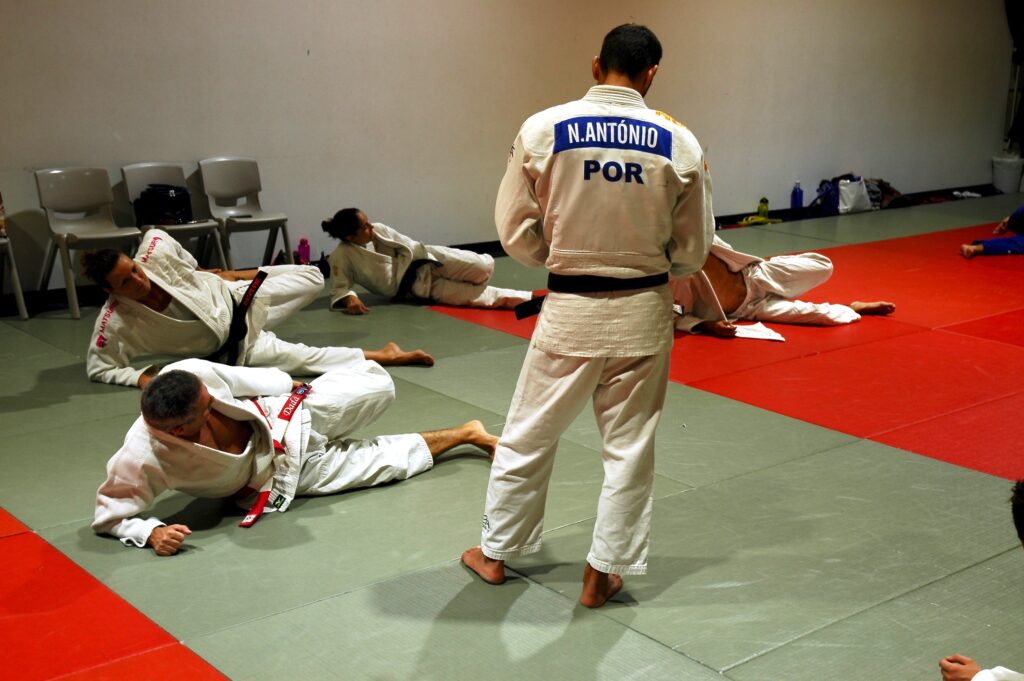
There are many. First there is Nuno António — better known as Casquinha.
Casquinha?
Nuno has an older brother who already did judo and whose nickname was Casca. Why that nickname, I don’t know. As Nuno is the younger brother, the suffix “-inha” was added. In Portuguese, when you want to say that something is small or younger, you use that ending. And that’s how Casquinha was born… He was my first judo teacher. I have unwavering trust in him. With him, I won several important medals. He is a very technical coach with an incredible sense of timing… Then there is Eduardo Garcia — better known as Dádá. He is the head coach at the club. He’s the one who is always present in the most important and most difficult decisions. He’s someone who transmits strength and an will to always win. The two of them form a perfect pairing for me. I’ve known them both since I was five. They are part of my life and I consider them to be much more than that — they are family. They listened to me through my most difficult moments, they often reached out a hand to help me keep moving forward. I was lucky to start judo with them.
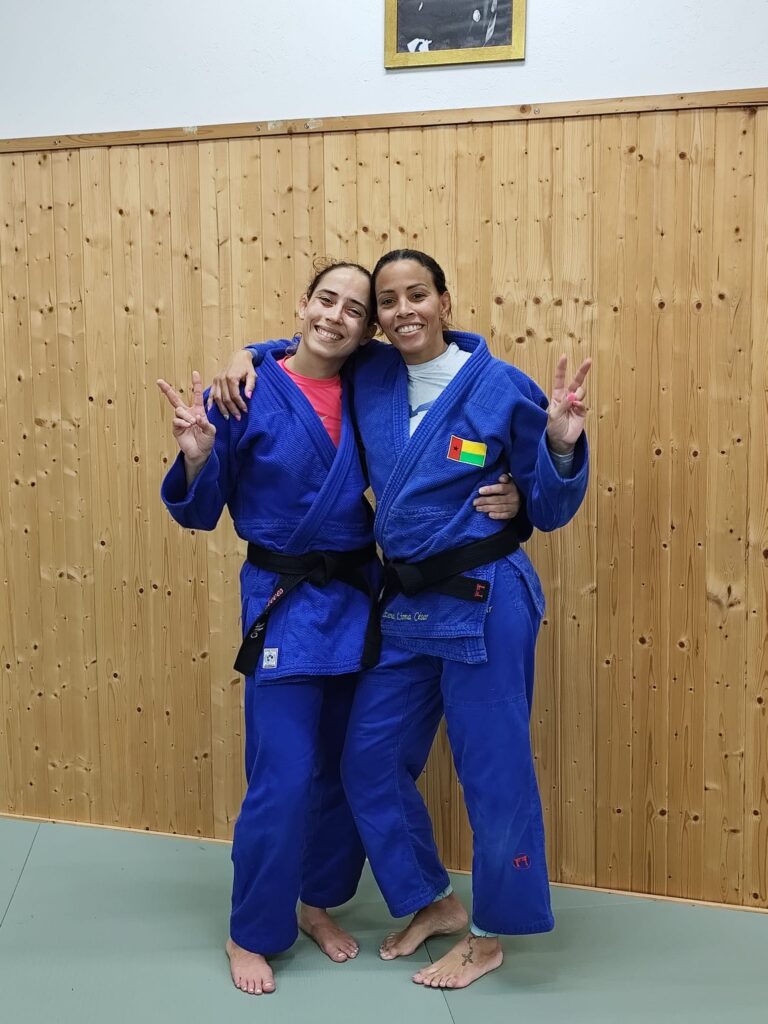
Next I would mention Taciana Lima César — my physical trainer. We were first training partners when she came to live in Portugal, then opponents when she moved to the U52kg category, then friends, and since 2022 she has been my physical trainer. She makes me “die” in physical training sessions so that I’m at the top of my form. She also sets me straight when I need it and always has a word of friendship.
I would also mention some of the Portuguese national squad coaches, who pushed me to step out of my comfort zone and gave me the determination to want to win tough fights and to pick myself up every time I fell in training.
Finally, I would mention Kamel Mohamedi — my club coach in France. After the Olympic Games, through the Judo Pro League, I became a registered member of Judo Club Venelles. They gave me the opportunity to compete in various team events and together we have built a good understanding and good teamwork. When I travel to France, I always come back recharged with confidence and with ideas to keep working on.
You started judo at five and you’re coming up to thirty. What advice would the Mariana of 2026 give to the Mariana of 2001?
I would say this to her, with all the strength I carry within me today: “Never give up. Not when it seems impossible, not when you doubt yourself, not when the world tells you you’re not capable. Keep going. Always remember: you are the one who defines your limits. Not others, not circumstances, not the falls. You are the one who decides how far you want to go… and how much you are willing to fight to get there. There will be hard times, days when you’ll want to stop, when you’ll feel like you’re not up to it. But you are. You always have been. Every training session, every tear, every victory and every defeat will build the woman you are in the process of becoming. And believe it — she is strong, resilient and unstoppable. So hold your head up, straighten your kimono, and keep going. Because your path is not easy… but it is yours. And you will go much further than you ever could have imagined.” – Interview by Anthony Diao, winter–spring 2026. Opening picture: the simple, pure joy of a first Grand Prix medal at twenty-eight, at the Upper Austria Grand Prix in Linz, 7 March 2025. ©Christian Fidler/JudoAKD.
A French version of this article is available here.
More articles in English:
-
- JudoAKD#001 – Loïc Pietri – Pardon His French
- JudoAKD#002 – Emmanuelle Payet – This Island Within Herself
- JudoAKD#003 – Laure-Cathy Valente – Lyon, Third Generation
- JudoAKD#004 – Back to Celje
- JudoAKD#005 – Kevin Cao – Where Silences Have the Floor
- JudoAKD#006 – Frédéric Lecanu – Voice on Way
- JudoAKD#008 – Annett Böhm – Life is Lives
- JudoAKD#009 – Abderahmane Diao – Infinity of Destinies
- JudoAKD#010 – Paco Lozano – Eye of the Fighters
- JudoAKD#011 – Hans Van Essen – Mister JudoInside
- JudoAKD#021 – Benjamin Axus – Still Standing
- JudoAKD#022 – Romain Valadier-Picard – The Fire Next Time
- JudoAKD#023 – Andreea Chitu – She Remembers
- JudoAKD#024 – Malin Wilson – Come. See. Conquer.
- JudoAKD#025 – Antoine Valois-Fortier – The Constant Gardener
- JudoAKD#026 – Amandine Buchard – Status and Liberty
- JudoAKD#027 – Norbert Littkopf (1944-2024), by Annett Boehm
- JudoAKD#028 – Raffaele Toniolo – Bardonecchia, with Family
- JudoAKD#029 – Riner, Krpalek, Tasoev – More than Three Men
- JudoAKD#030 – Christa Deguchi and Kyle Reyes – A Thin Red and White Line
- JudoAKD#031 – Jimmy Pedro – United State of Mind
- JudoAKD#032 – Christophe Massina – Twenty Years Later
- JudoAKD#033 – Teddy Riner/Valentin Houinato – Two Dojos, Two Moods
- JudoAKD#034 – Anne-Fatoumata M’Baïro – Of Time and a Lifetime
- JudoAKD#035 – Nigel Donohue – « Your Time is Your Greatest Asset »
- JudoAKD#036 – Ahcène Goudjil – In the Beginning was Teaching
- JudoAKD#037 – Toma Nikiforov – The Kalashnikiforov Years
- JudoAKD#038 – Catherine Beauchemin-Pinard – The Rank of Big Sister
- JudoAKD#039 – Vitalie Gligor – « The Road Takes the One Who Walks »
- JudoAKD#040 – Joan-Benjamin Gaba and Inal Tasoev – Mindset Matters
- JudoAKD#041 – Pierre Neyra – About a Corner of France and Judo as It is Taught There
- JudoAKD#042 – Theódoros Tselídis – Between Greater Caucasus and Aegean Sea
- JudoAKD#043 – Kim Polling – This Girl Was on Fire
- JudoAKD#044 – Kevin Cao (II) – In the Footsteps of Adrien Thevenet
- JudoAKD#045 – Nigel Donohue (II) – About the Hajime-Matte Model
- JudoAKD#046 – A History of Violence(s)
- JudoAKD#047 – Jigoro Kano Couldn’t Have Said It Better
- JudoAKD#048 – Lee Chang-soo/Chang Su Li (1967-2026), by Oon Yeoh
- JudoAKD#050 – Hermann Monne – Burkina, a Land Already Peopled
Also in English:
- JudoAKDReplay#001 – Pawel Nastula – The Leftover (2017)
- JudoAKDReplay#002 – Gévrise Emane – Turn Lead into Bronze (2020)
- JudoAKDReplay#003 – Lukas Krpalek – The Best Years of a Life (2019)
- JudoAKDReplay#004 – How Did Ezio Become Gamba? (2015)
- JudoAKDReplay#005 – What’s up… Dimitri Dragin? (2016)
- JudoAKDReplay#006 – Travis Stevens – « People forget about medals, only fighters remain » (2016)
- JudoAKDReplay#007 – Sit and Talk with Tina Trstenjak and Clarisse Agbégnénou (2017)
- JudoAKDReplay#008 – A Summer with Marti Malloy (2014)
- JudoAKDReplay#009 – Hasta Luego María Celia Laborde (2015)
- JudoAKDReplay#010 – What’s Up… Dex Elmont? (2017)
And also :
- JudoAKDRoadToLA2028#01 – Episode 1/13 – Summer 2025
- JudoAKDRoadToLA2028#02 – Episode 2/13 – Autumn 2025
- JudoAKDRoadToLA2028#03 – Episode 3/13 – Winter 2026
JudoAKD – Instagram – X (Twitter).