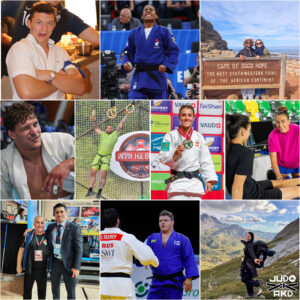
Born on March 30, 1988 in Bender (Moldova), Victor Scvortov is, on a personal level, strongly associated with the year 2014. At the end of January of that pivotal winter, a reportage in Ukraine brought us to sweat together during a ground randori at the Koncha Zaspa international training camp, in the snowy suburbs of Kyiv, a few kilometres from the now tragically famous Maidan Square.
Through the conversations that give their flavour to the stretching sessions at the end of morning or beginning of evening at such gatherings, we would learn that his compatriots and he — Moldovans freshly naturalised as Emiratis — had been given in that part of the world the very telling nickname of “Homeless Dojos.”
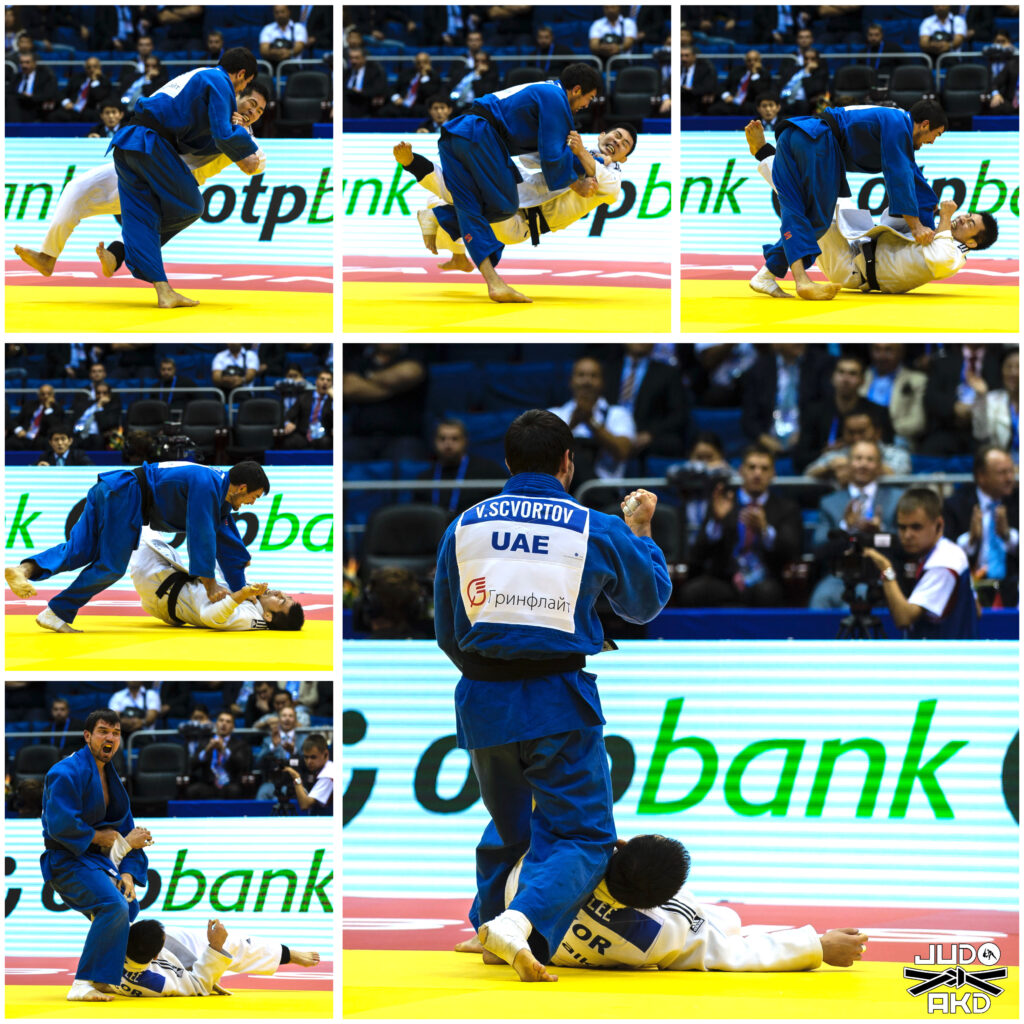
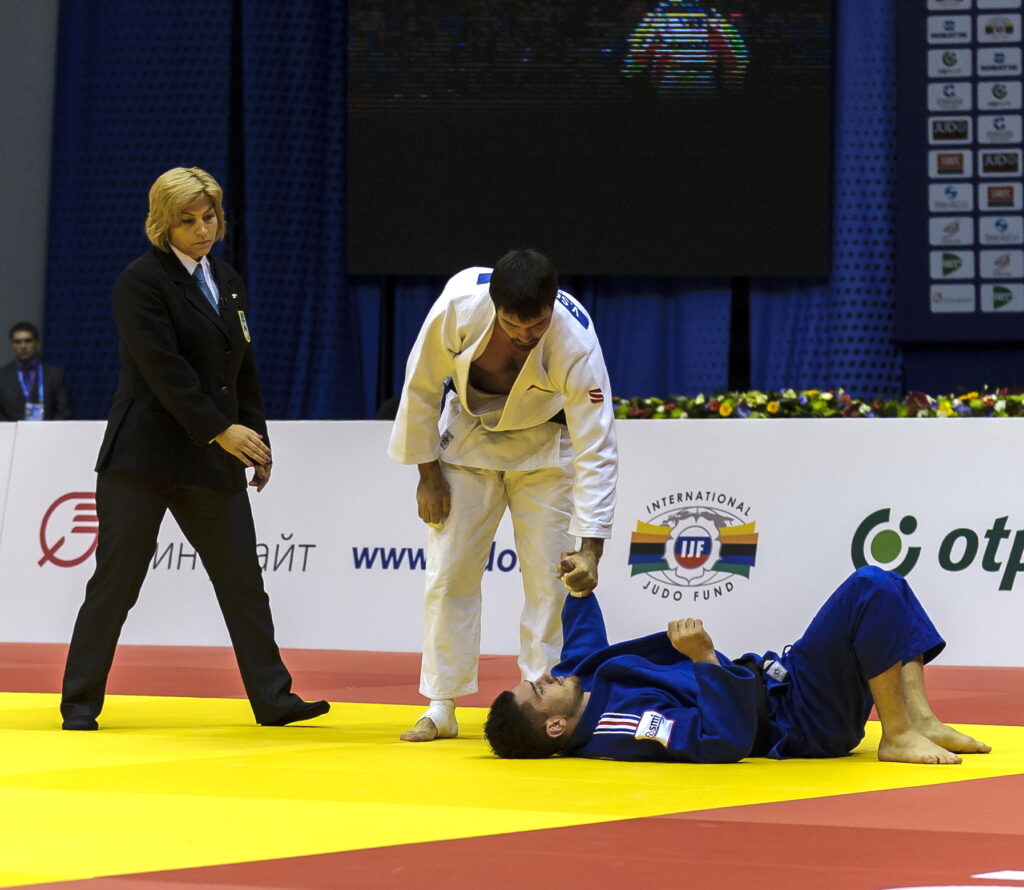
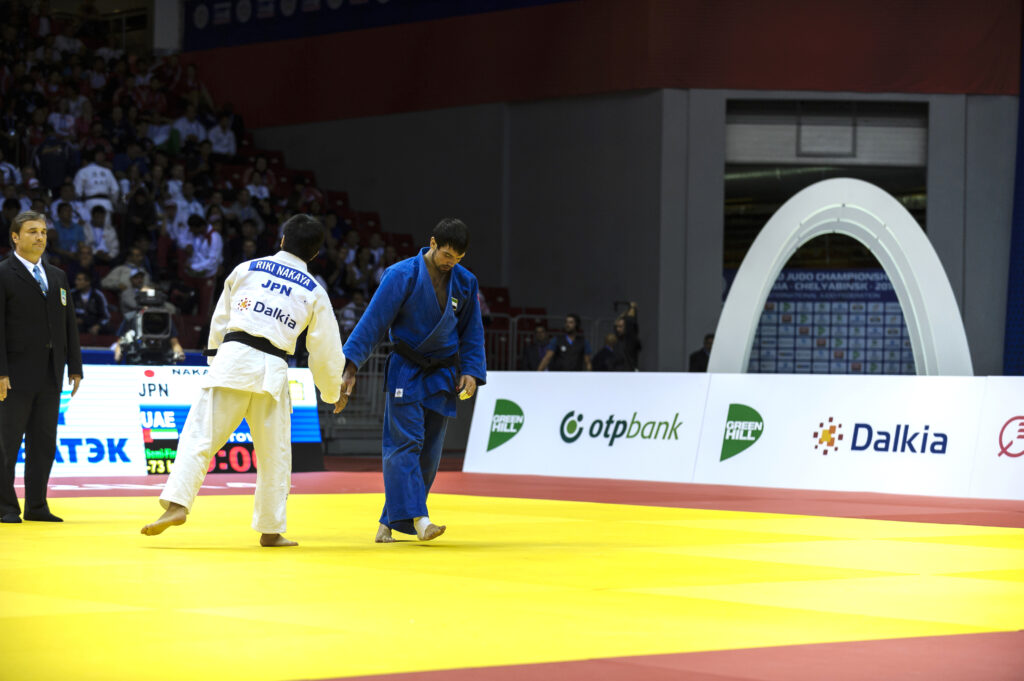
In August of that same year, deep in Russia this time, Victor and his teammate the U100kg Ivan Remarenco both claimed bronze at the World Championships in Chelyabinsk. The U73kg’s sweeping throw in the decisive match would remain one of the purest technical gestures observed that week on the mats of the Traktor Ice Arena.
Seven years later, it was on the heights of Bishkek (Kyrgyzstan) that our paths would cross again, during a long shuttle transfer to a remote hotel on the eve of what would remain his final Asia-Oceania Championships as an athlete. A side-by-side journey to the ends of the earth, which was an opportunity to discover an observant, composed man whose sharp intelligence was not unlike that of some of his rivals such as Dex Elmont or Ugo Legrand.
Since then, we have watched him steadily build his expertise at the helm of the judo project of his adopted homeland — the UAE, whose DNA can only be in tune with his backpacker career (89% foreigners, 5% of the territory inhabited).
In February 2026, two of his recruits stood out at the Paris Grand Slam. One, on the Saturday, won the U73kg. The other, on the Sunday, took silver at U78kg. What makes the overall performance unusual is that the two athletes in question — former Russian Makhmadbek Makhmadbekov and former Ukrainian Yelyzaveta Lytvynenko — come from two nations supposedly no longer able to stand each other. Seeing them cohabit under the same flag raises questions. All the more so for anyone who remembers that, in terms of soft power, the UAE itself already played, around 2017 and 2018, a widely decisive role in the shifting balance of power in the sub-region — and continues to do so, on a near-vital register this time, since the first detonations of February 28.
The moment therefore seemed right to put the microphone in front of Victor Scvortov. To talk about those things, a little, but also about all the others — sporting and cultural, well-known and less so — that explain the man and the coach he is, brick by brick and move by move, in the process of becoming. – JudoAKD#053.
A French version of this interview is available here.
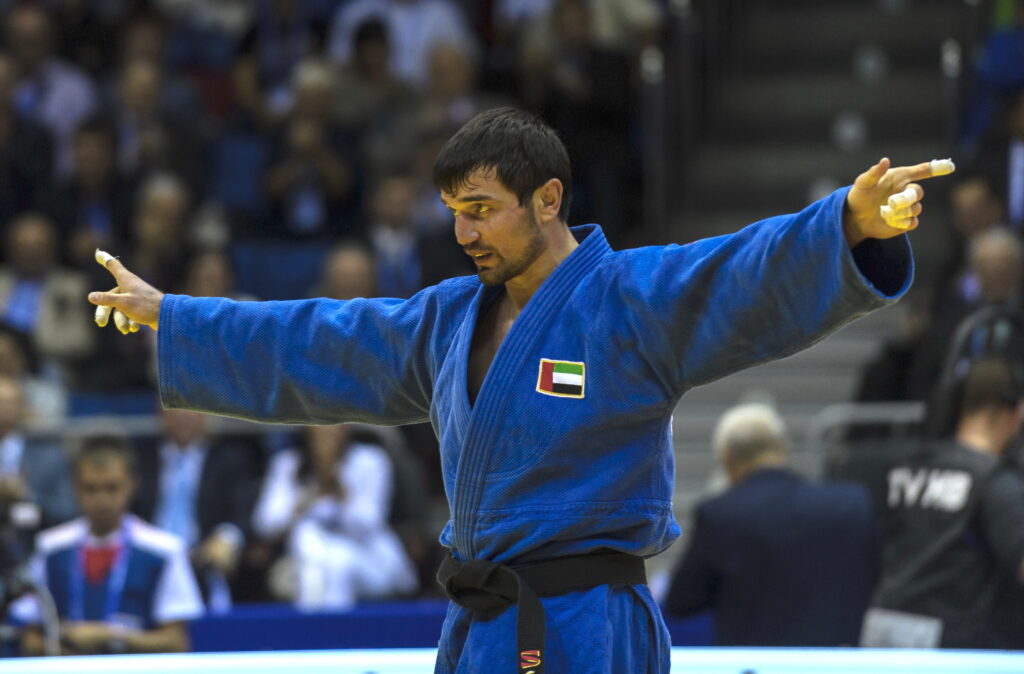
Your athletic career came to an end in the summer of 2021, on the evening of the Tokyo Olympics. Did you decide to move straight into coaching, or did you take time to think it over?
You know, my brother Naser Al Tamimi — well, my boss, but for me he’s more of a brother than a boss [he refers here to the president of the UAE Judo Federation, also treasurer since 2007 of the International Judo Federation — Ed.] — spoke to me after the Tokyo Games. I was thirty-three at the time, but you know how it is: inside, an athlete never stops. Especially if nobody ever tells you “stop.” But he told me stop. So I said to him: “What if we tried to build a team?” He said it was a good idea, to give him a little time. A week later, he called me back and said: “We have three passports available. If you can put a team together, that would be really great.”
What options were on the table?
It was complicated. Basically we needed to recruit abroad. For that, we had two options: either take athletes who had not competed internationally for three years, or obtain the agreement of their national federation for a transfer. The second option was difficult, because what federation would agree to let a good athlete leave to represent another country, with nothing in return? Normally, governments expect a return on investment for the elite athletes they have trained. Training athletes is a considerable undertaking. The reluctance is legitimate.
How did you get around that, then?
By going back to the first option and recruiting athletes who had not competed for three years. We also talked with the Georgian Federation because some of their athletes were already twenty-eight or thirty years old. In the U81kg category in particular, Georgia had too many athletes. Tatalashvili was coming to the end of his career, but he’s also an athlete who had results. Because if you take someone who hasn’t competed internationally, he may lack his bearings. But to energise a team you need someone who has already proven something.
And that’s how it all began…
Yes. We started putting the team together, and the messages poured in — around twenty a day on WhatsApp, Viber, Telegram, Facebook, Instagram. Then it was up to us to sort through them and see who was truly serious.
Because when you were an athlete, there were three naturalised players representing the UAE: Ivan Remarenco at U100kg, Sergiu Toma at U81kg, and you at U73kg, is that right?
In fact there were even six of us. Six athletes, two coaches and a masseur. Then some athletes stopped, others didn’t deliver the expected results and left. But the best athlete was Sergiu Toma, who won bronze at the Rio Games. Ivan and I, for our part, both medalled at the Chelyabinsk World Championships.
And so you’re saying that when you became a coach, a lot of people wanted to join the team…
Yes. We had athletes from Mongolia, Russia, Georgia, Armenia — very different countries, with different cultures. And also the religious question: some are very strict practising Muslims, others more relaxed about it. That can sometimes create tensions. Today my team is good, it’s progressing. Every year we win more medals and the results keep improving. At the last World Championships, we had a bronze and two athletes in the top eight — at U81kg and U100kg. We’re moving forward.
At the 2026 Asian Championships, you came close in the team event, and you also had three individual finals with a bronze medal.
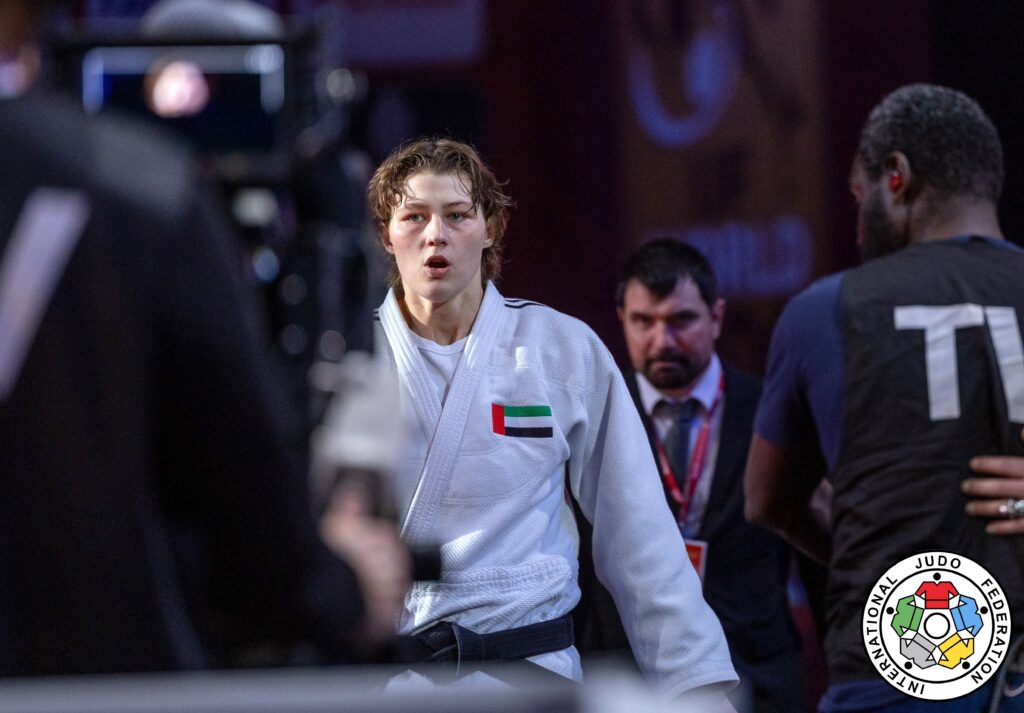
The level is rising, yes. And for me, it’s very important to compete as a team — that’s my dream, to move from the individual medal to the team medal. We fought well, we won the quarter-finals 4-0 against Taipei, the semi-finals — we were 3-3 against Korea… but we made a mistake against Kazakhstan. And we had a girl at U70kg who is a local Arab and usually competes at U57kg. She lost fairly heavily. But she’s improving and the whole team is improving with her, and that’s good. It was our first time and we finished fifth.
How does the day-to-day organisation work? Do you have a fixed training centre, or are you always on the move?
In the UAE, we have everything — we have a judo hall, you may have seen it if you went to the Grand Slam, we have a similar one near Abu Dhabi. Normally we have to pay for everything ourselves: hotel, travel, everything. So my idea is to stay as much as possible in Georgia. We have a good hotel there, a gym nearby, and from time to time we train with the Georgian national team — not too often, once or twice a week. We also rent a separate judo hall. The food there is very good. At the hotel, we buy halal meat and prepare special meals for the team. In Georgia, I feel at home.
And you continue to travel a great deal for training camps and competitions.
Yes, we do around twelve international training camps a year, and as many competitions. We train physically and tactically in Georgia, and then we travel for fights and competitions — to Japan, Germany, to the strong countries. Because in judo, we need to fight, not just do gym work or running.
Do your athletes stay with the team permanently, or do they go home sometimes?
They stay together permanently. They never train outside the team. Even at international camps, we compete together. I previously had Ivan Remarenco helping me, now it’s Artem Bloshenko. The athletes go home to rest a little, then come back to Georgia with the team.
You mention Ukrainian Artem Bloshenko, who finished fifth at the Rio Olympics at U100kg and is now a coach. That brings us to this particular situation of having in the same team Russian athletes and a Ukrainian woman, with everything that entails.
It goes well. It’s politics, and the guys never say anything about it. Artyom doesn’t talk about it either. We represent the UAE, not another country. I tell them: “We have to show that we’re a team, that we move forward together, not each one on his own.”
Can you, for example, join camps in Ukraine or Russia, or is it complicated?
It’s complicated because some hold Ukrainian citizenship, others Russian… Even in Moldova, my athletes have UAE passports, but some countries block entry because of the geopolitical situation — Moldova is close to Ukraine. Last year, for example, we had a junior European champion who couldn’t take part in an event because his country of origin hadn’t approved his participation. I hope that will change, because in Moldova we have very good randori partners — strong athletes at U90kg, U73kg, U81kg. I could organise everything — hotel, gym — but some athletes from my team simply can’t enter the country. Even for Mongolia, Makhmadbekov also had problems at customs, they asked him to explain his Russian origins. It remains complicated.
And was it easy to recruit those athletes, despite the three-year rule?
The athletes are progressing, we have results, and some contact us on their own — they come to the camp, train with the team. When I spot one who is good during a camp, I flag it to the Federation. My view: if it’s possible to take him, we try. If not, we try again six months later… Today the team is eighteen people: twelve athletes, two coaches, two masseurs and two doctors.
And the coaches today are Artem Bloshenko and you?
Yes. But Bloshenko isn’t always there — he has work in Ukraine and travels sometimes, just as U78kg Yelyzaveta Lytvynenko, whose mother is in Poland and who sometimes goes there to see her. I’m present permanently. I almost never see my family — I’m with the team perhaps three hundred and twenty days a year, twenty-four hours a day.
It’s like Ezio Gamba when he was coaching Russia. They were together twenty-seven or twenty-eight days a month, and only two days at home. It’s the same for you?
The same, exactly the same. We prepare physically and tactically for about sixteen days, then we chain together ten days of randori and competitions, a little rest — but even at home, some don’t really unwind, they prefer to stay with the team in Georgia.
And how are things in the UAE right now? I know there have been some strikes in recent weeks.
It’s calm now. There were alerts, but the UAE’s protection system is one of the best in the world — what comes in is intercepted before it reaches the ground. In Europe, the media covered it heavily, but on the ground nothing stopped: travel, competitions, salaries — everything continued normally, without delay.
That’s reassuring. In 2024, you hosted the World Championships at home, in Abu Dhabi. Do the good results of the national team have an effect on the development of judo in the UAE? Does it attract children to the sport?
There are about forty-five clubs in the UAE right now — last year there were thirty-five. The government supports sport because it understands that when people practise a sport, the country is stronger for it. Children see the results, the good athletes, and they want to do the same.
And your athletes — are they sometimes called upon to do demonstrations or masterclasses in the UAE?
Yes, for example in Fujairah — there’s a very powerful club there that supports judo enormously, but also wrestling, football, many other sports. Recently, Makhmadbekov did a demonstration there.
I know there are also coaches in the region like Ilias Iliadis. Don’t you do joint camps?
He’s in Saudi Arabia. Maybe later. He focuses more from the cadet and junior level. I concentrate on seniors. Our federation now has a contract with another coach — the former Uzbek U60kg Luftillaev — who is responsible for cadets and juniors. Maybe he’ll do something with Iliadis. Iliadis himself is working on a long-term projection — 2032 — so it’s a different plan. But he also has many local athletes, the government supports him, he travels a lot. It’s a somewhat different situation from what he had before in Uzbekistan.
And do you plan to bring in more coaches?
With twelve athletes, two coaches is enough. At camps and competitions, you have to see everything, monitor everything. I work in close collaboration with the doctor and the masseur. For example, the masseur makes videos in the evening and sends them to me, I watch them, I make a few corrections, and then I sit down with the athlete to explain where the problem is and why. A coach can follow a maximum of four athletes at a time — beyond that, you lose focus.
What is your coaching method? Do you work a lot with video, do you analyse opponents?
With cadets and juniors, you can still change a lot technically. But with seniors, if you really want to introduce something new, I reckon you need at least two years. So my idea is to put the athlete in the best possible physical condition — if he’s fit and can fight for twelve minutes in golden score, he’ll win. Of course I correct details of kumi-kata or nage-komi, but I never change someone’s core technique. I can only refine certain details.
So you place a lot of emphasis on physical preparation.
Yes, because physical preparation is also what keeps you lucid. When you’re tired, you lose quality of thinking.
Before, I relied on my instinct, my experience as an athlete. Now, after four years of experience as a coach, I have a structured programme, step by step: before competition, after competition, everything is planned. The athletes know where they’re going to compete, what’s on the programme each day, each morning. And I always tell them: “If you give 100% of yourself, you’ll get it back.” Because if you don’t really work, you’ll never win the big medals.
Does everyone understand the message?
Things are going in the right direction. I explain it with the example of our U100kg Dzhafar Kostoev — he’s talented, but he doesn’t train at 100%. If he did, he’d be winning title after title. In 2025, he won the Paris Grand Slam, but after his victory he started to ease off. I told him: “You can win, but you can’t reach the highest results if you don’t train seriously.” He still finished fifth at the World Championships and at the Olympics — but he didn’t reach his full potential, because he succeeds on his tactical intelligence alone, without the necessary groundwork. He can do much better.
And in terms of sparring, does everyone have a partner in their category, or do you bring people in from outside?
At every camp, there are at least five athletes who come to train with us. Some want to test the team — they fight, we observe, we evaluate. And it’s me who decides at the end whether we integrate them or not.
That’s an important decision each time. And has it always gone well, or was it sometimes difficult?
Sometimes I want to take someone, but the Federation says no. We have a Japanese expert and also Mr Naser Al Tamimi. I send them training and competition videos, and the Federation decides fifty-fifty. I’m not the only one making decisions.
And you, when you were an athlete in the UAE, did you have a coach or did you work alone?
There was Vasile Colta — he managed everything for us. He had been an athlete himself, and he had obtained UAE approval for everything. He didn’t tell us directly that we were going to compete for the UAE — he asked me if I wanted to represent another country, and I said yes. Because it was a big change: suddenly, the former Moldovan athletes were receiving a good salary, travelling a lot, having access to many competitions and camps. Now there is even accommodation provided by the Federation for around twelve athletes, with meals — breakfast, lunch and dinner. Everything is taken care of.
That’s a different world…
In my time, it was very different. We would learn we were going to a competition on Monday and had to fight on Friday. Someone needed to cut weight? They cut weight in two days. We had a ticket to Paris — we went, that was that… Our only certainty was being properly entered in the European and World Championships, but for other competitions and camps, we found out four days before. It was very hard for concentration, for results, for everything. And we had no salary. Now it’s different — Moldovan athletes are well looked after. They know well in advance where they’re going. Everything is secure.
And in your team, with people coming from very different judo cultures — Russia, Mongolia, Georgia — do they keep their own habits, or has something been built together? Do the Russians learn from the Mongolians, for example?
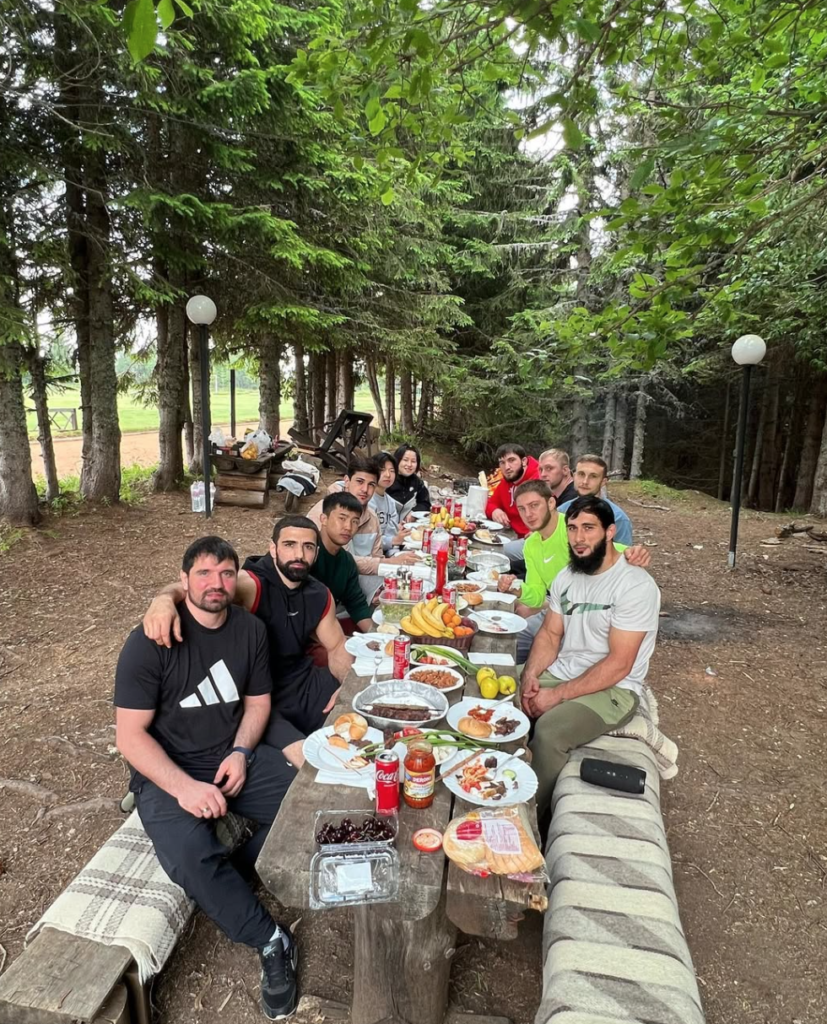
I make the programme, I run the judo, and everyone follows my training plan. Because they represent the UAE now. Of course the Mongolian has his style — closer to wrestling, very physical — but it’s like a family. If you want to create a good atmosphere in the team, everyone has to be united. When someone fights on the tatami, the others are in the stands cheering for him, with energy. Afterwards, in the training room, everyone comments: “Why didn’t you do that?” or “Well done, you won!” We spend a lot of time together, and in the evening I see them all sitting together, drinking tea, laughing. You can’t imagine how happy it makes me to have managed to create a real team spirit.
Do you also organise activities outside of judo?
Yes, outings together — shooting, games, group activities, twice a week. It’s important to share moments off the tatami. If you come, you’ll see.
A few months ago, on my site, I did a long interview with a Moldovan Paralympic coach — I think you know him, Vitalie Gligor.
Yes! We were in touch just a few days ago to coordinate a trip to the mountains at Bakuriani in Georgia, and then stay a few more days.
That’s the coaching life — it’s always about organisation!
Yes, before I thought it was just about coaching. Now I do everything: tickets, hotels, travel, halal food… everything.
I remember that Ronaldo, the Cuban coach, told me once that “the warrior’s only moment of rest is the time of the fight.” Because as a coach, you do so many things on the periphery, but the moment you coach on the edge of the tatami is perhaps the best moment for you — you only have to focus on the fight. Everything else is hotels, menus, WhatsApp groups…
Exactly! You never really get any rest — too much management, too much of everything. Hotel bookings, tickets to buy well in advance for Japan because it’s expensive, correspondence with a large team spread between Sochi, Mongolia… And sometimes someone falls ill and you have to change everything.
A few weeks ago, we had a great camp with the Kosovo team near Ljubljana. I had a slightly different image of their coach Driton Kuka beforehand, but now my view has completely changed — he’s a genuinely good person. He has great Olympic experience, many results, and he shares all of that with me. He explained why he chooses Ljubljana, why the mountains, why certain exercises, why certain sessions. It was really enriching.
Let’s go back to your beginnings. At what age did you start judo, and why judo? Do you have family in the sport?
No, not really. My father was a boxer, in the Soviet era — he had a decent level. He thought I was going to box. But in my street there was a judo club and a freestyle wrestling club, and all my friends went to wrestling. One day, coming home from school, I told my father I wanted to do wrestling. He said okay. I went for a year.
Then a friend of my father’s, who worked as a coach at a swimming pool, was passing through the neighbourhood. My father asked him if he knew a good judo coach, because he preferred judo. It has to be said that long before, I had seen a film called Sugata Sanshiro — you know it? It’s by Kurosawa. I had loved that film, it had made me want to do judo. So my father’s friend said: “Yes, I know someone — he was a very good judoka, he won many competitions in the USSR, and now he coaches.” We went to see him, he was five minutes from home.
And your first impression?
It was a big hall — about a thousand square metres — with a wrestling dojo and a freestyle wrestling dojo, all together. It was October and Alexander Popov, the teacher, told us: “We don’t take anyone after September, it’s full. Come back next year.” But my father’s friend insisted: “Alexander, take him on trial, just to see if he comes back or not.” It was the Soviet system — they recorded everything, even attendance.
Yes, it reminds me of Pawel Nastula’s difficult beginnings in Poland… How did it go for you?
I came, I got hooked. At my first competition, I won in the U22kg category. I was seven years old. And I kept on winning, again and again. My father went everywhere with me — at the time in Moldova there weren’t many big competitions, but every week there were tournaments, in villages, in towns, everywhere. And I won.
It was Jimmy Pedro who told me once that he hadn’t lost a single fight from the age of five to eleven…
At thirteen, I won the national championship in the under-sixteen age group. In fact I even won that title in both cadet and junior on the same weekend — cadets on Friday, juniors on Saturday. In cadets, I spent less than one minute total on the mat across the whole day, and in juniors, not a single fight went beyond a minute. It was a period when I was really very strong… Then I took part in the European Cadet Championships in Rotterdam — I was the age of the lower category, I looked very young. I took silver. And it was after that European Cadet Championships that my heart started racing and they detected this extrasystole problem.
At sixteen?
Yes. I felt something abnormal, as if my system had paused. I went back to Moldova. I lived in the Transnistria region — you know, it’s an area that functions like a separate state, with its own government, its own structures. We also had an unofficial Olympic committee there that financially supported promising athletes. During medical check-ups, the doctors were shocked. They said: “He has a serious heart problem. He can’t continue with judo, it’s too dangerous.” For two years, I stopped completely. The first year, I took medication, had regular check-ups. They even kept me under observation for a week with sensors. Then everything went back to normal. Little by little, I came back to attend training sessions. I did stretches, but I didn’t fight. And then the doctors said it was fine, that everything had returned to order.
What was the explanation?
Sometimes the body grows too fast and the heart needs time to catch up. I didn’t really feel pain — it was the system that faltered. My body perhaps needed to rest. I took medication, supplements, stayed under monitoring. And it eventually resolved itself. I was able to start coming back.
Two years out at that age is an abyss…
My opponents had continued to progress, especially in my U66kg category where at the time there was also Sergiu Toma, Valeriu Dominica… And that’s precisely the period between sixteen and twenty when you build everything: technique, tactics, musculature, everything. And I had missed that window.
How did you get back on track?
When I came back, I was eighteen. My opponents had grown, progressed. And the national selector didn’t support me — I don’t know why, even when I won the national championships, he didn’t take me to senior camps or competitions. It wasn’t until I was twenty-two, when that selector was replaced by Vasile Colta, that my so-called character was once again seen as a quality. I was then reintegrated into the senior national team and the gatherings that came with it. My first competition at that level was a World Cup in Georgia — at the time there weren’t as many Grand Slams and Grand Prix, there were World Cups everywhere.
How did that return to the circuit go?
I fought the Frenchman David Larose. And I led the whole match by yuko until the last five seconds, when he hit an uchi-mata scored waza-ari and I lost. My coach said: “It’s very good, he’s a good athlete, he was junior World Champion. You fought very well and I’m going to take you to other competitions.”
Then, at the 2009 World Championships in Rotterdam, I finished seventh. In the quarter-final against Hungary’s Miklos Ungvari, the refereeing went against me, in my opinion. I lost and had to go through the repechages. I fought against Korean Jeong-hwan An — who later became a coach in Spain before working for Canada, among others.
And yet despite that fine momentum — and a podium at the U23 Europeans in 2010 — you didn’t qualify for the 2012 Olympics…
Yes, I was two points short.
Two points? Wow…
In fact, there was one last competition in Australia. If I had gone, I would have had the points. Just taking part would have been enough. But we didn’t have the money — three thousand dollars for the trip. A sponsor had eventually said yes, but when we tried to start the process, there wasn’t enough time to get the visa, buy the tickets, organise everything. And the sponsor couldn’t put in any more. Those three thousand dollars, for a normal federation, are nothing. But at the time, it was insurmountable.
An Olympic cycle, unfortunately, isn’t decided only in the final straight…
Before the London Olympics, I had travelled a lot, competed everywhere — but each time, something was missing. Details, a grip, a movement. A questionable decision, a golden score, a tough draw like Wang Ki-chun, and so on. From memory, I must have lost a dozen first or second rounds in a row. I had reached the point of wanting to quit judo, it was destroying me inside.
What was the problem?
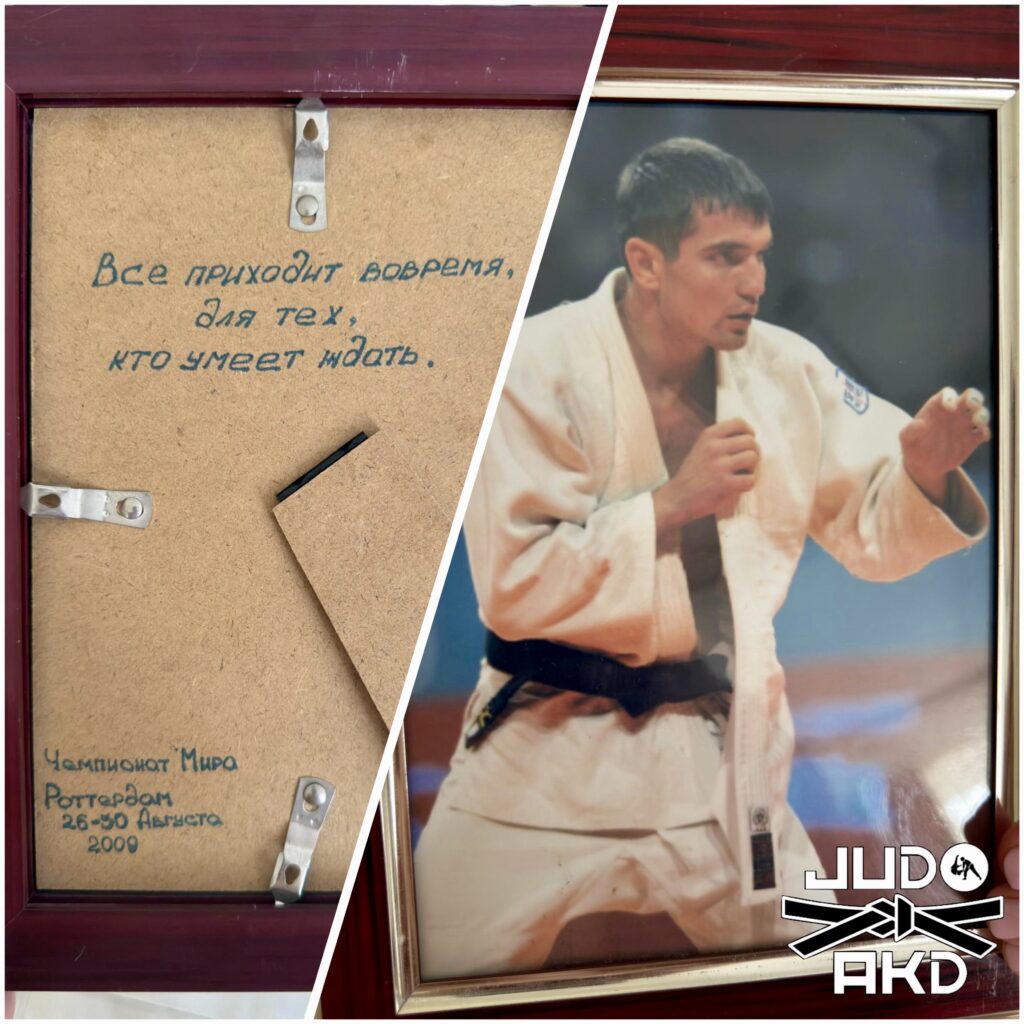
We were training enormously — morning, afternoon, evening, video, technique, tactics — and the results remained non-existent. One day, after a competition, I said to my coach: “Thank you for everything, but I want to stop. I’m losing everywhere and I don’t believe in it anymore.” And that’s when he reminded me of a message he had written to me at the time of the 2009 World Championships — I don’t remember exactly the words in English, but it was something along the lines of: “Everything will come at once for those who know how to wait.” As if everything was going to fall into place all at once.
Did that prove true?
Indeed, I started winning more. Then we went to the UAE. And there, something changed in me. I felt ready. I didn’t know how to explain it, but inside, I felt like a champion. I started to believe in myself. Really.
Was the change of nationality quick?
We spent three months in Tashkent, in Uzbekistan, waiting for confirmation of the UAE passports. And those three months were extraordinary — good athletes, a great atmosphere, full-time training. I was fighting strong guys and beating them. The confidence was coming back.
My first competition with the UAE: the 2013 Asian Championships in Bangkok, where I finished fifth. Fifteen days later, the Baku Grand Slam — silver medal. And then, medal after medal. Every medal, even in less competitive events, changed something in me. When you believe in yourself, you know what you’re doing on the tatami. You impose your judo, your grip, your tactics. And you can fight through golden score because your body is ready.
The decision to join the UAE — was it something you sought out, or did they contact you?
It was Vasile Colta who approached me. He didn’t say “the UAE” directly. He asked me if I wanted to change country, and I said yes immediately. Because I had family obligations — I had a child born when I was eighteen, and I needed to provide for him with no salary. The situation was very difficult at the time — it’s much improved since, thankfully.
To give you an idea: I lived in a village an hour and a half from Chișinău, the capital. Every day, I went to the National Centre, stayed for the second session, and the last bus home left at 7:35 pm while training finished at 8 pm. I sometimes had to wait until midnight, one in the morning for someone to give me a lift — manageable in summer, but at minus 20 or 25 degrees in winter, it’s exhausting. And no salary.
So yes, when a change was offered to me, I said yes without hesitation. And now I’m a coach there — I’m truly happy.
Especially since your first title under your new colours was “at home” in Abu Dhabi, where you beat Russian Mansur Isaev, the reigning Olympic champion, in the final…
Yes! And Miklos Ungvari too, who had taken Olympic silver in London. Afterwards, you know, Isaev — I knew him well, we often trained together in Moldova. His style was comfortable for me, I knew how to approach him… Now, the fact of winning at home, in Abu Dhabi, was enormous. The next day, Sergiu Toma also won the U81kg. The president, the Federation — everyone was overjoyed. We had just arrived in the UAE, it was our first competition on national soil. And ultimately, beating an Olympic champion in the final, at home — it was an incredible emotional shock for everyone. For me too.
And the following year, the medal at the World Championships…
Yes, during that period I was in truly exceptional form — physically, mentally, everything was at its peak. I also got on the podium at the Paris Grand Slam — a place I consider another planet. The arena, the fifteen thousand people, the finals where everyone is on you and watching you. No matter if the refereeing is sometimes debatable, whether the crowd cheers or boos — the atmosphere of Paris is incomparable. I won a bronze medal in 2014, I was in the quarter-final against Isaev — I was leading on shidos, it was very tight, he eventually got through with an uchi-mata or something like that. In the repechage, I beat two Frenchmen back to back, Guillaume Chaine and Jonathan Allardon. Those are the kinds of days you replay in your head for a long time.
Despite that, you couldn’t bring back a medal from the Rio Olympics…
For Rio, though, I was ready. But before Rio, at the Paris Grand Slam, I was using it as a preparatory competition — including a Grand Prix in Havana, where I took silver. And in Paris, I suffered a serious knee injury: a torn anterior cruciate ligament. I had surgery in Spain. Not enough time to fully recover before the Games. I still did a test competition in Azerbaijan — seventh place — with the knee strapped. My ashi-waza technique suffered for it.
I felt good mentally, but physically it wasn’t enough. And my draw wasn’t favourable. But for me there were no “big names” to fear — everyone is the same. I went to the Games, first fight against a guy from Yemen, second against Ono. And it ended there.
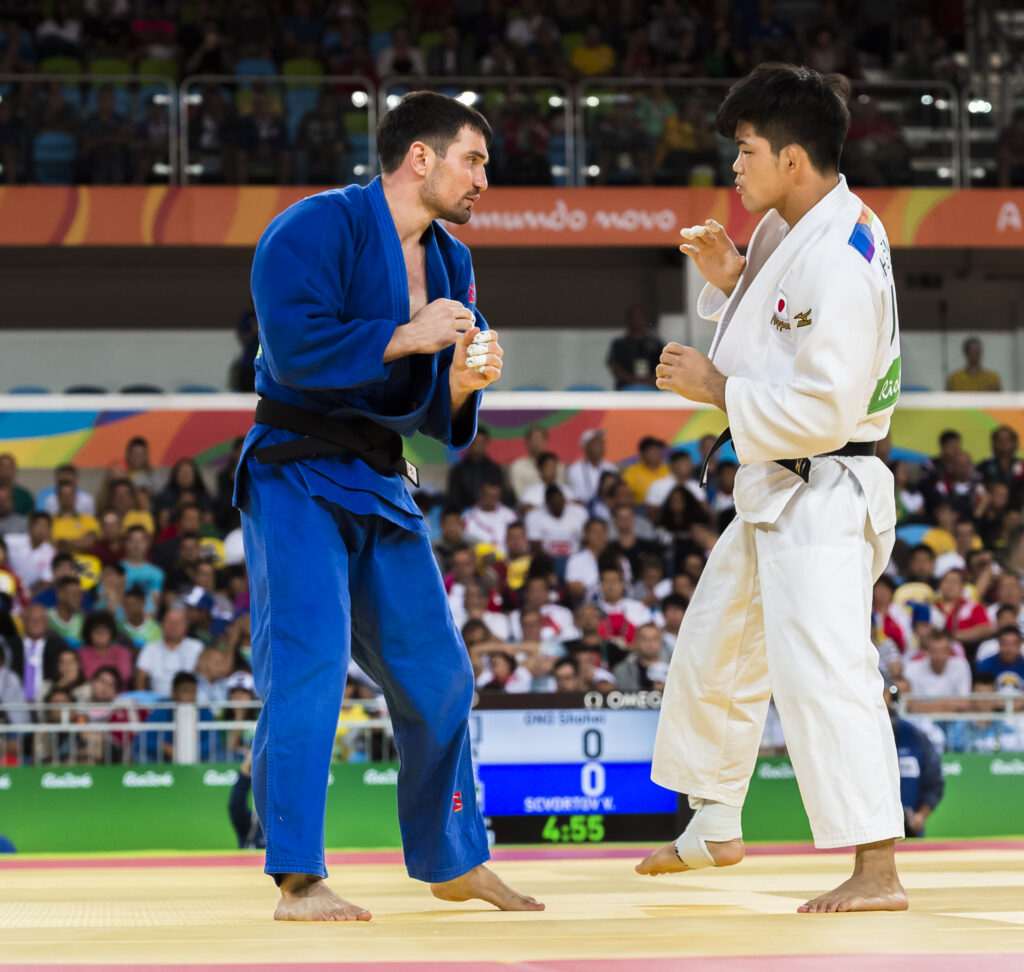
At that moment, were you already projecting yourself towards Tokyo, four years later?
If it had been four years later, I was thirty-two, it was still doable. But one more year… My body was thirty-three. The reflexes aren’t the same anymore. The weight cuts take their toll. To qualify, you have to compete in many competitions, and the body no longer recovers the way it did at twenty-five. In Tokyo, my first fight was against Swedish Tommy Macias. With the benefit of video now that I’m a coach, I should have won — I was hitting o-soto-gari in the first minute, I had the upper hand throughout. In the last five seconds, he tried something and we got tangled. The referee checked. And he got the point.
Yes, Tommy Macias was present in 2024 and 2025 at the Christmas training camp in Bardonecchia, Italy. He’s genuinely very dangerous in transitions to ne-waza. It was also him who beat you in your previous outing, at your final World Championships in Budapest, a month and a half earlier.
Yes, I face him in the second fight there too. So my last two fights as an athlete were both against him — at the Worlds and at the Olympics. When I walked off the tatami in Tokyo, I felt it was over. Physically, I had nothing left in reserve. The motivation was no longer there the way it was in Rio, where I felt strong, hungry, ready for anything. Maybe also the fatigue of travelling, the COVID that had disrupted everything…
Were you in Moldova during lockdown?
Yes. My coach Vasile had just passed away — he had diabetes. We were now working with Veacheslav Bacal, Denis Vieru’s coach, and the programme had evolved. COVID was also one more year on the clock — or even two, with Tokyo postponed. And staying home was good for family life, but for concentration, for the training rhythm… it wasn’t the same anymore. A few barbecues with friends, not sleeping well, eating less well — it all adds up.
And during your career with the UAE, was your family with you or did they stay in Moldova?
We were always on the move — never really settled in the UAE. I travelled everywhere: Germany for the best Germans, Japan for the Japanese style, Georgia for physical preparation… The base was Georgia, because it’s comfortable for everyone — three or four hours by car from Russia, from anywhere. When I sensed that athletes had lost their spark, I’d say: “Last training today, in three days we meet back there.” And for me, I have a direct flight to Moldova four times a week. I’d go home to see my family, decompress, and come back.
You get on a plane the way others get on a bus!
Exactly.
And does your family come to see you in the UAE sometimes?
Yes, when we’re there. And Naser Al Tamimi — who is genuinely a friend to me, not just a superior — we’d work together on programmes, check what was best for the team. He’s not someone who stands back and watches athletes compete — he’s inside the team, he supports it really, enormously. And then there’s Jassar, the manager based in the UAE — a remarkable person. If I call him in the middle of the night because we have a problem at customs or need an urgent document, he gets up and sorts it out immediately. These are the kind of people who make a team function. From the outside, you see the coach. But behind the scenes there’s Naser Al Tamimi, there’s Jassar — without them, none of this would be possible. And Jassar is a judoka himself — he practised, competed nationally, joined the UAE federation in 2000, and has been there full-time since 2008.
In thirteen years with the UAE, do you see an evolution in judo there?
Of course. Many clubs have opened. For a long time there were Japanese coaches, now there’s this coach from Uzbekistan, from different countries. And the IJF rules are also evolving favourably — for example, if your parents live and work in the UAE, you can represent that country in international competition before obtaining nationality, up to senior level. There are many Russian families living in the UAE, and in Russia judo is strong — I hope we’ll see cadets and juniors emerge who will eventually join the national team.
And in Moldova, do you also see an evolution? Because the fact that so many Moldovan athletes leave to represent other countries may have pushed the Federation to take better care of its own?
Maybe. But it’s complicated. When you leave after three years without international competition, it’s straightforward. But if you leave before that deadline, the federation of origin has to sign the authorisation — and there, it can become a political scandal. In my case, there was a real controversy when we left. Currently, there’s an athlete who is at the top level. I’d like to take him, but the Federation president refuses to sign.
In 2019 in Tokyo, I interviewed Denis Vieru with the help of Romanian Andreea Chitu — a great moment. And Denis said he always had a dedicated sparring partner. Is that something you had in your career?
No, not really. As I was saying, at every camp, there were four or five people who came to test the team — that’s how we work. Except for the top athlete in the team, for whom I sometimes specifically invite someone — a strong athlete for targeted nage-komi, speed work, specific situations, because the other partners might be too strong or simply not the right fit.
It’s interesting, actually: I can see when an athlete isn’t comfortable with a partner, even if he doesn’t say so. If I sense that, I find him someone he feels good with, someone he can say “let’s do this, this, this” to — and then the work is really effective.
And outside of judo, did you do military service or were you 100% judo from the start?
In Moldova, there’s a system — it was my second coach, Vasile Colsa, who helped me get a contract with the army. Like most Moldovan athletes, I was integrated into that system. It wasn’t very well paid at the time, but now it’s much better, with a pension system at the end of your career… And if you win an Olympic or World medal, the state pays you a monthly allowance from the age of thirty-five. A bronze medal at the European Championships is about six hundred euros a month for life. That’s a fine form of recognition.
In France — and in many other countries, unfortunately — that’s precisely the problem: many elite athletes who have devoted twenty years to their sport and their country find themselves with no safety net when they retire.
Yes, it’s very hard.
And in your category, U73kg, with the Japanese and Koreans always very strong — who were your most formidable opponents?
Honestly, almost everyone was manageable for me — except Hashimoto. I don’t know how he does it, but his judogi is extremely difficult to grip. Before, stepping out of the mat was a shido, so he’d push knowing I couldn’t get a grip. Ono, for his part, has an excellent uchi-mata entry — he knows exactly how to create the moment. But his grip is normal… Masashi Ebinuma is also a tough fighter. In China, at the Masters, in golden score, he hit me with a sumi-gaeshi. A constant opponent, always in motion, and in golden score, by dint of looking, he catches you. But Hashimoto was really the only one I was never comfortable against.
And among the French?
Ugo Legrand, at the 2007 European Junior Championships, I faced him in my first match. He beat me narrowly. I think he ended up on the podium that day, which allowed me to go through the repechages — and I finished seventh. And then there were Duprat, Urani… At the World Championships in Chelyabinsk, Duprat and I ended up facing each other in the round of 16. I won quickly — in about thirty seconds. Meanwhile, Mogushkov had gone through a seven- or eight-minutes golden score against Khashbaatar before meeting me in the quarterfinals. He was exhausted, while I was still fresh. I could tell he wasn’t himself, so I took advantage of it. Championships are won or lost on details like that…
What is the achievement you are most proud of — as an athlete and as a coach?
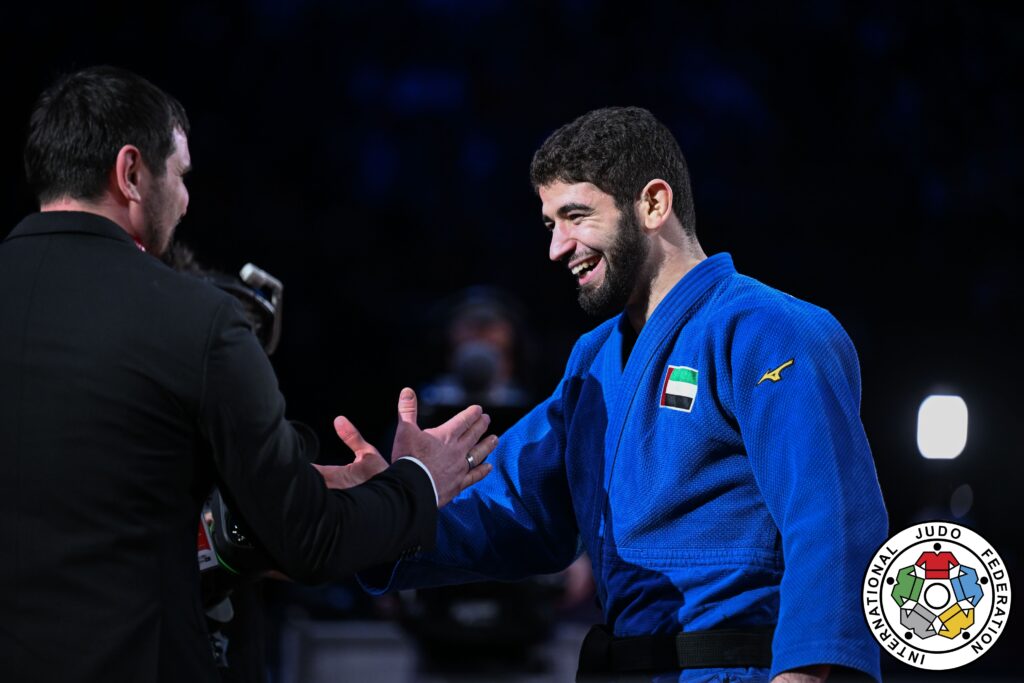
As a coach, Makhmadbekov’s first World medal in 2025 in Budapest remains a great source of pride. And also the fact of having qualified six athletes for the Olympic Games — because at that point, even major nations like Germany didn’t have as many representatives. Qualifying a full team for the Games is something.
And if I look back at my athletic career as a whole… Of course, my World medal, my medals at the Asian Championships or in the Grand Slams. But above all, that famous weekend at the age of sixteen in Moldova when I won the national cadet title and then the national junior title the next day, without ever spending more than a minute on the mat. Those two days will always stay with me.
And regrets? An Olympic medal you didn’t win, missed opportunities?
No regrets… Some wonderful surprises, rather. I was often struck by certain careers. I think of Austria’s Sabrina Filzmoser, who I saw at the Olympics on television when I was young. Her face had stayed with me. And ten years later, I found her on the mat. It was the same with Ilias Iliadis. It was as if I was crossing over to the other side.
And you — watching you compete, you always seemed very serene — as if winning or losing was okay, you stayed confident. Is that down to your character, or was it something built over time?
It was built when I went to the UAE. Before, I had doubts. After, I truly started to believe in myself. And that’s what I tell my athletes: no matter the competition — Olympics, World Championships, World Cup — that’s not what tells you whether you’re strong. Strength is on the inside. If you believe you’re strong, you are, even if you lose sometimes. Because mistakes, strokes of luck, bad days — they happen to everyone.
I have an example I often tell them: at a training camp in Tokai, Japan, there was a young lad from Georgia who was just starting out. He lost often, but every time he lost, he got back up, got back into position and went again as if nothing had happened. Everyone could see he wasn’t the strongest — but he behaved as if he were. And years later, that same lad, Lukhumi Chkhvimiani, finished fifth at the Olympics, won European and World titles, and keeps on progressing. He lost, and lost, and lost — but he never dropped his head. And then, boom, the results came.
A great example…
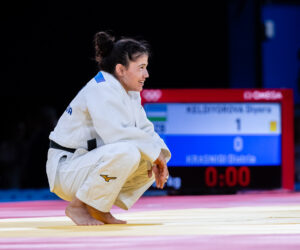
That’s what I explain to my guys: anything is possible. Did you see Diyora Keldiyorova in Paris? Who would have bet on her before the Games? She beats Abe, she beats Buchard on home soil in France, and in the final she beats Krasniqi… Because she had a strong mind. And that, you can’t buy.
If the Victor of 2026 could go back in time and speak to the seven-year-old Victor tying his first white belt, what would you say to him?
I would tell him not to ease off after the first big medals. Because when I won my World medal, something changed in me a little. Not radically, but something had shifted in my approach — some coaches were trying to change things, and I was perhaps listening a little too much. The period from when I was seven up to senior level was perfect — my family supported me, I worked hard, I won. What I would have wanted to change is the 2014-2016 period. Before Rio, I went to competitions knowing I was going to win. I no longer really questioned it. And at that point, I eased off a little — the Japanese training sessions with their endless uphill running, I knew them, but I may no longer have been doing them with the same intensity. When you reach the top, that’s precisely when you need to redouble your efforts. Never think it’s already won.
That’s something you understand in judo even at a more modest level — the Monday evening after winning a medal on Sunday, one coach I knew well would put you in the centre of the tatami and for half an hour you’d fight non-stop two-minute randori rounds against fresh opponents who rested between bouts. You’d end up not knowing who you were — gold medallist the day before and down on the mat every thirty seconds the next. It was a good way to rediscover humility and motivation.
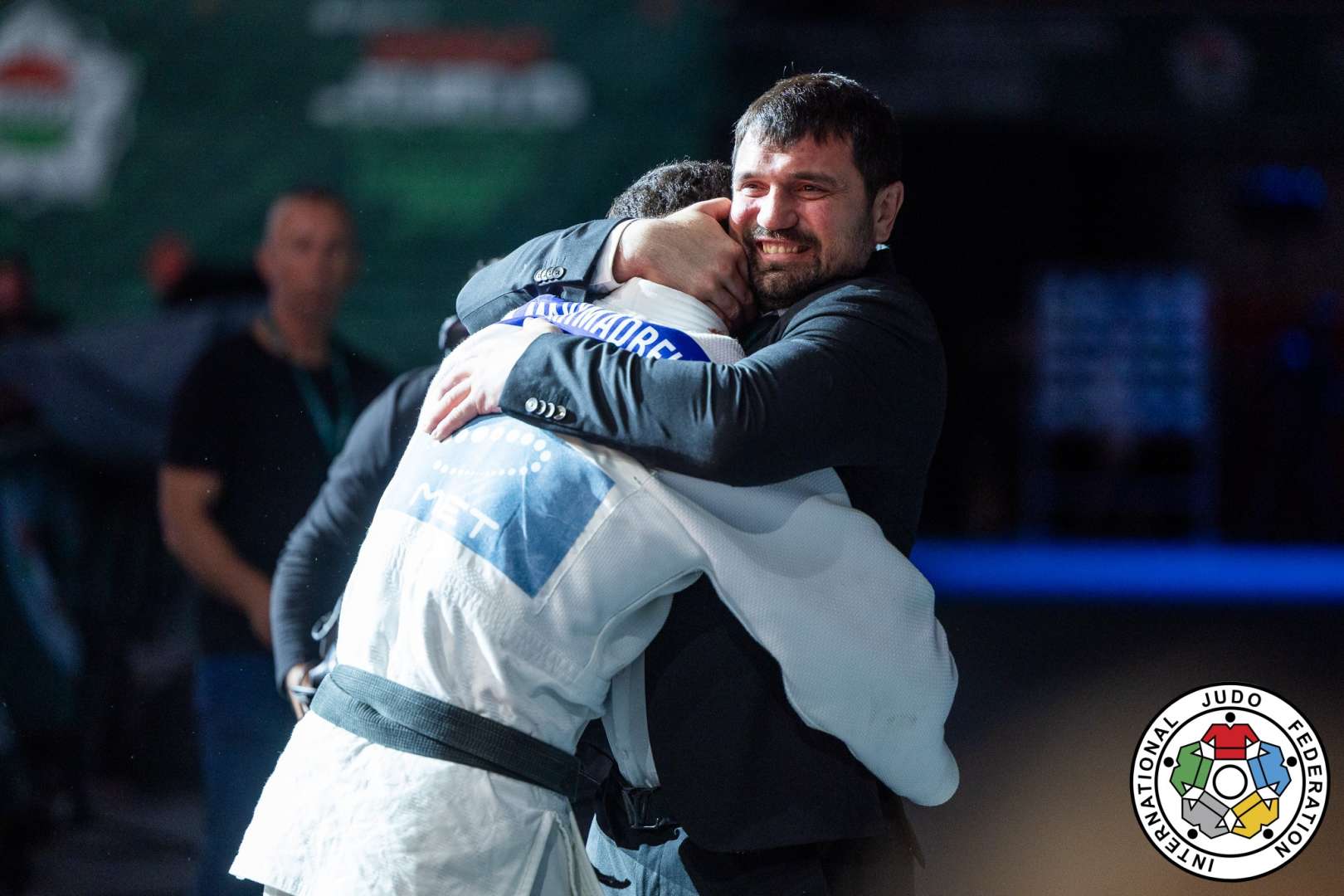
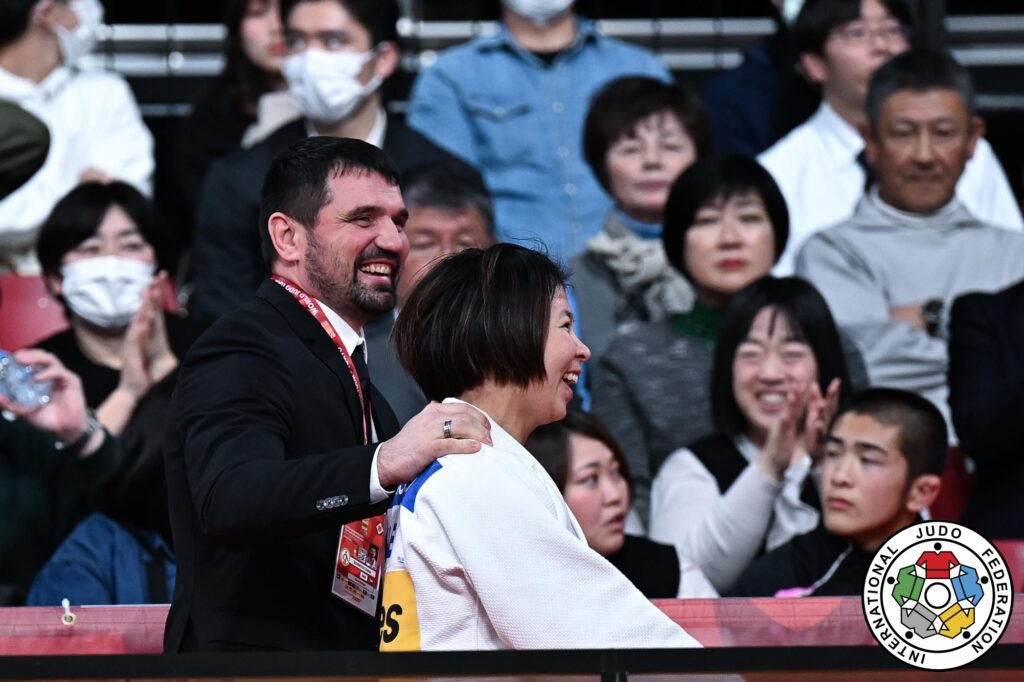
That’s exactly it. The moments when you’re at the top look very much like the moments when you’re at the bottom. Every athlete has their period of doubt — those moments when results don’t come, when you want to stop. What makes the difference is who is with you in those moments. My second coach said to me one day: “You’re strong. That competition was bad luck. Never drop your head.” And he added: “I will never tell you to stop.” If I had had someone else by my side at that moment, I wouldn’t have gone to the UAE, I wouldn’t be a coach today — and my whole life would have taken a different path. – Interview by Anthony Diao, spring 2026. Opening picture: the shared joy of a World medal, here with U73kg Makhmadbek Makhmadbekov at the 2025 Budapest Worlds. ©Gabriela Sabau-IJF/JudoAKD.
A French version of this interview is available here.
More articles in English:
-
- JudoAKD#001 – Loïc Pietri – Pardon His French
- JudoAKD#002 – Emmanuelle Payet – This Island Within Herself
- JudoAKD#003 – Laure-Cathy Valente – Lyon, Third Generation
- JudoAKD#004 – Back to Celje
- JudoAKD#005 – Kevin Cao – Where Silences Have the Floor
- JudoAKD#006 – Frédéric Lecanu – Voice on Way
- JudoAKD#009 – Abderahmane Diao – Infinity of Destinies
- JudoAKD#008 – Annett Böhm – Life is Lives
- JudoAKD#010 – Paco Lozano – Eye of the Fighters
- JudoAKD#011 – Hans Van Essen – Mister JudoInside
- JudoAKD#021 – Benjamin Axus – Still Standing
- JudoAKD#022 – Romain Valadier-Picard – The Fire Next Time
- JudoAKD#023 – Andreea Chitu – She Remembers
- JudoAKD#024 – Malin Wilson – Come. See. Conquer.
- JudoAKD#025 – Antoine Valois-Fortier – The Constant Gardener
- JudoAKD#026 – Amandine Buchard – Status and Liberty
- JudoAKD#027 – Norbert Littkopf (1944-2024), by Annett Boehm
- JudoAKD#028 – Raffaele Toniolo – Bardonecchia, with Family
- JudoAKD#029 – Riner, Krpalek, Tasoev – More than Three Men
- JudoAKD#030 – Christa Deguchi and Kyle Reyes – A Thin Red and White Line
- JudoAKD#031 – Jimmy Pedro – United State of Mind
- JudoAKD#032 – Christophe Massina – Twenty Years Later
- JudoAKD#033 – Teddy Riner/Valentin Houinato – Two Dojos, Two Moods
- JudoAKD#034 – Anne-Fatoumata M’Baïro – Of Time and a Lifetime
- JudoAKD#035 – Nigel Donohue – « Your Time is Your Greatest Asset »
- JudoAKD#036 – Ahcène Goudjil – In the Beginning was Teaching
- JudoAKD#037 – Toma Nikiforov – The Kalashnikiforov Years
- JudoAKD#038 – Catherine Beauchemin-Pinard – The Rank of Big Sister
- JudoAKD#039 – Vitalie Gligor – « The Road Takes the One Who Walks »
- JudoAKD#040 – Joan-Benjamin Gaba and Inal Tasoev – Mindset Matters
- JudoAKD#041 – Pierre Neyra – About a Corner of France and Judo as It is Taught There
- JudoAKD#042 – Theódoros Tselídis – Between Greater Caucasus and Aegean Sea
- JudoAKD#043 – Kim Polling – This Girl Was on Fire
- JudoAKD#044 – Kevin Cao (II) – In the Footsteps of Adrien Thevenet
- JudoAKD#045 – Nigel Donohue (II) – About the Hajime-Matte Model
- JudoAKD#046 – A History of Violence(s)
- JudoAKD#047 – Jigoro Kano Couldn’t Have Said It Better
- JudoAKD#048 – Lee Chang-soo/Chang Su Li (1967-2026), by Oon Yeoh
- JudoAKD#050 – Hermann Monne – Burkina, a Land Already Peopled
- JudoAKD#051 – Mariana Esteves – A Chronicle of Life Passing By
- JudoAKD#052 – Tiphaine Gingelwein – Chechnya and the Caucasus, a Feminine Perspective in Nuance and Complexity
- JudoAKD#054 – Eric Gervasoni – From Moves to Movies
- JudoAKD#055 – Mihael Žgank – Coming Home Is Where the Real Journey Starts
- JudoAKD#056 – Patrick Grosperrin – Laterality, a Little-Known Lever of Performance
- JudoAKD#057 – Rest in Peace, René Nazaret (1936-2026)
- JudoAKD#058 – Alexandre Paysan – We Saw Him in the Vercors, Bungee Jumping…
- JudoAKD#059 – Habib Alouache – Teaching Joy
- JudoAKD#060 – Diyora Keldiyorova – Another Giant Leap for (Wo)Mankind
Also in English:
- JudoAKDReplay#001 – Pawel Nastula – The Leftover (2017)
- JudoAKDReplay#002 – Gévrise Emane – Turn Lead into Bronze (2020)
- JudoAKDReplay#003 – Lukas Krpalek – The Best Years of a Life (2019)
- JudoAKDReplay#004 – How Did Ezio Become Gamba? (2015)
- JudoAKDReplay#005 – What’s up… Dimitri Dragin? (2016)
- JudoAKDReplay#006 – Travis Stevens – « People forget about medals, only fighters remain » (2016)
- JudoAKDReplay#007 – Sit and Talk with Tina Trstenjak and Clarisse Agbégnénou (2017)
- JudoAKDReplay#008 – A Summer with Marti Malloy (2014)
- JudoAKDReplay#009 – Hasta Luego María Celia Laborde (2015)
- JudoAKDReplay#010 – What’s Up… Dex Elmont? (2017)
- JudoAKDReplay#011 – Zakopane, or Lives Passing By (2017)
- JudoAKDReplay#012 – Thierry Frémaux (1/2) – About The Legend of the Great Judo (2016)
- JudoAKDReplay#013 – Thierry Frémaux (2/2) – Judo in the Light (2021)
And also :
- JudoAKDRoadToLA2028#01 – Episode 1/13 – Summer 2025
- JudoAKDRoadToLA2028#02 – Episode 2/13 – Autumn 2025
- JudoAKDRoadToLA2028#03 – Episode 3/13 – Winter 2026
- JudoAKDRoadToLA2028#04 – Episode 4/13 – Spring 2026
- JudoAKDRoadToLA2028#05 – Episode 5/13 – Summer 2026
JudoAKD – Facebook – Instagram – X (Twitter).