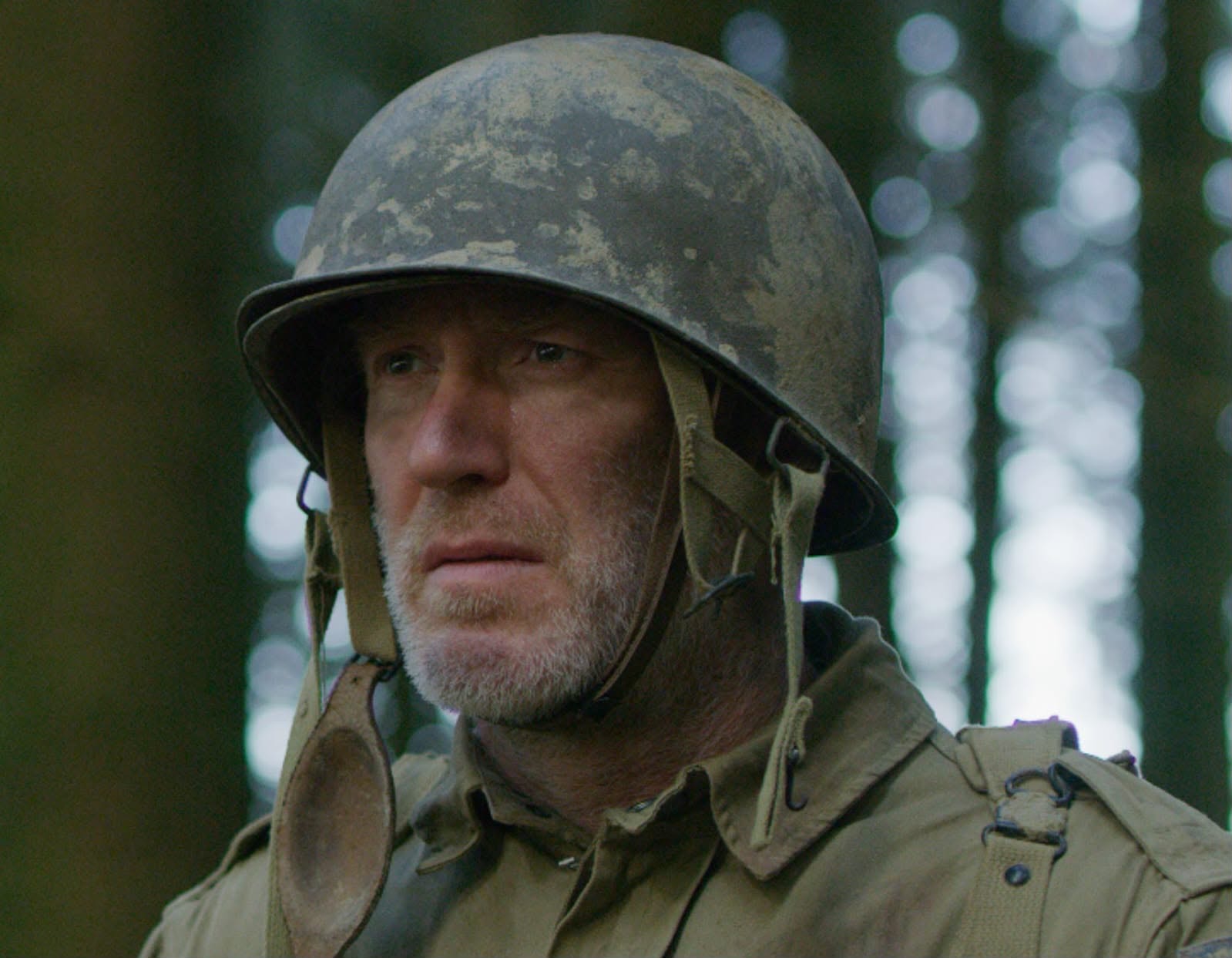
Beyond a few shared milestones – starting in 1986, first dan in 1995, like astronaut Thomas Pesquet – the Savoyard fourth dan has the distinction of embodying the main character of Mémoires silencieuses. This short film with a singular trajectory is directed by Gaetano Naccarato, another Savoyard judoka about whom I wrote a few lines for the French bimonthly L’Esprit du judo #121, recently published. The portrait is entitled “Mouvements et caméras.” Here is its opening paragraph:
“A black frame, a voiceover. A forest, mist. Clouds, mountains… On the ground, France is occupied and the conflict, for the second time, is global. An American soldier advances, alone. ‘As his journey unfolds,’ the synopsis reads, ‘the outer war becomes entangled with a more intimate struggle, revealing the cracks and torments he carries within.’ Thus begin the eleven minutes of Mémoires silencieuses, the haunted and multi-award-winning short film by Chambéry-born Gaetano Naccarato. ‘It’s a film about falling – a key notion when you come from judo.’“
Because the conversation begun with its central performer deserved more space than the often constrained format of a print publication allows, we arranged to meet on a fine Sunday morning, a few days before the film was recognised once again, in Cannes this time, at a selection running alongside the prestigious Festival. A warm conversation, the fruits of which follow here in writing. – JudoAKD#054.
A French version of this interview is available here.
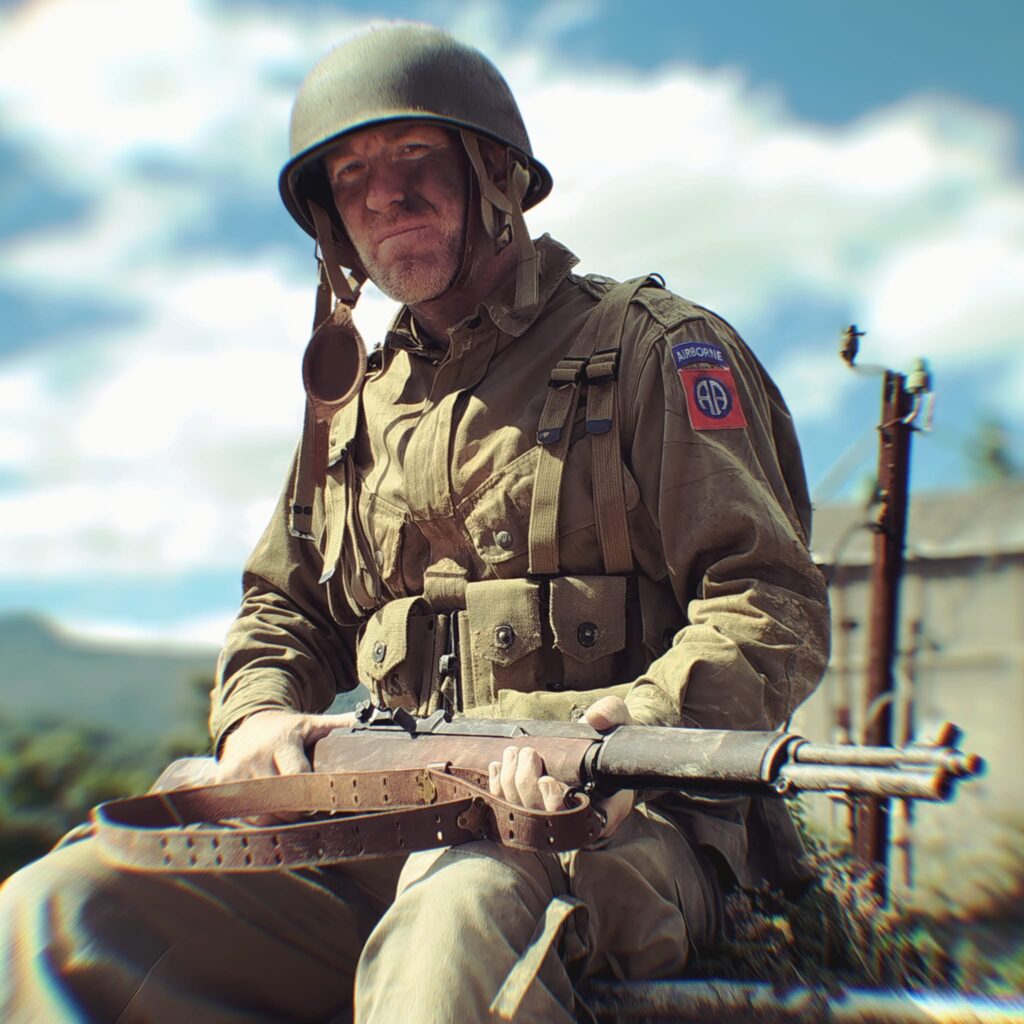
Before going into the details of your judo journey, let’s come back to what we touched on last time: how did your connection with Gaetano come about, and how did you come to take part in the Mémoires silencieuses project?
It happened the way you’d expect – through judo. It’s Gaetano’s sport and he loves it. We had the chance to meet at training sessions at the Alliance Revard in Aix-les-Bains, where I help out teaching. You know how it is: you cross paths on the mat, chat a bit in the changing rooms, but without really knowing each other at first. Then he dropped off for a while. He clearly has quite a demanding professional life, which is why he can’t always train regularly.
Did you know what he did for a living at that point?
I didn’t necessarily know what he did, no. When he came back we gradually got to know each other on and off the mat. He’d mentioned being a filmmaker, but nothing more. It wasn’t really the main focus of our conversations – which were essentially about judo. He wanted to get back into competition, particularly on the veterans circuit, and we’d talked a bit about supplementary physical preparation. And then we lost touch a bit because he stopped coming to train as often.
And yet you suddenly shifted into a higher gear.
Indeed. A few months later, I come back from a training session, turn my phone back on and see: a missed call, a WhatsApp message, a text, a voicemail – all from him. I think he’s decided to get back into it. I call him back, and he says: “Look, we don’t necessarily know each other in that world, but I’m a filmmaker. There’s a factory that’s going to be demolished in a few days and I need to get some footage. I’d like an American soldier doing forward and backward falls in the background. I’d thought of a judoka, because it’s more straightforward – he already knows how to do it, you just put the uniform on him.” I tell him I can ask around at training. He replies: “No, if I’m calling you, it’s because I want it to be you.” At that point I say: “Wow, hold on, I’m fifty years old, rolling around in the mud…” But he needed an answer quickly because the demolition of the factory was imminent. So I said: deal, let’s go.
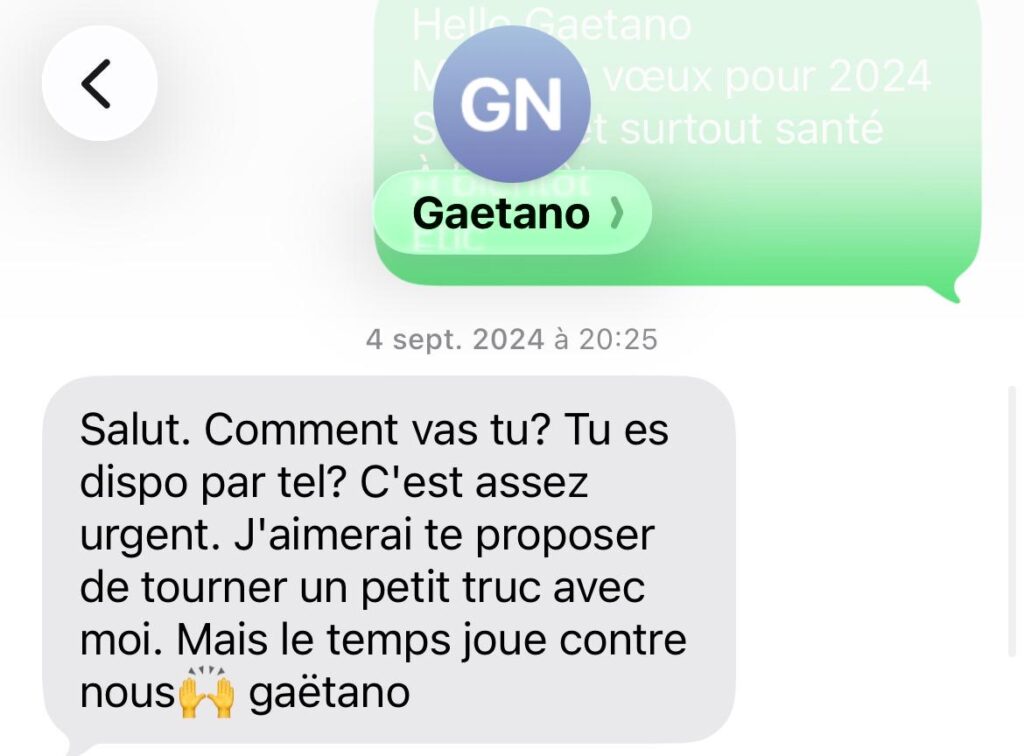
How did it unfold from there?
The next morning, I was at a prop master’s – someone who does costume and weapon rentals for the cinema – for fittings. I was kitted out in a Second World War American GI paratrooper uniform, with two period weapons deactivated but capable of firing blanks. The prop master transported the weapons himself to the meeting point, which was the Vicat factory – a fairly well-known cement works in Savoie and beyond.
And that’s where things tipped into something bigger?
Exactly. Gaetano and Priscilla Delay, the film’s producer and artistic director, were waiting on site. At the start, it was mainly about seeing whether the soldier in the background worked visually. But looking at the first images, he told me it was really working rather well. He then asked me to do a few more falls and rolls on a pile of rubble. In the exchange, I mentioned to Priscilla that if Gaetano wanted, I could also jump from a three or four-metre roof – no problem, as long as he puts some sand down for the landing. She replied: “Don’t tell him that, he’ll take you at your word.” Too late – he’d heard. He asked me to do a test – first without the weapon, then with it, varying the arm movements.
That evening, he looks at the rushes and calls me back around eleven at night to say: “The footage really works well. I’m going to rethink everything that had been done. We are going to adapt our story to take into account everything your potential can bring. It’ll be a short film and you’ll be the main character.”
It wasn’t clear to you at that stage that it would become that kind of format?
Not to me, no. For him, perhaps he already had ideas, but that wasn’t how he’d presented it to me originally.
And how did the rest of the shoot go?
We met up over several weeks but not continuously – a day here, a day there. We filmed in forests, by the water, in various locations. Gaetano noticed that I was extremely attentive and very adaptable, which led him to add a fight scene with another judoka, Yann Trécourt – who is more of a rugby player these days, but with judo foundations and the “German” look he was after. And above all, the final scene, where he said he could see the emotions passing through – for him, it’s the best scene in the film. There’s notably a seiza position held for a very long time, and what Gaetano noticed was the serenity that emanated from those postures. I think that’s not down to me alone. It’s more that judo brings that – the rigour of training, the respect, part of the Moral Code. We talked about it constantly together, actually, and that’s how I mentioned it to Arthur Clerget, and how the subject made its way to you.
That’s true… Was this your very first experience in front of a camera?
Exactly. I knew absolutely nothing about that world.
According to Gaetano and Priscilla, you seem to have caught the bug. Do you want to pursue the experience?
Not only did I develop a taste for it, but Gaetano and I have been speaking every day for a year and a half now because the adventure continues. We won in Houston – one of the oldest short film festivals – then at the international Filmoramax festival in Lyon. In March we won another one at the Gasparilla International Film Festival in Tampa, Florida. I couldn’t go because I’d changed jobs and it fell that same week, but Priscilla and Gaetano were there and we won the Audience Award. And now it’s at Cannes. He called me last night at eleven to tell me we’d been selected for a festival running within Cannes. There’s a prospect that Mémoires silencieuses could be recognised once again, at the Cannes Prestige Summit this time. It’s all very fresh, the decision is expected within forty-eight to seventy-two hours. If it happens, it’s enormous. [Interview conducted at the start of the 2026 Cannes Film Festival – Ed.]
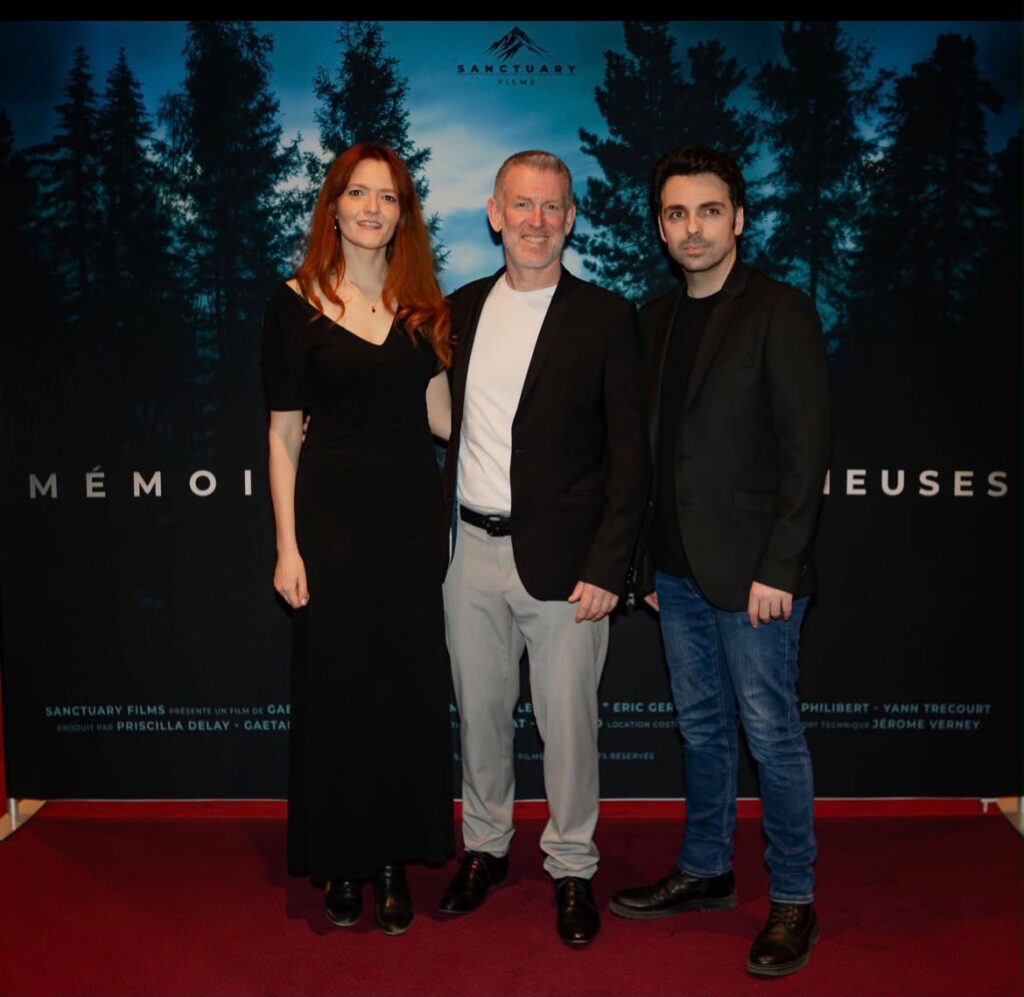
Let’s go back to the beginning of your judo journey. How old were you when you started?
I started judo at eleven, in 1986, and got my black belt in 1995. I have to mention René Miksa, because he’s the pioneer who brought judo to my native Maurienne valley – his black belt number was below 500 [#313 exactly], which gives you a sense of what he represented. It’s his son Edmond who runs the club today.
And how did your journey develop from there?
Rather conventionally at first – competitions at regional and inter-regional level. I was also club president in Modane for a time, because when it’s a passion, you get more broadly involved. But I didn’t stay in the presidency long — my studies took me away. Then I joined the pôle France in Grenoble for two years, which is where I obtained my state coaching qualification in 1995-96. Straight after, I took my second dan. Then I did my military service at the 403rd Artillery Regiment in Chaumont, in Haute-Marne — a semi-disciplinary regiment with elements of the Foreign Legion within it. When they saw I had a state qualification in judo and self-defence, they asked me to teach close combat to the combat battalion, and judo on Wednesdays to the children of senior officers. That opened unexpected doors — I was able to speak to senior officers I would never otherwise have come across. And it helped me pass the NCO cadet platoon: I left as a sergeant, the highest rank for a conscript. When I say judo has guided me throughout my professional life, those stages are part of it.
And after the army?
For a while I worked at a ski resort giving summer judo and self-defence classes to holidaymakers. Then I moved to Bourg-en-Bresse to work at Renault Trucks, where I was responsible for around forty people on the assembly line. And there again, judo caught up with me. The financial director of Renault Trucks – three thousand employees – comes to see me on the line and summons me to his office. He tells me he’s passionate about judo, that he’s a second dan like me, and that the Bourg-en-Bresse Judo Club had collapsed because the teacher left with the money. He wants to rebuild the club with his wife and offers me the role of resident teacher. I tell him that in return, I need to work days, because on a two-shift rota (one week mornings, one week afternoons) I can’t run the classes. A month later, I had a new daytime position… I did that for three or four years, before returning to Savoie around 2008.
At that point, you stopped judo for around ten years – something you wouldn’t imagine hearing you talk about it today. Why?
In fact, it wasn’t judo itself that no longer suited me. It was being tied to training timetables. I aspired to being able to train a bit when I wanted, how I wanted. I took up running, then at the company I joined – a large Swedish firm – there was a cycling group. I said: with running and cycling, if I learn to swim, I could do triathlon. And I did ten years of triathlon, from sprint distance to Ironman – three Ironman races in total. After the last one, I hung up the bike and went straight back to judo.
How did that return go?
Through René Miksa, my first teacher, who introduced me to Pascal Scanavino saying: “Take him, I know he’s a good judoka.” After a few months, Pascal handed me the competition classes to run. He also said: “Get your grades sorted, you can’t stay at second dan with your level.” I then met Vincent Orvelin, Savoie’s kata coordinator, who took me somewhat under his wing. Together, they put me through my third dan, then my fourth straight after – you’re now allowed to fast-track a dan. I did everything through competition, even at nearly fifty years old.
Were you competing in the same weight category as before your break?
I competed in U73kg throughout my career. Back then, you can imagine how many of us were on the mat in that category… Since coming back, I’ve moved up to U81kg.
You also tried the veterans circuit. How did you find the level?
I was shocked. The training is seriously intense. For my comeback, I finished third at the Maurienne tournament, but only just – I was missing a few hours of training in the arms…
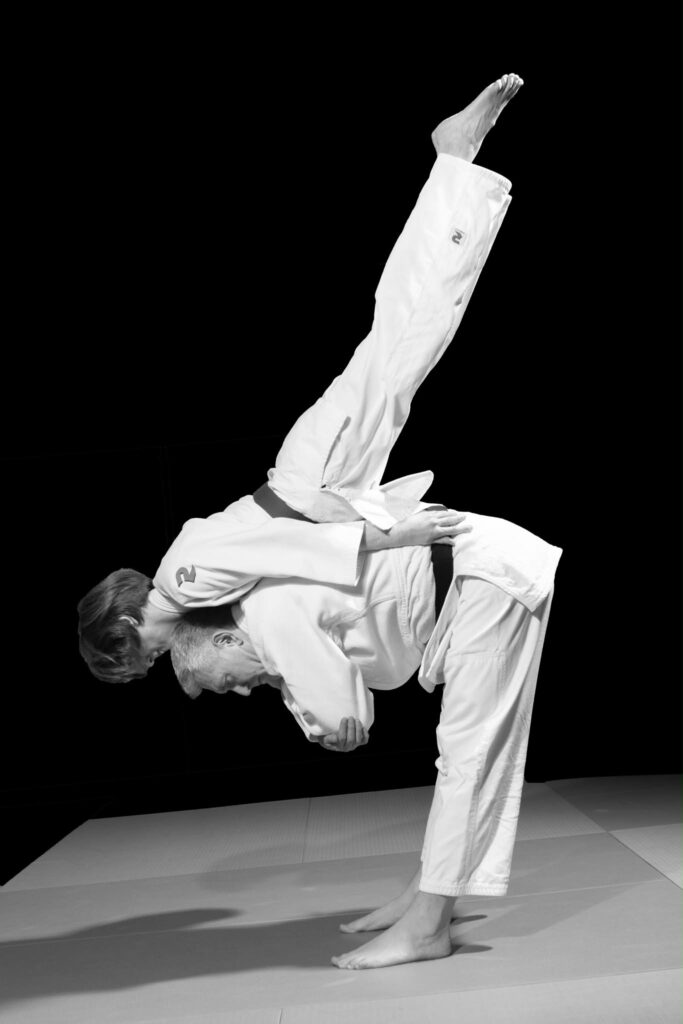
You even went as far as the French kata championships with your partner…
Yes, it’s interesting. Vincent Orvelin, sixth dan, is Savoie’s kata reference. He has competed at the European kata Championships several times and at the Worlds in koshiki this year. His approach to kata isn’t solely tied to grade progression. He passed that passion on to me. For my fourth dan, he had me corrected directly on the mat by Patrick Vial, who had been his own teacher, and Serge Feist. Can you imagine? And on top of that, both of them have the honesty to tell me they’re not the most qualified people to correct my kata… Even so! I was over the moon.
What struck you about that discipline within the discipline?
What struck me most was the way he made me work the katame no kata for the third dan. We developed each technique in its entirety, all the way through, complete attack and defence — not just outlines. And through that process, I rediscovered ground work. In the competitions to score my third dan points, I scored eighty percent of my points on the ground. That’s remarkable for someone who had never worked it that way before. We also made it to the French kata championships with my partner – but as she wasn’t a black belt, I ended up having to do the presentation with a different partner. We had no ambitions going in, we got there a bit quickly, and it came to nothing. But the experience was there.
Is your judo post-2018 different from your judo pre-2008?
Completely. Before, I relied heavily on morote, on strength techniques. And then I had a serious accident – on a makikomi, the guy took me down to the ground while continuing to turn, I had my shoulder torn, the pectoral, the dorsal. I passed out, two days under observation, a year and a half of rehabilitation… The shoulder never really came back – I could no longer raise it above ninety degrees. So my judo changed out of necessity. And the new rules also forced adaptation. I was more of a wrencher – let’s say I became a bit more technical. [Smiles]
On the subject of the new rules – did you experience what I’d call the Hibernatus syndrome? You know, when you come back after a long break and find yourself out of step with what’s now allowed or not…
Yes, in a way. Coming back, I said: “But nobody’s doing judo anymore!” The rules had changed so much. In my first shiai, I lift the guy with te-guruma – that was my thing — and the referee signals a shido. But I didn’t feel that frustration that makes you give up. I wanted to understand the new judo and adapt, simply because I wanted to pass my grades. I’d come back to reinvest myself, not just to have a look. It required a lot of adaptation – releasing grips when standing, the prohibitions on the knees… But quite a few things have also come back since, like the yuko recently.
Did that long break also physically regenerate you?
Yes, completely. My body needed to regenerate. The shoulder cost me years – there were mornings when I couldn’t even roll over in bed. I think that’s perhaps what ultimately made me say stop, unconsciously… Coming back, I had an engine like you wouldn’t believe. At one competition, the referee came up and asked me my age. I was forty-six, forty-seven, and I was the oldest on the board. But I hadn’t come back as a veteran – I’d come back to compete. In terms of cardio, it was formidable. When you’re training for an Ironman at over fifteen hours a week across three disciplines, it leaves you with a very solid aerobic base.
Do you still do all three disciplines?
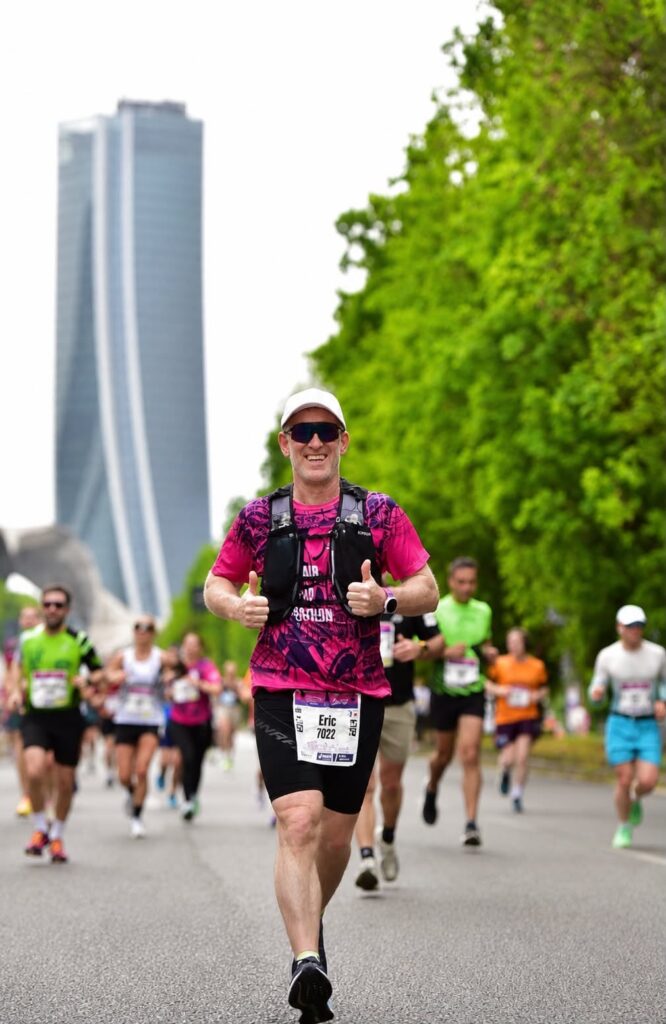
No cycling or swimming at all anymore. I run for pleasure. I did the Milan marathon in spring, fifteen days after the French kata championships – a personal and family challenge with my nephew and niece. My nephew, Loïc Bertolin, also does judo. He was at the INSEP and competed in the first Pro League with Montpellier Judo Olympic.
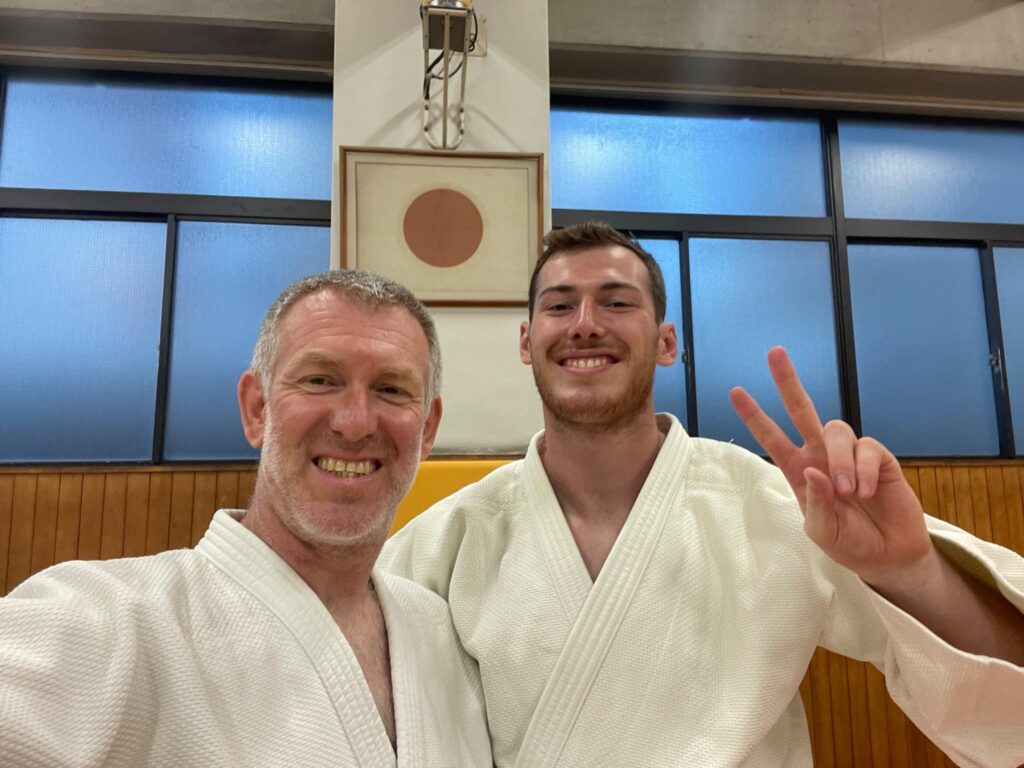
You made it to the Kodokan, in Japan. What was that like?
I went several times. Once, I took my nephew Loïc to show him all of that. There we met Pierre Flamand, who introduced us to neighbourhood dojos – it was fascinating. I also met a Japanese woman who absolutely wanted to speak French, and we’ve kept in touch. That’s global judo for you: we speak the same language, no matter where you’re from. I even got to be in the presidential box at the Paris Grand Slam this year, with Pascal Scanavino. Frédérique Jossinet was there, as was Sarah Nichilo, whom I know well because I was in her club at ESSM when she competed at the Atlanta Games. Those moments give you a real boost.
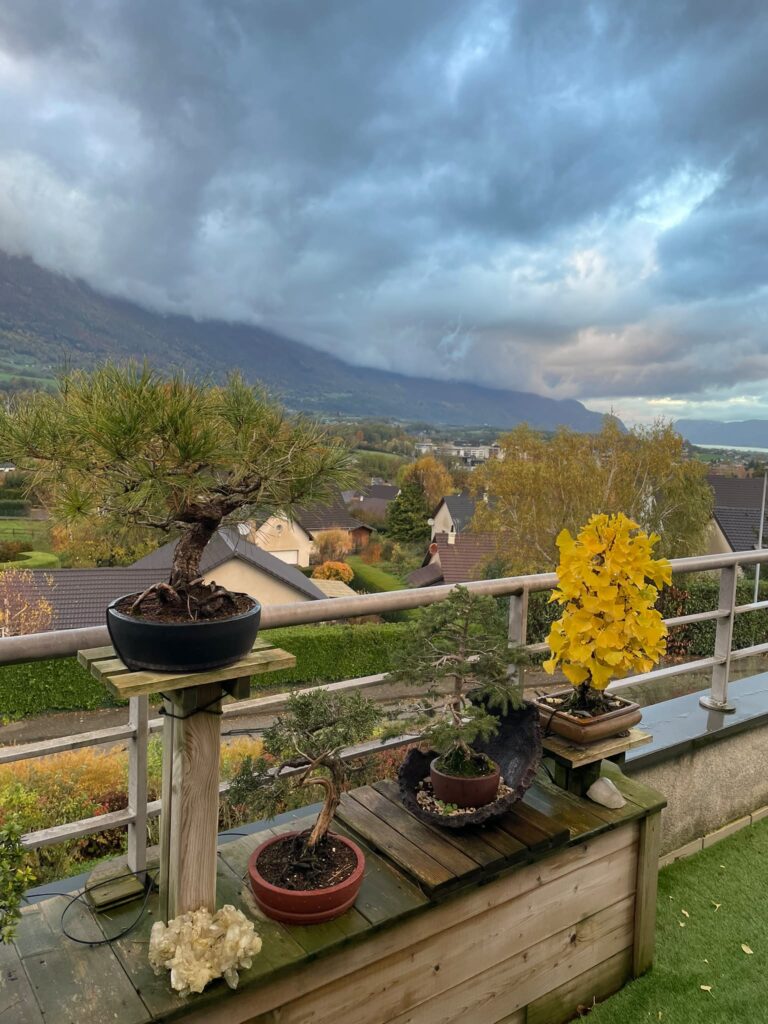
You’ve also developed a passion for bonsai. How do you manage to fit everything in – on top of work, judo, and now even cinema?
First of all, I don’t have children. There’s no point pretending otherwise: that frees up a lot of time. And I have a drive to throw myself into things fully. When I was younger I did cross-country skiing, saxophone, I’ve never strayed far from via ferrata, trail running… My days often run from seven in the morning until eleven at night when I’m training. When the summer breaks come, I really switch off to regenerate. And work remains the foundation – I’m now at Opinel and that’s what allows me to live first and foremost. I don’t earn my living from judo or as an actor. In fact, I don’t even consider myself an actor – it’s an experience, for now.
And yet Gaetano and Priscilla were telling me it’s a path you wouldn’t be averse to…
Gaetano told me I had real potential. He mentioned it again just last night from Cannes. I feel privileged, because he told me: “Do you realise there are more requests to join an agency in Paris than there are students in the grandes écoles.” Here’s an agency asking if I’d be willing to sign with them. I know nothing about it, I’m expecting nothing, but I’m open.
What is it that struck them about you – a presence, a “look”, a way of performing?
First they wanted to verify that it was really me who had done everything, stunts included. Gaetano confirmed it. And they find that the emotion comes through, that the face is there. And as it happens, being fifty years old is actually an asset in their eyes in this specific case – it gives you someone who has lived, who can play roles marked by experience. Age, in my case, could work in my favour where for others it might seem an obstacle. But I’m not getting carried away. If it happens, it’ll be through Gaetano, and it’ll remain an experience alongside everything else… What I also like is that the two of us would love to embark on a longer project together.
In what way does judo practice irrigate everything you do?
In every way. When I talk to you about all my parallel activities, I’m actually talking about judo. When I put on my judogi, there is respect. When I hold my belt in my hands, I feel energy passing through it. In fact I can’t stand it when someone throws a belt on the ground, for example.
Did your long break also help renew your curiosity?
Completely. I came back a bit like a dog let off the lead, throwing myself into every event possible, and it’s the encounters – Pascal Scanavino, Vincent Orvelin – that led me towards technical work and kata. And then you think: but I actually know nothing about judo. It’s wonderful because I have the energy to keep moving forward. And physically, there are no triathlon-related traumas. My body needed that parenthesis.
A few years ago, Dutchman Chris de Korte (1938-2024) told me you no longer see complete teachers – people capable of teaching competitors, children and kata alike. Do you feel like a complete judoka today?
While remaining humble, yes. I teach children and those classes seem to be appreciated. I run the competition classes, I give technical adult classes. And kata, of course, since we took part in the French championships. At Savoie training camps, people would come and ask me for advice on the ju-no kata while Vincent Orvelin was taking the nage no kata. I think yes – at my own modest level, it remains a fairly complete approach to judo.
If the Eric of 2026 could give a piece of advice to the Eric of 1986 tying his very first white belt, what would he say?
That’s a beautiful question – it forces you to project yourself and it almost gives me chills… [He thinks] Deep down I think I didn’t take enough advantage of my first teacher, René Miksa, who has since passed away. I hadn’t realised the value of what he was bringing us. So to the Eric of 1986, the Eric of 2026 would say: make the most of everything you’re being taught, because there will come a moment when you’ll need it – because after that it will be your turn to pass it on to others. So don’t wait.
Understanding that earlier might perhaps have led me to approach teaching differently. These are things I understood and rediscovered late. Nothing is a waste of time, but the wisdom of those who taught me judo – that is a treasure.
Sometimes we have treasures right before our eyes and don’t see them. At twelve, at fifteen, you think you know everything and there’s always something better to do. And then you leave. And when, one day, you finally come back – because one always comes back… – you find that your mentors are no longer there… Thinking about it, I would have liked to have been a little better accompanied through certain transitions. But it’s also up to each person to take themselves in hand. It’s that holding back in the moment, and the nostalgia it generates afterwards, that I would take away from all this, in the end. – Interview by Anthony Diao, spring 2026. Opening picture: on the set of Mémoires silencieuses. ©Sanctuary Films/JudoAKD.
More articles in English:
-
- JudoAKD#001 – Loïc Pietri – Pardon His French
- JudoAKD#002 – Emmanuelle Payet – This Island Within Herself
- JudoAKD#003 – Laure-Cathy Valente – Lyon, Third Generation
- JudoAKD#004 – Back to Celje
- JudoAKD#005 – Kevin Cao – Where Silences Have the Floor
- JudoAKD#006 – Frédéric Lecanu – Voice on Way
- JudoAKD#008 – Annett Böhm – Life is Lives
- JudoAKD#009 – Abderahmane Diao – Infinity of Destinies
- JudoAKD#010 – Paco Lozano – Eye of the Fighters
- JudoAKD#011 – Hans Van Essen – Mister JudoInside
- JudoAKD#021 – Benjamin Axus – Still Standing
- JudoAKD#022 – Romain Valadier-Picard – The Fire Next Time
- JudoAKD#023 – Andreea Chitu – She Remembers
- JudoAKD#024 – Malin Wilson – Come. See. Conquer.
- JudoAKD#025 – Antoine Valois-Fortier – The Constant Gardener
- JudoAKD#026 – Amandine Buchard – Status and Liberty
- JudoAKD#027 – Norbert Littkopf (1944-2024), by Annett Boehm
- JudoAKD#028 – Raffaele Toniolo – Bardonecchia, with Family
- JudoAKD#029 – Riner, Krpalek, Tasoev – More than Three Men
- JudoAKD#030 – Christa Deguchi and Kyle Reyes – A Thin Red and White Line
- JudoAKD#031 – Jimmy Pedro – United State of Mind
- JudoAKD#032 – Christophe Massina – Twenty Years Later
- JudoAKD#033 – Teddy Riner/Valentin Houinato – Two Dojos, Two Moods
- JudoAKD#034 – Anne-Fatoumata M’Baïro – Of Time and a Lifetime
- JudoAKD#035 – Nigel Donohue – « Your Time is Your Greatest Asset »
- JudoAKD#036 – Ahcène Goudjil – In the Beginning was Teaching
- JudoAKD#037 – Toma Nikiforov – The Kalashnikiforov Years
- JudoAKD#038 – Catherine Beauchemin-Pinard – The Rank of Big Sister
- JudoAKD#039 – Vitalie Gligor – “The Road Takes the One Who Walks”
- JudoAKD#040 – Joan-Benjamin Gaba and Inal Tasoev – Mindset Matters
- JudoAKD#041 – Pierre Neyra – About a Corner of France and Judo as It Is Taught There
- JudoAKD#042 – Theódoros Tselídis – Between Greater Caucasus and Aegean Sea
- JudoAKD#043 – Kim Polling – This Girl Was on Fire
- JudoAKD#044 – Kevin Cao (II) – In the Footsteps of Adrien Thevenet
- JudoAKD#045 – Nigel Donohue (II) – About the Hajime-Matte Model
- JudoAKD#046 – A History of Violence(s)
- JudoAKD#047 – Jigoro Kano Couldn’t Have Said It Better
- JudoAKD#048 – Lee Chang-soo/Chang Su Li (1967-2026), by Oon Yeoh
- JudoAKD#050 – Hermann Monne – Burkina, a Land Already Peopled
- JudoAKD#051 – Mariana Esteves – A Chronicle of Life Passing By
- JudoAKD#052 – Tiphaine Gingelwein – Chechnya and the Caucasus, a Feminine Perspective in Nuance and Complexity
- JudoAKD#053 – Victor Scvortov – Born Again Under a Lucky Star
- JudoAKD#055 – Mihael Žgank – Coming Home Is Where the Real Journey Starts
- JudoAKD#056 – Patrick Grosperrin – Laterality, a Little-Known Lever of Performance
- JudoAKD#057 – Rest in Peace, René Nazaret (1936-2026)
- JudoAKD#058 – Alexandre Paysan – We Saw Him in the Vercors, Bungee Jumping…
- JudoAKD#059 – Habib Alouache – Teaching Joy
- JudoAKD#060 – Diyora Keldiyorova – Another Giant Leap for (Wo)Mankind
- JudoAKD#061 – Angelika Szymańska – With the Restraint of Those Still on Their Way
- JudoAKD#062 – Valentin Ménard – The Click (That Moment When Champions Just Know)
More Replays in English:
- JudoAKDReplay#001 – Pawel Nastula – The Leftover (2017)
- JudoAKDReplay#002 – Gévrise Emane – Turn Lead into Bronze (2020)
- JudoAKDReplay#003 – Lukas Krpalek – The Best Years of a Life (2019)
- JudoAKDReplay#004 – How Did Ezio Become Gamba? (2015)
- JudoAKDReplay#005 – What’s up… Dimitri Dragin? (2016)
- JudoAKDReplay#006 – Travis Stevens – « People forget about medals, only fighters remain » (2016)
- JudoAKDReplay#007 – Sit and Talk with Tina Trstenjak and Clarisse Agbégnénou (2017)
- JudoAKDReplay#008 – A Summer with Marti Malloy (2014)
- JudoAKDReplay#009 – Hasta Luego María Celia Laborde (2015)
- JudoAKDReplay#010 – What’s Up… Dex Elmont? (2017)
- JudoAKDReplay#011 – Zakopane, or Lives Passing By (2017)
- JudoAKDReplay#012 – Thierry Frémaux (1/2) – About The Legend of the Great Judo (2016)
- JudoAKDReplay#013 – Thierry Frémaux (2/2) – Judo in the Light (2021)
And also:
- JudoAKDRoadToLA2028#01 – Episode 1/13 – Summer 2025
- JudoAKDRoadToLA2028#02 – Episode 2/13 – Autumn 2025
- JudoAKDRoadToLA2028#03 – Episode 3/13 – Winter 2026
- JudoAKDRoadToLA2028#04 – Episode 4/13 – Spring 2026
- JudoAKDRoadToLA2028#05 – Episode 5/13 – Summer 2026
JudoAKD – Facebook – Instagram – X (Twitter).