Born on February 1, 1994 in Celje (Slovenia), Mihael Žgank is, first and foremost, a physical memory. The memory of randoris together – first at his home base, the Judo Klub Z’dežele Sankaku, then every following Christmas at the Italian training camp in Bardonecchia. The U90kg was barely out of his twenties at the time but soaked up like blotting paper everything there was to learn from his illustrious elders and training teammates Urška Žolnir, Lucija Polavder, Petra Nareks, Rok Drakšič, Adrian Gomboc, Anamari Velenšek, Klara Apotekar and Tina Trstenjak — all Olympic, World and/or European champions and/or medallists, and all trained, like him, in the demanding school of Marjan Fabjan.
In July 2016, under the hot Spanish sun of Castelldefels, Miha confided to me that he was looking for a sparring partner in his weight category for the final stretch of his preparation before the Rio Olympics. Back in France, I mentioned it to Valentin Jourdan, a solid partner I was facing almost every week for half a dozen years on the mats of SO Givors or CS Doua, before his move to Paris and RSC Montreuil. After a legitimate moment of hesitation — he had forty-eight hours to decide — Val accepted enthusiastically. This unique experience took him up another notch. Cause and effect or not, a few months later Val made it onto the podium at the French First Division Championships. Miha was among the first to congratulate him by text.
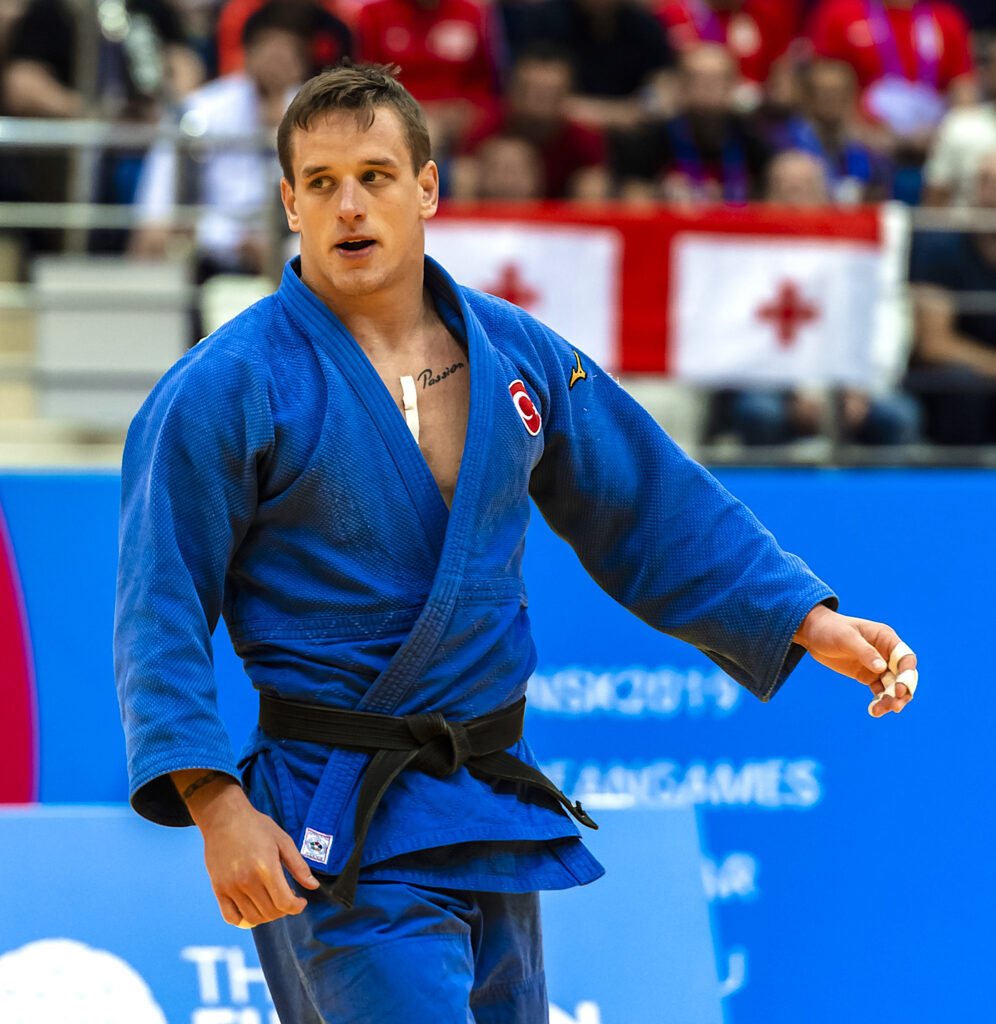
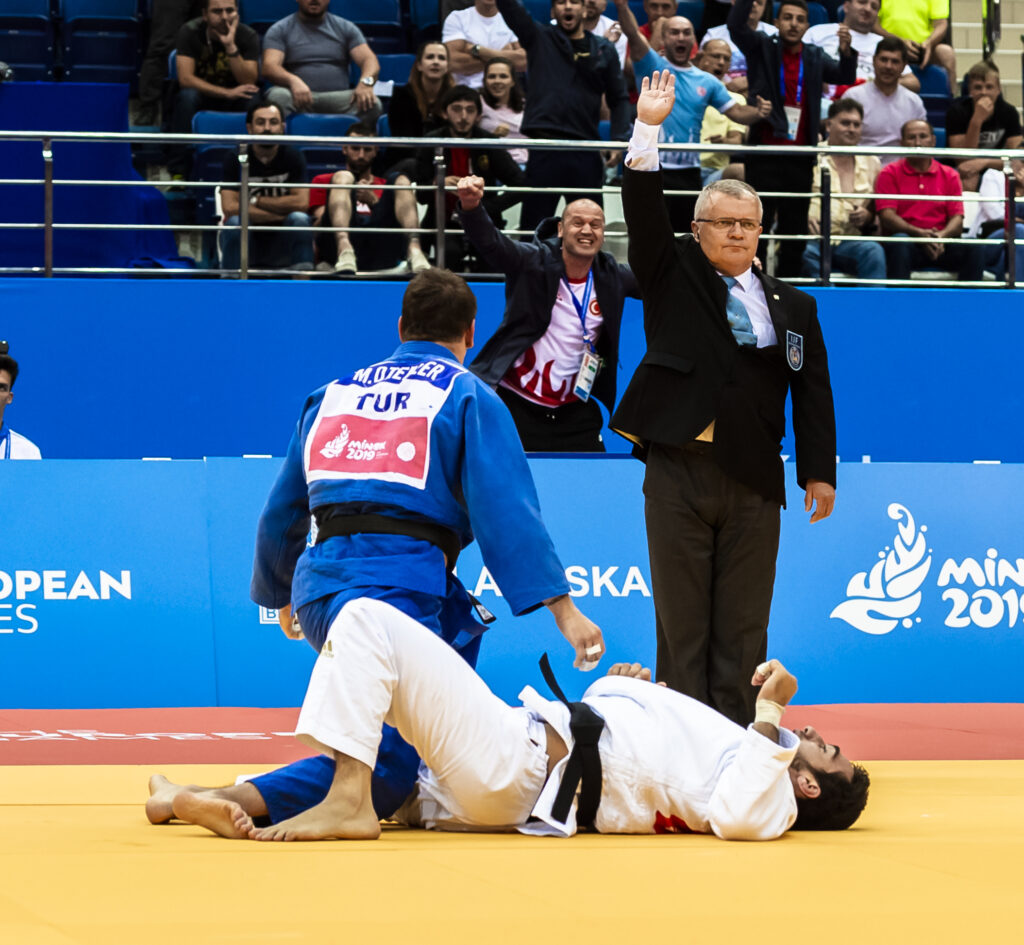
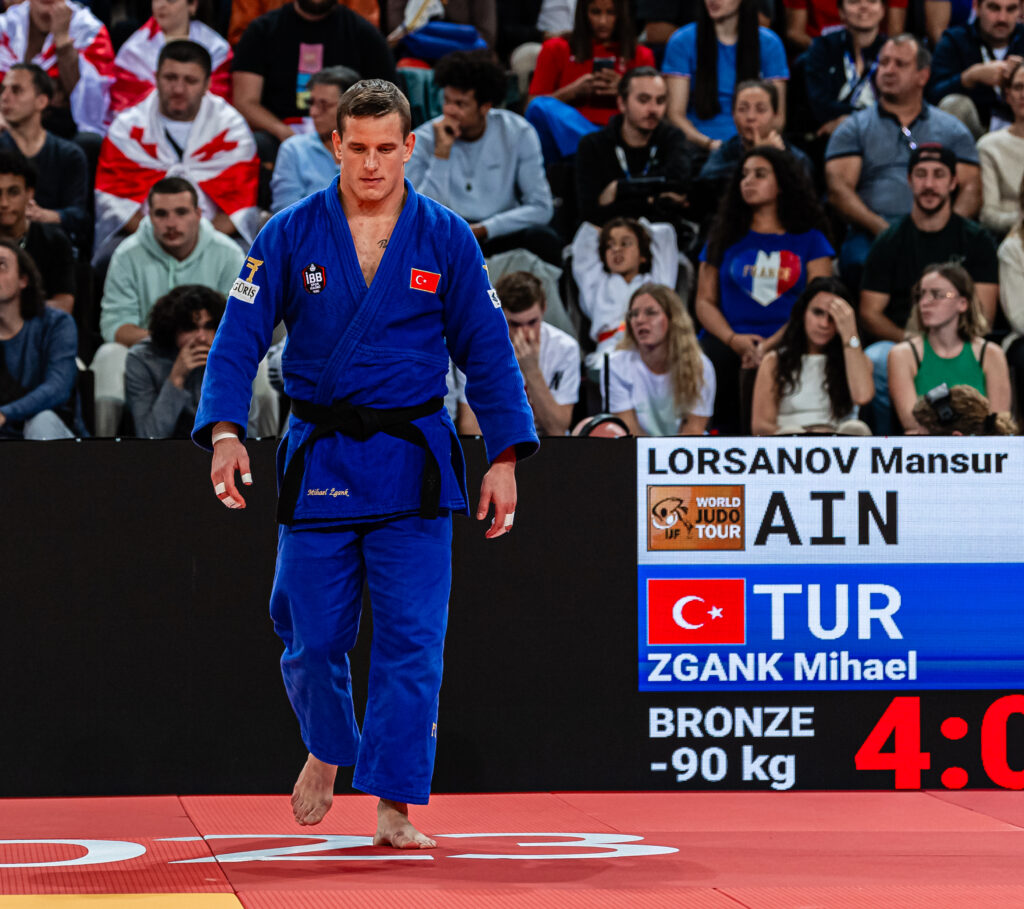
A decade has passed. A World final, a change of nationality to Turkey, two continental podiums including a title at the 2019 European Games in Minsk, a fifth place at the Tokyo Olympics, a spectacular peak in form six months before the Paris Olympics… And since then, silence, or almost. Absent from the tatami since the Games but not officially retired, the thirty-something is taking time to think about what comes next, dipping a toe in before venturing into life after sport — as he recounts in the long and fascinating interview below. – JudoAKD#055.
A French version of this interview is available here.
Where are you at since the Paris Olympics? You’d mentioned a kind of pause…
Actually I wanted to try living a normal life. To see how people live when they’re not professional athletes, who don’t travel all the time and don’t sweat while risking injury every day.
And so, what’s that life like?
It’s been an interesting period, I’ll admit. I’m trying a lot of things. My goal, in the first year after the Games, was to take a sabbatical. Rest a bit, enjoy life, you know. And then a friend of mine in Slovenia asked me at that point to help him out with coaching a bit. He has a club that’s growing fast. A profile like mine, obviously, was a godsend for him. So I took the opportunity and started coaching a little. In total, I spent just over a year at that club.
Which club is it?
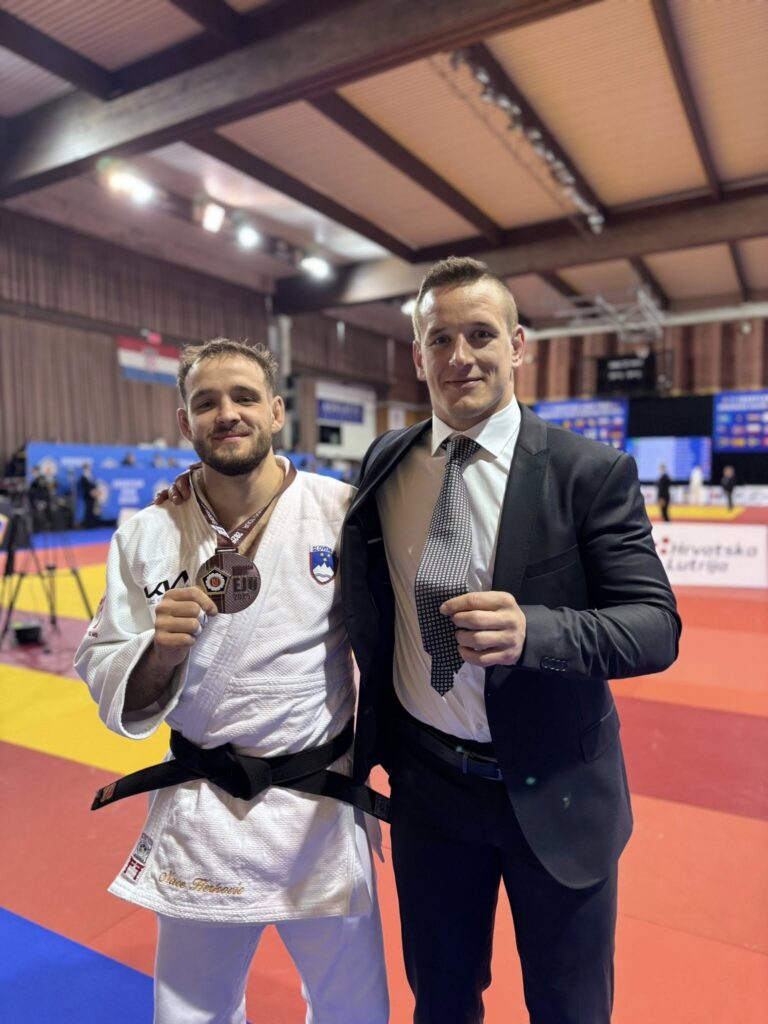
It’s in Slovenj Gradec, a town forty-five minutes from Celje, between Italy and Austria. They have an athlete, Nace Herkovic, who competes at U81kg and won the Sarajevo European Open last October… Taking care of these guys helped me progress too. I saw the system start to evolve — but in judo, it takes time to change a system, especially in a club that’s been running for twenty years. Especially since by the end of that first year, I started feeling tired again because of the travel. At the start I’d hoped to settle down a bit, but coaching even at that level is practically the same thing as being an active athlete. Sometimes it’s even harder.
How so?
They have very good juniors and cadets, which means a lot of travel. But that pace, for me, was fundamentally the same as before. So I stopped and asked myself: did I make the right choice? I wanted to rest, take some time, but I was doing exactly the opposite… Still, it remains an incredible experience that taught me a huge amount. I saw judo from a different angle — something you can’t do when you’re constantly in competition mode, travelling and training. As an athlete, you’re always a bit on autopilot: you train, you travel, you do what your coach tells you, what the Federation tells you. Everything is laid out in front of you: eat here, do your physical prep there, go to competitions here. But when you take a few steps back, you start seeing things differently, and that’s when it gets interesting.
Were you in charge of the seniors at that club?
Yes, but I mainly looked after the juniors and cadets. So I was still travelling a lot around Europe — maybe even more than before. It was really a lot. With athletes to manage, weights to monitor, schedules… And we had these WhatsApp groups where you had to communicate constantly, with endless problems and adjustments. You think everything’s settled, everything’s calm — and then someone gets injured, someone else has a different schedule, has to go to school… It takes a huge amount of organisation to juggle all that.
When did you start that experience?
I started in October, after the Games. I’d just come out of two months without judo. Back in Slovenia, I went through a difficult period. The transition was hard. I went through a breakup at that point, complications moving into my new flat. It was chaotic and very far from what I’d hoped for.
And what had you hoped for?
I’d expected a gentler return… When I was there seven or eight years ago, I had those friendships, we’d go out together, I had people around me… It was the same when you’d come back between trips, we’d all get together. But when you actually settle down, you see that everything has changed. Everyone’s living their own life. Everyone has their own priorities, their own struggles. It’s hard to accept. When you see your parents, your nephews, your niece, your sister — everyone’s at a different stage of their life.
Yes, it’s something I worked out very young, having had to travel a lot early on: the journey begins on the way back. When you come home, when you find yourself among people you care about but who haven’t lived what you’ve lived — there’s often a gap, misunderstandings, sometimes a lack of comprehension. In any case, there’s a balance to find.
It’s awful at times. And it’s really a lesson for me too, because I thought I was intellectually equipped enough to anticipate that kind of thing in my life. But there are things nobody prepares you for. I haven’t officially ended my career yet, but it’s been almost two years since I last did any major competitions, just a few team leagues. And even that was a difficult change for my body, for my nervous system.
What do you mean?
My body got sick several times. The longer it went on, the more anxious I became just from sitting still in the evening. I’d think: I need to do something, this isn’t normal. And when I’m not training, I feel like I need to eat two or three times a day — I want to eat everything, because you’re used to eating a lot. I have this perception that food has to come first. I talked about it with athletes who’ve also stopped, and now I understand. A lot of them find different escapes. For me, it was cycling at first — a lot of cycling. And there were also periods when I started drinking quite a bit of alcohol, to distract myself.
Ouch.
Yes, in the period after the Games, for a few months, it wasn’t easy and I didn’t know how to deal with it.
And your weight — did you manage to stay at 90 kg?
No, I gained weight too. I was still training, but I went up to 98-100 kg pretty quickly, even with the cycling. And last winter, when I was setting up my academy, I didn’t do any sport for two or three weeks because of the stress — I went up to 106 kg.
Wow. And now, what are you at?
Now I’m around 100 kg, and I feel better. I train once a day, sometimes twice, but more like a hike or something light — not heavy training sessions. I’ve reached a point where I know I no longer need to eat all the time. I often skip dinner — maybe just a salad or something light. I’ve started rebalancing everything gradually… In short, it’s not easy to find the right rhythm.
How are things in Celje, by the way? Like many, I heard about the allegations concerning Marjan Fabjan a few months ago. I ran into him at Bardonecchia at Christmas, he gave me his version of events…
The court is about to start examining the case… Personally I don’t know what to think. These allegations date back more than fifteen years. Physically, there’s always been a lot of rigour and discipline, but it was also a different era. As for the other allegations, I was too young to see what was going on and I was never exposed to that side of things, so I really can’t say anything about it.
You grew up and trained in Celje. And now you’re launching your academy there. How did Marjan Fabjan take the news?
Unfortunately I think he didn’t take it well. Yet I tried to do things properly — I called him, invited him to dinner, invited his people, told them my doors were open if they wanted to come. But he took it a bit personally. And when people ask me about it, I tell them — as I’m telling you now — that given what’s happening with the court case, I really hope it gets resolved in the best possible way, because it’s really bad for Slovenian judo in general. It’s also in my interest, and in Fabjan’s interest. In any case, he’s understood that I’m not taking sides.
Where do you stand on it, yourself?
My primary value is the truth. What matters is that everything comes to light. I don’t want to attack him, especially since he already feels watched from every direction right now. It’s hard for him, for the club, and it’s hard for me too to see this. Because I owe him everything, in a way. If I’ve become the man I am, it’s thanks to his club, to Fabjan and to the discipline he instilled in me. I’ll be eternally grateful to him… I used to visit him sometimes after the Games, we’d talk. But since these things came out, he’s become a bit distant with everyone, and I completely understand that. I hope it doesn’t affect his health too much, because I know in recent years he’d been paying close attention to his diet and had lost weight.
At what age did you start judo?
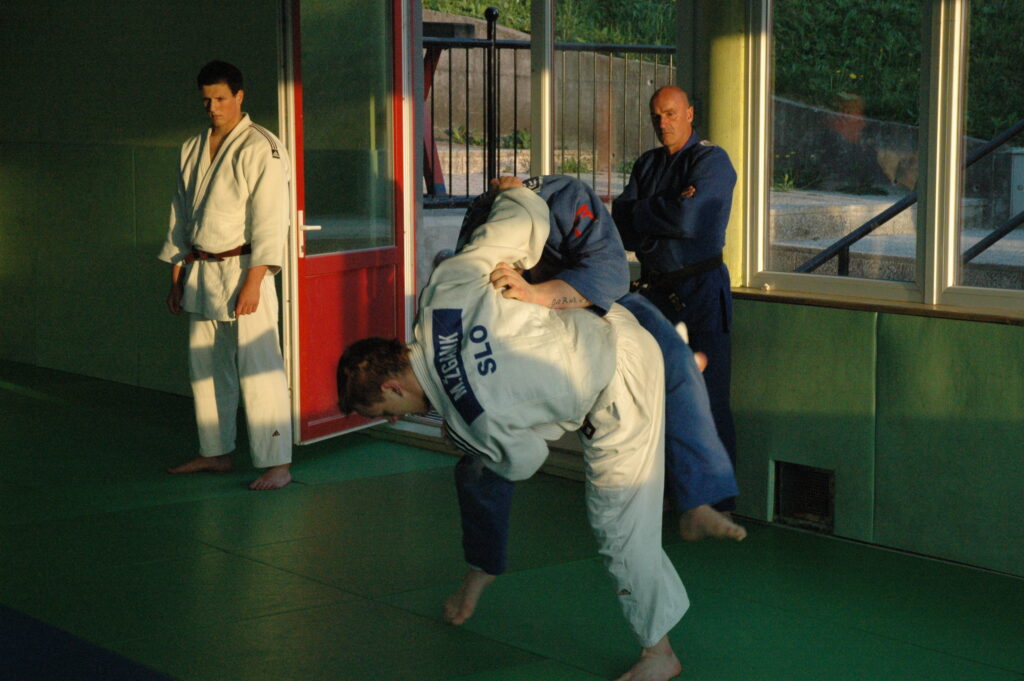
I started judo at seven. Why judo? I think it’s because it started at my primary school. That was the first step. I remember wanting to become strong, learn self-defence, build muscle. That’s one of my earliest memories. And when I went there, it was presented as a self-defence martial art: “Judo will toughen you up.” I got hooked straight away, especially since in the first sessions we played a lot. I latched onto that. Then, a few years later, I won my first medal, and it was the best feeling I’d ever known. After that, I kept winning more, and it became one of my missions in those very early years.
Was that at Sankaku already?
Yes. They ran classes in the primary schools of Celje — almost every primary school was covered. I was lucky to be there, and Lucija Polavder was there too. She gave me a lot, because I followed her closely as I was growing up. And after six or seven years, I started training with her. Well — I would have liked her to be my coach… Then I started fighting her, and after a while, I started beating her in randori too.
One thing that struck me about your progression: I watched you grow step by step. I don’t think you were necessarily the most talented guy at the start, but through sheer work — I told some journalist colleagues at the Paris Grand Slam who were following the Rio Games: keep an eye on this guy, he won’t be far from a European or even World medal one day. And six months later, at the 2017 World Championships, you took silver… Then, surprise! That same autumn, you announced you’d now be competing under the colours of Turkey. How did that opportunity come about?
It’s a really interesting case. It started at the 2017 European Championships. I’d been preparing flat out for it since the start of the year. I’d told myself: this is the year, this will be the first time I win a major medal. In 2016, I’d already been to the Games, but my biggest medal up to that point was at the 2016 Masters in Guadalajara. It was a nice bronze, but what I wanted was a championship medal: Europeans, Worlds, maybe Olympics down the line. After Rio, I’d set myself a goal: start with a European medal, then a World one, then aim for the Tokyo Games. That was the plan. I’d put everything into the 2017 Europeans, but it didn’t go that way…
Why not?
Things were a bit tense between Fabjan and me at the time. He’d delegated my coaching to someone else, but that didn’t suit me. I wanted him to coach me. After the Europeans, I told him: I want you to be fully invested for me, or I’d rather go elsewhere, because I plan to do great things in judo and I want to give myself every chance. It was a professional choice, in line with my ambitions and my room for progression.
How did he react?
At that point, he told me he’d received offers for him and Tina to go to Turkey, but that they probably weren’t going to accept, that he wanted to stay in Celje. I, on the other hand, had had the idea of looking elsewhere since I was very young. But in judo, it’s not like other sports — in basketball or football, you can play for Barcelona while remaining a citizen of your own country. In judo, if you want to do that, you have to change nationality. When he mentioned this possibility after the Europeans, I was intrigued. I thought: this might be a good chance for me. Because I’d prepared like crazy for those Europeans… and I lost in the first round in twenty seconds, like an idiot, against Belarus’s Varapayeu, who hit me with a kata guruma in twenty seconds.
What was your state of mind, right after that?
I thought: well, I did everything but it didn’t come off. And Fabjan said we could try to give it everything for the Budapest Worlds in September. I had four to five months to prepare, and he really got stuck in alongside me. He put together a programme for me. We worked a lot. Igor Tbovc had been with me since those Europeans, always on the tatami or beside it. We were really preparing for those Worlds. At the start, I don’t think anyone really believed it was possible, because it was a big leap.
Especially since Slovenia didn’t have a World medal in the men’s category at the time…
And even today, there hasn’t been another World or Olympic medal for Slovenia in the men’s category. But little by little, I was improving. I think Igor and Fabjan could see that I was beating some of the best athletes in the world. At big training camps, I was managing without overworking or overtraining. That showed my form was really good, even compared to the Europeans. And by working further, I added a mental dimension to training that I’d never explored before. It was a total investment.
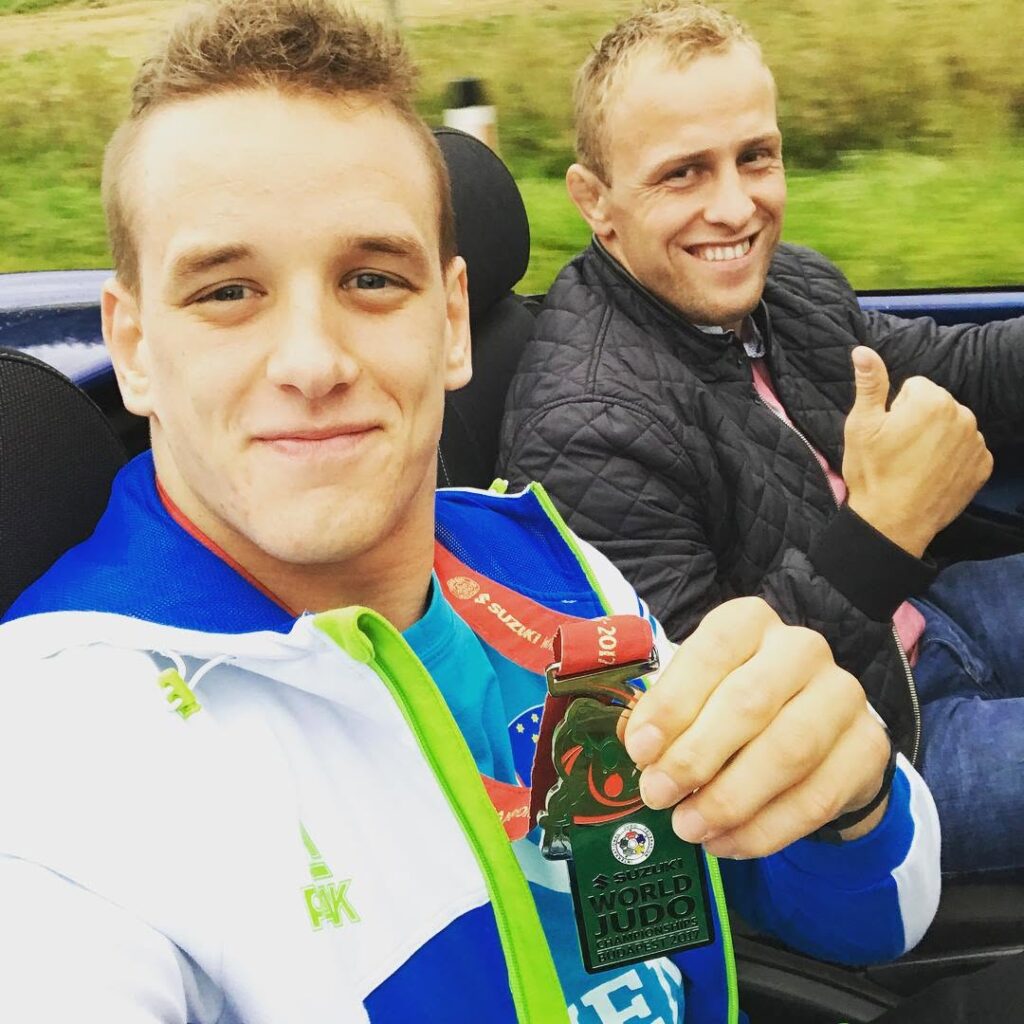
An investment that paid off, since on September 1 there you were, World silver medallist…
At the Worlds, everything paid off. My goal had been to get a World medal — not to win the title. That’s why I didn’t win in the end, I think: because as soon as I knew I was in the final, I knew I’d have the medal, and I settled for that.
How did the Turkey topic come back onto the table?
A few weeks later, Fabjan — I don’t remember which direction it came from — was perhaps approached again about Tina and himself, and he mentioned that I was also a good prospect. Negotiations started. They contacted me. We had a meeting. And deep down, I’d known from the start that I wanted to make that decision, because that’s how I wanted to experience the sport — to leave, to learn new things. It was obvious. And of course, there was a financial security that Slovenia couldn’t offer: no expenses, a good salary, a good bonus after the Games, a pension after forty if you win an Olympic medal. I told myself: I’m going to Tokyo regardless, either for Slovenia or for Turkey, and I’m going for a medal. If I’m devoting my whole life to this, at least I want a return on investment, something to help me live afterwards. That’s really how I reasoned at the time — in a purely material and security-driven way. And I wouldn’t change that decision. Even if you asked me now, I’d do the same, because it gave me everything: it gave me a different perspective, it built me, it shaped my character.
Yes, we talked about this over coffee at the European camp in Mittersill, in January 2018. You told me everything Georgian Turkey coach Irakli Uznadze brought you…
Yes, at the start, it was really good. It was a big change for me too, because Fabjan was very structured, very planned — he planned everything starting from the finish line and built the steps one by one working backwards. I think that was his greatest talent: he’d start from the Olympics, such-and-such a date, and work back to today, week by week. There was iron discipline, but I didn’t really feel the human side, the warmth. That’s what the Georgian had. He gave me the feeling that we were almost friends, that he really wanted me to succeed, that every result, every medal, he lived it with me. It was really good for me. Even at camps, we’d talk sometimes, there was this human warmth I hadn’t had before. It was really good at the start. In those first years, he really opened my eyes to a different approach to training.
During our chat in Austria, you were still waiting for your papers, if I remember correctly…
Yes, that transition phase wasn’t easy. I had to wait six months for a passport — even longer, I think eight months, because my first competition was the Baku World Championships in September 2018. So in January I was already with the team, but my first competition was in September. It was a long wait, with a lot of uncertainty, because they kept promising me the passport in a few weeks, maybe a few months. Extra stress.
And were you already living in Turkey at that point?
Yes, I was under huge pressure because the Olympic qualification period had already started — this was 2018 and the Tokyo Games were then supposed to be held in 2020 — and I was missing everything. My first results for Turkey reset me to zero in the rankings. I was second or third in the world after the Budapest Worlds, and then I was starting from zero at every competition. I was really stressed because I didn’t know how I was going to manage it — and the quotas had also changed at the time. I think the number of men’s spots had gone from twenty-two to eighteen per category. I was a bit scared. And then, the following year, after losing my first five competitions under the Turkish colours, I managed to win the Antalya Grand Prix, and then the European Championships in Minsk — and that’s when everything started to unblock. It was like a weight lifting, because in Turkey, it’s an investment: either you come and perform, or they make a change and bring in someone else. You know the money invested has to produce results.
Yes, that mentality exists there.
Exactly. That’s a pressure I felt at the time. And after the 2019 Europeans, I felt like my mental state was the best of my whole career — for a year and a half, I was at the top, consistent at every competition. I even tore a tendon and still went to competitions, even won medals. The balance between everything was perfect. And then Covid arrived. I was in China at the time.
I recall that Oon Yeoh quoted you in his round-the-world article on that subject. You spent lockdown in Slovenia, is that right?
Yes, and it actually went quite well for me. I used the lockdown to get an operation done without being bothered by the media or anyone. I was able to recover and rest. At the end of 2020, I had Covid for the first time. I lost my sense of smell and taste for five or six months — it was really hard. I was a bit depressed because of it, I didn’t have the energy I needed. But somehow I got through it and got back into some kind of shape. I then had a lot of fifth-place finishes: fifth at the Prague Europeans, fifth at the Doha Masters, fifth at the Antalya Grand Slam, fifth again at the Lisbon Europeans. And fifth at the Tokyo Olympics.
What’s the dominant feeling, after a fifth place at the Games? The pride of having been able to express yourself across several fights, or the frustration of coming so close to the podium?
It’s really hard to come that close. I’m in the semi-final against Germany’s Eduard Trippel. I’d already beaten him, he’d already beaten me. It’s an intense fight, but he already has two shidos. I always attack first, I’m in control and I don’t feel he can beat me — I’m focused, I know all his techniques, I defend well, I can already feel the medal… and yet he gets through. He’s surprised himself to beat me at that moment. And afterwards, for the bronze medal fight, I can’t get myself back together. It’s really hard.
I can imagine. Many people don’t grasp the abysmal emotional gap between finishing third and finishing fifth at the Olympics — especially when you’ve been one of the four semi-finalists…
Exactly. A lot of athletes come out of that experience broken. If you’re not really ready mentally and physically, you won’t get over that hurdle — because it really is one. The medal is both right there and gone forever. Yes, it’s a really, really hard experience.
After Tokyo, did you try to take a break, or is the cycle too short — just three years — to allow yourself the luxury of catching your breath?
After Tokyo, I wasn’t thinking about a break. I was quite clear-eyed about what I wanted: fix everything that wasn’t working, then start the qualification period at the highest level right from the beginning. Be consistent from the start, all the way to Paris. And I also wanted to do well at the Mediterranean Games and the Islamic Games, which are very important in Turkey. So I focused on those competitions, which I won.
And six months before the Paris Games, you pulled off a notable double, winning the Almada Grand Prix in Portugal and then, a week later, the Paris Grand Slam, before following up a few weeks later with a bronze medal at the Antalya Grand Slam…
Yes, I was in great form at that point.
At the Paris Games, however, you went out in the first round against Korea’s Ju-yeop Han… Given your season, hadn’t you hit your peak form too early?
Yes, that’s it. To be honest, I still don’t know exactly what the problem was… Was it that period without a coach? After Tokyo, the Georgian coach had stepped back — he was as devastated as an athlete would be, because he hadn’t gotten an Olympic medal. I think he felt a kind of shame and didn’t want to show himself anymore. After that, the Turkish Federation replaced him with Japan’s Kohei Oishi. Technically, he’s one of the best I’ve had. He taught really well, especially ne waza. But the system, the planning, everything around it, was awful. And coming to Turkey as a coach is hard for a Japanese person, because it’s a totally different mentality.
In what way?
You constantly have to argue, assert yourself, show character, otherwise people don’t respect you. I talked about it a lot with my president because I wanted Ezio Gamba. I really pushed for that. But I think his salary was too high at the time. They didn’t even really want to negotiate with him. And for two years, we were with the Japanese coach and without anyone to structure things — so we tried to make the programmes ourselves. At one point, I said: I’m out, I’m going to Valencia, I’ll train alone, I’ll build my own programmes. And that’s when Irakli Uznadze came back — just a year before the Games. So the dynamic was good at that point because he fought for us, he argued, he did his best. But I think we did indeed peak too early. And unfortunately, that’s how it ended.
During your first seasons with Turkey, you took the surname Mikail Ozerler before going back to your original name. Why?
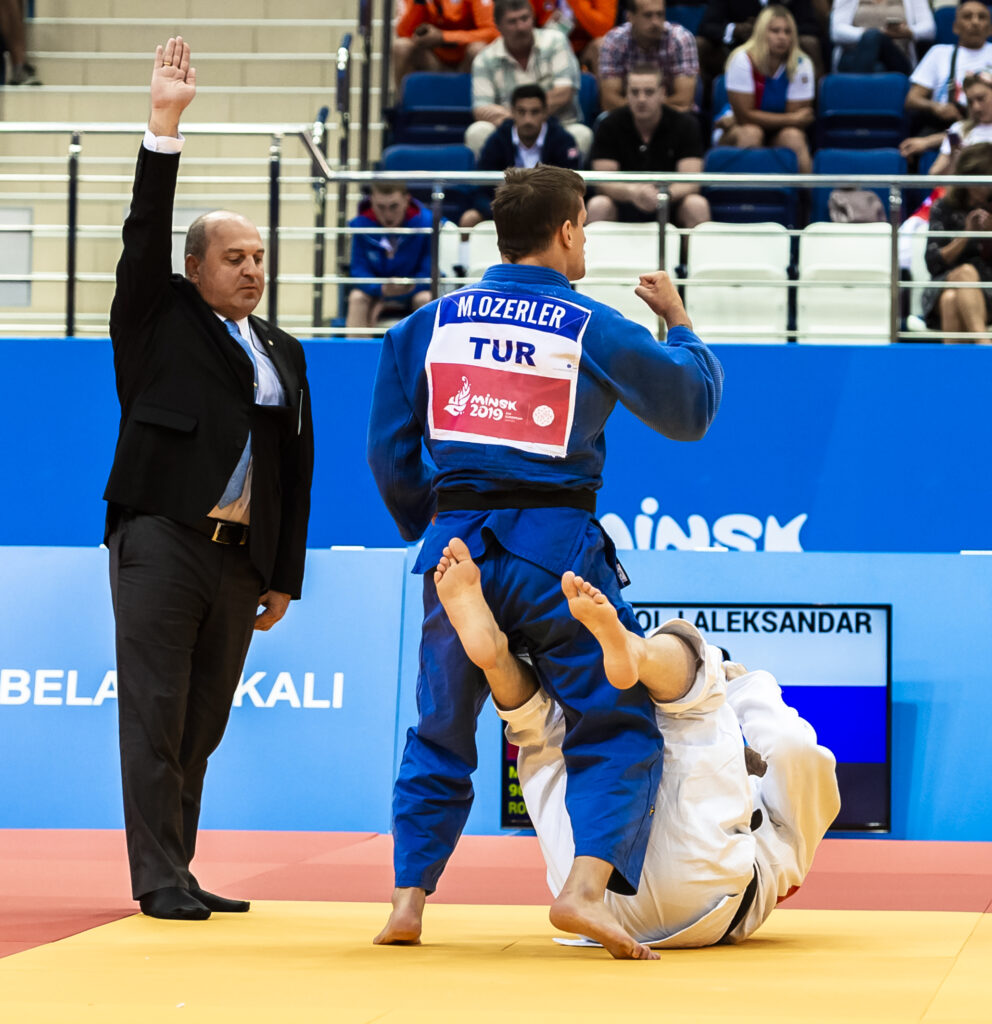
It’s linked to that long wait I mentioned earlier. I wanted to keep my own name, but they told me that switching to a Turkish name would speed things up. It was a common practice at the time: giving Turkish names to people who got Turkish passports. I don’t know what the political logic behind it was, but in any case that’s what they wanted. And I’d always had the idea of competing at the Olympics under my own name. So I told myself: fine, I’ll take this name, I’ll compete with it, but in my head, I knew I’d change it back. And I did actually start the process in 2019, after the European medal. I went to the town hall, talked to them: I want my name back, I’m not a terrorist, I just want to carry the name my parents gave me. And I got my passport with my own name at the very start of 2020 — a few weeks before the pandemic began, actually.
Interesting. And when you were living in Turkey, how often did you go back to Celje to see your family?
In the early years, not often. I think I went six months at a time without going back. Then it became after the big events — Europeans, Worlds, Olympics — so three or four times a year in the first years. But in the last years, after Tokyo, I started missing Slovenia. Friends, family. I had a girlfriend at the time, so I went back more often — about every two weeks, just for a weekend or a week. I was mostly in Istanbul for training, but we travelled a lot — Antalya, Ankara at the Olympic training centre, training camps abroad…
Always between hotels, really…
Yes. And now, I appreciate so much having my own kitchen. Last February or March, I realised it was the first time in maybe fifteen or sixteen years that I’d stayed in the same place for two and a half months.
That’s the real luxury of travellers — staying put…
People don’t understand that. Even the drive to the club where I was coaching — forty-five minutes, sometimes an hour with traffic — was already a lot of stress for me. I’d think: I don’t want to travel this much anymore. And now, it’s been two weeks since I’ve touched my car. I walk to work, I go hiking, cycling — I have a town bike with a basket on the front. Two weeks without a car and I’m so happy. I don’t want to go anywhere. I just want to stay here.
We talked a bit about this on the eve of your title at the 2024 Paris Grand Slam, but yoga seems to occupy an important part of your life now.
It’s not really yoga. Mainly I’ve done meditation. Mindfulness. It’s helped me a lot with focus. When I started, I couldn’t stay still, I couldn’t control my thoughts — they went off in every direction. It was too much. It affected my body too, with all those thoughts, all that negativity. I didn’t know how to focus. And that’s one of the reasons I started meditating…
How did you come to it?
I remember being in a hotel in Japan, I downloaded a mindfulness app, and I thought: okay, let’s try three minutes. And I couldn’t stay still for three minutes. I couldn’t even count to ten breaths. One inhale, one exhale, and already a thought. How is it possible, three minutes without a single thought? That’s where it all started. I gradually learned to observe thoughts rather than let them consume me. And I started incorporating it into my training.
How so?
I saw that I could compete without being devoured by my thoughts. I could just acknowledge them and let them go, like little clouds in a clear sky. I then combined that with visualisation, and it became a really good combination. I think a lot of top athletes do the same thing now — Kobe Bryant did that, famous basketball players, tennis players, Michael Phelps, who was a master of it: he’d programme his mind for the worst-case scenarios, the best-case scenarios, how he’d feel…
Hence your celebrations with hands joined together…
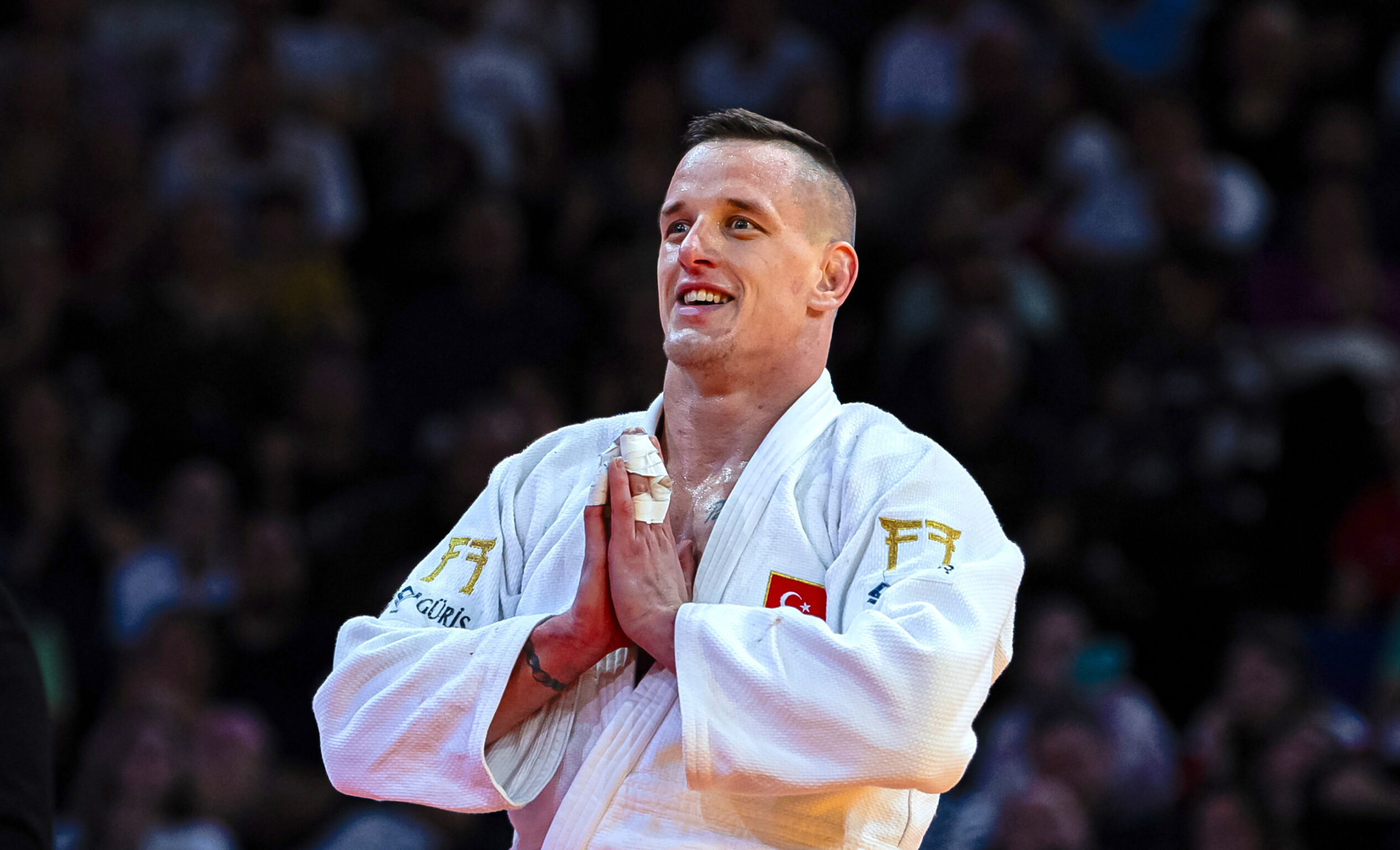
With that celebration, I wanted to show people the importance of mindfulness and mental wellbeing in our sport. I still do it now, every day. After the Games, there were periods when I stopped, and I started feeling bad again. The thoughts started devouring me again, I wasn’t fully present anymore. And now I also do yoga, as you mention — it’s meditation with movement. In sometimes painful positions, trying to control both thoughts and body at the same time. Yoga involves the body more, and it’s an even deeper connection.
You say you started in Japan, that was before lockdown, right?
Yes, I started around 2013, when I was about nineteen. That was a first encounter with it. Then I started with visualisation for the World Championships. I prepared for every scenario: how I’d lose, how I’d fight against this or that opponent, if the referee was someone I didn’t like, if my contact lenses fell out. I’d put up photos of the venue, of my opponents, and I’d try to feel what it would be like fighting against them. And then, that’s when I really started meditating — calming my body, being with my thoughts, trying to be without any thought at all.
You say you struggled after the Paris Games, and that this also coincided with a period when you eased off on meditation. How did you get out of that difficult period? Or maybe you’re still a bit in the middle of that fight?
It’s fine now because it’s been almost two years. It was long, but I really struggled. I tried lots of things, including therapy. What helped me a lot was getting an apartment. I bought it empty and turned it into a renovation project — it helped me think about something else and stay busy. There was also training, lots of things to distract me. I hope it wasn’t all escapism — there was an element of distraction, but I also took the time to face my problems, to feel the post-Games emotions. If you don’t do that, it comes back one way or another.
How did you go about it?
I tried to step out of my comfort zone, because in judo, I’m an expert — or at least, when you do something your whole life, you have skills, you can teach or learn anything easily. But when you start something completely new, like this renovation project, it’s totally different. I also have a job as a trainee teacher at a high school — I teach physical education. It’s a ten-month contract, really interesting. You work with fifteen to eighteen year-olds, you have to teach them sports in general: volleyball, basketball, keep them active, give them something they can take away from that hour of sport. And it’s sometimes stressful too because you have seven or eight different classes of twenty to thirty students to manage.
Is that a field you’d studied?
Yes, I got a diploma in PE teaching and we covered the curriculum during my career, but I graduated in 2018. Getting back to it seven years later is a real challenge. But an enjoyable one too.
Do you enjoy teaching?
Yes, I really do.
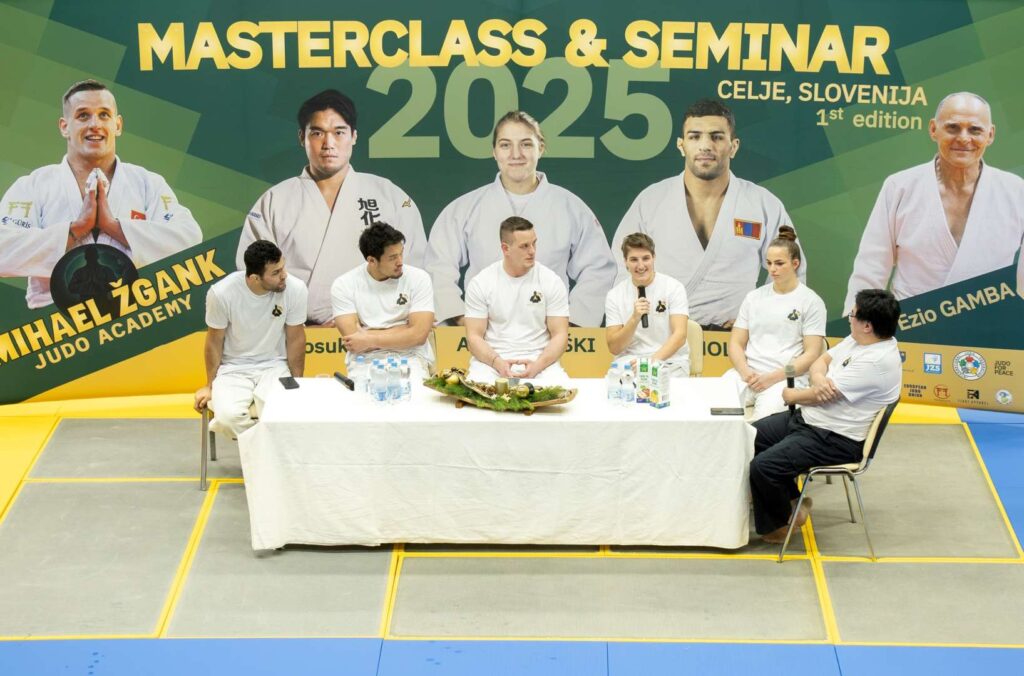
At the end of 2025, you organised a major seminar featuring, among others, Slovenian Olympic champion Andreja Leški, former World champions and Olympic medallists Ryunosuke Haga and Saeid Mollaei, Italian coach Ezio Gamba… How did you manage to bring together such a line-up?
That was also one of the things that helped me deal with post-Olympic stress. Organising a project like that was really useful. Haga was my first choice. My goal here in Slovenia was to bring in male athletes who could offer something concrete to our athletes. At the time I was coaching in Slovenia and I wanted to teach them uchi mata and o-soto-gari, because in that context it would really be useful, but first I wanted to give them solid foundations. I spoke to Haga and he told me he was now living in Düsseldorf, Germany, training abroad as a coach. I saw that as a good opportunity: the plane ticket would be cheaper than from Japan. Then I thought of Andreja Leški, because she was the best at that moment with her Olympic title in Paris. For Saeid Mollaei, the IJF helped me, because he works a bit for them too, particularly with the Paralympics. They sent him here to observe and learn as part of the seminar. I just covered his accommodation costs. It worked out really well for me.
And Ezio?
With Ezio, we’d talk from time to time when we crossed paths on the circuit. He always gave me advice and I had his number. I wrote to him saying I was organising this event and that I also wanted to train the coaches – because I’d seen a lot of seminars focused on athletes, but it seemed really important to me to educate the coaches too. And I was a coach myself at that point, so I also wanted to learn from him — he’s always been a great role model for me. He replied: it’s your first time, we’re friends, I want to help. He’s in Brescia, just across the Slovenian border. He just drove over, gave the seminar, and went back to Italy. I think he also dropped in on Fabjan on the way. I was really lucky with Saeid and Ezio — without them, it wouldn’t have been possible. And the IJF supported me too, without which I couldn’t have managed.
I saw that flyer with all those big names together — it was impressive. And you also organised a round-table discussion with them?
Yes, a discussion panel. It was really good. There were two hundred people sitting in the stands. This year, when I organise it again, I want a photo of us with the stands behind us, to show the scale of it. It was really moving for me, because I remember when I was young, we used to go to Bardonecchia a lot — back then it was Gressoney – and champions would come and demonstrate techniques. At one point, I got the chance to spar with Liparteliani, when I was about sixteen, and it had a huge influence on me — the fact that he was approachable, that we were close. He was already a World medallist, and there I was, right next to him. I wanted to give that to the athletes here, in Slovenia. Unfortunately, not many Slovenian athletes ended up coming, but there were two hundred and fifty other people there.
That was the important thing — the proximity to excellence…
Yes, I wanted to give them that feeling: these champions are approachable, they’re human beings. Even Leški, Olympic champion, even Haga, World and Olympic champion, even Saeid, World champion, and Gamba, Olympic champion and coach of the Russian team. The panel let participants ask questions. We started with a discussion, then opened it up to the audience. And at one point, a fifteen-year-old Bulgarian kid came down from the back of the stands and asked: how do you handle stress and nerves before competitions? Saeid then asked him: why do you feel stressed? What are you afraid of? He answered that he didn’t want to disappoint his parents, his coach, his friends, not to look bad in front of them. And Saeid gave him a really powerful response: you need to remember that you’re doing this for yourself, not for your parents or your coach. It’s your life, your path, your goals in the sport. It was very moving — watching this fifteen-year-old come down, his voice shaking, everyone in the stands happy with the answer. For me, that was the essence of what I wanted to create with this panel.
The aspect of conversations with champions is really interesting. You’re also building a community.
Exactly. I’ve set up a free online school, with that idea of community in mind. There are people watching, taking part. Again, it’s alive, it serves a purpose.
Do you think you’ll be a judoka your whole life?
Yes, I’m sure of it. Even without a judogi, even in civilian life. As you put it: it’s not just a sport, it’s a philosophy. These are the values I’ve drawn from this sport, the values I live by — and that’s what I want to pass on to athletes, to my children one day, I hope. And even here, at school, I want to give them values that aren’t necessarily taught elsewhere.
If you came back to competition, would you still fight for Turkey?
We’ll see… But I’d probably compete at U100kg rather than U90kg.
Do you have any regrets in your career?
I wouldn’t say I have regrets, but if I could change one thing, I’d have liked to learn earlier the importance of asserting myself, of believing in my own values and living by them. I learned that too late. I was too afraid of what people thought, of figuring out which decision would be the right one in others’ eyes. When you have a family, a club, a responsibility as a coach or a teacher, you have to be careful with your decisions and think about the people you’re responsible for. But when it’s your own path, you have to assert yourself. You have to say: I’m doing this. No matter what others think. I know I’m going to hurt some people, but it’s the decision that’s best for me, because that’s how I’ll grow and feel my best. That’s what I regret not learning earlier — because now I see it’s the right path. Everyone, at some point in their life, needs the courage to say: I’m doing this for myself, it’s my path, no matter what others think, even if it hurts.
And when did you first really understand that?
I really understood it around the last Games. Before Paris, I was in an environment I couldn’t fully escape because of what was at stake. But now, I see that even those positions aren’t worth the compromise.
What are you proudest of?
I’m proud of the way I handled the transition to Turkey. At the time, when I decided to leave, I didn’t know what the consequences would be. I had panic attacks, depression, struggled to build myself up alone, to face life by myself. And I saw that I was no longer the big fish in a small pond, but the small fish in a big pond. And the way I managed all of that to ultimately win the European title — that’s something I’m really proud of. It showed me I could face anything in life, not just in sport.
If the Miha of today could give a piece of advice to the Miha tying his very first white belt at the age of seven, what would he say?
I think the best advice — one I still want to apply to myself today — is: even when things get really hard, never forget why you started this sport — because you loved it, because you enjoyed it. And even if you’re at the Olympics with enormous stakes, go out there and try to keep enjoying it, doing it because you love it. I often forgot that, and every time someone reminded me, things got better. A lot of athletes try to force everything, control everything. Enjoy the process — the rest comes, sooner or later. – Interview by Anthony Diao, spring 2026. Opening picture: a victory marked by serenity on February 4, 2024 at the Paris Grand Slam. ©Paco Lozano/JudoAKD.
A French version of this interview is available here.
More articles in English:
-
- JudoAKD#001 – Loïc Pietri – Pardon His French
- JudoAKD#002 – Emmanuelle Payet – This Island Within Herself
- JudoAKD#003 – Laure-Cathy Valente – Lyon, Third Generation
- JudoAKD#004 – Back to Celje
- JudoAKD#005 – Kevin Cao – Where Silences Have the Floor
- JudoAKD#006 – Frédéric Lecanu – Voice on Way
- JudoAKD#009 – Abderahmane Diao – Infinity of Destinies
- JudoAKD#008 – Annett Böhm – Life is Lives
- JudoAKD#010 – Paco Lozano – Eye of the Fighters
- JudoAKD#011 – Hans Van Essen – Mister JudoInside
- JudoAKD#021 – Benjamin Axus – Still Standing
- JudoAKD#022 – Romain Valadier-Picard – The Fire Next Time
- JudoAKD#023 – Andreea Chitu – She Remembers
- JudoAKD#024 – Malin Wilson – Come. See. Conquer.
- JudoAKD#025 – Antoine Valois-Fortier – The Constant Gardener
- JudoAKD#026 – Amandine Buchard – Status and Liberty
- JudoAKD#027 – Norbert Littkopf (1944-2024), by Annett Boehm
- JudoAKD#028 – Raffaele Toniolo – Bardonecchia, with Family
- JudoAKD#029 – Riner, Krpalek, Tasoev – More than Three Men
- JudoAKD#030 – Christa Deguchi and Kyle Reyes – A Thin Red and White Line
- JudoAKD#031 – Jimmy Pedro – United State of Mind
- JudoAKD#032 – Christophe Massina – Twenty Years Later
- JudoAKD#033 – Teddy Riner/Valentin Houinato – Two Dojos, Two Moods
- JudoAKD#034 – Anne-Fatoumata M’Baïro – Of Time and a Lifetime
- JudoAKD#035 – Nigel Donohue – « Your Time is Your Greatest Asset »
- JudoAKD#036 – Ahcène Goudjil – In the Beginning was Teaching
- JudoAKD#037 – Toma Nikiforov – The Kalashnikiforov Years
- JudoAKD#038 – Catherine Beauchemin-Pinard – The Rank of Big Sister
- JudoAKD#039 – Vitalie Gligor – « The Road Takes the One Who Walks »
- JudoAKD#040 – Joan-Benjamin Gaba and Inal Tasoev – Mindset Matters
- JudoAKD#041 – Pierre Neyra – About a Corner of France and Judo as It is Taught There
- JudoAKD#042 – Theódoros Tselídis – Between Greater Caucasus and Aegean Sea
- JudoAKD#043 – Kim Polling – This Girl Was on Fire
- JudoAKD#044 – Kevin Cao (II) – In the Footsteps of Adrien Thevenet
- JudoAKD#045 – Nigel Donohue (II) – About the Hajime-Matte Model
- JudoAKD#046 – A History of Violence(s)
- JudoAKD#047 – Jigoro Kano Couldn’t Have Said It Better
- JudoAKD#048 – Lee Chang-soo/Chang Su Li (1967-2026), by Oon Yeoh
- JudoAKD#050 – Hermann Monne – Burkina, a Land Already Peopled
- JudoAKD#051 – Mariana Esteves – A Chronicle of Life Passing By
- JudoAKD#052 – Tiphaine Gingelwein – Chechnya and the Caucasus, a Feminine Perspective in Nuance and Complexity
- JudoAKD#053 – Victor Scvortov – Born Again Under a Lucky Star
- JudoAKD#054 – Eric Gervasoni – From Moves to Movies
- JudoAKD#056 – Patrick Grosperrin – Laterality, a Little-Known Lever of Performance
- JudoAKD#057 – Rest in Peace, René Nazaret (1936-2026)
- JudoAKD#058 – Alexandre Paysan – We Saw Him in the Vercors, Bungee Jumping…
- JudoAKD#059 – Habib Alouache – Teaching Joy
- JudoAKD#060 – Diyora Keldiyorova – Another Giant Leap for (Wo)Mankind
- JudoAKD#061 – Angelika Szymańska – With the Restraint of Those Still on Their Way
- JudoAKD#062 – Valentin Ménard – The Click (That Moment When Champions Just Know)
Also in English:
- JudoAKDReplay#001 – Pawel Nastula – The Leftover (2017)
- JudoAKDReplay#002 – Gévrise Emane – Turn Lead into Bronze (2020)
- JudoAKDReplay#003 – Lukas Krpalek – The Best Years of a Life (2019)
- JudoAKDReplay#004 – How Did Ezio Become Gamba? (2015)
- JudoAKDReplay#005 – What’s up… Dimitri Dragin? (2016)
- JudoAKDReplay#006 – Travis Stevens – « People forget about medals, only fighters remain » (2016)
- JudoAKDReplay#007 – Sit and Talk with Tina Trstenjak and Clarisse Agbégnénou (2017)
- JudoAKDReplay#008 – A Summer with Marti Malloy (2014)
- JudoAKDReplay#009 – Hasta Luego María Celia Laborde (2015)
- JudoAKDReplay#010 – What’s Up… Dex Elmont? (2017)
- JudoAKDReplay#011 – Zakopane, or Lives Passing By (2017)
- JudoAKDReplay#012 – Thierry Frémaux (1/2) – About The Legend of the Great Judo(2016)
- JudoAKDReplay#013 – Thierry Frémaux (2/2) – Judo in the Light (2021)
And also :
- JudoAKDRoadToLA2028#01 – Episode 1/13 – Summer 2025
- JudoAKDRoadToLA2028#02 – Episode 2/13 – Autumn 2025
- JudoAKDRoadToLA2028#03 – Episode 3/13 – Winter 2026
- JudoAKDRoadToLA2028#04 – Episode 4/13 – Spring 2026
- JudoAKDRoadToLA2028#05 – Episode 5/13 – Summer 2026
JudoAKD – Facebook – Instagram – X (Twitter).