The first quarter of the 21st century is now behind us. Clearly, the prospects for the one opening up seem, if not bleak, at least confused. Black Mirror and Oppenheimer in the short term? Children of Men in the medium term? Dune in the longer run? There’s something of all that in the air, somehow.
Governance not for the people but against them. Testosterone-fuelled and obtuse battles of egos intertwining in an almost choreographed ballet of communicating vessels… International law and its tacit social contract built on symmetry, patient listening and restraint? To say it was already on shaky ground was an open secret. On January 20, the World Economic Forum in Davos made the shift official with this admission of unprecedented candour from the Canadian Prime Minister: “We knew the story of the international rules-based order was partially false, that the strongest would exempt themselves when convenient […]. Argue, the middle powers must act together, because if we’re not at the table, we’re on the menu.” A diagnosis already sketched out on numerous occasions by Haitian filmmaker Raoul Peck, notably in the fourth hour of his monumental documentary Exterminate All the Brutes (2021): “We now know that narratives are made of silences. While some of us debate what history is or was, others are appropriating it.”
Since Marius Vizer’s first presidency in 2007 and the in-depth overhaul of the international judo circuit, four generations of fighters have already succeeded one another on tatamis the world over, from those born in the seventies back then to millennials today. Annual World Championships, the introduction of a Grand Prix, Grand Slam and Masters system modelled on tennis — and just as impactful in carbon footprint — successive changes to the refereeing rules… The one constant that remains is that acceleration of tempo observed at the midpoint of each Olympiad, after the false rhythm of the eighteen months that follow — understandably — the post-Olympic comedown on each cycle. And that is precisely what the ten protagonists of this instalment each bear witness to, in their own way. —JudoAKDRoadToLA2028#03.
A French version of this episode is available here.
To (re)read episode 2/13 (autumn2025), it’s over there.
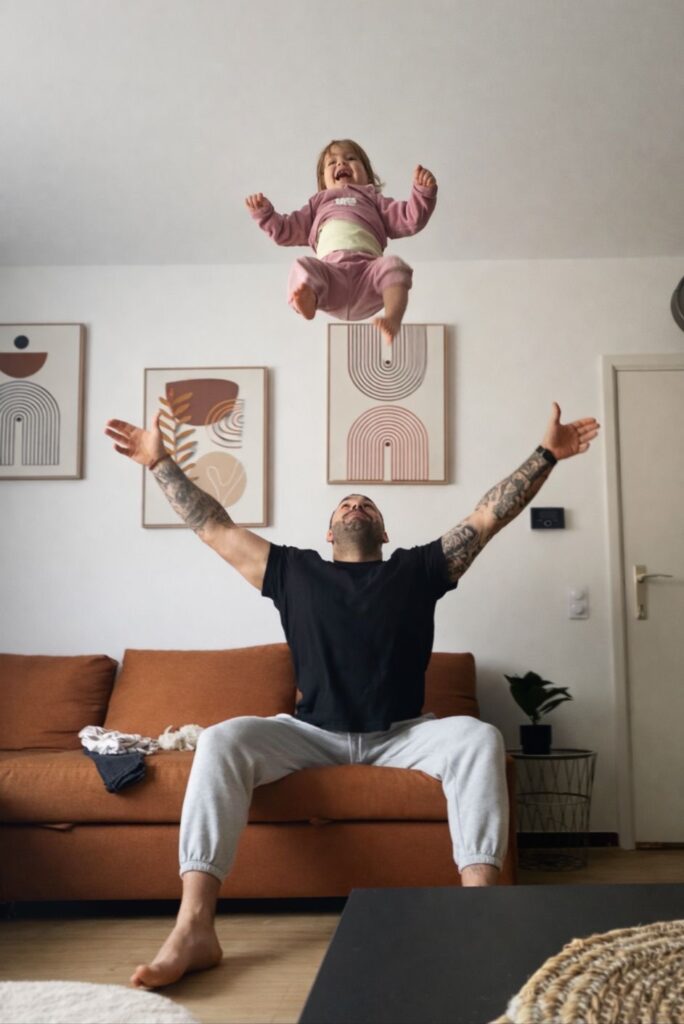
Toma Nikiforov – Belgium – Newly retired – There is something special about talking with Toma at this stage of his life. All the more so after having, four Olympiads ago, accompanied him in a similar ensemble format during his first steps on the professional circuit. It has to be said honestly: very little of the content of these conversations makes it into print here. A matter of respect and care. Take our exchange on the morning of January 27, for instance — two days after he blew out his thirty-three candles. A moment of deep introspection in which the giant, as he often does, set aside the pecs and the tattoos to speak man to man about those particular phases of existence — fatherhood and grieving an athlete’s life — and the disconnect they sometimes create with those around you: “I’m often right — not to say always — but the way I express it isn’t always the right one.” That same evening, Toma reshared on his social media the magnificent photo Paco Lozano had taken of him during his final competition, at the Mixed Team European Championships in Podgorica in April 2025 — the photo that opens the long interview published on JudoAKD to mark the official announcement of his retirement. He paired it with a short text of his own, a gut-punch of brutal honesty. Yes, the immediate post-career period is sometimes a landing without wheels. The applause fades, a night falls, and with it its share of chiaroscuro, unspoken things and misunderstandings. “What sound does the hubbub make? It grinds” [“Il fait quel cri le brouhaha ? Il broie”] — as friend Vîrus put it so neatly in one of his noctambulant, razor-sharp strolls.
Fortunately, the bout of blues was short-lived. Very quickly the exclamation marks and laughing emojis return on the WhatsApp exchanges. His IJF training to teach judo, his job with the Army, his padel tournaments, his daily gym sessions, his projects in Belgium and Bulgaria, his week skiing with the family in Alpe d’Huez… After having been one of the most endearing figures on the circuit at U100kg and then O100kg, “Monsieur Kalashnikiforov” seems to gradually prepare to step into the coaching role he has long known was tailored for him. A transition that will inevitably be marked by the multiple personal and invisible-to-the-public challenges met along the way through this 2025-2026 season. “A man is more of a man for the things he keeps silent than for the things he says,” wrote Albert Camus. His future students will come to understand in their own time just how thick the hide is of the man about to face them.
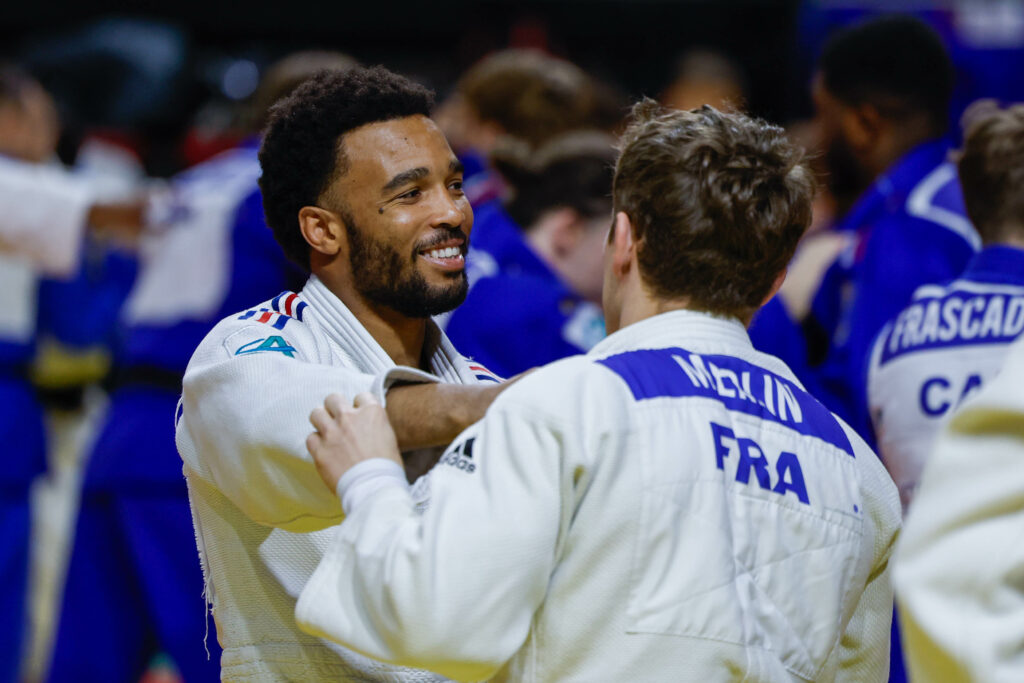
Daikii Bouba – France – 10th in the U66kg rankings (-2 places) – A Christmas with family, a cruise with friends in Martinique — including Benjamin Axus and newly crowned French champion at U60kg Maxime Merlin — then eleven days in Marrakech with part of the French men’s squad while another group went to toughen up in Japan. The goal? Physical and technical preparation, topping up on vitamin D and… the great temptation of driving three hours to Rabat to watch the Africa Cup of Nations quarter-final between Morocco and Cameroon — before reluctantly giving up on it.
Highly anticipated at the Grand Slam in Paris on February 7 after reaching the final at the previous edition, the 2025 European champion produced in the second round one of the most spectacular and thrilling bouts of the weekend against the Mongolia-born, UAE-naturalised Namandah Bayanmunkh — the man who had beaten him at the last World Championships. A festival of actions and reactions, ne-waza exchanges and last-millimetre escapes reminiscent of the legendary Ebinuma-Zantaraia clash at the 2014 Worlds, from which the AJA Paris XX fighter emerged victorious with one final ferocious takedown deep into golden score.
Beaten in the semis and then the bronze medal contest by Japanese fighters Takeshi Takeoka and Kairi Kentoku, he came out “burnt out” from that marathon day in which he also had to pull out his best sumi-gaeshi and tani-otoshi to escape the clutches of China’s Minghao Zhang and Portugal’s Miguel Gago. “I often struggle against static left-handed fighters with an offset stance, and that day I had three of them to deal with,” he analyses with the calm that defines him, coming out of an international training camp navigated with restraint — experience talking. On March 18, he turns thirty. A symbolic milestone he has chosen, like his teammate Romain Valadier-Picard, not to mark from Brazil, where most of the French team is on camp. “I’m trying not to deviate from my training routines so I no longer start my weight cuts already tired… The staff is very attentive, too. And besides, I think I have everything I need at the INSEP to keep improving!” Next stop: the European Championships in Tbilisi in mid-April, where he’ll defend his 2025 title.
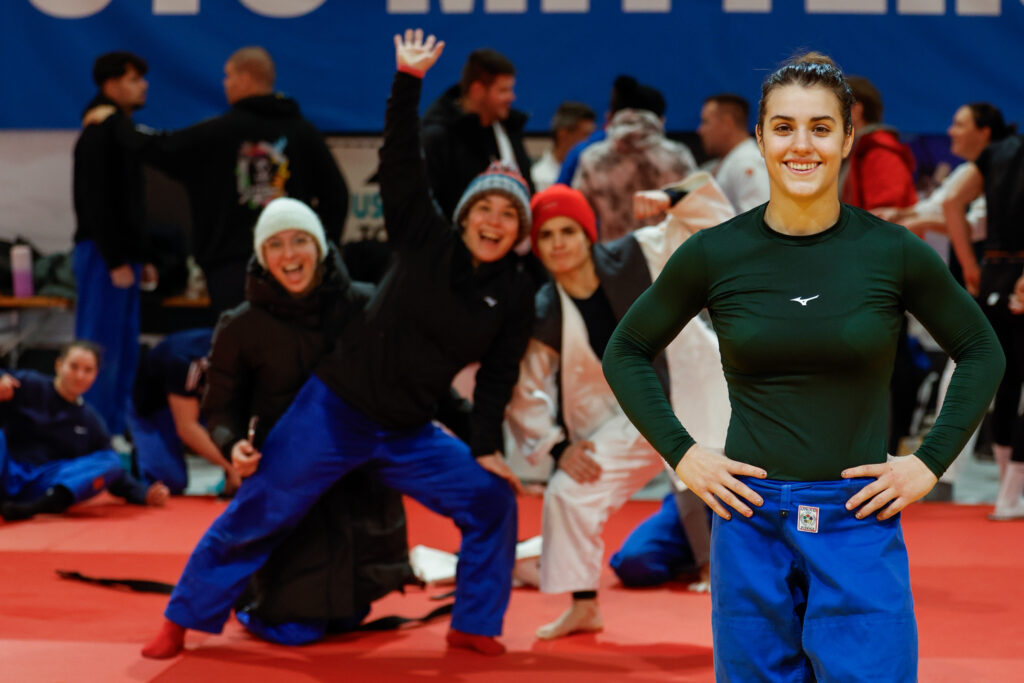
Ariane Toro Soler – Spain – 4th in the U52kg rankings (=) – Third in Paris two years ago during that famous first half of 2024 she blazed through like a cannonball — scraping her Olympic qualification at the last moment at the expense of Estrella Lopez-Shériff, the national number one at the time — the Spaniard this time makes it all the way to the final on February 7. And never mind that she suffers a sledgehammer o-soto-gari from Kosovo’s Distria Krasniqi — a world number one who picks up her ninth consecutive podium in the event in the process, including four titles in the last five editions. She feels validated in her strategy of competing sparingly, the better to capitalise on the frustration and competitive hunger that this deliberate rarity generates. And incidentally, she edges a little further ahead of her national rival, Cuban-born Ayumi Leiva Sanchez.
The rest of the Olympiad promises to be captivating, between the return from maternity leave of Uzbek Olympic champion Diyora Keldiyorova, the drip-feed appearances of five-time Japanese world champion Uta Abe, and the dual judo-rugby challenge of France’s Amandine Buchard. “I’m working on making fewer and fewer mistakes,” she confides, coming out of a short post-Paris Grand Slam break to nurse an elbow injury. Objective: to be in peak condition for the continental showdown in mid-April — she who finished third at that event in both 2024 and 2025.
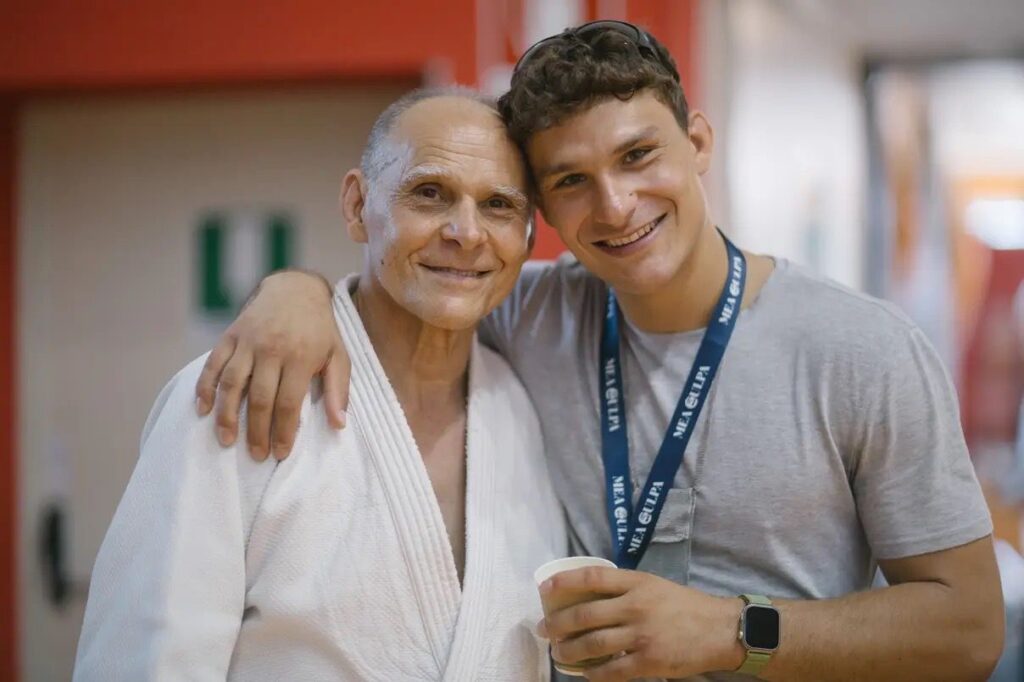
Giacomo Gamba – Italy – Unranked at U90kg – This year 2026 marks the 140th anniversary of Forza e Costanza, the Brescia club where he was forged and where he has “the privilege,” when not in Rome with the national team, of training alongside his father Ezio who coaches there every evening after two decades spent abroad — between bike rides, including “a recent one up a col with a 22% gradient” to keep his sprightly septuagenarian body sharp.
For “Jack,” 2026 also marks the acceptance of the signals his body has been sending for two years. “I’m moving up to U90kg,” he tells us with enthusiasm, fresh from a comeback sequence that took him to Mittersill, Paris, Rome and Nymburk, ahead of his first steps in official competition planned for late March at the European Cup in Dubrovnik (Croatia). “At the international training camp after the Paris Grand Slam, I was still at 87 kg after three weeks of dieting. My body fat percentage, already at eight or nine percent, still had to come down to four or five. I couldn’t take it anymore. I’ve been competing at U81kg since I was eighteen. I talked it over with my father. I know that to be at my best, the four levers are the ability to express yourself, power, energy and essence. And I had no more essence left in the tank. So I made the decision to move up.” A decision communicated by text message on February 23 to Raffaele Parlati, the men’s team director… and father of Christian, the category’s number one, reigning European champion and 2022 world vice-champion. “I have an excellent relationship with both father and son — Christian and I were already going at each other back in the cadet years.”
Last summer, his club teammate Alice Bellandi — 2024 Olympic champion, 2025 world champion and winner of the 2026 Paris Grand Slam — had been encouraging him to take the plunge, based on her own example: she was transformed after 2021 and her decision to move up from U70kg to U78kg. “New programme, new nutrition… My goal now is to focus on all these small details, surrounded by my family and friends. With the idea of continuing to grow and reaching my full potential.”
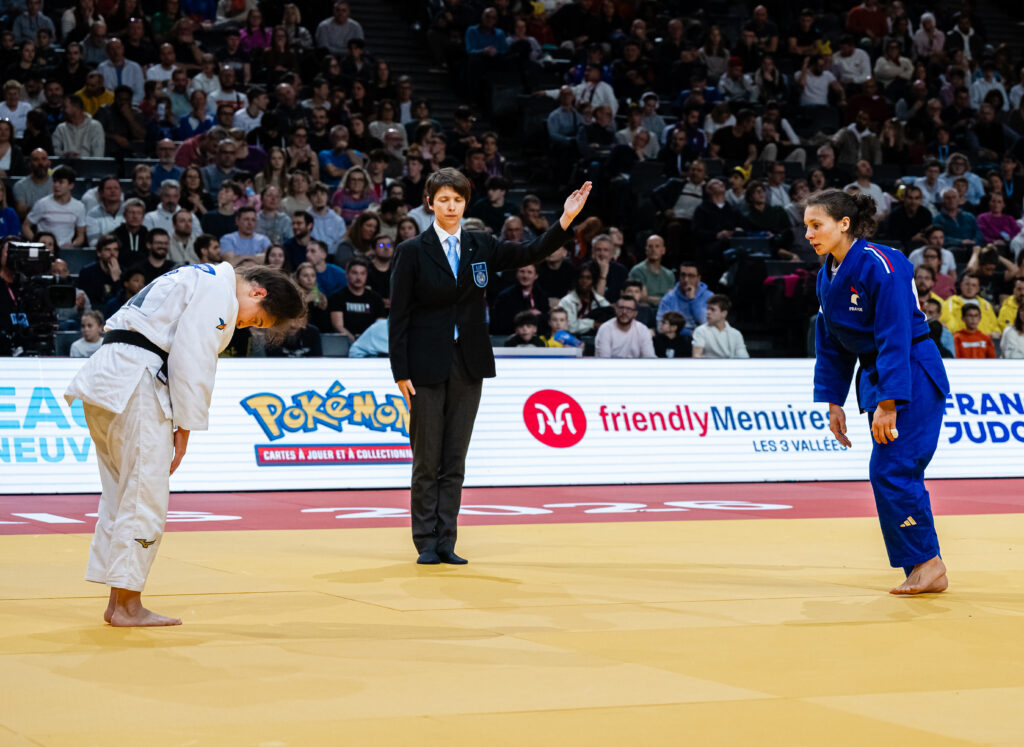
Faïza Mokdar – France – 9th in the U57kg rankings (=) – After a short but beautiful Christmas holiday in Tanzania and then the Italian gathering in Bardonecchia, it’s at a physical and technical training camp in Gran Canaria that the silver medallist from the last French Championships kicks off 2026 alongside some of her national team teammates. Third at the Paris Grand Slam on February 7, she remains in the shadow of Sarah-Léonie Cysique, the fourth consecutive U57kg Frenchwoman to win in the capital after Priscilla Gneto in 2023, Faïza in 2024 and Martha Fawaz in 2025. “Physically I felt good but I couldn’t unlock myself. Against the Japanese fighter in the semis, the yuko I conceded straight away made me change strategy — when I shouldn’t have.” Cautious going into the international camp that follows — “I’ve often got injured in the first few days there” — she loses in the opening round on February 27 in Tashkent against Japan’s Mio Shirakane, reigning junior world champion. A slip that could cost her dearly in the race for selection for the European Championships in Tbilisi in mid-April, given the depth across several French squad categories, with O78kg and U78kg leading the way. But she is also an absence that is increasingly noticed within a squad, as her vibrant and unifying personality brings cohesion to a group — by her teammates’ own admission.
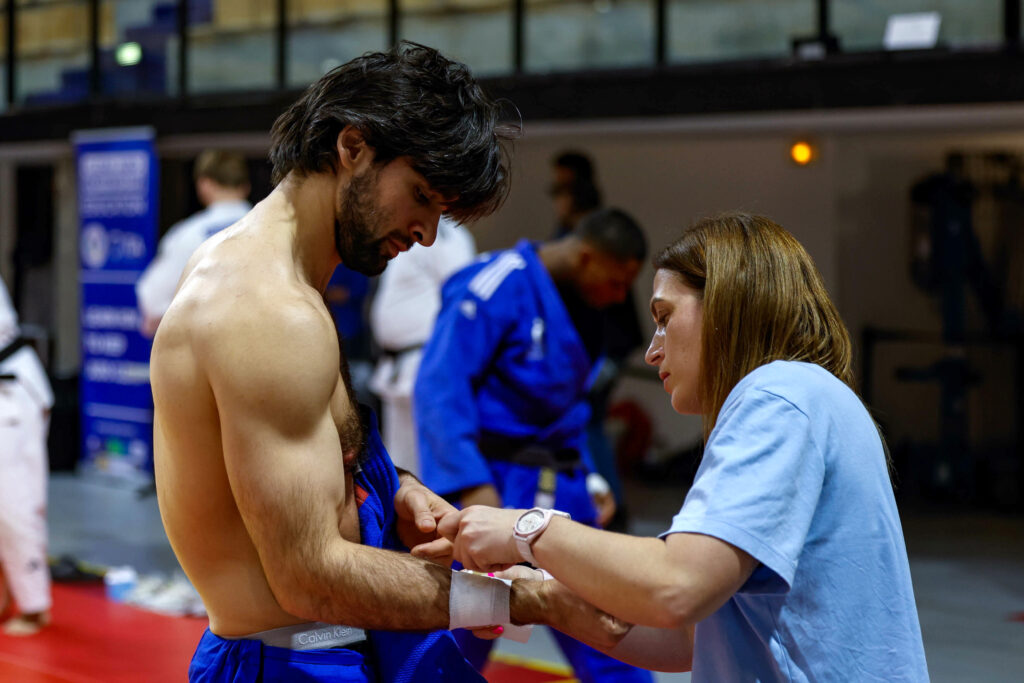
Morgane Sellès – France – Physiotherapist with the Azerbaijani team – With three medals in early February at the Paris Grand Slam, and despite the absence of their two Olympic champions — Hidayat Heydarov at U73kg and Zelym Kotsoiev at U100kg — the Azerbaijani team confirms its growing importance on the world judo stage. The World Championships in Baku this coming October should give a clearer picture of the progress made by this nation, which had already hosted the same event in 2018. “In Paris, our U60kg Balabay Aghayev wins for the third time at twenty-eight. Among the men, apart from Teddy, Cyrille and maybe a few others, that hasn’t happened all that often,” Morgane points out, justifiably proud of the positive sensations from athletes whose health she diligently watches over throughout the season.
And there’s no shortage of things to do, with the Olympic race truly getting underway this year — “I see the entry numbers for upcoming tournaments growing and growing, it won’t be long before it gets absolutely brutal.” Hence the objective of Richard Trautmann, the German strategist overseeing the entire squad and stepping things up in ne-waza with one dedicated session per week, to get “as many guys into the top 8 of their category as possible before the end of 2025,” to build in a bit of breathing room before the circuit hits crunch time. Here we are.
Hence too Morgane’s key role in staying attentive to recovery and injury prevention — all the more so in a country where Ramadan is an inescapable part of the calendar: “We move training forward by half an hour so the guys can all break the fast together — it’s a really powerful moment of togetherness and good feeling.” An openness to other sensibilities she had already experienced two years ago during her stint in Kazakhstan. “It’s really interesting because my status as an expat makes the dialogue with other colleagues both necessary and somehow easier. My contact book has become more international and filled up far faster in my first six months abroad than in twelve years in France!”
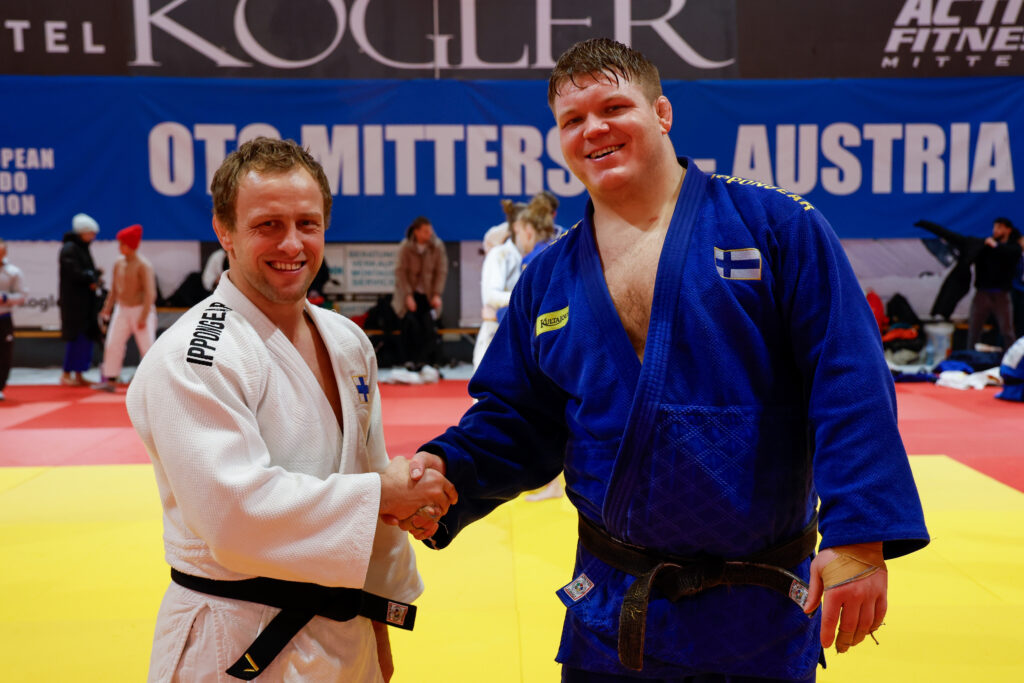
Martti Puumalainen – Finland – 12th in the O100 kg rankings (+2 places) – Ever punctual, enthusiastic and thoughtful, the 2023 European champion chooses at the start of this year to build on the endurance base he banked in December in the Sierra Nevada. Swiss fighter Daniel Eich, fifth at the 2024 Olympics at U100kg, joins him for a few days in Finland to help him gain mobility in his randori. Then it’s off to the Austrian crucible of Mittersill to push on through that volume block. No Paris Grand Slam this year, but an interesting camp the following week at the Institut du Judo. “I had the honour of doing a randori with Cyrille Maret,” he shares with the grin of the kid he still was when the Frenchman was delivering his famous hat-trick at the AccorArena in 2014-2015-2016. “To me he remains a legend of our sport. And even if his coaching role means he’s probably less sharp than in his prime, I can tell you he’s still got plenty. His kumi-kata knowledge is still impressive.” With the Japanese men having skipped the gathering, he makes up for it by sparring with the best Koreans and with the new generation of French heavyweights — Matheo Akiana Mongo and Khamzat Saparbaev leading the way — before continuing at the same pace back in Helsinki with Wesley Greenidge, the British sparring partner he was warming up with in Montpellier in November 2023 during his continental title win.
Finnish champion for the tenth time on February 28, he enters an intense stretch. “I missed the Abu Dhabi Grand Slam at the end of November because I was under the weather. I need to compete.” Fifth on March 8 at the Linz Grand Prix, he’s a little annoyed at himself for “not being able to stick to [his] tactical plan to the end” in the quarters against Georgia’s Demetrashvili and then in the bronze medal contest against Japan’s Hatakeyama — but still finds positives in the day on paper: “Five bouts, long minutes on the mat, progress in the work on the grips. It’s encouraging.” The Nymburk camp and the Tbilisi Grand Slam are next up in this slow but steady (re)build in fitness and confidence for a man who, apart from a military world title in June 2025, had strung together eleven international outings without a podium between his European title in November 2023 and his victory at the Continental Open in Gold Coast (Australia) in November… 2025.
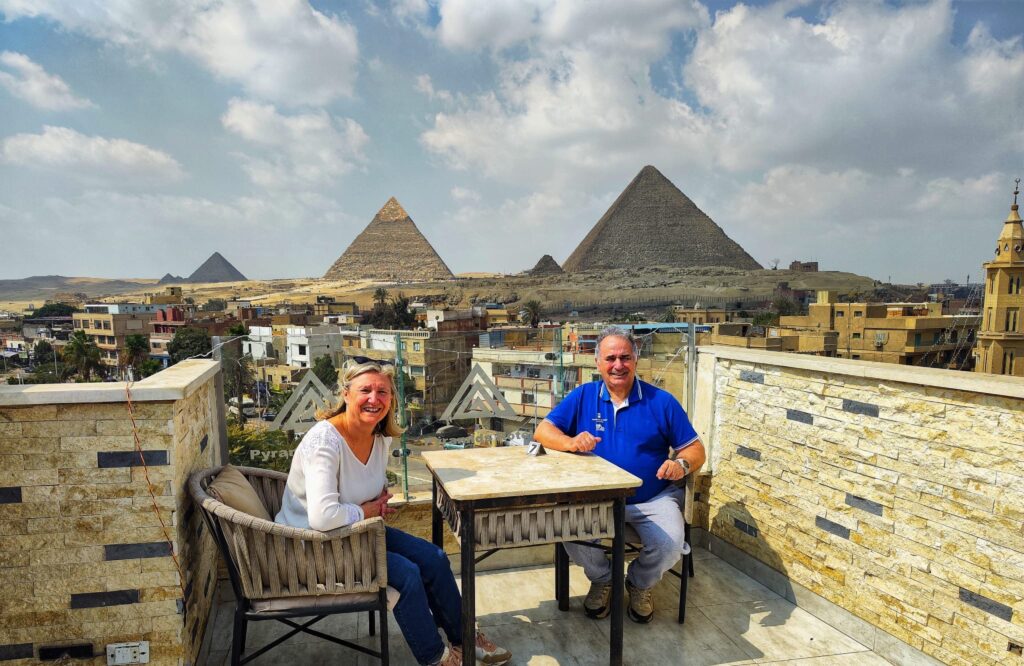
Paco Lozano – Spain – Photographer – The successive retirements of Kosovo’s Nora Gjakova, Japan’s Natsumi Tsunoda, Slovenia’s Andreja Leski and Israel’s Sagi Muki have touched this old hand from the mat’s edge. His brief but intense visit to Paris in early February for the Grand Slam is a chance to take the pulse of the circuit again. “I was impressed by the overall showing of the Japanese, by the difficulties of the French men (just one medallist from twenty-eight entries — that raises questions), by the consistency of Kosovo’s Distria Krasniqi, and also by the incredible run of Italy’s Alice Bellandi: third at the 2023 Worlds, second in 2024, world champion in 2025, Olympic champion in Paris… and winner of the 2026 Paris Grand Slam.” The absence from the French Grand Slam of the top Russian judokas (including Inal Tasoev, defending champion in Paris and at the Worlds in the O100kg category) was widely discussed in the paddock given the political tensions, as was the status of Israeli judokas, whose coaching staff has been working for many months now without official tracksuits. Among the other sources of concern: conversations picked up at the mat’s edge about the severity of the economic situation in Cuba. The era of Ronaldo’s dominance feels like a long time ago. Today — and even more so since the US intervention in Venezuela on January 3 — the reality is jet fuel rationing so that planes can take off from José Martí airport, electricity limited to a few hours a day, and the beginnings of a food shortage… “They’re not doing the international camp after the Paris Grand Slam, they’re not sure they’ll even be able to make it to the World Championships… It’s terrible.” The one ray of sunshine: the masterful win at the Paris Grand Slam by U60kg Jonathan Charon — despite being without his corner coach Julio Aldarete — against France’s double Olympic medallist Luka Mkheidze. Ending with a fifth place that struggles to erase the memory of the podium machines of their time — Asley Gonzales, Driulis Gonzales, Idalys Ortíz… — despite realities light-years away from what Ronaldo Veitía used to call “the first world,” even back then.
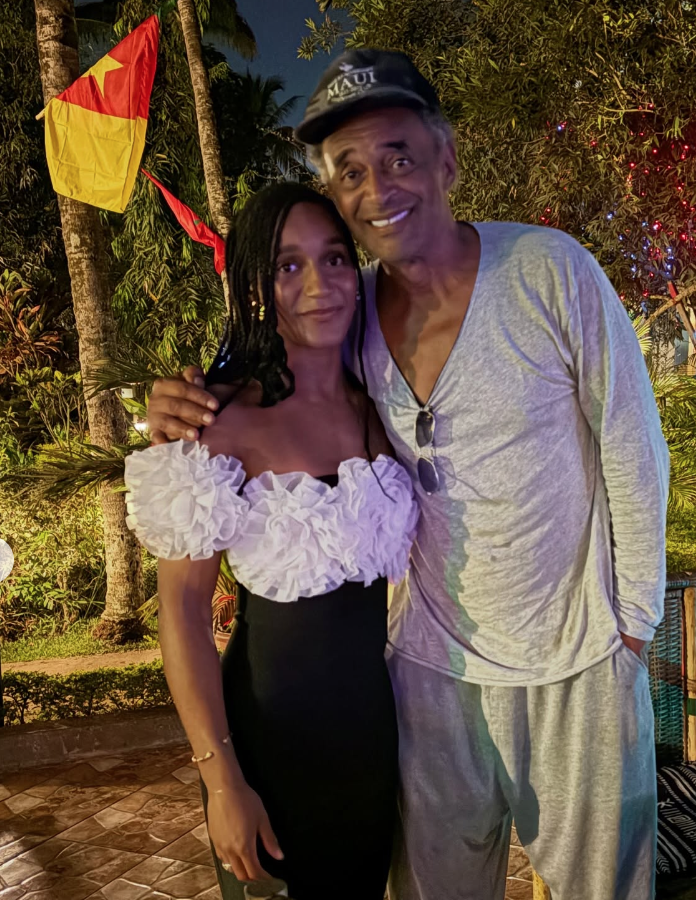
Melkia Auchecorne – France – 43rd in the U70 kg rankings (+50 places) – Third at the French Championships in mid-December in Saint-Chamond, the newly minted U70kg fighter experiences an unforgettable festive period alongside her mother. At twenty-one, she sets foot for the first time since she was eight on Cameroonian soil that holds deep personal meaning for her. Over two weeks, she embraces her grandmother, follows the Africa Cup of Nations in a Lions Indomptables shirt, and raises the profile of Kom’Mel, the association her promising trajectory led her to found at an early age — to encourage young people, and especially young girls, to “emancipate themselves through education and sport.” A commitment made early enough in life to earn her a meeting with the charismatic Yannick Noah — an icon of world tennis since 1983 and a chart-topping singer since 1991 — now absorbed by the Village that bears his name, an all-inclusive hotel complex in Yaoundé of the kind that exists in more or less every country on the continent.
Back in France on January 5, she feels the notion of climatic jet lag in her very bones as she goes straight into the valley-floor snows of the Austrian Mittersill camp. “I went from +30°C to -10°C in the space of a few hours — I won’t pretend I didn’t feel it.” A deliberate choice, even though she was also offered the option of going to the Canary Islands with the Elite group or to Japan with the Juniors group of the French women’s squad. “I needed to compete,” she explains, back from a week spent shaking up the competition in a tricky category she only joined at the end of summer 2025. British, Hungarian, Italian, German, Dutch, Japanese, Austrian, Danish, Belgian, Portuguese: she took them all on, and that was exactly the kind of panoramic test she had come for. “All the girls are beatable — the trick is managing to do it on the D-day.”
Eliminated in the opening round in golden score on February 8 at the Paris Grand Slam — for the first time in four appearances (she finished third in 2025) — she feels “a little lost” for a few days, “afraid that [her] season might stop there.” But the fact that Marie-Ève Gahié — seemingly the French number one in the category given Margaux Pinot’s extended absence — had also slipped out in the first round at the AccorArena gives her the chance to bounce back on March 11 at the Tashkent Grand Slam. Like Ugo Legrand at the same age and the same stage of his career in the 2009-2010 season, she doesn’t let the opportunity pass her by and claims a silver medal against Germany’s returning Miriam Butkereit. A 2024 Olympic vice-champion whose back-from-Uzbekistan Melkia still didn’t know had also been on the podium at the Budapest World Championships in… June 2025 (!) — a certain idea of letting go and living in the present. And what if that, right there, is the secret to a clear and focused mind?
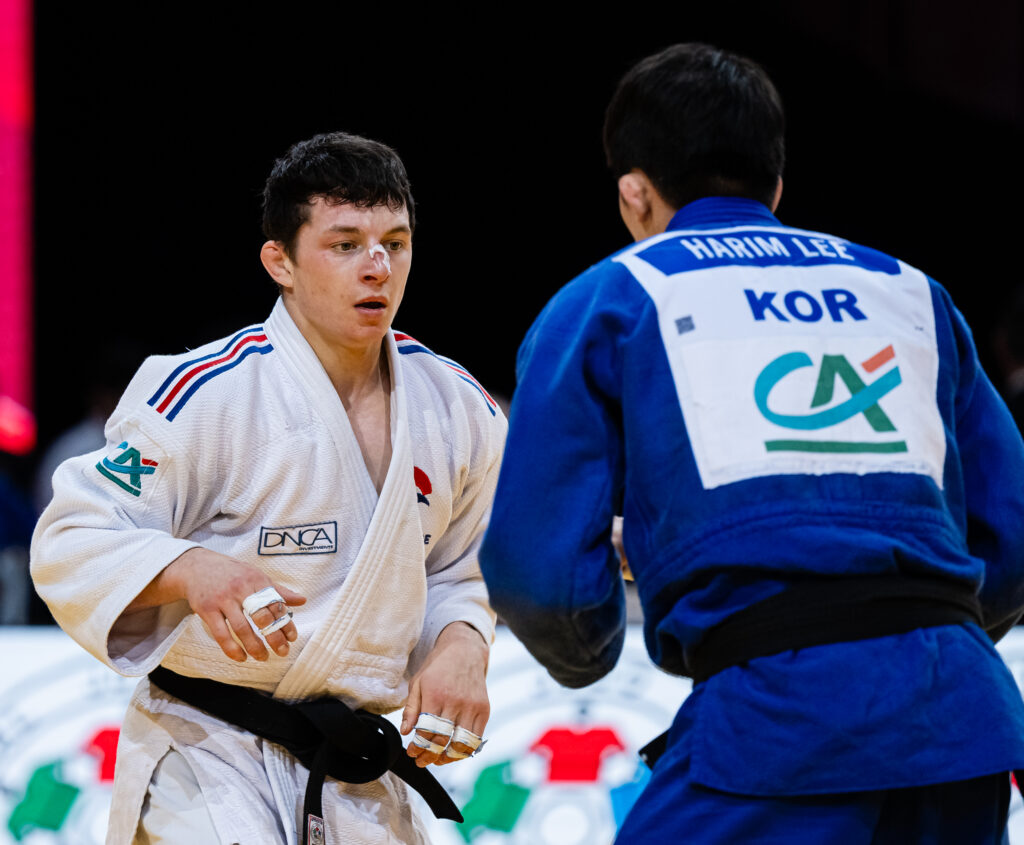
Romain Valadier-Picard – France – 5th in the U60kg rankings (+1 place) – Back in mid-December from his eighth stay in Japan in three years, the 2025 world vice-champion follows it up with two weeks of family holidays in Normandy, a trip to the mountains with friends, and the January gathering in Marrakech. A French team-stamped stay where his latent rivalry with double Olympic medallist Luka Mkheidze means he gravitates towards sessions with 66kg Daikii Bouba. A training partner with whom this perfectionist puts the emphasis on “work against left-handers, forward-backward combinations, ko-uchi gari, o-uchi gari, grip work and transitions.”
Back in Paris, he sits his exams and prepares to defend the title he won in 2025 at the AccorArena. But the adventure is short-lived: 7 minutes and 10 seconds in total, golden score included, against Korea’s Harim Lee — the man who had already beaten him two months earlier in the bronze medal match in Tokyo. This time it’s a tsubame gaeshi that sends him into his darkest mood — never mind that the following day, his ACBB teammate Liz N’Gelebeya blazes in the 78kg category. “I wasn’t able to bring the mental intensity I needed, or change the rhythm when the moment called for it.” At the international camp that follows, though, he thoroughly enjoys himself working through the cream of the crop from Azerbaijan, Kazakhstan, Mongolia, Georgia and Uzbekistan. His Japanese rivals absent? “I’ve trained a lot with them over at their place these past few months, especially in December. This time it let me focus on guys who are less judo but who block well and against whom I’m forced to look for new solutions.”
After three days off at his grandparents’ in the Vosges, the man with the perpetually strapped nose (not unlike Karim Benzema and his bandaged hand) — due to a fragility in the skin on the bridge — wins the Linz Grand Prix on March 6, beating two of the Paris medallists along the way. No excessive celebration leaving the mat, just a handshake with his coach Ludovic Delacotte, as if running into a vague acquaintance in a supermarket car park. Don’t mistake it for coldness: “It’s just the feeling of duty done and the urge to already be thinking about what’s next.”
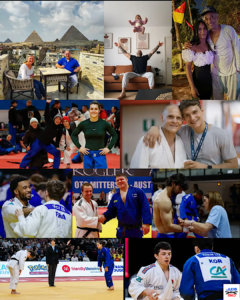
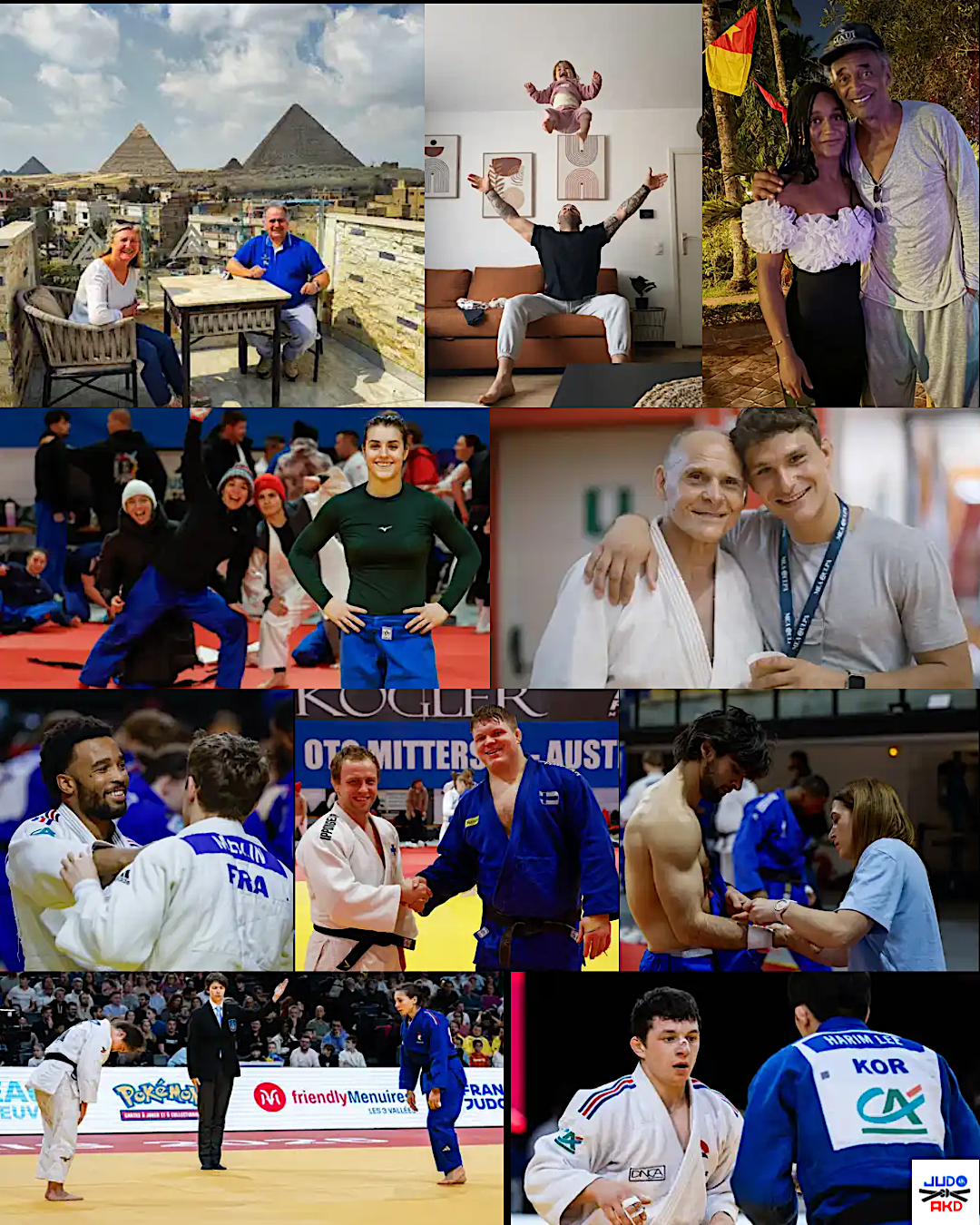
Suffering a head injury in the semis and the final, he wisely opts out of the international camp in Brazil that the French team departs for in mid-March. “I was injured and had surgery twice last year. Those forced breaks taught me to reconsider my schedule. And to understand that a progression isn’t always linear, that I have the base and the volume, and that what makes the difference afterwards is the desire. So I’m trying to give myself these recovery windows. That’s something new for me.” The famous less is more, in service of a real ambition. All of it accompanied by an intellectual curiosity that never rests — illustrated by his ongoing study at the INSEP with former international Clément Delvert on “quantifying training load in the world of judo.” Or his simple pleasure, over the past few months at his club, of training alongside Japan’s Haruka Funakubo — three-time junior world champion, two-time senior world medallist and Olympic medallist in the U57kg behind her former compatriot Christa Deguchi — who came at 27 to discover something different. A rare and admirable approach that speaks to him, naturally. — Anthony Diao, winter 2026. Opening montage: ©Peyo Diao-Thomé/JudoAKD.
A French version of this episode is available here.
To (re)read episode 2/13 (autumn2025), it’s over there.
More articles in English:
-
- JudoAKD#001 – Loïc Pietri – Pardon His French
- JudoAKD#002 – Emmanuelle Payet – This Island Within Herself
- JudoAKD#003 – Laure-Cathy Valente – Lyon, Third Generation
- JudoAKD#004 – Back to Celje
- JudoAKD#005 – Kevin Cao – Where Silences Have the Floor
- JudoAKD#006 – Frédéric Lecanu – Voice on Way
- JudoAKD#009 – Abderahmane Diao – Infinity of Destinies
- JudoAKD#008 – Annett Böhm – Life is Lives
- JudoAKD#010 – Paco Lozano – Eye of the Fighters
- JudoAKD#011 – Hans Van Essen – Mister JudoInside
- JudoAKD#021 – Benjamin Axus – Still Standing
- JudoAKD#022 – Romain Valadier-Picard – The Fire Next Time
- JudoAKD#023 – Andreea Chitu – She Remembers
- JudoAKD#024 – Malin Wilson – Come. See. Conquer.
- JudoAKD#025 – Antoine Valois-Fortier – The Constant Gardener
- JudoAKD#026 – Amandine Buchard – Status and Liberty
- JudoAKD#027 – Norbert Littkopf (1944-2024), by Annett Boehm
- JudoAKD#028 – Raffaele Toniolo – Bardonecchia, with Family
- JudoAKD#029 – Riner, Krpalek, Tasoev – More than Three Men
- JudoAKD#030 – Christa Deguchi and Kyle Reyes – A Thin Red and White Line
- JudoAKD#031 – Jimmy Pedro – United State of Mind
- JudoAKD#032 – Christophe Massina – Twenty Years Later
- JudoAKD#033 – Teddy Riner/Valentin Houinato – Two Dojos, Two Moods
- JudoAKD#034 – Anne-Fatoumata M’Baïro – Of Time and a Lifetime
- JudoAKD#035 – Nigel Donohue – « Your Time is Your Greatest Asset »
- JudoAKD#036 – Ahcène Goudjil – In the Beginning was Teaching
- JudoAKD#037 – Toma Nikiforov – The Kalashnikiforov Years
- JudoAKD#038 – Catherine Beauchemin-Pinard – The Rank of Big Sister
- JudoAKD#039 – Vitalie Gligor – « The Road Takes the One Who Walks »
- JudoAKD#040 – Joan-Benjamin Gaba and Inal Tasoev – Mindset Matters
- JudoAKD#041 – Pierre Neyra – About a Corner of France and Judo as It is Taught There
- JudoAKD#042 – Theódoros Tselídis – Between Greater Caucasus and Aegean Sea
- JudoAKD#043 – Kim Polling – This Girl Was on Fire
- JudoAKD#044 – Kevin Cao (II) – In the Footsteps of Adrien Thevenet
- JudoAKD#045 – Nigel Donohue (II) – About the Hajime-Matte Model
- JudoAKD#046 – A History of Violence(s)
- JudoAKD#047 – Jigoro Kano Couldn’t Have Said It Better
- JudoAKD#048 – Lee Chang-soo/Chang Su Li (1967-2026), by Oon Yeoh
- JudoAKD#050 – Hermann Monne – Burkina, a Land Already Peopled
Also in English:
- JudoAKDReplay#001 – Pawel Nastula – The Leftover (2017)
- JudoAKDReplay#002 – Gévrise Emane – Turn Lead into Bronze (2020)
- JudoAKDReplay#003 – Lukas Krpalek – The Best Years of a Life (2019)
- JudoAKDReplay#004 – How Did Ezio Become Gamba? (2015)
- JudoAKDReplay#005 – What’s up… Dimitri Dragin? (2016)
- JudoAKDReplay#006 – Travis Stevens – « People forget about medals, only fighters remain » (2016)
- JudoAKDReplay#007 – Sit and Talk with Tina Trstenjak and Clarisse Agbégnénou (2017)
- JudoAKDReplay#008 – A Summer with Marti Malloy (2014)
- JudoAKDReplay#009 – Hasta Luego María Celia Laborde (2015)
- JudoAKDReplay#010 – What’s Up… Dex Elmont? (2017)
And also :
- JudoAKDRoadToLA2028#01 – Episode 1/13 – Summer 2025
- JudoAKDRoadToLA2028#02 – Episode 2/13 – Autumn 2025
JudoAKD – Instagram – X (Twitter).