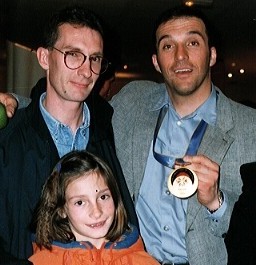
Born on November 14, 1961, in Salins-les-Bains (France), Patrick Grosperrin first came into my life through a professional encounter. In July 2017, a partnership between the Lyon Press Club – on whose board I was sitting at the time – and the telecom operator Orange, where Patrick was then a management trainer, gave us a few hours together in Chambéry, that year’s stage town for the 104th edition of the Tour de France, and a chance to see behind the scenes of a logistics operation so precisely timed it was all the more impressive for being entirely nomadic.
We very quickly discovered we shared a good number of sporting and intellectual interests. Because Patrick, alongside the professional activities mentioned above, has long taken a close interest in how success is built in elite sport. Coming from rugby, athletics, and golf, he says he had a decisive encounter in 1991 (“someone passionate about personal development”) and then trained as a coach and mental performance consultant. His website discreetly but genuinely claims a hand in a number of Olympic and world titles won by athletes he has worked with, citing Jean-Luc Crétier (skiing), Philippe Rozier (equestrian), Jean Galfione (athletics), Younes El Aynaoui and Michael Llodra (tennis), Raphaël Jacquelin, Mike Lorenzo-Vera, and Nicolas Colsaerts (golf), among others. Today he heads an organization that aims to “develop the champions of tomorrow – namely, symmetrical athletes” – and in the interview below he tells us more about what he means by that last term. A conversation full of intuitions, cross-references, and connections across disciplines. – JudoAKD#056.
A French version of this interview is available here.
Let’s start by defining our terms: what is laterality, and why do you make it such a central subject in your analysis of performance levers?
Most people have a rough idea of what it is: so-and-so is right-handed, someone else is left-handed. But there’s a much bigger issue behind that word – a crucial one for judo, and for sport in general, both today and tomorrow. Most sports, judo included, are symmetrical, meaning it’s possible to perform actions on either side (for example: attacking to the right, or attacking to the left). Now, there are laterality profiles that we don’t yet know how to properly identify or make enough use of, which naturally have the potential to act just as effectively on one side as the other – and that gives an immediate, major advantage over the competition. Then, for the more classic profile, there’s also the possibility of developing all or part of that capacity, though it takes more time.
In our conversations ahead of this interview, you listed an impressive series of champions with this characteristic…
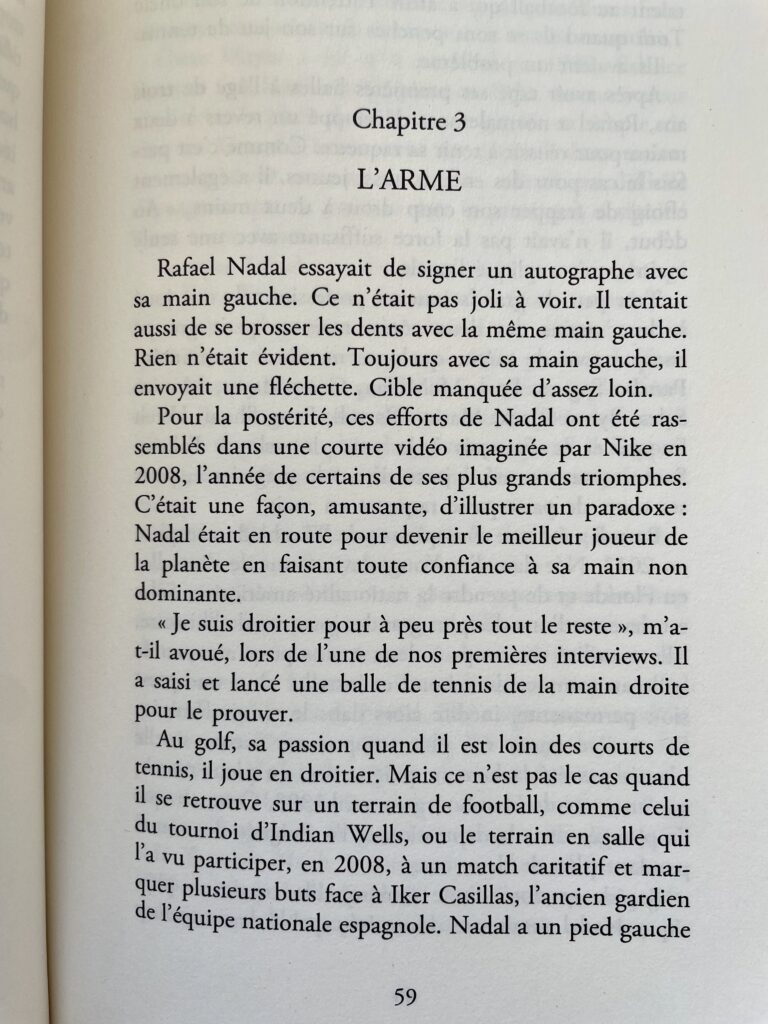
Indeed – I observe, in many of the great champions throughout the history of sport, traits linking them to these particular profiles, without it being widely known. From Pelé to Cruyff, by way of Wayne Gretzky, Tiger Woods, Roger Federer, Rafael Nadal, Jannik Sinner, Carlos Alcaraz, Martina Hingis, Ayrton Senna, Max Verstappen, Sébastien Loeb, LeBron James, Victor Wembanyama, Antoine Dupont, Zinedine Zidane, Lionel Messi, Cristiano Ronaldo, Kylian Mbappé… Another very striking recent illustration of this asset is the historic run of the young Polish tennis player Maja Chwalinska (1.64 m, world No. 114) at the last Roland Garros. Despite a significant power deficit (a first serve averaging 135 km/h, against 160 to 200 km/h for the Top 30), she strung together nine straight wins, qualifying rounds included, to reach the final. I immediately noticed how easily she pinned down her opponents, varied her game, surprised them with drop shots… and, being a left-hander, used her right hand at the end of certain exchanges.
So there are several laterality profiles?
Yes, and it’s important to distinguish them clearly. The most common is the homogeneous laterality profile (75% of the population, according to several consistent studies): someone whose dominant eye, dominant hand, and dominant foot are all on the same side. I myself am a right-side homogeneous type. We’re built to act primarily with one side of the body.
What are the other profiles among the remaining 25%?
There are two. First, there’s the ambidextrous type, who uses both sides with near-identical ease, without even thinking about it – an object thrown at them will be caught with either hand, whichever suits. These athletes are very rare (1% of the population), but they’re generally already spotted: their opponents know they can attack from both sides and stay wary of it. Then there’s the profile that interests me the most, because it goes unnoticed most often and most of those who have it aren’t even aware of it themselves: the crossed-laterality profile. This is someone whose, say, dominant foot is the right one but whose dominant eye is the left. Their motor preference doesn’t follow a single line – it’s split between the two sides of the body. There are two categories here: visual crossed-laterality and bodily crossed-laterality. Together they make up less than 25% of the population.
How do you explain this profile giving a particular advantage?
You have to start from a simple anatomical fact: the body is divided into two half-bodies, right and left, from eye to hand to foot. And the circuits controlling them cross over in the brain – the left cerebral hemisphere drives the right half of the body, the right hemisphere drives the left half. To give a simple picture of how roles are divided between the two hemispheres: the right hemisphere is the seat of the global, the creative, the emotional, with a faster rate of information exchange with the body; the left hemisphere is logic, analysis, and reason.
That’s very schematic…
It’s a teaching device with its limits. The reality of how the brain works is more complex and more nuanced than this binary opposition, which has been popularized for a long time. But it helps convey the underlying intuition: in an ambidextrous person, or someone with crossed laterality, both hemispheres are called on more, and more evenly, than in a homogeneous person. According to the scientific studies and my own field experience, this would translate into a richer, faster spatio-temporal perception (the famous “eye for the game”) and a better capacity for anticipation and adaptation. But I’ll say it again: you still have to detect these athletes, most of whom are carrying around a secret weapon without knowing it, and therefore without making full use of it. That’s how you go from asymmetrical athletes to symmetrical athletes – perfectly suited to symmetrical sports, but also to asymmetrical disciplines (golf, throwing events, shooting, baseball…), because how their brain works gives them an edge in game vision, creativity, touch, or reaction speed.
Concretely, on a mat or a field, how does this show up?
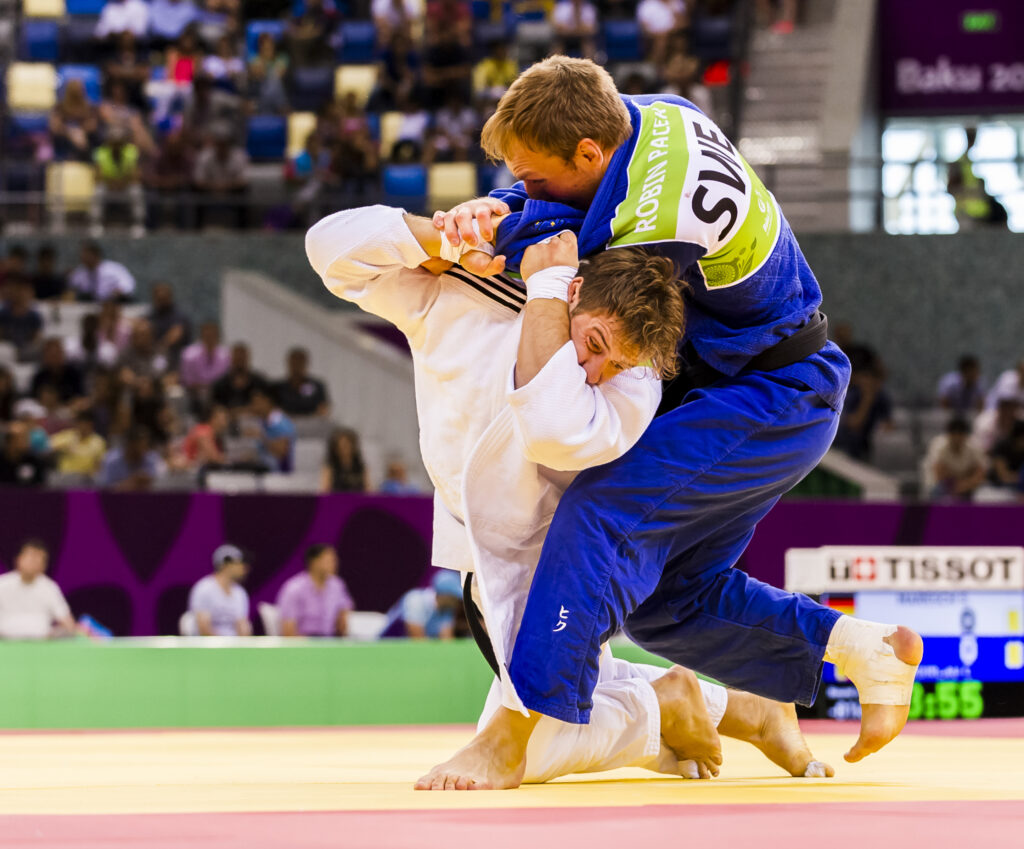
It creates a formidable unpredictability. An athlete with equivalent power on both sides (footwork, mobility, upper body), able to attack credibly from either side, puts their opponent in a state of constant uncertainty: the opponent no longer knows where to look, or which side to anticipate, and is thrown off balance. The ambidextrous athlete, or the one with crossed laterality, won’t endlessly repeat a preferred response pattern, always the same side, always the same direction. Their psychomotor system, in the midst of movement, senses and decides how best to proceed. They can lean on a preferred side, but it serves an overall perception rather than a one-sided one. That’s what produces those magical moments: Messi’s dribbles, passes, and strikes; Federer’s flashes of inspiration and technical purity; Mbappé’s sudden strikes with either foot; Olise’s openings in the middle of a crowd of defenders. Before they have a different technique, they have a brain that works differently.
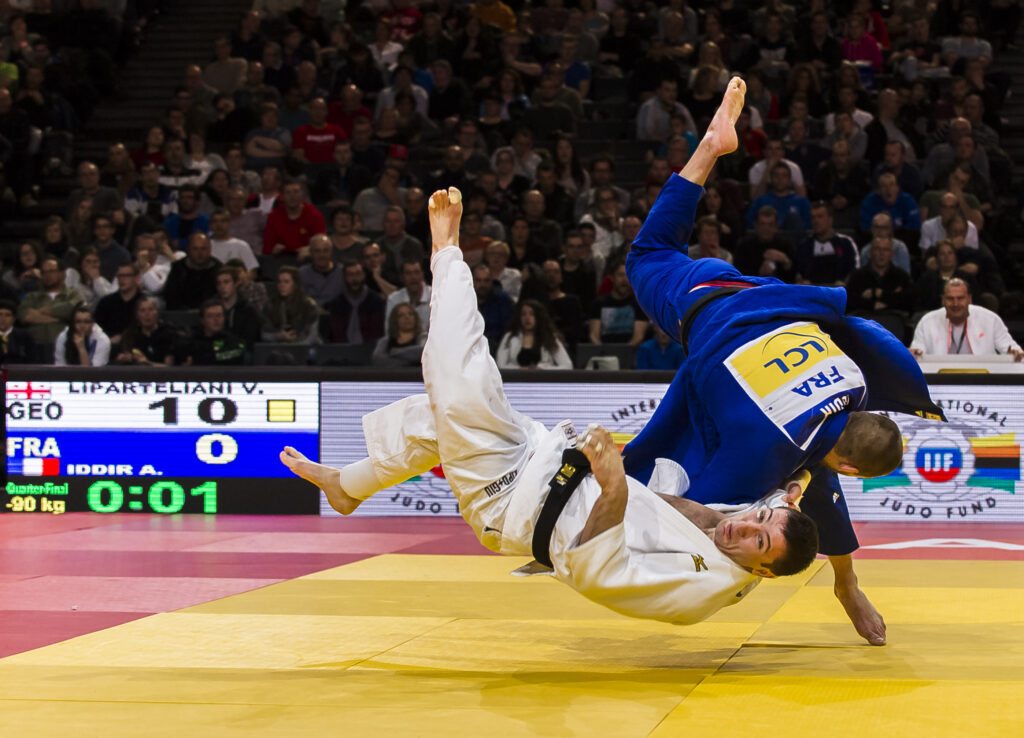
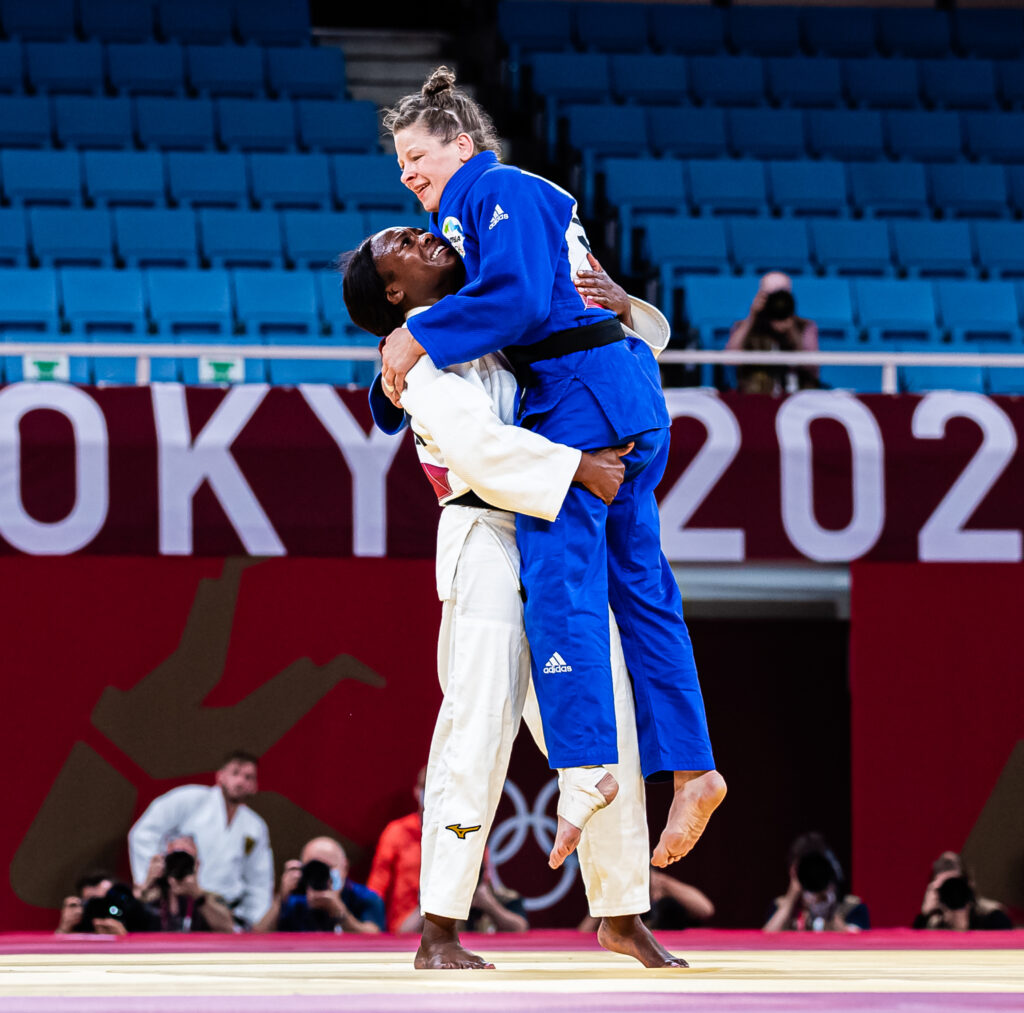
That reminds me of Alexandre Iddir, double European medalist and Olympic competitor in Rio and Tokyo. He was capable of unleashing an ippon seoi nage on the opposite side to his apparent stance – a move all the more devastating for being completely unexpected, even in the very last seconds of a bout. Or the Franche-Comté fighter Maxime Clément, who to my mind remains, alongside the Dutchman Dex Elmont and a few others, one of the smartest fighters I’ve ever seen on a mat: during a French team championship, he deliberately reversed his stance until ten seconds from the end, to the point of making his opponent, Lloyd Soetens, forget his strong side altogether, and catching him out with a single attack on that very side in the bout’s final sequence.
Exactly. That kind of scrambling isn’t just a technical sleight of hand. It acts directly on the opponent’s decision-making capacity, who ends up drawing on only a fraction of their resources at the decisive moment, because they’ve lost their bearings.
You often draw examples from football…
It’s actually the clearest example today. Look at the French national team’s attack: Mbappé, Olise, Dembélé, Doué, Barcola, Cherki – all ambidextrous or crossed-laterality profiles, able to dribble, cross, shoot, or beat a defender indifferently with either foot. A player positioned on the left who can use both feet and both plants can take the inside or outside space depending on the situation, which makes him unpredictable for defenders.
Interesting. I remember a match played by Guy Roux’s AJ Auxerre in a European Cup preliminary round, in August 1989. The team played a 4-3-3, with a lone striker, Hungary’s Kalman Kovacs, and two wingers, left-footed Pascal Vahirua on the left and right-footed Christophe Cocard on the right. It was fascinating because they advanced in waves, the wingers would go outside and cross with their strong foot toward the center-forward. A few months later, Olympique de Marseille used the English left-footer Chris Waddle as a… right winger. The danger with him came when he cut back inside…
Yes. That observation, in fact, fits into a longer evolution of the winger’s role. In Guy Roux’s era, the classic model placed a right-footer on the right and a left-footer on the left: each crossed with their strong foot at the end of a run. Then came the fashion for the “wrong-footed” winger – right-footers on the left, left-footers on the right – which favored cutting inside, at the expense of the cross. Crossed-laterality or ambidextrous profiles free themselves from that trade-off entirely: they can do both, depending on what the situation calls for.
Is this type of profile something innate, or something that can be trained?
Crossed laterality is innate, though it does still require deliberate work to develop the non-preferred side. On the other hand – and this is the other major strand of what we work on at our organization – homogeneous athletes, through dedicated effort, can develop what I call acquired bilateralization, which turns out to be very effective.
Meaning?
There are several distinct cases here:
– acquired bilateralization of the lower body – a right-footer who has developed the use of his left leg (Spain’s David Villa or France’s Désiré Doué, in football), as I did myself as a child for rugby, or the reverse (left-footer Jonny Wilkinson, who developed his right foot, notably for his famous decisive drop goal in the 2003 Rugby World Cup final);
– acquired bilateralization of the upper body – the case of naturally left-handed people forced to write with their right hand, for instance. I’m thinking of golfer Phil Mickelson, who learned golf as a mirror image of his father’s swing;
– full acquired bilateralization, rarer still, which combines both (arms and legs, or arms and footwork): Michael Jordan, Stephen Curry.
In all three cases, though, the dominant eye doesn’t change.
It’s interesting that you mention basketball players Michael Jordan and Stephen Curry. Both of their skill sets are legendary…
And yet both are homogeneous types. According to my research, Stephen Curry was a frail child, and his father decided that for him to have any chance of playing at college level, he absolutely needed to be able to play on both sides. To make that happen, he made him use only his left hand throughout an entire training camp. It was difficult, even painful, but it paid off. Michael Jordan’s case is different. He was already in college, but coaches and opposing teams had figured out how to shut him down on his strong side. Because of that, he had to work hard to be able to drive from the left as well.
Is there a good age to start this kind of work?
Yes, and it’s a point neurologists insist on: they advise against intervening before age five. At that stage, a child’s brain is being built according to its own natural needs. Interfering too early could encourage orientation difficulties, left-right confusion, or dyslexia-type problems. Past that age, though, the earlier you start, the more durably the work takes hold. I, for example, started developing the athletic use of my left leg at age ten, and I’ve kept it up ever since.
What concrete exercises do you recommend for someone who wants to work on this day to day?
There’s the generic kind (activating both cerebral hemispheres) and the specific kind (tailored to the sport and the athlete). Very simple gestures, repeated over time. Personally, I regularly alternate my supporting leg and the eye I use while shaving – that deliberately activates the hemisphere that’s normally under-used. Juggling is another excellent exercise, as is having a judoka deliberately do an entire training sequence in a reversed stance, even while remaining fundamentally right- or left-handed at heart. There’s no need to try to throw your partner every single time – the goal is to force the brain to search for new technical solutions, rather than relying on the strong side’s automatic reflexes.
All of this rests on a word you use often: neuroplasticity. Can you explain it simply?
It’s the brain’s ability to reorganize itself, to optimize how it functions, based on needs and use. It’s a biological principle as old as evolution itself – the very one that allowed species to gradually adapt to changing conditions. What’s more recent is our scientific understanding of the phenomenon, and our ability to make deliberate use of it within a training framework.
For example?
Concretely, a movement deliberately repeated on the other side of the body isn’t just a simple motor exercise: it calls on a cerebral hemisphere that’s normally under-used in most people, and contributes – as brain imaging confirms – to more balanced brain function, with better emotional regulation and a better overall reading of situations. And from there, to the emergence of new neural pathways.
What does this change, concretely, for a coach?
That’s where it all plays out, in my view. Most current methods start from an observed motor preference – “I can see he’s right-handed” – and build the whole technical and physical program around that undeniable fact. It’s an intuitive approach, but one that overlooks a decisive factor: some athletes already possess, without even knowing it themselves, the ability to use the other side effectively.
How should one proceed, then?
The first task is simply to identify the ambidextrous athletes and those with crossed laterality, to explain this specific trait to them and to their support staff, and then to build training programs and strategies that make use of this advantage rather than ignoring it. For homogeneous profiles, the approach is different but just as concrete: engage – ideally as young as possible, though it’s never too late to do it right – in systematic work on the other side. Not to match the innate advantage of crossed-laterality profiles, but to move closer to it, with real benefits in terms of physical balance and technical and tactical range. And therefore, in terms of performance.
Do you have a recent example of work done with an athlete?
In football, I recently worked with Rémy Descamps, Olympique Lyonnais’s number two goalkeeper. That collaboration began just before the start of the 2025–2026 season. With the starting goalkeeper not yet having arrived at the club, Rémy had to fill in for the first matches. Even though he’d come up through three training academies and four professional clubs, I had to help him discover that he had crossed laterality – with all the advantages that brings for a goalkeeper who uses both his hands and his feet. We analyzed the different game situations together: saves, coming off his line, ball control, passing, distribution – and how to make the most of his advantage, backed by both generic (skill-based) and specific (football) exercises. He fulfilled his role perfectly, since this collaboration coincided with three clean sheets in a row – an encouraging result, though of course it would need to be confirmed over a larger sample to isolate the real effect.
You mentioned earlier in the interview that there’s a dedicated organization behind this research. Who’s part of it?
It brings together various elite-sport specialists (mental coaches, physical trainers, technical coaches), including Paul Dorochenko, one of Roger Federer’s earliest coaches, who did a great deal to help him develop his crossed-laterality trait. We make our expertise and experience available to federations, organizations, coaches, and athletes – from any sport, from any country – who want to move forward on this subject.
If the Patrick of 2026 could give advice to the young Patrick who, a little over three decades ago, was starting out in mental performance coaching, what would he tell him?
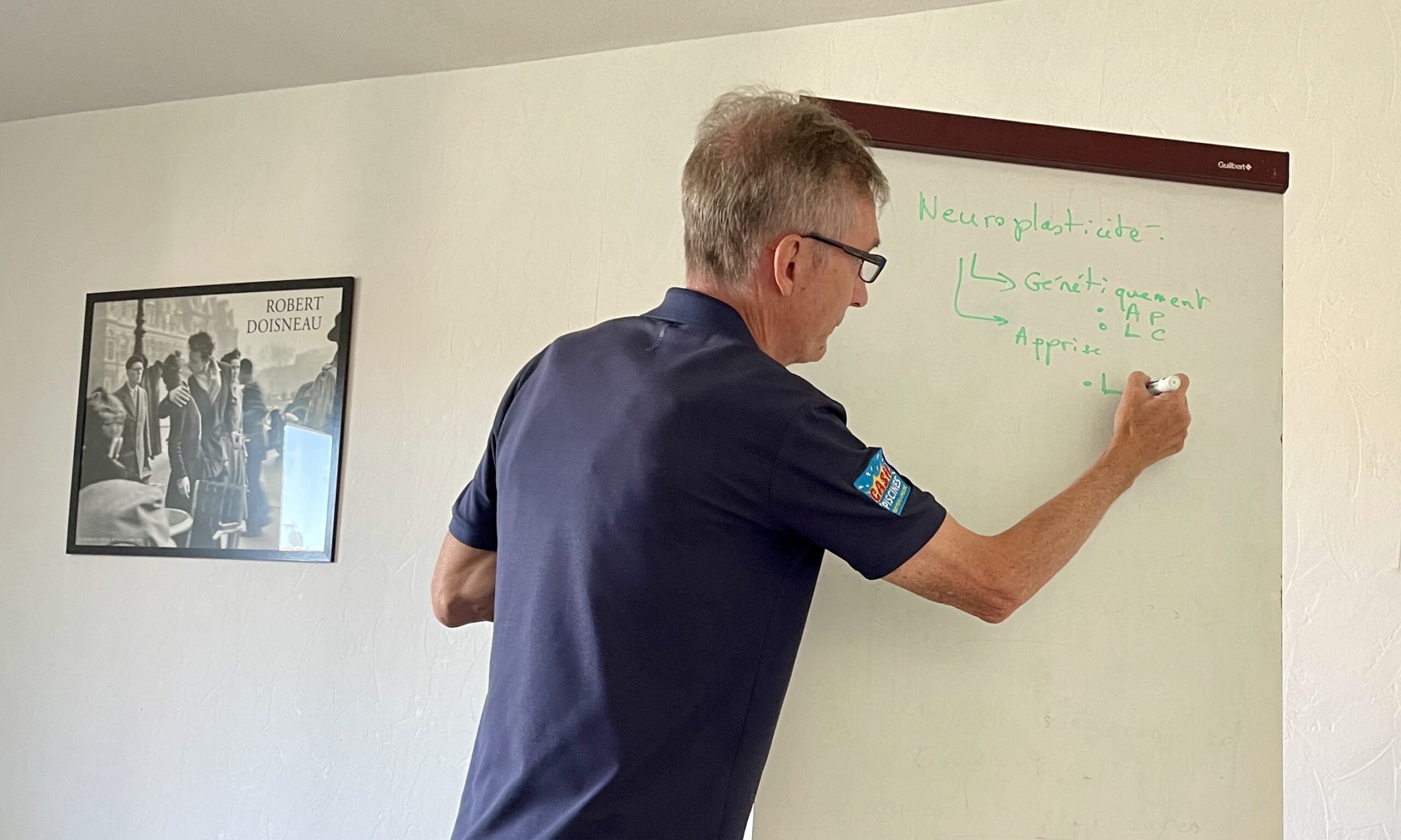
I’d tell him: surround yourself with passionate people, multilingual ones – so you can work internationally – and train them, because there’s a lot to do, everywhere. You only need to look at the basic mental errors that keep cropping up during the current football World Cup: emotional management, poor defensive reflexes, and reflexes on different types of strikes (crosses, shots, volleys). One example: letting players ride extreme emotional rollercoasters after scoring or conceding a goal. But there’s also this truth: every football player is afraid of being hit by the ball when striking it, so there’s an instinctive reaction to avoid that, which ends up leaving the ball a clear path. Most football players are also afraid of missing when they shoot from distance, so either they arrange things so they don’t have to, or, when they do shoot, they rush to look at the result – which makes them pull up and not finish their motion, and the ball generally sails off target. In both of these last cases, specific work is needed to give yourself a better chance of scoring against low defensive blocks. To do that, you need to learn to eliminate these very powerful unconscious reactions and replace them with effective ones. – Interview by Anthony Diao, summer 2026. Opening picture: Patrick Grosperrin in front of his flip chart. ©JudoAKD.
A French version of this article is available here.
More articles in English:
-
- JudoAKD#001 – Loïc Pietri – Pardon His French
- JudoAKD#002 – Emmanuelle Payet – This Island Within Herself
- JudoAKD#003 – Laure-Cathy Valente – Lyon, Third Generation
- JudoAKD#004 – Back to Celje
- JudoAKD#005 – Kevin Cao – Where Silences Have the Floor
- JudoAKD#006 – Frédéric Lecanu – Voice on Way
- JudoAKD#009 – Abderahmane Diao – Infinity of Destinies
- JudoAKD#008 – Annett Böhm – Life is Lives
- JudoAKD#010 – Paco Lozano – Eye of the Fighters
- JudoAKD#011 – Hans Van Essen – Mister JudoInside
- JudoAKD#021 – Benjamin Axus – Still Standing
- JudoAKD#022 – Romain Valadier-Picard – The Fire Next Time
- JudoAKD#023 – Andreea Chitu – She Remembers
- JudoAKD#024 – Malin Wilson – Come. See. Conquer.
- JudoAKD#025 – Antoine Valois-Fortier – The Constant Gardener
- JudoAKD#026 – Amandine Buchard – Status and Liberty
- JudoAKD#027 – Norbert Littkopf (1944-2024), by Annett Boehm
- JudoAKD#028 – Raffaele Toniolo – Bardonecchia, with Family
- JudoAKD#029 – Riner, Krpalek, Tasoev – More than Three Men
- JudoAKD#030 – Christa Deguchi and Kyle Reyes – A Thin Red and White Line
- JudoAKD#031 – Jimmy Pedro – United State of Mind
- JudoAKD#032 – Christophe Massina – Twenty Years Later
- JudoAKD#033 – Teddy Riner/Valentin Houinato – Two Dojos, Two Moods
- JudoAKD#034 – Anne-Fatoumata M’Baïro – Of Time and a Lifetime
- JudoAKD#035 – Nigel Donohue – « Your Time is Your Greatest Asset »
- JudoAKD#036 – Ahcène Goudjil – In the Beginning was Teaching
- JudoAKD#037 – Toma Nikiforov – The Kalashnikiforov Years
- JudoAKD#038 – Catherine Beauchemin-Pinard – The Rank of Big Sister
- JudoAKD#039 – Vitalie Gligor – « The Road Takes the One Who Walks »
- JudoAKD#040 – Joan-Benjamin Gaba and Inal Tasoev – Mindset Matters
- JudoAKD#041 – Pierre Neyra – About a Corner of France and Judo as It is Taught There
- JudoAKD#042 – Theódoros Tselídis – Between Greater Caucasus and Aegean Sea
- JudoAKD#043 – Kim Polling – This Girl Was on Fire
- JudoAKD#044 – Kevin Cao (II) – In the Footsteps of Adrien Thevenet
- JudoAKD#045 – Nigel Donohue (II) – About the Hajime-Matte Model
- JudoAKD#046 – A History of Violence(s)
- JudoAKD#047 – Jigoro Kano Couldn’t Have Said It Better
- JudoAKD#048 – Lee Chang-soo/Chang Su Li (1967-2026), by Oon Yeoh
- JudoAKD#050 – Hermann Monne – Burkina, a Land Already Peopled
- JudoAKD#051 – Mariana Esteves – A Chronicle of Life Passing By
- JudoAKD#052 – Tiphaine Gingelwein – Chechnya and the Caucasus, a Feminine Perspective in Nuance and Complexity
- JudoAKD#053 – Victor Scvortov – Born Again Under a Lucky Star
- JudoAKD#054 – Eric Gervasoni – From Moves to Movies
- JudoAKD#055 – Mihael Žgank – Coming Home Is Where the Real Journey Starts
- JudoAKD#057 – Rest in Peace, René Nazaret (1936-2026)
- JudoAKD#058 – Alexandre Paysan – We Saw Him in the Vercors, Bungee Jumping…
- JudoAKD#059 – Habib Alouache – Teaching Joy
- JudoAKD#060 – Diyora Keldiyorova – Another Giant Leap for (Wo)Mankind
Also in English:
- JudoAKDReplay#001 – Pawel Nastula – The Leftover (2017)
- JudoAKDReplay#002 – Gévrise Emane – Turn Lead into Bronze (2020)
- JudoAKDReplay#003 – Lukas Krpalek – The Best Years of a Life (2019)
- JudoAKDReplay#004 – How Did Ezio Become Gamba? (2015)
- JudoAKDReplay#005 – What’s up… Dimitri Dragin? (2016)
- JudoAKDReplay#006 – Travis Stevens – « People forget about medals, only fighters remain » (2016)
- JudoAKDReplay#007 – Sit and Talk with Tina Trstenjak and Clarisse Agbégnénou (2017)
- JudoAKDReplay#008 – A Summer with Marti Malloy (2014)
- JudoAKDReplay#009 – Hasta Luego María Celia Laborde (2015)
- JudoAKDReplay#010 – What’s Up… Dex Elmont? (2017)
- JudoAKDReplay#011 – Zakopane, or Lives Passing By (2017)
- JudoAKDReplay#012 – Thierry Frémaux (1/2) – About The Legend of the Great Judo(2016)
- JudoAKDReplay#013 – Thierry Frémaux (2/2) – Judo in the Light (2021)
And also :
- JudoAKDRoadToLA2028#01 – Episode 1/13 – Summer 2025
- JudoAKDRoadToLA2028#02 – Episode 2/13 – Autumn 2025
- JudoAKDRoadToLA2028#03 – Episode 3/13 – Winter 2026
- JudoAKDRoadToLA2028#04 – Episode 4/13 – Spring 2026
JudoAKD – Facebook – Instagram – X (Twitter).