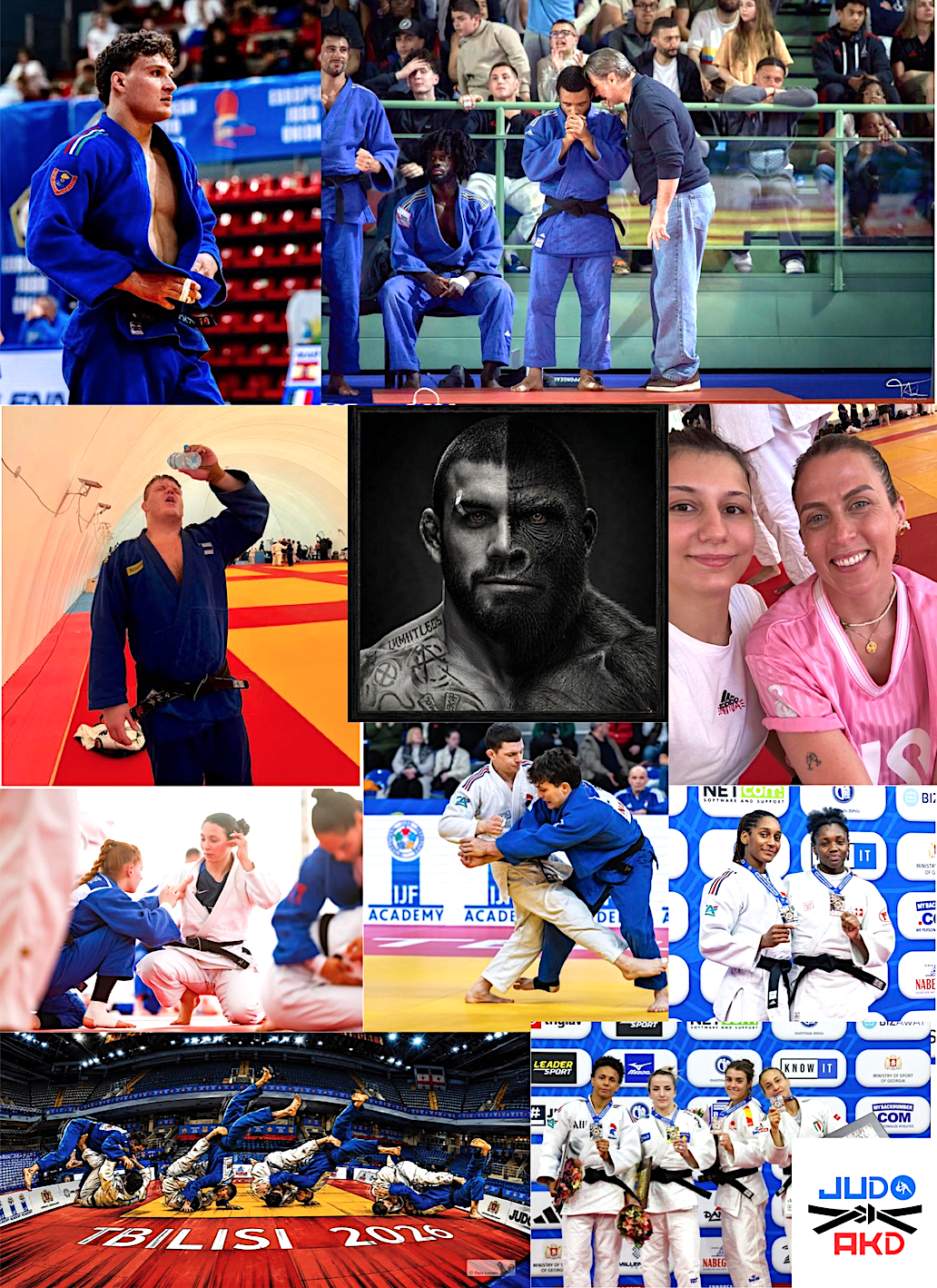
Brace yourself and let settle slowly. “I rather believe that the West’s inexhaustible capacity to disconnect words from deeds has long rendered its modernity both unintelligible and illegitimate to those it has designated as others, even if they may have benefited from it by default.”
Twenty-five years after the publication of her stimulating essay L’Occident et les autres (The West and the Others, La Découverte editions, 2001), Franco-Tunisian historian Sophie Bessis was the guest at the start of June on the equally stimulating À voix nue programme on France Culture. Five conversations as so many concentrates of intellectual vivacity and joyful erudition with director Ilana Navaro, which anyone keen to better grasp certain issues of our time would do well to listen to without delay… An era of which American economist Joseph Stiglitz was already saying in 2015 that the roots of the drama lay in the following paradox: “Americans want very much to be number one – we enjoy having that status. In contrast, China is not so eager. […] China understands full well America’s psychological preoccupation with being number one – and was deeply worried about what our reaction would be when we no longer were.” As Le Rat Luciano put it this spring, upon his great microphone comeback after a quarter of a century making himself scarce: “Why listen to what they say? We look at what they do. It’s the world after us, no less. The rest? Background noise. [Pourquoi écouter ce qu’ils disent ? On regarde ce qu’ils font. C’est le monde après nous, pas moins. Le reste ? Bruit de fond.]“
In judo too, the Olympiad has suddenly accelerated, coming out of a sequence of continental championships where the noise of the world sometimes seeped in — as Tiphaine Gingelwein told us from Tbilisi right after the U81kg podium, where Timur Arbuzov, who had just served up a salad-tomatoes-onions menu to local hero Tato Grigalashvili in the final, heard his anthem booed amid a chorus of “ruseti okupantia,” in reference to the disputed statuses of the buffer zones of Abkhazia and South Ossetia…
At the recent Mongolia Grand Slam, Japan proved lethal and South Korea appeared possessed of the same physical and technical certainties as at the 2021 Doha Masters where, emerging from the pandemic, the fighters of the Land of the Morning Calm had displayed a collective impact as remarkable as it was noticed. The protagonists of the series below, meanwhile, experienced a contrasting spring — one worth documenting closely while placing it in the perspective of the long view. – JudoAKDRoadToLA2028#04.
A French version of this episode is available here.
To (re)read episode 3/13 (winter 2026), follow this link.
To jump ahead to episode 5/13 (summer 2026), click here.
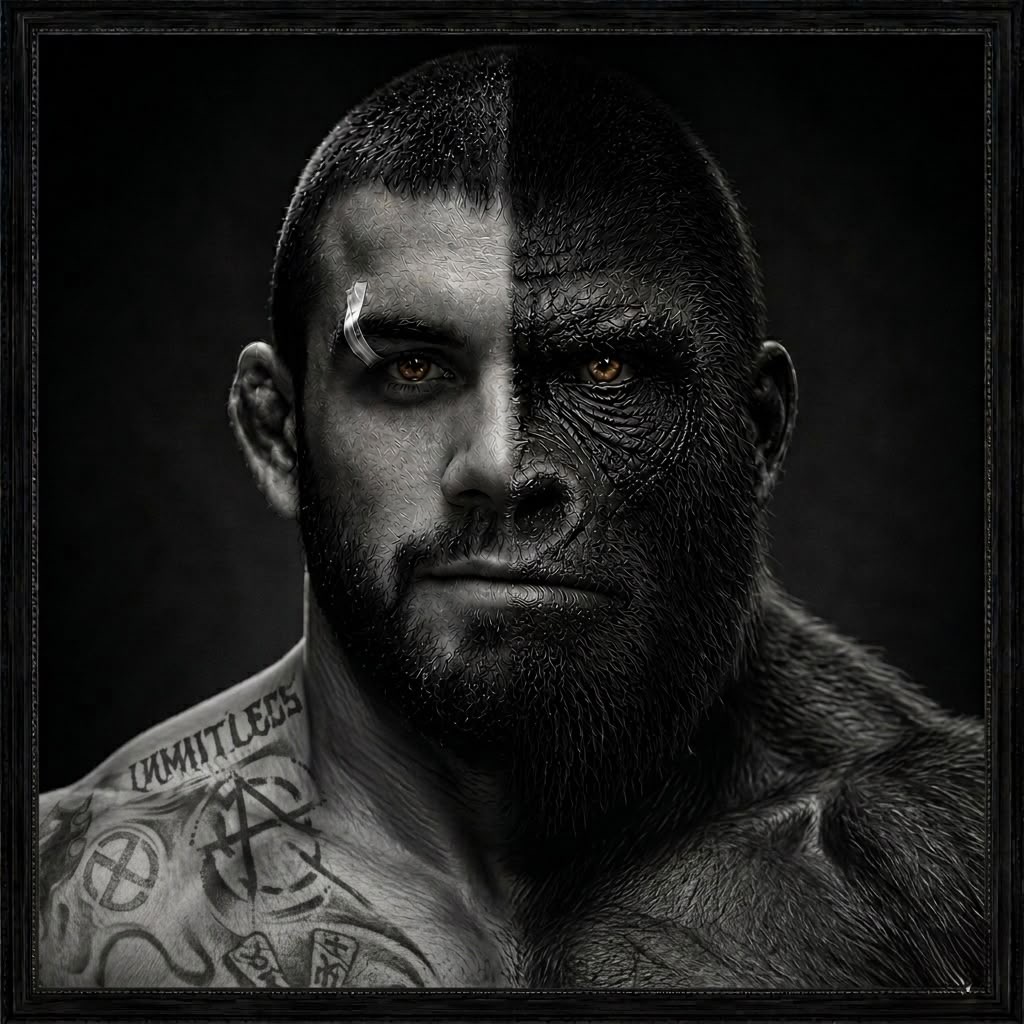
Toma Nikiforov – Belgium – Newly retired – In the final pages of his La Gloire de mon père [sic — Le Château de ma mère, 1958], French writer Marcel Pagnol writes these lines: “Such is the life of men. A few joys erased by unforgettable sorrows. It is not necessary to tell the children.” A year after announcing his retirement, the happy father of Azalia and Deya continues his apprenticeship of life after sport, his enormous smile serving as a front bumper for anyone who might venture to threaten the serenity of an inner circle he takes great care to keep sacred. At thirty-three, the theoretical component of his coaching education is now behind him. His hours with the Army and his evenings providing security at events that are not averse to the presence of a colossus with nimble fists of his build allow him to cover the most pressing needs. His evident vocation as a leader of men (and women) seems now only a matter of weeks away, so much do his intransigence, his charisma and — beneath his gruff exterior — his acute understanding of human nature appear today as decisive criteria in the eyes of many ambitious directors. In the meantime, another project has him so absorbed that he is sometimes “at the gym from 11 pm to 2:30 am,” as the hyperactive person he is. Not much of a fan of “this TikTok generation that films itself a lot while having little to say,” he bides his time and has committed to telling us more when summer is over.
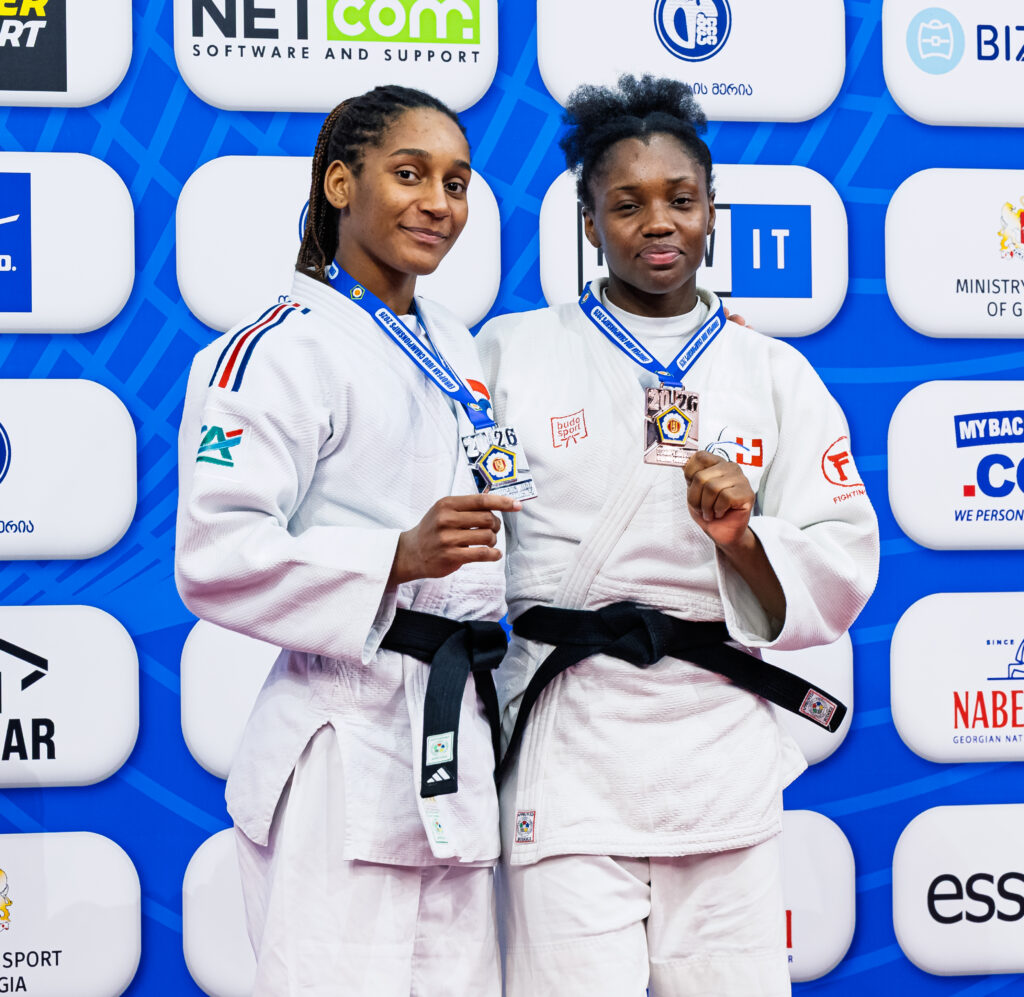
Melkia Auchecorne – World ranking U70kg: 19th (+24 places) – Beaten in her second fight on March 20 at the Tbilisi Grand Slam by Japan’s Shiho Tanaka, ranked 4th in the world, the AS Chelles judoka breathes a sigh of relief three days later upon learning that she has nonetheless been selected for the European Championships scheduled the following month in the same city. These are her first senior continental championships, following the “trade-off” agreed a year earlier to best accommodate Clarisse Agbégnénou’s maternity plans.
On the day, she confirms that she is, at twenty-one, decidedly a sound investment. Silver medallist in her first season at U70kg, having dominated seasoned campaigners such as the Netherlands’ Sanne Van Dijke, Spain’s Ai Tsunoda Roustant and Russia’s Madina Taimazova — seventeen Olympic, World or continental medals between the three of them. The latter’s generous assessment, trained on the same Vladikavkaz mats as Inal Tasoev and relayed by the French federation’s press office: “I didn’t expect her to be so strong physically. I felt good, everything was going as planned. The first half of the fight was completely in my favour, and I could feel her starting to tire. I began attacking and thought victory was within reach. And then I made a serious mistake and she took advantage of it.” Coming from the “black eye girl” of the Tokyo Games — who passed into posterity for her marathon golden scores that day (14’58 in the second round, 16’41 in the semis and 5’22 for the bronze) — the confidence has the value of a knighting.
For Melkia, “frustration” remains the prevailing feeling coming out of this Georgia campaign. Frustration at having given way to Hungarian Szofi Ozbas, the defending champion she had nonetheless managed to dominate last September at the China Grand Prix in her first steps in this new category. Frustration too at not having driven the nail home definitively at national level in a category where, granted, Margaux Pinot announced her retirement in mid-May, but where a Marie-Ève Gahié or a Clémence Émé — transformed since her move to AJA Paris XX and finally free from injuries — have not yet had their last say. But this is undoubtedly only a postponement: at the end of a spring brightened by a few team outings, the Benidorm training camp and public appearances to promote women’s judo — but also cut short by her last-minute withdrawal from selection for the Ulaanbaatar Grand Slam in order to catch up on missed sociology, administrative law and EU law exams — she knows she holds strong cards.
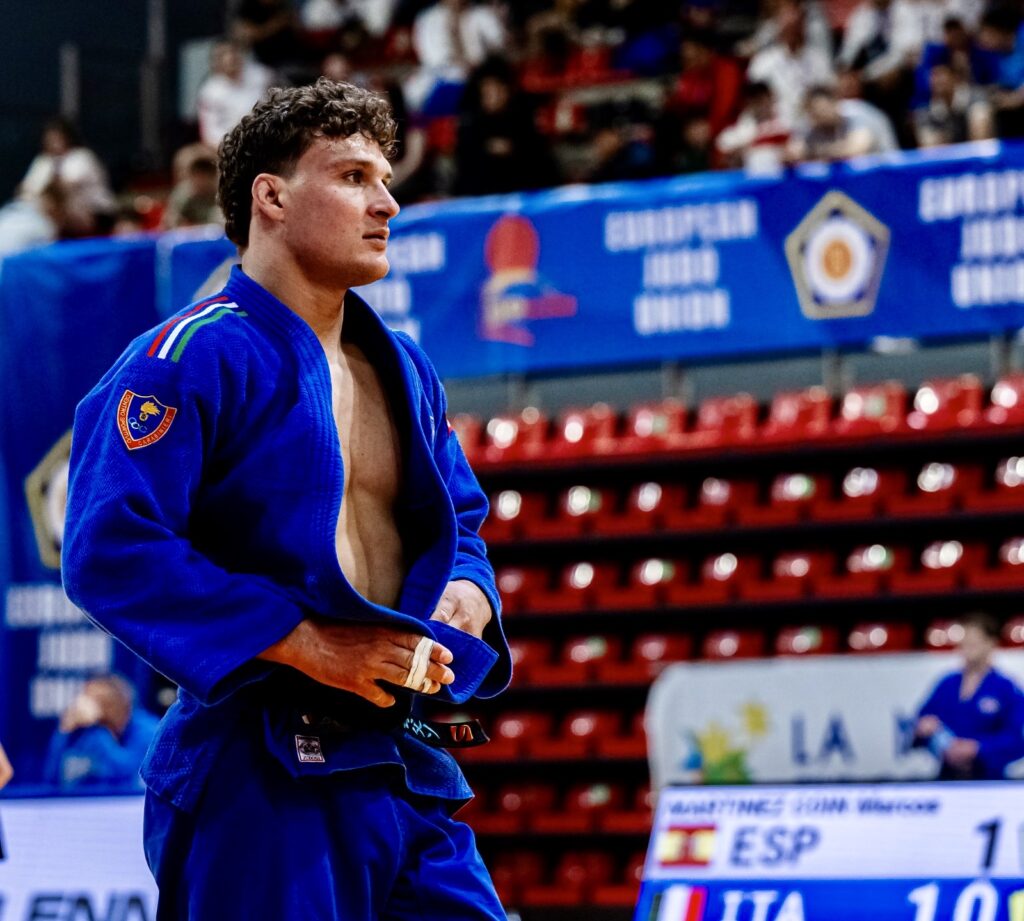
Giacomo Gamba – Italy – World ranking U90kg: 342nd (entry) – Thirteen months after his last outing at U81kg, “Jack” makes his full debut at U90kg on March 28 at the Dubrovnik Continental Cup. Five fights won out of six, a bronze medal and genuine grounds for satisfaction. “I’m not yet at 100% but it feels so good to be back,” he confides in the heat of the moment, with that irresistible momentum known to all those who have spent months in the anteroom of convalescence and treatment.
Six weeks later, at the Benidorm European Open, he is stopped in the third round, outclassed by Germany’s Eduard Trippel, 2021 Olympic silver medallist in Tokyo and gold medallist at the end of the day. “I’m at 91 kg, I still need to put on three or four kilos to really be comfortable in the category,” reckons the man who admits to commenting reluctantly on this period of his career. “This is not the time for words. This is the time for action. I need action. I want fights. I want victories. And for that, there is only one thing to do: work.”
Putting his words into action, he follows up at Martina Franca in Puglia by winning the national title at the Italian Championships with his carabinieri team, winning each of his four fights. A men’s-and-women’s double that sends his coach Matteo Marconcini back to the memory of the last time this team won the event, in 2012 — when the 2017 World silver medallist took part as an athlete.
The start of the celebrations for the 140th anniversary of his club Forza e Costanza, a spell on the Adriatic coast at Riccione in the week of June 10 for the aptly named Green Camp of his compatriot Elio Verde — with Azerbaijan’s Zelym Kotsoiev as guest star — a look at the Mille Miglia, the soon-to-be-centenary motor race brought back into the spotlight in Michael Mann’s film Ferrari (2023), and the preparation of his next outing on June 28 at the Prague European Open… The comeback proceeds step by step, never going backwards.
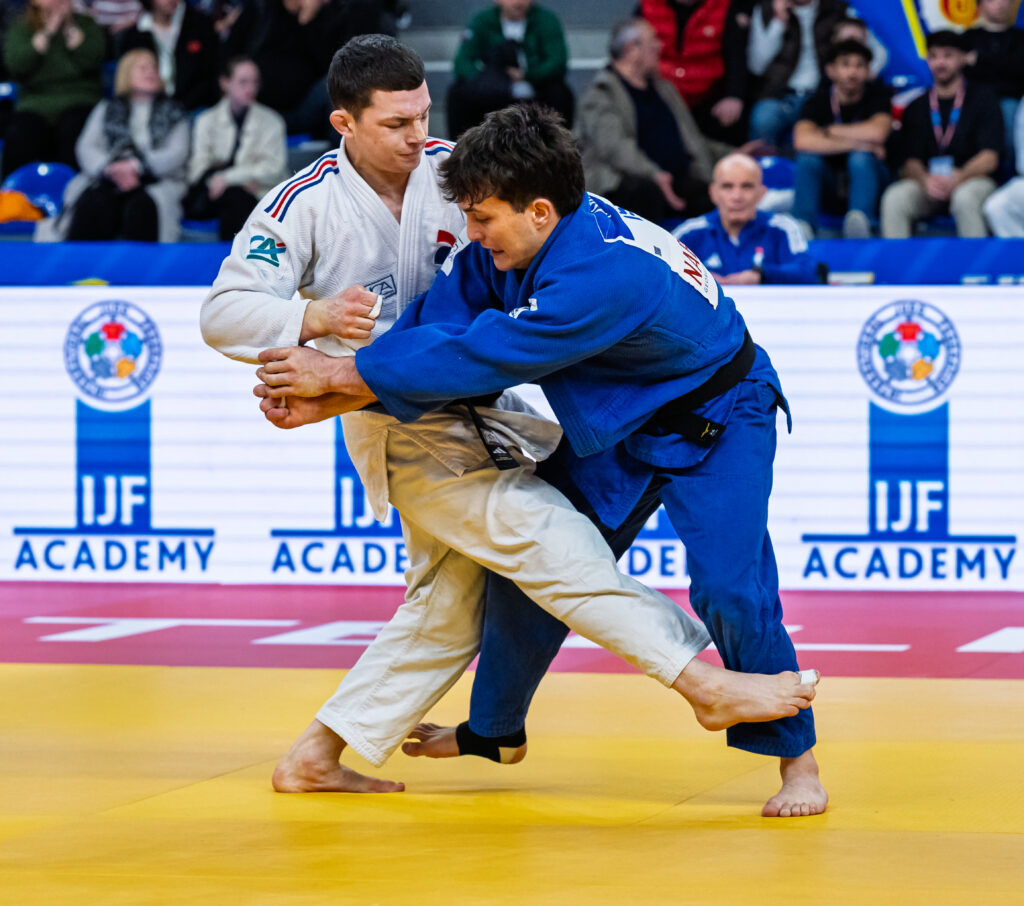
Romain Valadier-Picard – France – World ranking U60kg: 8th (-3 places) – The Tbilisi European Championships opened an unprecedented sequence for the French men’s team: the gamble of fielding two tricolores per category in four of them (U60, U66, U73 and U90kg), skipping two others (U81 and U100kg) and giving a chance to an O100kg, Mathéo Akiana Mongo this time, in one of those uncomfortable temp-worker costumes that the category knows all too well over two decades, at every cycle when Teddy Riner enters the pause mode that his imperial record allows him.
Despite “a calm preparation” and a solid start punctuated by a sutemi candle throw on Ukraine’s Artem Lesiuk, Romain goes down in the quarter-finals against Israeli Izhak Ashpitz, the revelation of this early season with his podiums in Paris in February, that day in Tbilisi and then in June in Mongolia. Finishing seventh without having been able to properly defend his chances in the repechages, Romain explains the reason a few days later: he dislocated two quadriceps tendons during that clash against the immensely powerful protégé of former World medallist Golan Pollack — “even my father, who is a radiologist, was impressed by the extent of the injury.” Six weeks of rest and treatment, and above all the bittersweet joy of having had a front-row seat at the triumph of his rival Luka Mkheidze who, as in 2023 at the Montpellier edition, claims by virtue of his personal history another title on home soil.
Exempted from the Judo Pro League on May 16 and replaced by Gabin Supervielle due to his convalescence, he watches from the sideline as his ACBB teammates claim the Final Four title in an event whose regulations have been scrutinised by lawyers in recent months to assert their rights. The Benidorm camp the following week is an opportunity to take the circuit’s pulse again, limiting himself to technique and trackside treatment. A school of frustration which, compounded by the many galas he made a point of honouring weekend after weekend across France on his return from Tbilisi, leads him to forego the recovery time he should have taken — and thus to “re-injure himself in the same spot.” Out goes the Mongolia Grand Slam on June 19, for which he had been selected. A blessing in disguise, as this forced pause allows him to advance with his partner Clément Delvert on their academic research into training load quantification, and to continue planning those open-air weekends with friends that he loves so much. “I need to learn to rest and not just to relax,” he refines. “Last season showed me that when I arrive hungry, I perform. My luck is that my coaches, Dany Fernandes and Stéphane Frémont above all, hear me and encourage me to listen to my body better. They know I don’t cut corners.” And Luka Mkheidze’s first-round defeat on June 19 in Ulaanbaatar suggests that between the double Olympic medallist and the reigning World silver medallist, the race to the Games is far from over.
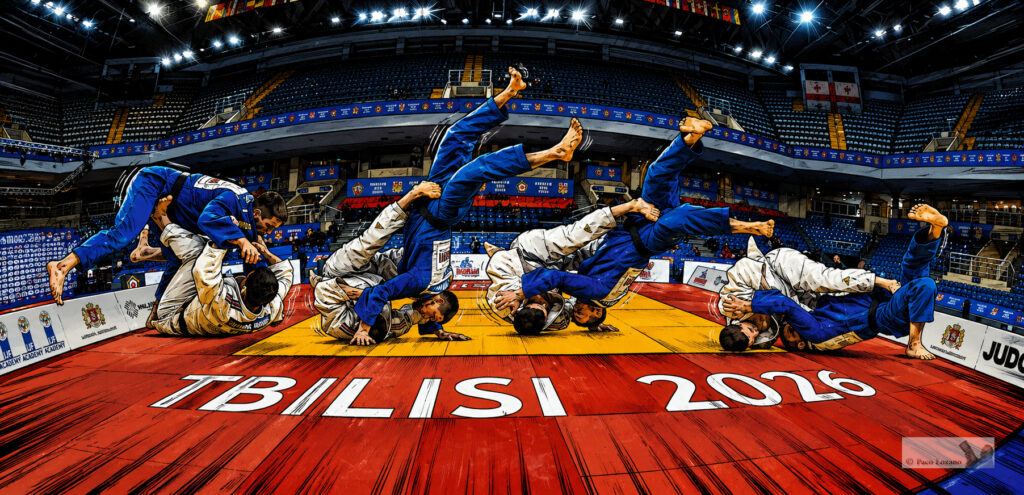
Paco Lozano – Spain – Photographer – “You have to love solitude to be a photographer,” Raymond Depardon once said. Faithful to his post as every year at the European Championships, the man who shoots faster than his shadow experiences it a little more keenly at each event, this solitude. He finds it once again at this Georgian edition, noting the exhaustion of a model that discourages more than it encourages his most experienced colleagues from making such trips. A global dynamic whose acceleration he locates at the time of the health crisis, and which reaches well beyond the judo microcosm to the point of generating extensive debate in journalism schools… A finding confirmed by a first day of championships played out before a listless crowd, owing to a mid-week scheduling — a Thursday — barely compatible with the professional or school commitments of the target audience. A false start fortunately redeemed by the high-flying performances of the following days — “the Arbuzovs, the Bellandi, Krpalek, Tushishvili… Even young Tataroglu, it was impressive to watch.”
Present a few weeks later at the Benidorm camp and then at the celebrations of the dynamic Galicia League run by the equally dynamic Mario Muzas, he takes part there in the minute of silence held in memory of his friend José-Manuel Cortès, referee at the Beijing, London and Rio Olympics. Back in Málaga, he resumes with infinite passion and patience the sorting of his tens of thousands of photographs in waiting, an echo of the famous aphorism of documentary filmmaker Chris Marker: “Photography is hunting, it is the hunting instinct without the desire to kill. It is the hunting of angels… You track, you aim, you shoot, and click! Instead of a dead man, you create an eternal one.”
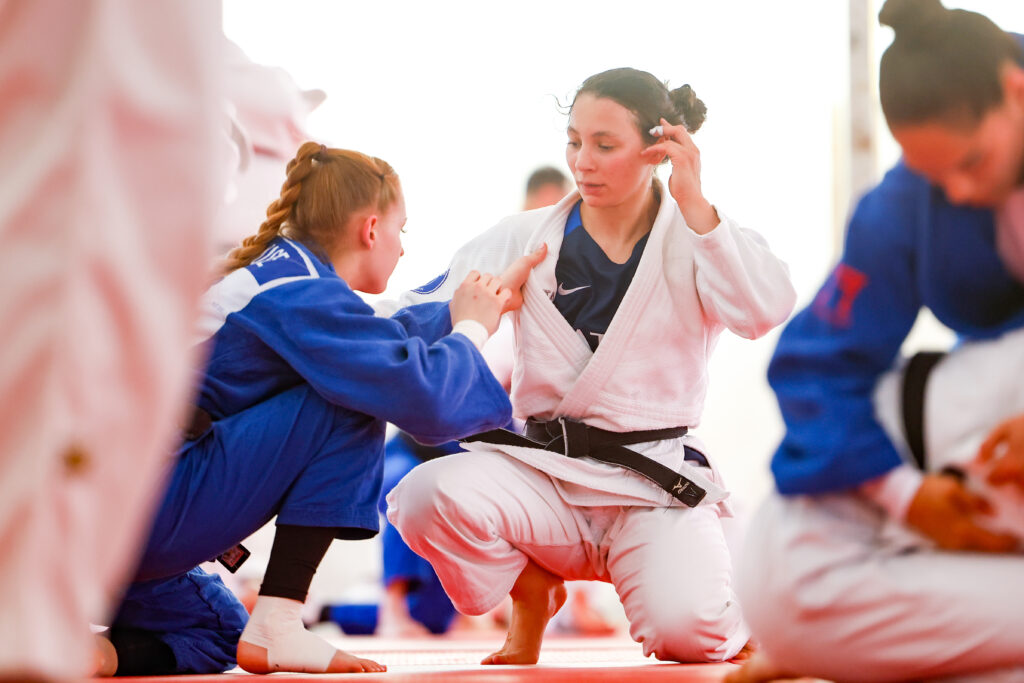
Faïza Mokdar – France – World ranking U57kg: 3rd (+6 places) – Her status as second reserve for the Tbilisi Europeans draws from her an “I feel like they’re not counting on me” that says everything about the unfathomable solitude that strikes these ultra-competitive environments when those inevitable crossroads arrive, brutally revealing that there is still something to prove. Meagre consolations: Shirine Boukli, her traditional roommate, wins in Georgia her fifth continental title in as many appearances, equalling a French record; and the next day, in her U57kg category, Sarah-Léonie Cysique finishes “only” in bronze, while Martha Fawaz, the other incumbent, falls to her senior in the repechage final. Nothing insurmountable, then — especially since this sequence without immediate objectives is also an opportunity to advance in her studies and rework her fundamentals with her club coach Baptiste Leroy.
On May 1, reinforced by Kosovo’s Distria Krasniqi and Brazil’s Rafaela Silva — ten Olympic and World medals between them — alongside Romane Dicko and Marie-Ève Gahié among others, her PSG Judo is simply unplayable at the French mixed team championships. Four wins in as many fights for Faïza, who gets back on track. A week later, she reminds the selectors of her presence by retaining her title at the Astana Grand Slam, taking revenge in the final and on the ground against her compatriot Chloé Devictor, who had denied her a fourth consecutive national title in December at Saint-Chamond. Slightly troubled by a hamstring injury, she limits herself to technical sessions the following week at the camp organised on site, bringing together the Kazakhstani hosts as well as Canada and her AJA Paris XX colleagues. Enough to arrive like a loaded 504 break at the much-coveted Benidorm camp, where Clarisse Agbégnénou, marked by a trying spring, returns to play den mother to the group… Fifth on June 19 at the Ulaanbaatar Grand Slam while Sarah-Léonie Cysique finishes second, she knows that her selection for the October World Championships no longer depends entirely on her alone.
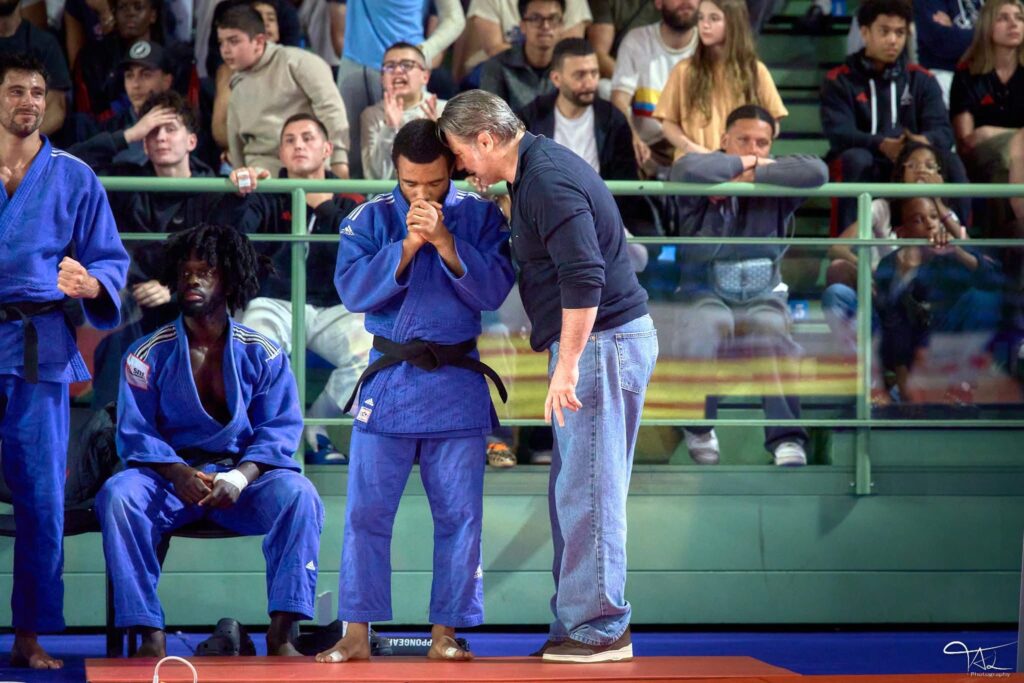
Daikii Bouba – France – World ranking U66kg: 13th (-3 places) – Radiant in 2025, Daikii returns from the 2026 European Championships with confused ideas. “In each of my three fights, I go down on the first sequence. My patterns weren’t clear. I tried to throw too quickly, without building. It’s been a good ten years since I’d had that feeling.” Seventh without having managed to read the ball either against Russia’s Abdullakh Parchiev in the quarters or against Armenia’s Davit Abrahamyan in the repechage, the thirty-something ruminates. Was it his status as defending champion that weighed too heavily? Was it the rediscovered consistency of his rival Walide Khyar, third in Tbilisi as he had been a year earlier in Podgorica, with a fifth place at the Budapest World Championships and a title at the Abu Dhabi Grand Slam in between? Was it his choice to stay and train in Paris at the time when part of the French team was flying to Brazil during the preparation cycle?
Fifteen days later, Daikii bounces back. Within an AJA Paris XX team forced to go one short — Maxime Merlin being entered in the Dushanbe Grand Slam and Benjamin Axus having moved up to U81kg — he volunteers at U73kg, winning four of his five fights including those against French champion Nathan Cadignan and his runner-up, the newly-minted European medallist Dayyan Boulemtafès, eleven years his junior.
(Too) conscious of the importance of every international outing from now on, his participation on June 19 at the Ulaanbaatar Grand Slam is cut short. Although he scores on his Mongolian opponent with a sutemi, he relaxes and gets pinned down on the following sequence. A first defeat in three encounters against this Erkhembayar Battogtokh who, on home soil, is worth considerably more than his 39th place in the rankings.
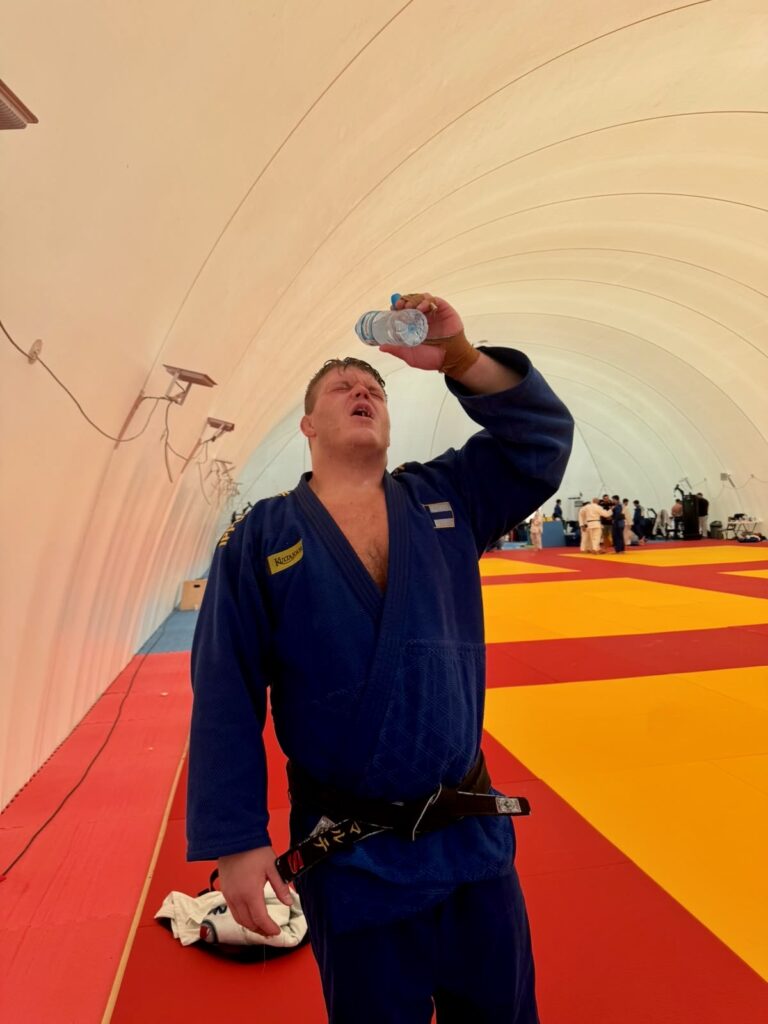
Martti Puumalainen – Finland – World ranking O100kg: 15th (-3 places) – Not even a matte. In two international outings this spring, the 2023 European champion will have spent seventeen seconds on the mat on March 20 at the Tbilisi Grand Slam, then twenty-six more on June 21 at the Ulaanbaatar one, subdued respectively by Artem Zolothukin’s circular uchi mata — ranked 27th in the world and sixth Russian in the rankings — and then by a lightning armlock from the returning Duurenbayar Ulziibayar, third at the 2018 World Championships, now fallen to 116th in the world rankings and whose last competition win on the circuit dated back to the Paris Grand Slam… of 2020.
The damage is heavy, especially coming on top of his last-minute withdrawal from the European Championships on April 19 due to throat pain that turned out to be the symptoms of mononucleosis. A poor run fortunately offset by the overall momentum of his team, literally transformed since Slovenia’s Rok Drakšič took the helm at the time of the pandemic. “With Luukas Saha’s final at U66kg, we come back from the European Championships with a medal for the fourth year running. That shows it’s a real system that is being put in place. It raises everyone’s game.”
The work is not paying off right now, but it has paid off before and will doubtless pay off again. That is the conviction of the blond giant, never sparing in his efforts — neither at the substantial Benidorm camp nor a few days later in Istanbul, where he has the privilege of crossing swords with a Teddy Riner who has not yet hit fourth gear. Back home, he continues to bring in sparring partners such as Belarus’s Mikita Svirid, Britain’s Wesley Greenidge and Estonia’s Marek-Adrian Masak. “Behave in the sauna as you would in church,” says a Finnish proverb. Martti has stumbled but he is still on his way.
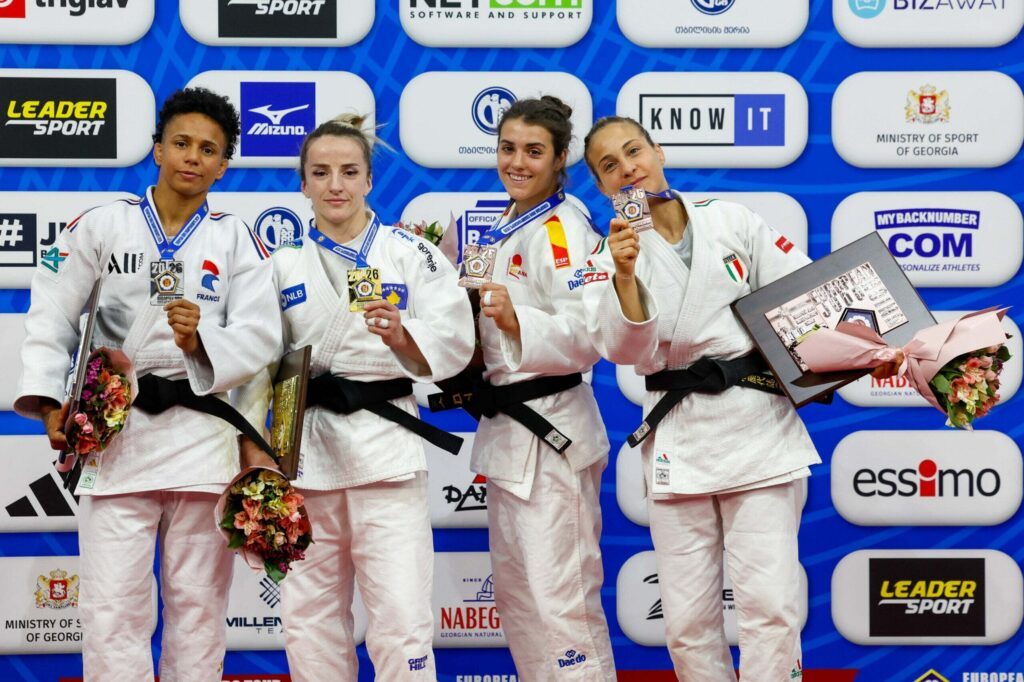
Ariane Toro Soler – Spain – World ranking: 10th (-6 places) – True to her guiding principle, the Navarrese competes sparingly and rarely returns empty-handed. After her bronze medal in December at the Tokyo Grand Slam and her silver in February in Paris, she had every intention of claiming the third metal that has eluded her since the 2024 Tbilisi Grand Slam. On April 16, it is again in the Georgian capital that she hopes to seize the opportunity, at the European Championships where she had finished third in both 2024 and 2025. Alas, her yuko on one of those scrappy techniques that contemporary judo sometimes produces — thirty seconds from the end of her semi-final against Amandine Buchard – is taken away by the central table after the sore made. A cold shower for this glass ceiling she thought she had finally managed to break through. Demoralised, she holds on for another 2’50 of golden score before rolling onto her side from a jumping tai otoshi by the Frenchwoman… Despite the disappointment, she needs only two quick sweeps left and right to stick two waza-ari on Dutch athlete Naomi Van Krevel and claim her third consecutive continental podium. Alongside her, the trio of thirty-somethings Distria Krasniqi (gold), Amandine Buchard (silver) and Odette Giuffrida (bronze) between them accumulate thirty-six medals at major championships. “My first European medal was a great joy. The second, a confirmation. This one is tinged with a little more sadness, but it also confirms that my choice to compete sparingly is the right one. I arrive with desire and that’s what allows me to express myself best.”
After a few sporting holidays (mountains and surfing near San Sebastián), followed by the Benidorm camp while juggling university deadlines, she reappears two months later at the Ulaanbaatar Grand Slam. Five fights, scores with a ko-uchi maki-komi on Poland’s Aleksandra Kaleta, a hikikomi-gaeshi on local athlete Gal-Od Tserentogtokh and an o-guruma in seven seconds again against Dutch athlete Naomi Van Krevel. But a tomoe-nage in the quarters against Odette Giuffrida, a clinch that tips the wrong way in golden score for the bronze against the former Mongolian naturalised as Emirati Khorloodoi Bishrelt. There’s Ari in fifth place… and even more motivated to make sure it doesn’t happen again.
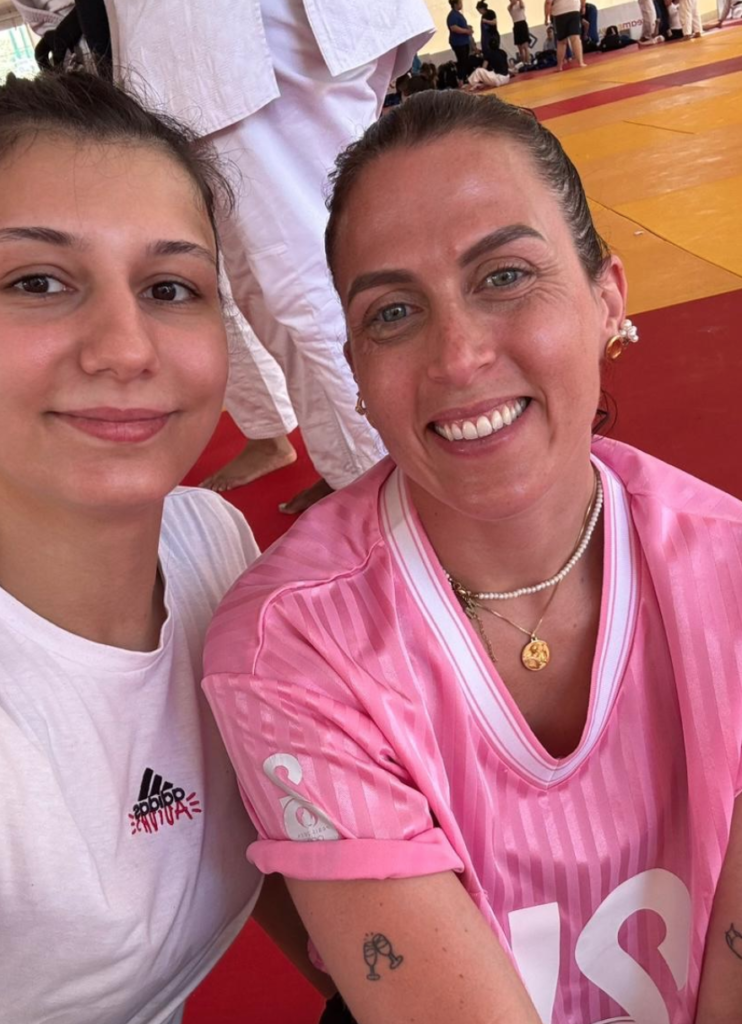
Morgane Sellès – France – Physiotherapist with the Azerbaijan team – “Their ceiling is my floor, your plan A is my plan B [Leur plafond c’est mon plancher, ton plan A c’est mon plan B]”: as French rapper Booba raps in ‘Les Meilleurs’ (2015), the team from the shores of the Caspian Sea is developing a taste for high standards since the extraordinary 2024 season of its U73kg Hidayat Heydarov and U100kg Zelym Kotsoiev — among others, and all the more so with a view to hosting the World Championships in the autumn. The four medals without a title brought back from the Tbilisi European Championships? “A disappointment and a frustration,” comments Morgane, who has a hard time swallowing the stormy outcomes of certain fights against the home crowd, particularly at U60 and U81kg. Among the satisfying moments, the fine rise of the newly-minted U66kg Turan Bayramov, already on the podium just months after moving up from U60kg, and the promising fifth place of the U48kg Shafag Hamydova, who beat Italian World champion Assunta Scutto and Swedish Olympic medallist Tara Babulfath among others. “The arrival of Amina Abdellatif in the women’s staff brings a lot of calm to this group. Some of the girls have moved up in category so they don’t wreck their health with weight cuts, and, for once, our men stayed around to cheer on the women. Personally, it’s the first time the athletes have taken it upon themselves to come to me for treatment. It took two years, as it did when I was working with the French team.”
An interesting parallel which, given cultural codes that are sometimes poles apart, owes much to the listening skills of German manager Richard Trautmann and his ability to defuse problematic situations as they arise. “I feel empowered and respected, with the genuine sense of belonging to a team.” An important milestone, also linked to the credibility built over time — “60 to 70% of the injuries observed in recent months are linked to deficiencies identified in our pre-season tests. That means we’re on the right track.”
This mutual trust is anything but surplus to requirements as they shift up a gear for a meticulously planned summer calendar, which leaves behind it the Benidorm camp — “there were far too many athletes on the mat, among physios we were all terrified of seeing one of our athletes have someone land on them during the randori” — the Palapellicone camp (Italy) immediately after, a stopover in the Netherlands for her daughter’s fifth birthday, the Mongolia Grand Slam where, for the second time in a few months, Hidayat Heydarov fails to make weight…, and a bright-and-early, self-deprecating debrief in the podcast – as physical as it is cerebral — she feeds like a logbook: “Why do physios try to become influencers? Maybe because there are more and more influencers giving rehab advice… With ‘miracle exercises’ that cure everything in just five minutes a day. Your back. Your grandmother’s. Your marathon-running friend’s knee. And your hemiplegic colleague’s.” More to come. – All words gathered by Anthony Diao, winter 2026. Opening montage: ©Peyo Diao-Thomé/JudoAKD.
A French version of this episode is available here.
To (re)read episode 3/13 (winter 2026), follow this link.
To jump ahead to episode 5/13 (summer 2026), click here.
More articles in English:
-
- JudoAKD#001 – Loïc Pietri – Pardon His French
- JudoAKD#002 – Emmanuelle Payet – This Island Within Herself
- JudoAKD#003 – Laure-Cathy Valente – Lyon, Third Generation
- JudoAKD#004 – Back to Celje
- JudoAKD#005 – Kevin Cao – Where Silences Have the Floor
- JudoAKD#006 – Frédéric Lecanu – Voice on Way
- JudoAKD#009 – Abderahmane Diao – Infinity of Destinies
- JudoAKD#008 – Annett Böhm – Life is Lives
- JudoAKD#010 – Paco Lozano – Eye of the Fighters
- JudoAKD#011 – Hans Van Essen – Mister JudoInside
- JudoAKD#021 – Benjamin Axus – Still Standing
- JudoAKD#022 – Romain Valadier-Picard – The Fire Next Time
- JudoAKD#023 – Andreea Chitu – She Remembers
- JudoAKD#024 – Malin Wilson – Come. See. Conquer.
- JudoAKD#025 – Antoine Valois-Fortier – The Constant Gardener
- JudoAKD#026 – Amandine Buchard – Status and Liberty
- JudoAKD#027 – Norbert Littkopf (1944-2024), by Annett Boehm
- JudoAKD#028 – Raffaele Toniolo – Bardonecchia, with Family
- JudoAKD#029 – Riner, Krpalek, Tasoev – More than Three Men
- JudoAKD#030 – Christa Deguchi and Kyle Reyes – A Thin Red and White Line
- JudoAKD#031 – Jimmy Pedro – United State of Mind
- JudoAKD#032 – Christophe Massina – Twenty Years Later
- JudoAKD#033 – Teddy Riner/Valentin Houinato – Two Dojos, Two Moods
- JudoAKD#034 – Anne-Fatoumata M’Baïro – Of Time and a Lifetime
- JudoAKD#035 – Nigel Donohue – « Your Time is Your Greatest Asset »
- JudoAKD#036 – Ahcène Goudjil – In the Beginning was Teaching
- JudoAKD#037 – Toma Nikiforov – The Kalashnikiforov Years
- JudoAKD#038 – Catherine Beauchemin-Pinard – The Rank of Big Sister
- JudoAKD#039 – Vitalie Gligor – « The Road Takes the One Who Walks »
- JudoAKD#040 – Joan-Benjamin Gaba and Inal Tasoev – Mindset Matters
- JudoAKD#041 – Pierre Neyra – About a Corner of France and Judo as It is Taught There
- JudoAKD#042 – Theódoros Tselídis – Between Greater Caucasus and Aegean Sea
- JudoAKD#043 – Kim Polling – This Girl Was on Fire
- JudoAKD#044 – Kevin Cao (II) – In the Footsteps of Adrien Thevenet
- JudoAKD#045 – Nigel Donohue (II) – About the Hajime-Matte Model
- JudoAKD#046 – A History of Violence(s)
- JudoAKD#047 – Jigoro Kano Couldn’t Have Said It Better
- JudoAKD#048 – Lee Chang-soo/Chang Su Li (1967-2026), by Oon Yeoh
- JudoAKD#050 – Hermann Monne – Burkina, a Land Already Peopled
- JudoAKD#051 – Mariana Esteves – A Chronicle of Life Passing By
- JudoAKD#052 – Tiphaine Gingelwein – Chechnya and the Caucasus, a Feminine Perspective in Nuance and Complexity
- JudoAKD#053 – Victor Scvortov – Born Again Under a Lucky Star
- JudoAKD#054 – Eric Gervasoni – From Moves to Movies
- JudoAKD#055 – Mihael Žgank – Coming Home Is Where the Real Journey Starts
- JudoAKD#056 – Patrick Grosperrin – Laterality, a Little-Known Lever of Performance
- JudoAKD#057 – Rest in Peace, René Nazaret (1936-2026)
- JudoAKD#058 – Alexandre Paysan – We Saw Him in the Vercors, Bungee Jumping…
- JudoAKD#059 – Habib Alouache – Teaching Joy
- JudoAKD#060 – Diyora Keldiyorova – Another Giant Leap for (Wo)Mankind
- JudoAKD#061 – Angelika Szymańska – With the Restraint of Those Still on Their Way
- JudoAKD#062 – Valentin Ménard – The Click (That Moment When Champions Just Know)
Also in English:
- JudoAKDReplay#001 – Pawel Nastula – The Leftover (2017)
- JudoAKDReplay#002 – Gévrise Emane – Turn Lead into Bronze (2020)
- JudoAKDReplay#003 – Lukas Krpalek – The Best Years of a Life (2019)
- JudoAKDReplay#004 – How Did Ezio Become Gamba? (2015)
- JudoAKDReplay#005 – What’s up… Dimitri Dragin? (2016)
- JudoAKDReplay#006 – Travis Stevens – « People forget about medals, only fighters remain » (2016)
- JudoAKDReplay#007 – Sit and Talk with Tina Trstenjak and Clarisse Agbégnénou (2017)
- JudoAKDReplay#008 – A Summer with Marti Malloy (2014)
- JudoAKDReplay#009 – Hasta Luego María Celia Laborde (2015)
- JudoAKDReplay#010 – What’s Up… Dex Elmont? (2017)
- JudoAKDReplay#011 – Zakopane, or Lives Passing By (2017)
- JudoAKDReplay#012 – Thierry Frémaux (1/2) – About The Legend of the Great Judo(2016)
- JudoAKDReplay#013 – Thierry Frémaux (2/2) – Judo in the Light (2021)
And also :
- JudoAKDRoadToLA2028#01 – Episode 1/13 – Summer 2025
- JudoAKDRoadToLA2028#02 – Episode 2/13 – Autumn 2025
- JudoAKDRoadToLA2028#03 – Episode 3/13 – Winter 2026
- JudoAKDRoadToLA2028#05 – Episode 5/13 – Summer 2026
JudoAKD – Facebook – Instagram – X (Twitter).