Born on October 16, 1999 in Włocławek (Poland), Angelika Szymańska has for several years caught observers’ attention with the calm, disciplined determination that comes through in every one of her grips and in her slightest standing-to-ground transitions. World No. 7 in the U63kg category just days before the Baku World Championships, she is one of the fighters to watch in a weight class once locked down by a handful of happy few and now formidably contested between seasoned veterans and unabashed contenders, a category she clearly belongs to. – JudoAKD#061.
A French version of this interview is available here.
You won the Lausanne Grand Slam on August 29, beating, for the first time, the two French judokas Clarisse Agbégnénou and Manon Deketer in succession. What matters more to you at the end of that day: winning a tough tournament weeks before the World Championships, or beating for the first time two athletes who had always dominated you before?
I’m very happy to have won the tournament. It shows that I’m returning to my best level and that the work my coach and I are doing is paying off. Having also won my bouts against two very strong French athletes makes this gold medal even sweeter.
You are the first to beat Clarisse Agbégnénou since her comeback. What does her longevity inspire in you, and how do you keep from being intimidated by her past achievements?
Clarisse’s career is incredible. She’s the greatest athlete in history: she’s won everything and she’s still just as motivated to keep building her legend. On top of that, she managed to combine her career with motherhood, twice, no less!, which is extremely impressive at this level. I think she’s a tremendous source of inspiration, not just for other judokas, but for women in sport in general.
What are the main differences between her judo and yours since your first encounter at the 2020 European Championships in Prague?
She was my idol since I was a teenager. Getting the chance to face her in 2020 was a very important event for me. At the time, Clarisse was at the peak of her form, while I was just starting out as a senior. I lost on the ground to an armlock and had to wait six years for another chance to face her… Today, I’m more experienced, physically stronger, and better prepared tactically, while Clarisse is just coming back after the birth of her second child. It’s incredible that she’s already in such good shape five months after giving birth, and I know she’ll get even better. That’s exactly why I, too, keep going and keep working to be ready for the challenges ahead.
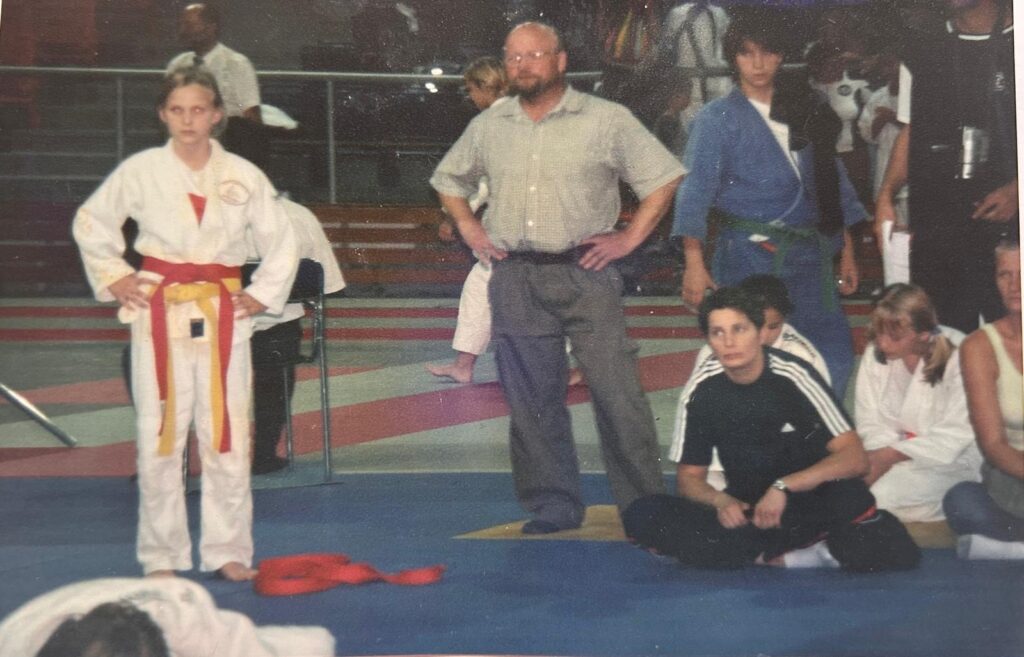
What were your first steps in judo?
I’m from Włocławek, a small town in central Poland. I started training in 2007 at a small club whose main strength was having excellent coaches. From the start, my coach was Aneta Szczepańska, with whom I still work today… I was a very active child, and at school I took part in every sports competition I could. I came to judo a bit by chance. At the time, some friends from the neighborhood did it and convinced me to come to a training session with them.
Were your parents judokas too?
No, my parents weren’t athletes. At home, sport was seen as a leisure activity. My mother would have preferred that I spend more time on my studies rather than on extra training, but over time she understood how important it was to me and stopped opposing it. That came all the more naturally since judo didn’t stop me from getting good results at school. I’d even say it taught me to be responsible and manage my time well. Today, in fact, my parents support me enormously.
What’s your situation outside of judo?
I’m in the military. I serve at the Central Military Sports School. The army allows me to combine my sporting career with my professional activity and to progress in both areas. I’ve also completed studies in social rehabilitation.
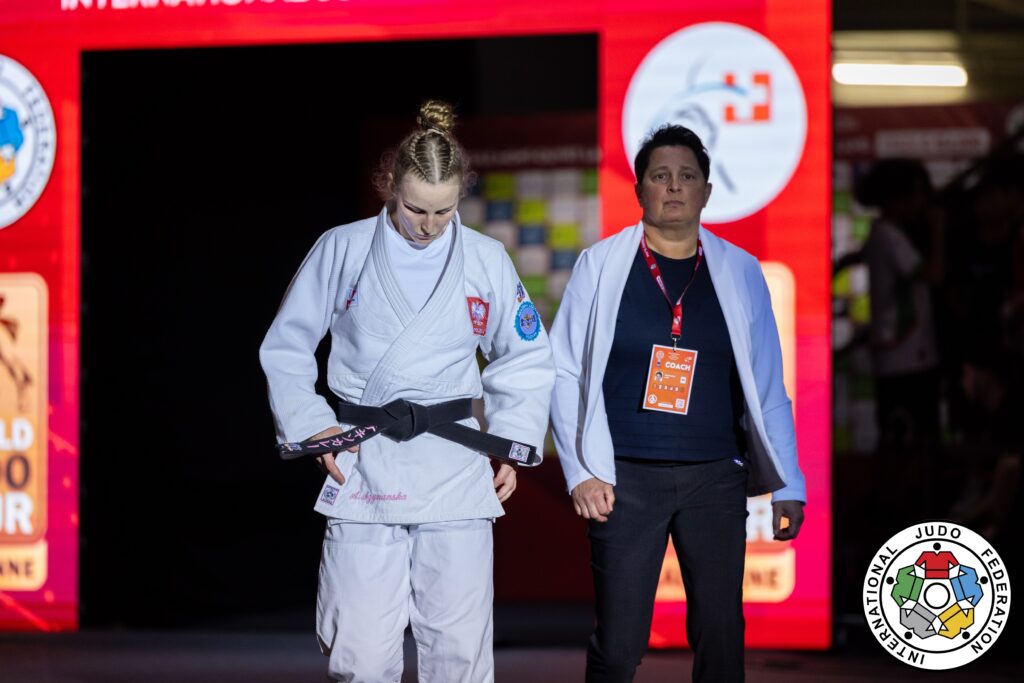
Your coach, Aneta Szczepańska, left her mark on judo followers by crushing, in the final seconds of the U66kg category semifinal at the Atlanta Olympics, Alice Dubois’s dream of reaching an Olympic final. What kind of coach is she day to day?
I was incredibly lucky to meet Aneta Szczepańska at the very start of my judo journey. She’s the only woman in Poland to have won an Olympic medal in judo, and she’s been a role model for me from the beginning. She’s known me since I was a child, which makes it easier for her to plan my training process. She’s a very experienced coach who knows exactly how to pass on her knowledge. She pays enormous attention to detail and is very demanding, which allows me to keep improving constantly… She also works very well with the other members of the staff. She’s in constant contact with my physiotherapist, my strength and conditioning coach, and my mental coach, which gives her a complete picture of my physical and psychological state and makes it easier to plan the next steps. She’s very invested in my development and supports me enormously. After the Paris Games, she even moved to Poznań with me. We changed clubs to join Akademia Judo Poznań so that I could keep training, because the club in our hometown had ceased to exist and I no longer had training partners, which made preparing for the following tournaments extremely difficult.
I was in Zakopane in 2017 to follow part of the Polish team’s preparation before the Warsaw European Championships and to interview Paweł Nastula. I was surprised at the time to find that there were several sub-groups within that national team. How do you handle these divisions as an athlete?
I try not to get involved in matters over which I have no influence. Unfortunately, that’s how things stand at the moment, and it certainly doesn’t have a positive effect on the process, but I keep my distance from all that. I entrusted my sporting development to Aneta almost twenty years ago. Over the years, she’s proven that she knows what she’s doing. I trust her completely and want to believe that this partnership will produce a positive result in the form of a medal at the Olympic Games.
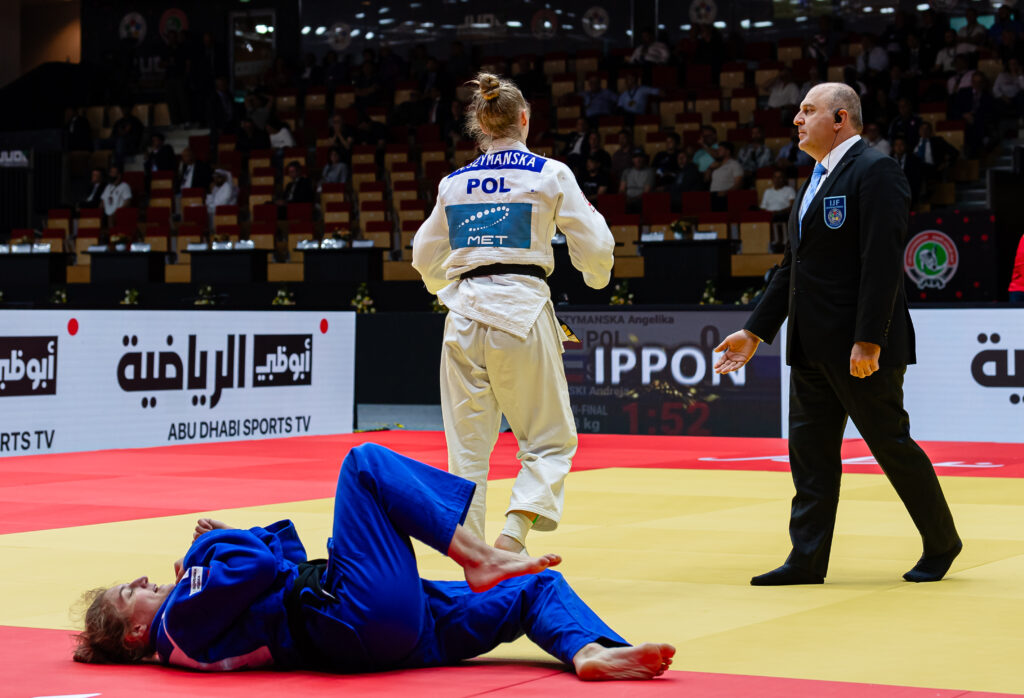
You had reached a high level of consistency in the season before the Paris Games (third at the European Championships in Montpellier, second at the Tbilisi Grand Slam and at the Abu Dhabi World Championships) before being knocked out in the second round of the Games by Mexico’s Prisca Awiti…
The Paris Games were my first Olympics, and they turned out to be a huge disappointment. Physically, I was very well prepared, but mentally, the event overwhelmed me. It took me a long time to recover, to the point of doubting whether I’d be able to come back and try again. Luckily, I had a group of people around me who helped me enormously.
How so?
After that tournament, a real revolution took place in my life. As I told you, in order to keep training, I had to change clubs and move to another city. My family and my fiancé, on the other hand, stayed in Włocławek. We saw each other less often, and that had a very negative impact on my well-being.
On what new foundations did you restart your training?
With Aneta, we gave ourselves two years to look for new solutions so that I could keep progressing. Now that qualification for the next Games has begun, we’re keeping the elements that worked during that period and adding them to those that already worked before. The experimentation phase is over, because Los Angeles is actually coming up quite fast, and I want to prepare for it as well as I can… The loss in Paris still hurts, but I also recognize that it gave me extremely valuable experience for my preparation for Los Angeles. I now know what to expect and which aspects to focus on to be ready on the day, not just physically but mentally too.
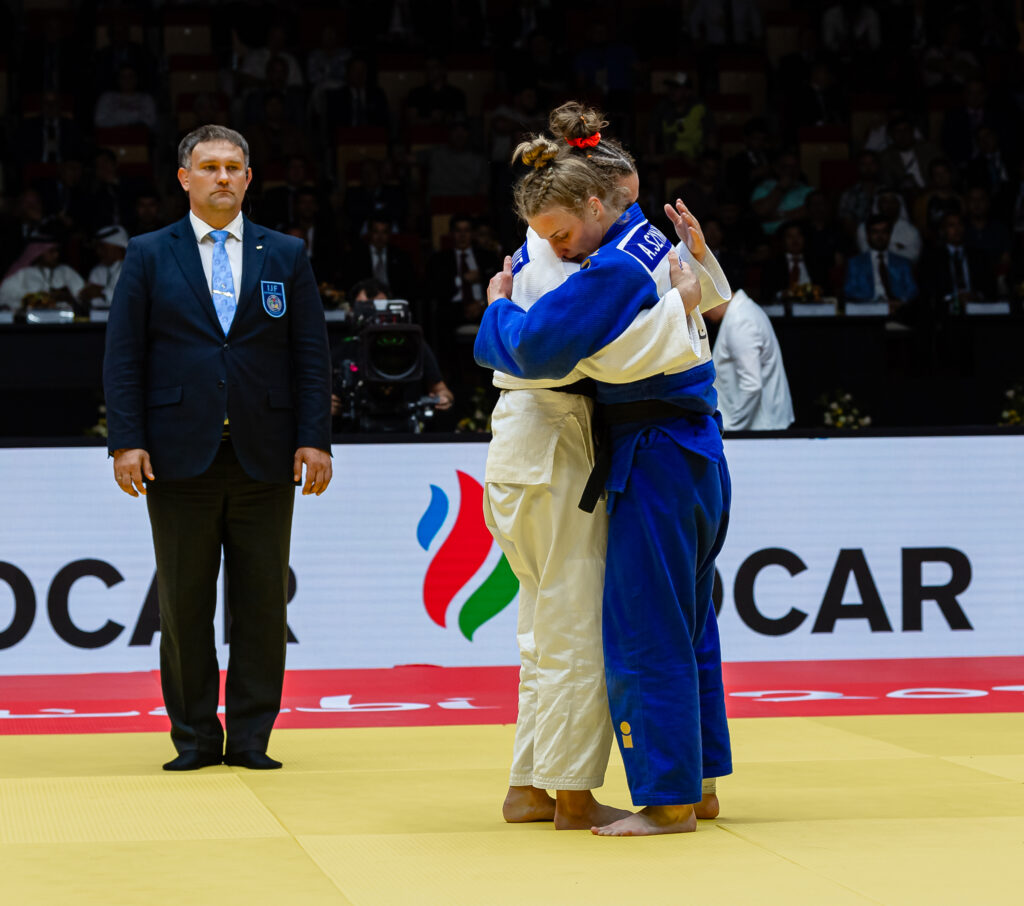
There seem to be two extraterrestrials in your category: Clarisse Agbégnénou, whom we’ve already discussed, and Japan’s Haruka Kaju, still undefeated since her late breakthrough on the circuit in late 2024. You’ve just beaten the Frenchwoman. What do you still need in order to face the Japanese fighter and, more broadly, to go after European, world, and even Olympic gold?
I’ve never faced Haruka Kaju in competition. We’ve had several bouts at international training camps, so I know what to expect. She’ll certainly be a very tough opponent, but I’m working hard and continuing to improve, particularly in terms of tactical preparation and consistency, to give myself a chance of winning.
If the Angelika of 2026 could give some advice to the Angelika of 2007, who was tying her very first white belt at the time, what would she say?
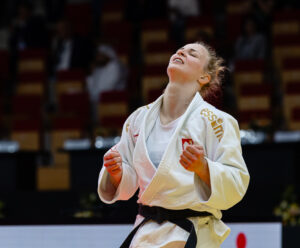
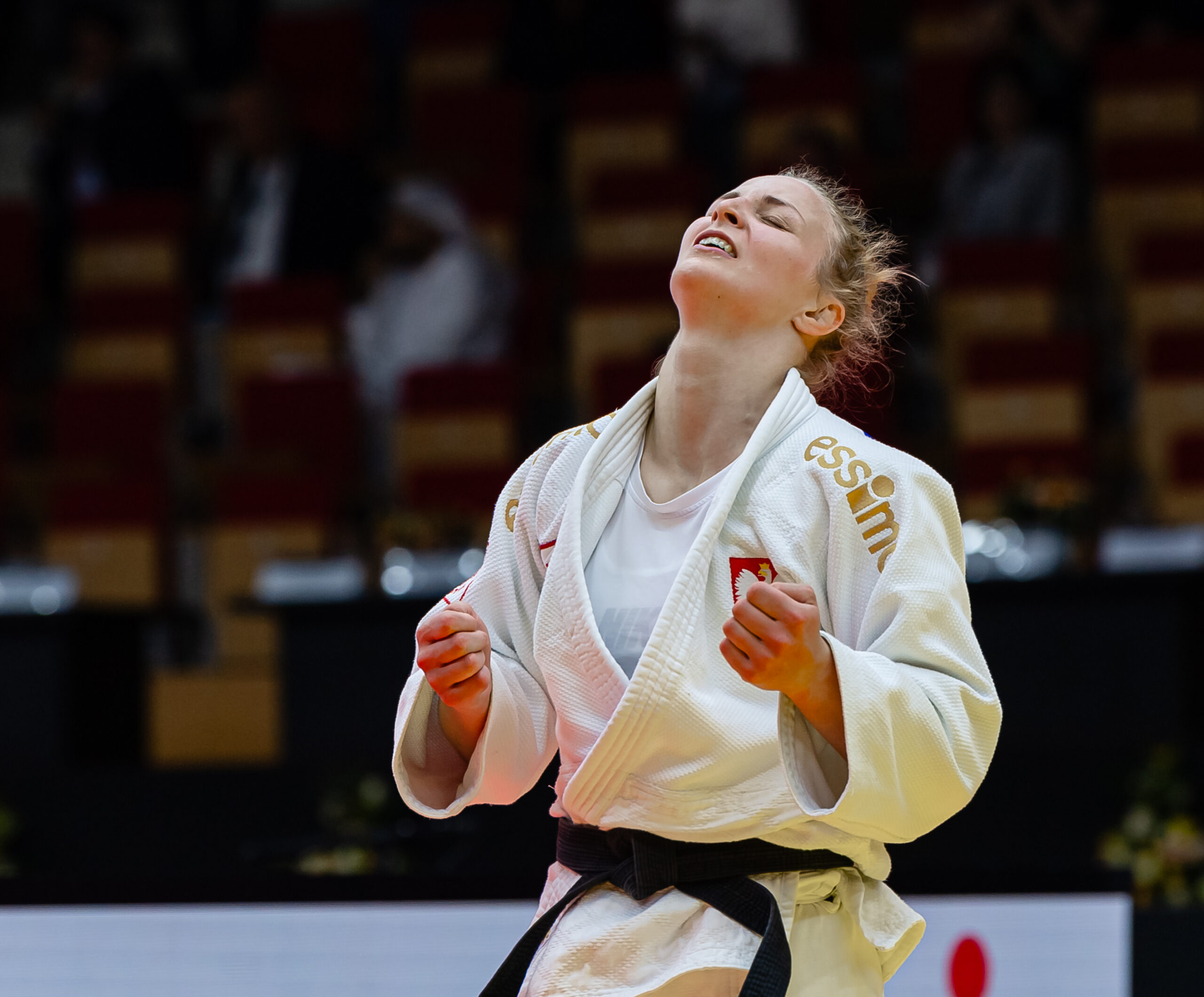
I’d tell her to simply enjoy the journey, whether or not there’s a treasure at the end of it. – Interview by Anthony Diao, summer 2026. Thanks to Raoul van Leendert. Opening picture: Abu Dhabi, May 21, 2024, the restrained joy of qualifying for a World Championships final. ©Paco Lozano/JudoAKD.
A French version of this interview is available here.
More articles in English:
-
- JudoAKD#001 – Loïc Pietri – Pardon His French
- JudoAKD#002 – Emmanuelle Payet – This Island Within Herself
- JudoAKD#003 – Laure-Cathy Valente – Lyon, Third Generation
- JudoAKD#004 – Back to Celje
- JudoAKD#005 – Kevin Cao – Where Silences Have the Floor
- JudoAKD#006 – Frédéric Lecanu – Voice on Way
- JudoAKD#009 – Abderahmane Diao – Infinity of Destinies
- JudoAKD#008 – Annett Böhm – Life is Lives
- JudoAKD#010 – Paco Lozano – Eye of the Fighters
- JudoAKD#011 – Hans Van Essen – Mister JudoInside
- JudoAKD#021 – Benjamin Axus – Still Standing
- JudoAKD#022 – Romain Valadier-Picard – The Fire Next Time
- JudoAKD#023 – Andreea Chitu – She Remembers
- JudoAKD#024 – Malin Wilson – Come. See. Conquer.
- JudoAKD#025 – Antoine Valois-Fortier – The Constant Gardener
- JudoAKD#026 – Amandine Buchard – Status and Liberty
- JudoAKD#027 – Norbert Littkopf (1944-2024), by Annett Boehm
- JudoAKD#028 – Raffaele Toniolo – Bardonecchia, with Family
- JudoAKD#029 – Riner, Krpalek, Tasoev – More than Three Men
- JudoAKD#030 – Christa Deguchi and Kyle Reyes – A Thin Red and White Line
- JudoAKD#031 – Jimmy Pedro – United State of Mind
- JudoAKD#032 – Christophe Massina – Twenty Years Later
- JudoAKD#033 – Teddy Riner/Valentin Houinato – Two Dojos, Two Moods
- JudoAKD#034 – Anne-Fatoumata M’Baïro – Of Time and a Lifetime
- JudoAKD#035 – Nigel Donohue – « Your Time is Your Greatest Asset »
- JudoAKD#036 – Ahcène Goudjil – In the Beginning was Teaching
- JudoAKD#037 – Toma Nikiforov – The Kalashnikiforov Years
- JudoAKD#038 – Catherine Beauchemin-Pinard – The Rank of Big Sister
- JudoAKD#039 – Vitalie Gligor – « The Road Takes the One Who Walks »
- JudoAKD#040 – Joan-Benjamin Gaba and Inal Tasoev – Mindset Matters
- JudoAKD#041 – Pierre Neyra – About a Corner of France and Judo as It is Taught There
- JudoAKD#042 – Theódoros Tselídis – Between Greater Caucasus and Aegean Sea
- JudoAKD#043 – Kim Polling – This Girl Was on Fire
- JudoAKD#044 – Kevin Cao (II) – In the Footsteps of Adrien Thevenet
- JudoAKD#045 – Nigel Donohue (II) – About the Hajime-Matte Model
- JudoAKD#046 – A History of Violence(s)
- JudoAKD#047 – Jigoro Kano Couldn’t Have Said It Better
- JudoAKD#048 – Lee Chang-soo/Chang Su Li (1967-2026), by Oon Yeoh
- JudoAKD#050 – Hermann Monne – Burkina, a Land Already Peopled
- JudoAKD#051 – Mariana Esteves – A Chronicle of Life Passing By
- JudoAKD#052 – Tiphaine Gingelwein – Chechnya and the Caucasus, a Feminine Perspective in Nuance and Complexity
- JudoAKD#053 – Victor Scvortov – Born Again Under a Lucky Star
- JudoAKD#054 – Eric Gervasoni – From Moves to Movies
- JudoAKD#055 – Mihael Žgank – Coming Home Is Where the Real Journey Starts
- JudoAKD#056 – Patrick Grosperrin – Laterality, a Little-Known Lever of Performance
- JudoAKD#057 – Rest in Peace, René Nazaret (1936-2026)
- JudoAKD#058 – Alexandre Paysan – We Saw Him in the Vercors, Bungee Jumping…
- JudoAKD#059 – Habib Alouache – Teaching Joy
- JudoAKD#060 – Diyora Keldiyorova – Another Giant Leap for (Wo)Mankind
Also in English:
- JudoAKDReplay#001 – Pawel Nastula – The Leftover (2017)
- JudoAKDReplay#002 – Gévrise Emane – Turn Lead into Bronze (2020)
- JudoAKDReplay#003 – Lukas Krpalek – The Best Years of a Life (2019)
- JudoAKDReplay#004 – How Did Ezio Become Gamba? (2015)
- JudoAKDReplay#005 – What’s up… Dimitri Dragin? (2016)
- JudoAKDReplay#006 – Travis Stevens – « People forget about medals, only fighters remain » (2016)
- JudoAKDReplay#007 – Sit and Talk with Tina Trstenjak and Clarisse Agbégnénou (2017)
- JudoAKDReplay#008 – A Summer with Marti Malloy (2014)
- JudoAKDReplay#009 – Hasta Luego María Celia Laborde (2015)
- JudoAKDReplay#010 – What’s Up… Dex Elmont? (2017)
- JudoAKDReplay#011 – Zakopane, or Lives Passing By (2017)
- JudoAKDReplay#012 – Thierry Frémaux (1/2) – About The Legend of the Great Judo(2016)
- JudoAKDReplay#013 – Thierry Frémaux (2/2) – Judo in the Light (2021)
And also :
- JudoAKDRoadToLA2028#01 – Episode 1/13 – Summer 2025
- JudoAKDRoadToLA2028#02 – Episode 2/13 – Autumn 2025
- JudoAKDRoadToLA2028#03 – Episode 3/13 – Winter 2026
- JudoAKDRoadToLA2028#04 – Episode 4/13 – Spring 2026
- JudoAKDRoadToLA2028#05 – Episode 5/13 – Summer 2026
JudoAKD – Facebook – Instagram – X (Twitter).