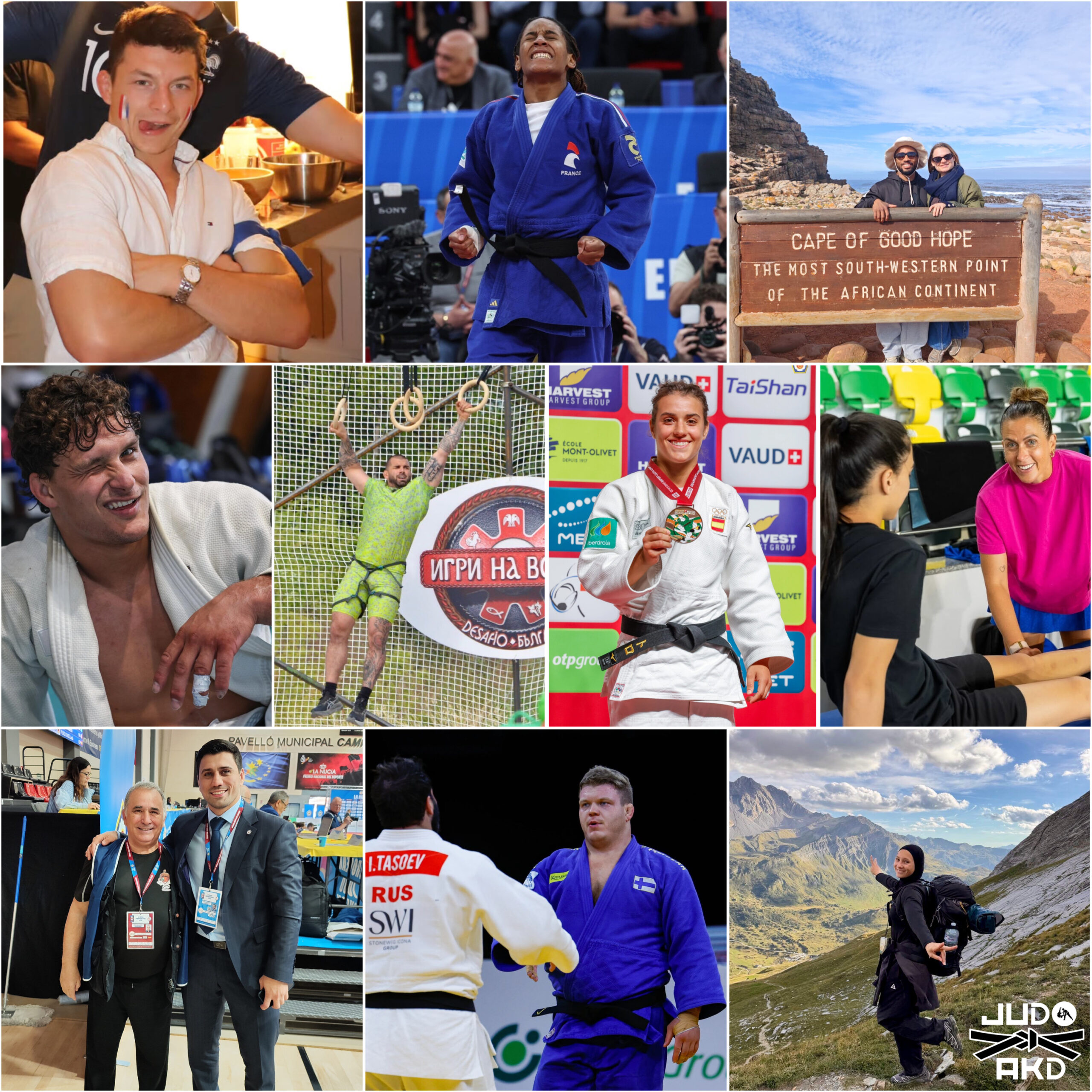
And suddenly the view shifted. The first weekend of July 2026 marked a turning point. On the 3rd, Faïza Mokdar, twenty-four, world No. 3 in U57, announced the end of her career (see below). In the days that followed, at the football World Cup, the unpunished acts of anti-play in France–Paraguay, the almost regal reinstatement of a player suspended ahead of Belgium–USA, or the blinkered eye of the officials whenever it came time to say “Dura lex sed lex” to this or that Untouchable of the ecosystem, showed in 4K something starting to crack in sport’s social contract – much as has also been documented, in crescendo and sadly spectacular fashion, in international law these past months… and even at the heart of our own nations, where governing by stress competes with an encroachment – bad faith steadily eating into good.
How do you build a society without a shared framework? Drive around treating traffic lights as binding on everyone but yourself? Practise judo without a dojo or bows? For now, our discipline still seems sheltered – even if, from time to time, the system does show itself to run at several speeds, as the South African triple African champion Gideon “Jacques” Van Zyl told us when he hung up his judogi a little over ten years ago. But for how much longer? The video tool is in place. So are the convoluted clauses of the refereeing rules. Everything is ready for people to do right by them, or wrong. A great deal rests on the backbone of whoever chooses to give the thumbs-up or the thumbs-down. In a world bending a little further every day, holding a straight line, thinking beyond oneself, and staying the course takes real strength of character.
The stream never stops. In early July, a long WhatsApp message from an Israeli lawyer confirmed internal federal tensions of an almost unbelievable sadness. A few weeks later, a message from Austria’s Sabrina Filzmoser alerted us to the scale of the damage from the mudslides in Nepal. And what to say of the darkness our old friends in Cuba seem to be sinking further into?
Other moments too. The wonderful video of Jimmy Pedro during the training camp organised in Italy in July by Ezio Gamba. Shock in the German Bundesliga: a fighter’s over-the-top celebration earns him a beating from his opponent. At the other end of the spectrum, from Japan comes the happy news, in the middle of summer, of the unthinkable Abe–Maruyama dinner – a kind of metaphor for what might one day become of a world that had come down off its ridge-line of under-listening and over-interpreting… Eighteen thousand kilometres further west, Chad withdraws from the International Criminal Court, and the news shouldn’t be waved away lightly, given the three-cushion billiards that govern relations between great (im)powers. Togo and the African Union, for their part, are pushing hard on the debate over the Mercator map projection, and with it a whole way of picturing the globe – and the unexamined assumptions that come with it – stands to be potentially reshaped. The death of René Nazaret, meanwhile, levels everything out.
“The pilgrim gradually discovers that it is the distance that measures him,” a sage wrote recently. There’s a bit of that in the ten people who speak below. A year on from a 2025 summer unusually short on immediate deadlines, the start of the Olympic ranking period and the horizon of the Baku World Championships (4–11 October 2026) give plenty of good reasons to get out of bed in the morning. Their one certainty? Being on the road. – JudoAKD Road To LA 2028 #05.
A French version of this episode is available here.
To (re)read episode 4/13 (spring 2026), click here.
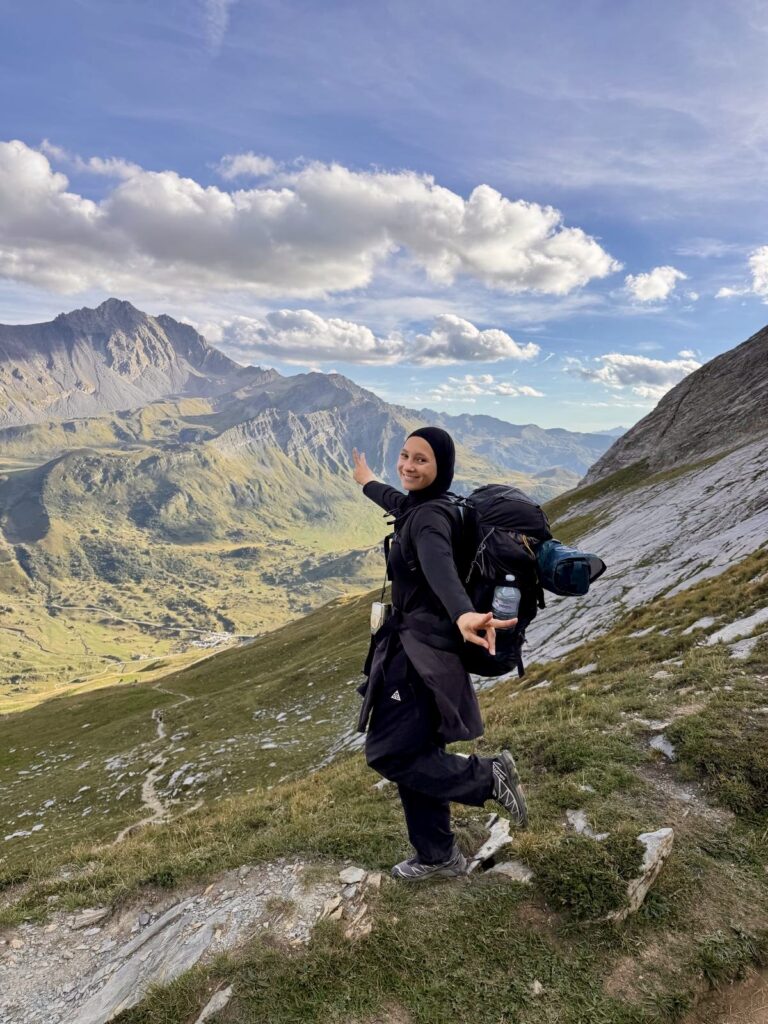
Faïza Mokdar – France – World No. 6, U57 (-3 places) – “Hi Anthony, hope you’re well? Do you have time early next week for a call, please? Thanks, have a good day 😉” It’s 12:21 p.m. on Thursday 2 July 2026 when Faïza Mokdar sends this WhatsApp message. The call finally happens the next day, Friday 3 July, right after a stimulating conversation at Patrick Grosperrin‘s home. “Everything okay?” Yes, everything’s fine. Faïza’s voice is, as ever, half composed, half playful – much as it was last winter, when we had the pleasure of meeting again in judogi on the tatami at Bardonecchia. A clearing of the throat, and then it comes out. “So – I’ve decided to stop judo.” Wow. The Faïza Mokdar of PSG Judo? The huge, twenty-four-year-old promise, world No. 3 in U57, twice defending champion of the Astana Grand Slam as of a few weeks earlier, and above all the stunning winner of the Paris 2024 edition, having taken down former world and Olympic champion Rafaela Silva of Brazil and then the Canadian double-act of Jessica Klimkait and Christa Deguchi – the latter then the reigning world champion and future Olympic champion – one after another? “Yes, yes. I’m quite serious.”
Over the five episodes since this series began, a relationship of trust has built up. Back in early 2025, in a first profile of her for the French daily Libération, the key to this summer 2026 plot twist was, in hindsight, given between the lines: “Spectacular as it was, Mokdar’s breakthrough at 23 has since gone through its share of plateaus. The main one? Too wide a gap, on arriving at Insep, between the support on offer and the specific needs of this young woman – otherwise very comfortable in her own skin, wearing the veil in everyday life out of fidelity to a well-centred inner path. ‘At Insep, she gets the same package as everyone else, even though she isn’t like everyone else,’ explains Nicolas Mossion, a mainstay of PSG Judo. He was already her coach back at the Brétigny training centre, where he had quickly spotted ‘something’ about this ‘lively, smiling and determined’ schoolgirl, whose parents had worked out ‘how to be present without smothering her.'”
Singularity, character and inner life. It’s on that last word that the discomfort turns. A sense of being out of step that she intends to keep private, and one we’ll make a point of respecting – all the more so given today’s touchiness around such deeply personal subjects, where the norm has become to comment before even falling silent long enough to actually listen.
“I’m carrying on, without stopping, towards the islands of the Pacific, because I’m happy at sea, and perhaps also to save my soul.” Like the French sailor Bernard Moitessier (1925–1994), remembered for having, in 1968, peeled off while in the lead, seven months into the very first solo, non-stop round-the-world race, Faïza Mokdar has decided, in the summer of her twenty-fifth year, to step sideways off a path that had until now looked clear and mapped out. To ask herself what it’s all for, and to open up onto a crossroads of possibilities she may not have imagined were so vast, or so dizzying. And we, here at JudoAKD, told her that changes nothing, and that we’ll keep both getting and sharing news of her. Because the road to Los Angeles is long, but no one ever said it would be limited to that one destination, or that it would only run across tatami mats. Noted, and agreed.
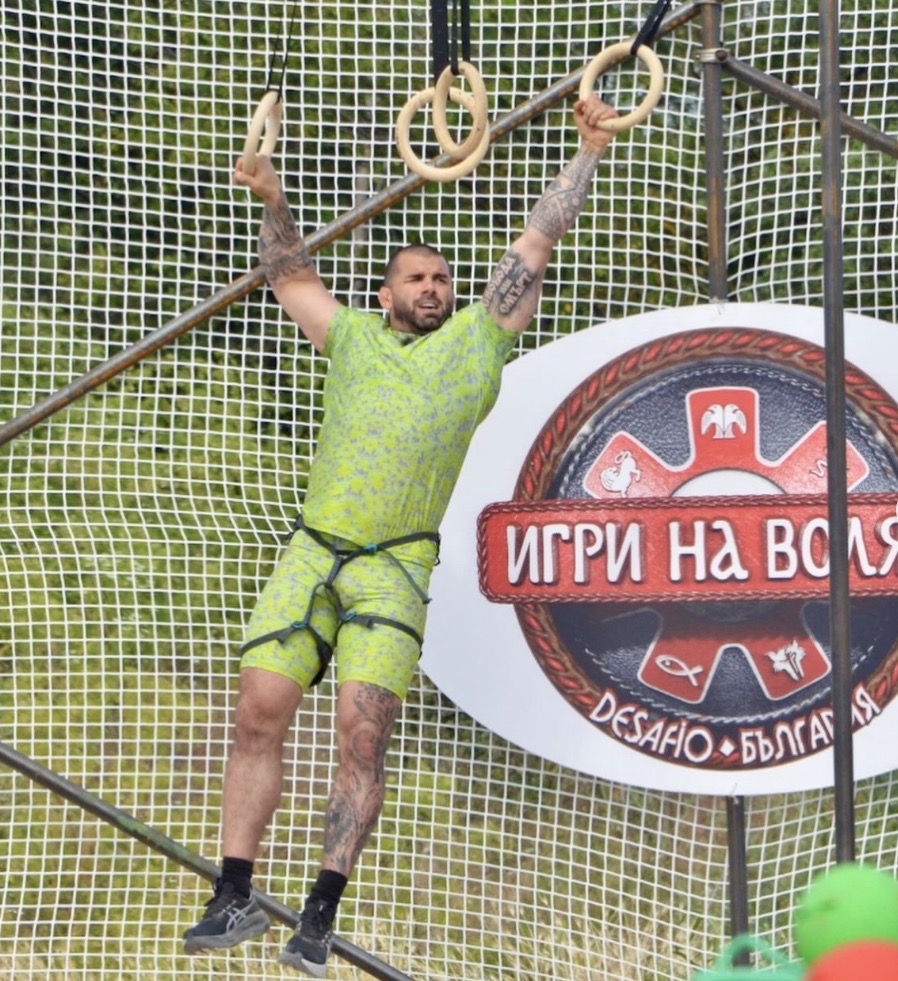
Toma Nikiforov – Belgium – In transition. – The last person to catch us off guard (mid-interview, no less!) with news of retiring remains the Schaerbeek native – though the reasons here are very different. Since then, this series has shared a little of the emotional rollercoaster ridden by the former double European champion and double world medallist, in this thirty-third year of every danger… and every possibility. In episode 4/13, we left him on a cliffhanger… and for good reason. Hired by Bulgarian television – his second homeland – for the country’s flagship reality show on the leading channel, Toma was contractually unable to reveal it at the time the article was published. He had, however, promised to say more once he was back in business a few weeks later.
And he kept his word. The Games of Will – the show in question – is a kind of Survivor with a Balkanese flavour, alternating physical trials and Darwinian scheming. This eighth season airs every night in prime time from September to December on Nova TV, Bulgaria’s second most-watched channel – so Toma still isn’t allowed to say publicly, before then, whether or not he made it through the six weeks of filming, shot in high summer on the Bulgaria–Romania border. A physically punishing shoot – “I weighed 122 kg going in and 107 kg coming out” – but one that’s brought him a new kind of fame on the streets of Sofia, thanks to the roughly two million viewers the show draws on average.
“Personally, those six weeks off my phone did me good. Just think – I didn’t even follow the football World Cup! Instead, I was able to centre myself and focus better. I got to think about my life and decisions I had to make. When I came out, the people around me found me quiet. My eldest daughter, though, was relieved to have me back. We’d warned her beforehand, but it was still a huge worry for her, going that long without news from me.”
Still under contract with the Army, Toma is starting this autumn on a quarter-time role with the Dutch-speaking Belgian junior team. News that should shake things up a bit, given how much potential “Mr Kalashnikiforov”‘s personality has to deliver a wake-up call even to the shyest of them – as shown by his rather blunt teaching philosophy, tried out alongside his younger brother Dilyan on the mat of their lifelong club, the Judo Royal Crossing Club de Schaerbeek: “I give the guys plenty of freedom. I’m not strict about being late: you show up, you bow, and you jump on the train while it’s moving. But when I’m talking, everyone has to shut up and look at me. My fuse is very short.”
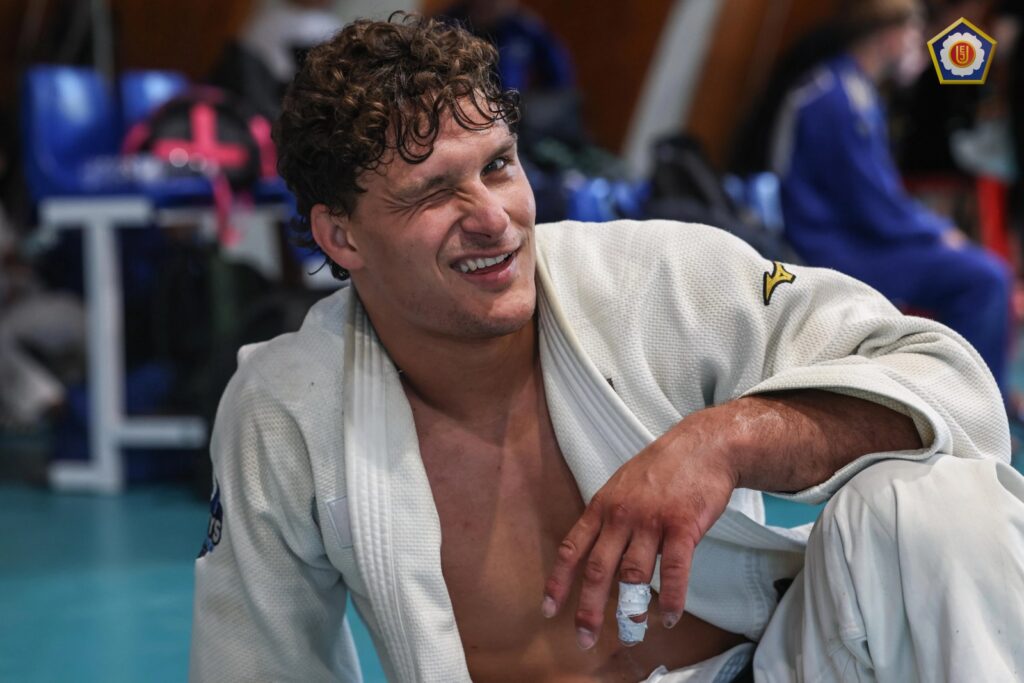
Giacomo Gamba – Italy – World No. 206, U90 (+136 places) – Summer 2026 was marked by the celebrations for the 140th anniversary of his heart-club, Forza e Costanza of Brescia, some happy days with friends by Lake Garda, sweat-soaked sessions at Bardonecchia, Lignano, Rome and Cambrils, and the success of the training camp organised in mid-July, in that same spot, by his father Ezio – whose considerable address book brought together big names such as America’s Jimmy Pedro, the most Spanish of Japanese fighters Go Tsunoda and his European-medallist daughter Ai Tsunoda, and Kazakhstan’s young guard, led in particular by Belgium’s Sami Chouchi. A Kazakhstan where, like many others, “Jack” would go on to enjoy himself a few days later among the cream of world judo – thirty nations, seven hundred judoka, and a fair share of Olympic champions, judging by a photo that went viral bringing together local hero Yeldos Smetov, Russia’s Galstyan, Georgia’s Bekauri and Shavdatuashvili, Azerbaijan’s Kotsoiev, Greece’s Iliadis and Japan’s Suzuki.
Before that, the newly minted U90 fighter carries on finding his feet (and his weight) in his new category. Although he comes unstuck straight away, on 28 June at the Prague World Cup, against France’s Aleksa Mitrovic – Loïc Pietri‘s protégé going on to win the whole event, as he’ll also do in August at the Lima Grand Prix and then the Taranto Mediterranean Games, snatching the last French ticket to the Baku Worlds at the last moment – he only loses in the final, a month later, at the Sarajevo World Cup, to Georgia’s Luka Maisuradze, the 2023 world champion. Ruled out in mid-September, on the eve of leaving for the Skopje European Cup, by old back pain flaring up again, he takes it in his stride and, as ever, stays positive about what’s happening to him. “I saw my nutritionist recently and he was really pleased, because I’ve put on three and a half kilos of lean muscle. I’m at 90.5 kg now and the goal is to get to 92 or 93 kg… As soon as I’ve got my back issue sorted, I’m hoping to be called back up for the IJF circuit. If that happens, everything changes, and I really want it to. If it doesn’t, I don’t change my plans and I carry on as planned.” Not chasing gold but progress: there’s a touch of the old sensei about this twenty-seven-year-old.
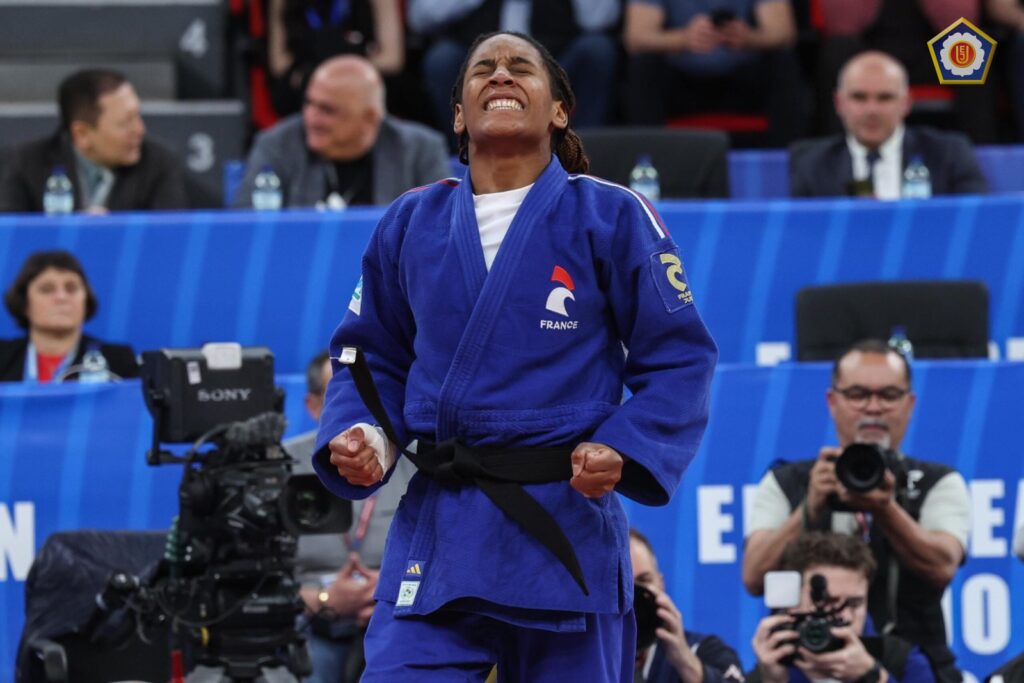
Melkia Auchecorne – France – World No. 24 on the U70 ranking (-5 places) – Bare minimum for the low-key Melkia. After a more-than-promising start to the season (a finalist at the Tashkent Grand Slam in February and then the European Championships in Tbilisi in April), the former U63 fighter is physically paying the price for the effort she put in, in just a few months, to adapt to her new weight category. Forced to watch the rest of the season from the sidelines, she sees her teammate Clémence Émé seize her chance with both hands and, at twenty-nine, earn her very first World Championship call-up, nine years after a promising bronze medal at the Junior World Championships in Zagreb.
Daikii Bouba – France – World No. 13, U66 (=) – Clémence Émé, precisely. For the 2025 European champion, the U70 fighter’s late blossoming has a lot to do with her arrival, a year ago, at her club, AJA Paris XX. The only woman in the elite squad, she seems to have found, under Alexandre Borderieux, exactly what she was looking for at this point in her career: a collective drive and genuine consideration for the specifics of her path, as she told JudoAKD at length in an interview to be published soon. A tribute to the day-to-day work of a man honoured at the French Judo Federation’s April 2026 general assembly with the Federation President’s Prize for best manager, trainer and coach of 2025. A man forever on deck, and one whose mention here is a nod to his many students, who’ll understand both the timing and the discretion.
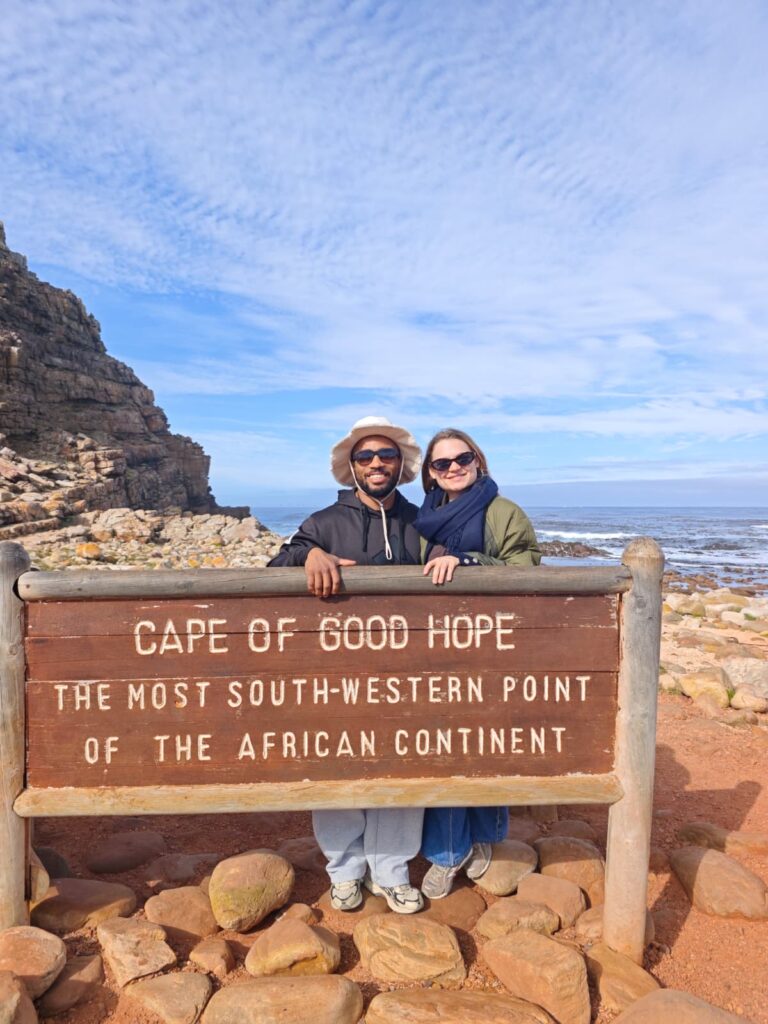
Daikii’s summer was a non-stop cycle of packing and unpacking bags. A training camp in Mongolia, a stag do with friends in Spain, a honeymoon in South Africa for his and Clothilde’s first wedding anniversary (from Jo’burg to Cape Town via Port Elizabeth aboard the famous Rovos train, Robben Island and the Cape of Good Hope), a stopover in Amsterdam, back to training in Houlgate, straight into “the best camp of my life” (sic) from 4 to 16 August in Kazakhstan, before dropping in on the one in Châteauroux with teammates Maxime Merlin, Clémence Émé, Benjamin Axus and Tieman Diaby.
On 28 August, just as in Mongolia two months earlier, he’s knocked out in the first round at the Lausanne Grand Slam. The man who beats him is Tajikistan’s Iksandar Mahmadkhojazoda, who scores against him three times, including a final waza-ari-awasete-ippon fifteen seconds from time, on one of those countless muddled sequences that delight nitpicking video reviewers and dismay purists of the clean, unambiguous ippon. Another disappointment for the Frenchman, after his early exits at the Ulaanbaatar Grand Slam in June and at the European Championships in April. “It’s paradoxical, because in terms of grip fighting and mindset I can feel myself improving – I’ve learned, for instance, to accept that you don’t have to win absolutely every exchange in a bout – and yet, for now, I can’t manage to convert on the day what I manage to do in training.” A matter of fine-tuning, just days before he steps out for his fourth Worlds in a row.
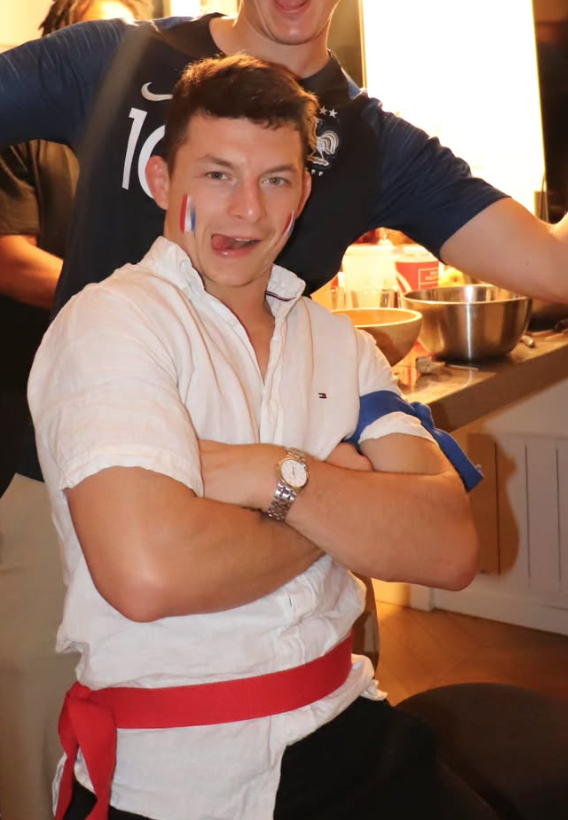
Romain Valadier-Picard – France – World No. 6, U60 (+2 places) – On Thursday 3 September 2026, Romain defended his thesis and officially became an engineer, six years after enrolling on a work-study track at the Léonard de Vinci School of Engineering (ESILV) in Nanterre. An achievement worth marking, given how notoriously hard it is to combine demanding studies with top-level sport, in France as elsewhere. But one greeted almost with a shrug by the man himself, left almost speechless after his early exit six days earlier at the Lausanne Grand Slam, against Kazakhstan’s Sherzod Davlatov. A third straight defeat on the circuit, after a European Championships in April that ended on one leg – an unprecedented run for him. “I lacked reference points,” he admits on his return, taking his perfectionism so far as to observe that “against right-handers, judo has moved on again.” In his defence, his convalescence after the Tbilisi Europeans left him champing at the bit right up to the training camps at Houlgate in mid-July and then Kazakhstan in early August – “by the end I couldn’t take any more,” he admits after that gruelling stretch, during which almost the entire world elite passed through his hands.
Keen not to arrive at the Baku Worlds with so few fights under his belt, the ACBB man heads to the Skopje European Cup on 19 September, where he reels off sutemis and juji-gatame that leave opponents looking one-armed (four for four!) – lesser-ranked opponents, granted, but ones he never once gave time to settle. “I needed reference points and to fight in real conditions. That’s what I did in Skopje. Mission accomplished. Now, focus on the Worlds.”
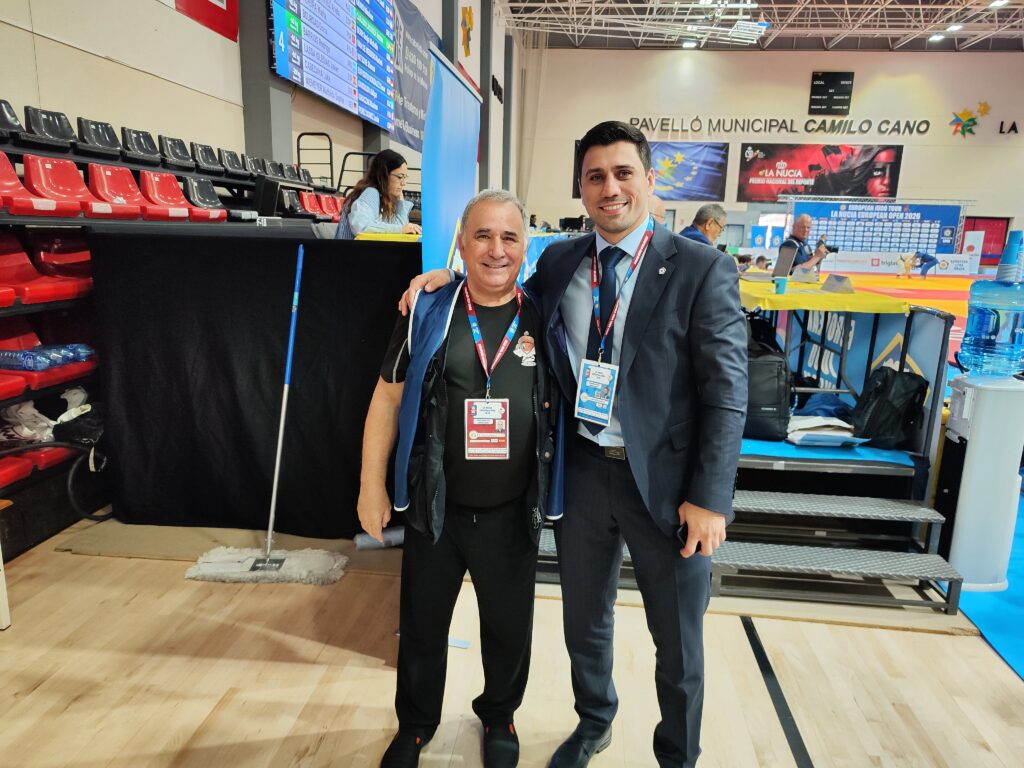
Paco Lozano – Spain – Photographer – He was the great absentee of the Lausanne Grand Slam. The most Swiss of Spaniards – he grew up in Nyon from age four to sixteen – couldn’t get accredited for the event. Heartbreaking, especially since he’d just reconnected with old childhood friends he’d planned to go and say hello to on the occasion. “What I really wanted was to catch up with my old partner-in-crime Robert Danis, whom I’d gone to see a few years back in his home city of Basel.” In poorer health these last few years, the eternally smiling Swiss photographer leaves the two of us with the memory of a joyful dinner for three, on a cold Sunday in February 2015, just after a Düsseldorf Grand Prix marked by the brilliance of Shohei Ono in U73, Kayla Harrison in U78, and the late Kazbek Zankishiev (1992–2024) in U90.
But Paco’s summer was also a chance to take the pulse of a Spain that keeps advancing in scattered ranks – from the Galicia province of the dynamic, visionary Mario Muzas in early July, to the training visit of former Cuban world champion Asley Gonzales, invited to Malaga in late August by Miguel Arias, one of Paco’s former students, taking in the Valencia training camp along the way, where the methodical Sugoi Uriarte managed to bring together 1,600 participants from France, Azerbaijan, Germany, Italy, Switzerland, Belgium and Israel – and where he had the immense pleasure of crossing paths again with the legendary Jimmy Pedro. All that, plus a few days of diving with his wife around El Hierro in the Canary Islands.
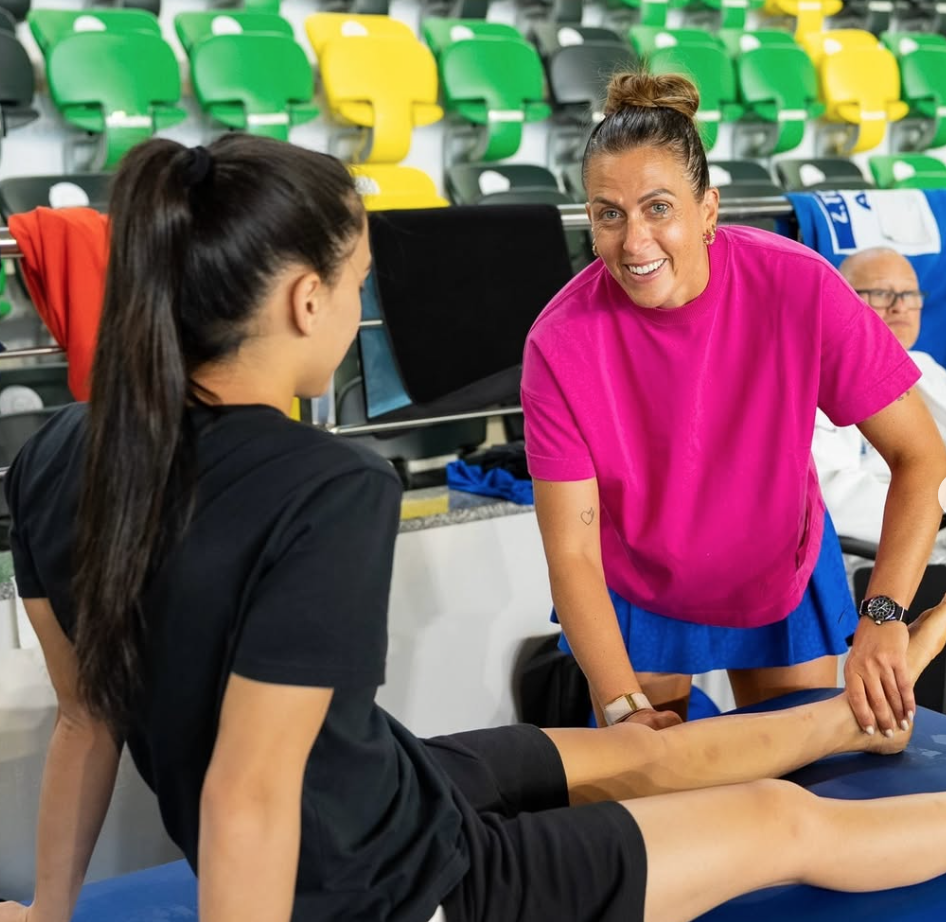
Morgane Sellès – France – Physiotherapist for the Azerbaijan national team – The cobbler’s children go barefoot, as the French saying goes. So what about physios? Back from Japan with a stress fracture in her left foot, Morgane pokes fun at herself about it in her almost-daily log, admitting she needed to talk it over with her own sister to work out the right protocol to follow – she who pampers or patches up, roughly speaking, some thirty athletes a day out of the hundred or so based at the Baku Olympic centre. “Since then I’ve also picked up a bad back and a cold. Goes to show even the healers need healing!” she notes, as a sign of just how attuned she is to the tensions stirred up by managing everyone’s thwarted ambitions.
Her summer was marked by a return to Kazakhstan, where she’d worked for several months in the run-up to the Paris Olympics, just before switching over to Azerbaijan – a ten-day training camp that left every participant impressed. In late August in Lausanne, it’s a bit of a sour face at the Swiss Grand Slam. As World Championship hosts six weeks later, Azerbaijan brings back “only” one bronze medal from Switzerland. A performance in its own right, since it goes around the neck of Omar Rajabli, back from injury, but still a warning sign given what’s coming up.
“In their defence, they’d just come through a heavy training block, and the staff had already warned that selection for both the Baku Grand Slam and the Budapest one would have to make do with whatever was available.” One big unknown for the team: the recurring inability of superstar Hidayat Heydarov to make weight in the U73 category he’d triple-locked down in 2024, sweeping the European, world and Olympic titles. Will he move up to take another fighter’s U81 spot, given that Zelim Tckaev (world No. 3), Omar Rajabli (No. 6) and Vusal Galandarzade (No. 18, bronze on 11 September at the Budapest Grand Slam) have each, on their recent form, got the potential to challenge for a world podium or better on home soil on 7 October? A tricky call for Germany’s Richard Trautmann and his staff.
Another VIP to look after ahead of Baku: U100 fighter Zelym Kotsoiev, back in training in early September, whom Morgane accompanied at the Bratislava camp. The reigning Olympic champion, Ossetian by birth – like fellow standouts Russia’s Inal Tasoev or Greece’s Theódoros Tselídis – is one of the headline names plastered all over the capital, part of a deliberate soft-power push, with tickets sold at relatively affordable prices to fill the arena all week and project the image of a passionate, conquering nation. Championships that Morgane will get to enjoy with her parents nearby, visiting for three weeks over that same period.
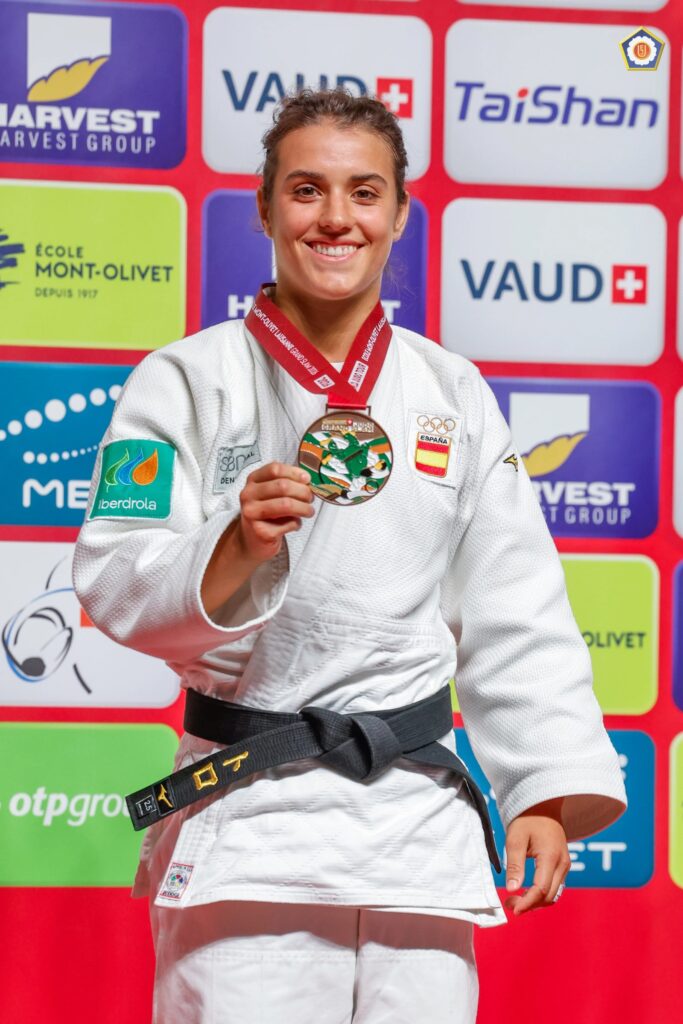
Ariane Toro Soler – Spain – World No. 5, U52 (+5 places) – A metronome. Since finishing fifth at the Budapest Worlds in June 2025, the Spaniard has come out of her cave five times for four medals. The most recent is bronze, on 28 August at the Lausanne Grand Slam, with Sugoi Uriarte – coach of her domestic rival Ayumi Leiva Sanchez (world No. 3, no less) – sitting in her coach’s chair. A small mistake in golden score in the semi-final, against Israel’s Gefen Primo (the eventual winner), costs her any chance of going on to claim the gold medal that, for all her consistency, has eluded her since March 2024 and her title at the Antalya Grand Slam. No matter: she tightens things up again in the bronze-medal contest, dominating Japan’s Rin Takeuchi with a seoi-otoshi – her third straight win over a representative of the Land of the Rising Sun.
Thirty years after her mother Yolanda’s Olympic podium finish (bronze in U48 at Atlanta), in a U52 category where Uzbekistan’s Diyora Keldiyorova, the reigning Olympic champion, is returning from maternity leave, and where France’s Amandine Buchard – despite her endless drive to do well, and the fine showcase her ambitious dual project could have made for the federation – won’t be making the trip to Azerbaijan to chase a sixth world medal, the woman from Pamplona holds the cards to go and rattle the three top dogs she’s identified herself: Japan’s Uta Abe, Kosovo’s Distria Krasniqi and Italy’s Odette Giuffrida – fifteen individual Olympic and world medals (including eight titles) between the three of them.
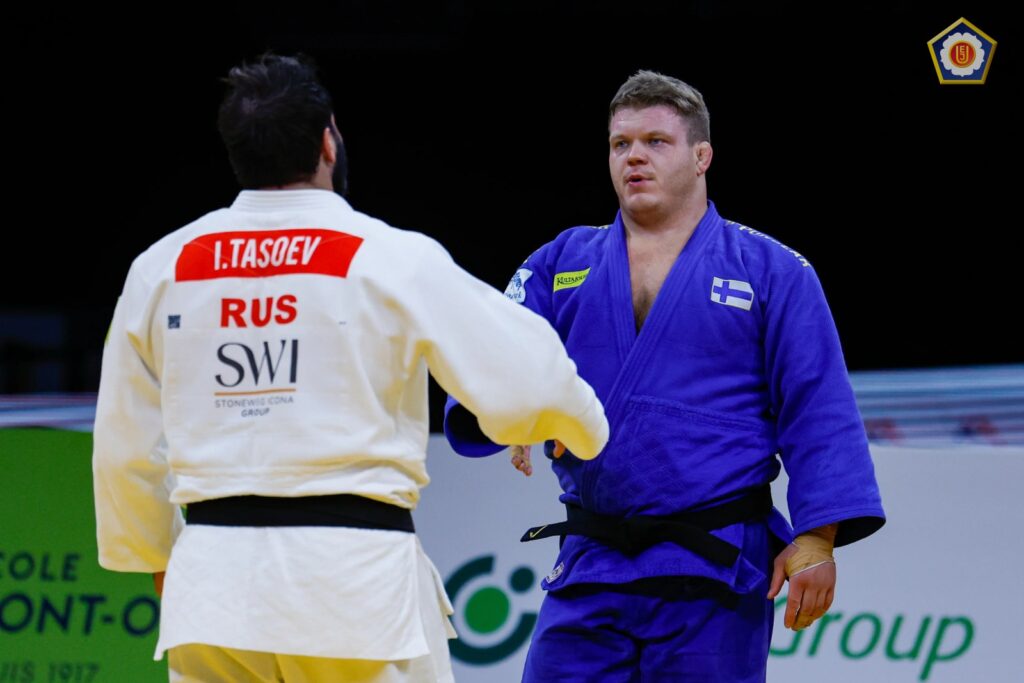
Martti Puumalainen – Finland – World No. 8, O100 (+7 places) – “Hope you’re enjoying the show.” On the warm-up mat at the Lausanne Grand Slam, coffee cup in hand, a Finn in his boxer shorts has just walked past, chest puffed out under blond down, with the wink of a lumberjack who spits into his hands before heading off to split another load of logs ahead of the coming winter. Martti – it’s him – has just brought back the seoi machine that let him win the 2023 Budapest Masters and then the Montpellier Europeans. In a few minutes, he faces off in the final against “the end-of-game boss,” Russia’s Inal Tasoev, whom he’d just crossed paths with sporting an unusually black eye after a semi-final in which Japan’s Kanta Nakano had made him wobble on a sequence or two, before the reigning world champion caught him out, old-fox style, with an uchi-mata sukashi straight out of Shin’ichi Shinohara circa 1999. Despite putting up a good fight, logic is ultimately upheld – Tasoev wins in golden score with a slam that isn’t unlike the way, at the end of a club gala in late June, the last man in the human chain is left to clear away the tatami mats and stack them at the back of the trailer.
The summer had started well, with that medal in Qingdao, his first international one of 2026. “At last I’m managing to turn what I do in training into results.” A summer camp in Bardonecchia, then a week back home in Finland cycling non-stop with his girlfriend, then a camp between Finns and Estonians with Japan’s Ryunosuke Haga, currently a coach in Düsseldorf, then the famous Kazakhstan camp where, the only Finn present (“the others were in Peru”), he particularly enjoys himself against “the three best Russians and the three best Japanese in the category.” Whether it’s Ota, Nakano, Nakamura, Tasoev, Bashaev or Endovitskii, “you’re never allowed a single mistake, or they punish you for it straight away.”
His pride? Watching his teammates gradually gain strength – like U57 fighter Pihla Salonen, gold in August in Lima, five months after her podium finish at the Tbilisi Grand Slam, or 2024 world medallist and 2025-and-2026 double European medallist, U66 fighter Luukas Saha, whose vlog charts an individual and collective rise towards a dream that would have seemed crazy just a few years ago: seeing Finland line up in the mixed team event at the Los Angeles Games.
“In Lausanne I was well prepared mentally. I managed to stay in the moment the whole time, and I think a lot of that comes down to my weight loss. I was at 132 kg when I won the European title. Now I eat better and I’m at 125 kg, which lets me be more mobile and not worry when a fight goes long,” the giant continues. As for the bogeyman Tasoev, whose rather over-the-top celebration at the 2025 Europeans he hadn’t much appreciated at the time: “We talked it through again at the camp, there’s no bad blood. Of course I’m not happy about losing, but for the first time I took him to golden score, and that’s encouraging. Beyond that, he’s still the master of counters and unbelievably solid. Of the three Russians, Endovitskii is the only one I’ve managed to beat – twice, actually – but he won our last meeting in 2024 and seems to have improved a lot since. For now he’s the most ‘gettable’ of the three, if you know what I mean [laughs].”
Final adjustments in September in Azerbaijan and then Germany, then focus on Baku: “This is the first time I’m arriving with real ambition, but without too much pressure either. I’m twenty-nine, I know how hard it is, so I’m going in wanting to enjoy the fight and seek out tough opponents, like the Netherlands’ Spijker – it’s always a real battle with him. That’s what I love most. And afterwards I’ll write it all up in the logbook I’ve been keeping for nearly four years now, which already runs to a good hundred pages.” – Interviews by Anthony Diao, summer 2026. Opening pictures: ©Paco Lozano, Gabi Juan-EJU, Emanuele Di Feliciantonio-EJU, athletes’ personal archives. Layout: Thomas Eustratiou-Diao/JudoAKD.
A French version of this episode is available here.
To (re)read episode 4/13 (spring 2026), click here.
More articles in English:
-
- JudoAKD#001 – Loïc Pietri – Pardon His French
- JudoAKD#002 – Emmanuelle Payet – This Island Within Herself
- JudoAKD#003 – Laure-Cathy Valente – Lyon, Third Generation
- JudoAKD#004 – Back to Celje
- JudoAKD#005 – Kevin Cao – Where Silences Have the Floor
- JudoAKD#006 – Frédéric Lecanu – Voice on Way
- JudoAKD#009 – Abderahmane Diao – Infinity of Destinies
- JudoAKD#008 – Annett Böhm – Life is Lives
- JudoAKD#010 – Paco Lozano – Eye of the Fighters
- JudoAKD#011 – Hans Van Essen – Mister JudoInside
- JudoAKD#021 – Benjamin Axus – Still Standing
- JudoAKD#022 – Romain Valadier-Picard – The Fire Next Time
- JudoAKD#023 – Andreea Chitu – She Remembers
- JudoAKD#024 – Malin Wilson – Come. See. Conquer.
- JudoAKD#025 – Antoine Valois-Fortier – The Constant Gardener
- JudoAKD#026 – Amandine Buchard – Status and Liberty
- JudoAKD#027 – Norbert Littkopf (1944-2024), by Annett Boehm
- JudoAKD#028 – Raffaele Toniolo – Bardonecchia, with Family
- JudoAKD#029 – Riner, Krpalek, Tasoev – More than Three Men
- JudoAKD#030 – Christa Deguchi and Kyle Reyes – A Thin Red and White Line
- JudoAKD#031 – Jimmy Pedro – United State of Mind
- JudoAKD#032 – Christophe Massina – Twenty Years Later
- JudoAKD#033 – Teddy Riner/Valentin Houinato – Two Dojos, Two Moods
- JudoAKD#034 – Anne-Fatoumata M’Baïro – Of Time and a Lifetime
- JudoAKD#035 – Nigel Donohue – « Your Time is Your Greatest Asset »
- JudoAKD#036 – Ahcène Goudjil – In the Beginning was Teaching
- JudoAKD#037 – Toma Nikiforov – The Kalashnikiforov Years
- JudoAKD#038 – Catherine Beauchemin-Pinard – The Rank of Big Sister
- JudoAKD#039 – Vitalie Gligor – « The Road Takes the One Who Walks »
- JudoAKD#040 – Joan-Benjamin Gaba and Inal Tasoev – Mindset Matters
- JudoAKD#041 – Pierre Neyra – About a Corner of France and Judo as It is Taught There
- JudoAKD#042 – Theódoros Tselídis – Between Greater Caucasus and Aegean Sea
- JudoAKD#043 – Kim Polling – This Girl Was on Fire
- JudoAKD#044 – Kevin Cao (II) – In the Footsteps of Adrien Thevenet
- JudoAKD#045 – Nigel Donohue (II) – About the Hajime-Matte Model
- JudoAKD#046 – A History of Violence(s)
- JudoAKD#047 – Jigoro Kano Couldn’t Have Said It Better
- JudoAKD#048 – Lee Chang-soo/Chang Su Li (1967-2026), by Oon Yeoh
- JudoAKD#050 – Hermann Monne – Burkina, a Land Already Peopled
- JudoAKD#051 – Mariana Esteves – A Chronicle of Life Passing By
- JudoAKD#052 – Tiphaine Gingelwein – Chechnya and the Caucasus, a Feminine Perspective in Nuance and Complexity
- JudoAKD#053 – Victor Scvortov – Born Again Under a Lucky Star
- JudoAKD#054 – Eric Gervasoni – From Moves to Movies
- JudoAKD#055 – Mihael Žgank – Coming Home Is Where the Real Journey Starts
- JudoAKD#056 – Patrick Grosperrin – Laterality, a Little-Known Lever of Performance
- JudoAKD#057 – Rest in Peace, René Nazaret (1936-2026)
- JudoAKD#058 – Alexandre Paysan – We Saw Him in the Vercors, Bungee Jumping…
- JudoAKD#059 – Habib Alouache – Teaching Joy
- JudoAKD#060 – Diyora Keldiyorova – Another Giant Leap for (Wo)Mankind
- JudoAKD#061 – Angelika Szymańska – With the Restraint of Those Still on Their Way
- JudoAKD#062 – Valentin Ménard – The Click (That Moment When Champions Just Know)
Also in English:
- JudoAKDReplay#001 – Pawel Nastula – The Leftover (2017)
- JudoAKDReplay#002 – Gévrise Emane – Turn Lead into Bronze (2020)
- JudoAKDReplay#003 – Lukas Krpalek – The Best Years of a Life (2019)
- JudoAKDReplay#004 – How Did Ezio Become Gamba? (2015)
- JudoAKDReplay#005 – What’s up… Dimitri Dragin? (2016)
- JudoAKDReplay#006 – Travis Stevens – « People forget about medals, only fighters remain » (2016)
- JudoAKDReplay#007 – Sit and Talk with Tina Trstenjak and Clarisse Agbégnénou (2017)
- JudoAKDReplay#008 – A Summer with Marti Malloy (2014)
- JudoAKDReplay#009 – Hasta Luego María Celia Laborde (2015)
- JudoAKDReplay#010 – What’s Up… Dex Elmont? (2017)
- JudoAKDReplay#011 – Zakopane, or Lives Passing By (2017)
- JudoAKDReplay#012 – Thierry Frémaux (1/2) – About The Legend of the Great Judo(2016)
- JudoAKDReplay#013 – Thierry Frémaux (2/2) – Judo in the Light (2021)
And also :
- JudoAKDRoadToLA2028#01 – Episode 1/13 – Summer 2025
- JudoAKDRoadToLA2028#02 – Episode 2/13 – Autumn 2025
- JudoAKDRoadToLA2028#03 – Episode 3/13 – Winter 2026
- JudoAKDRoadToLA2028#04 – Episode 4/13 – Spring 2026
- JudoAKDRoadToLA2028#05 – Episode 5/13 – Summer 2026
JudoAKD – Facebook – Instagram – X (Twitter).