Born on March 20, 1976 in Grenoble (France), Alexandre Paysan is both one of the reasons for and an extension of judo journalism’s famous “right of follow-up.” Interviewed in the summer of 2018 as part of a report on the European Veterans Championships in Glasgow, the fifth dan was at that time in charge of the Butokuden Dojo in Saint-Pierre-et-Miquelon. The roughly three thousand six hundred kilometers separating his students from the Scottish meet give the event an intercontinental dimension all on its own – and a glimpse of just how far this man from Isère’s gaze reached, quite proud to help put on the world judo map this French archipelago sitting at the crossroads of Quebec, Prince Edward Island, and Nova… Scotia.
Reading between the lines, it’s clear this destination was far from his first time away from home. That, like a Mihael Žgank, more than once he’s felt in his own skin that jet lag and that sense of disconnect which so many regulars of train station halls or airport drop-off zones know, at that quiet – and sometimes lonely – hour of coming home… And the saga isn’t going to end there.… And the saga doesn’t stop there. Through emails and articles, his name kept coming up, each time attached to a new pied-à-terre, until last spring, when – a regular reader of JudoAKD – he took the initiative to give me a fuller picture of his past, present, and future horizons. One thing became clear: contrary to the field’s conventional wisdom, he doesn’t believe in the equation linking teaching to a single location. Quite the opposite.
His way of reading the world? To see it as one giant dojo, one he already knows he won’t have enough of a lifetime to fully explore. So, following what we did in 2024 with Spanish photographer Paco Lozano and Romanian European and world medalist Andreea Chitu, we went with an interview in the form of captioned photos. Always with this idea in mind: that an image is worth as much for what it shows as for what lies outside the frame.
The title of this piece will speak more to French speakers. It’s a nod to the opening line of the title track from Alain Bashung’s album Fantaisie militaire (1998) [“On m’a vu dans le Vercors, sauter à l’élastique…”], a thematically layered record co-written with the erudite Jean Fauque, whose density and epic breadth suit the spirit of this former French Navy man well. He who, as he nicely puts it in our exchanges, likes to say, each time he takes leave once again of a place and of people he’s left his mark on: “I’m not leaving, I’m going elsewhere.” – JudoAKD#058.
A French version of this article is available here.
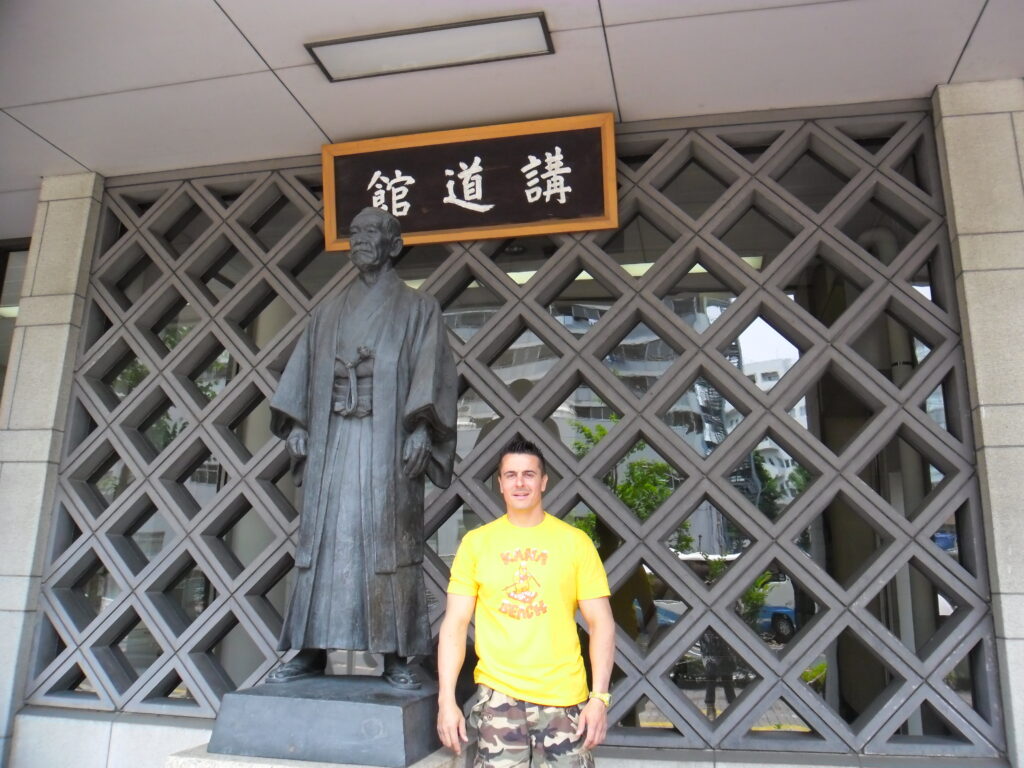
Japan. This photo is from May 24, 2012. I was on a mission in Japan with the French Navy, in port at Yokosuka. The work schedule wasn’t great. Since the command knew I did judo, they’d adjusted my hours so I could go take a look at the Kodokan.
I had no information, and I went there by chance. Unable to find my way, I asked a Japanese man who went out of his way to walk me to the building. I’d built the place up in my head – a lot of people in France had told me stories about Japan. “In Japan… at the Kodokan…” And there, I discover you have to pay to train. They hand me a sheet with the Kodokan rules, the required attire, no t-shirt under the judogi… I look for a shop, there is one… tiny, right by the entrance on the ground floor. Then I take the elevator, tour the place alone, discover a spotless, gleaming wooden floor. To get onto it you have to take off your shoes and put on slippers. I visit the museum, but everything’s written in Japanese.
That evening, I come back for training, meet a Japanese man in the locker room who offers to show me around. He walks me through the legendary dojo, has me tour it and bow to all the sensei present. You have to bow to them on your knees.
I’m very surprised because there’s no opening bow to start the class. It’s actually an evening where you more or less do what you want on the tatami. The randori have neither a hajime nor a matte.
Honestly, I’d really idealized judo in Japan, and the Kodokan in particular. The fact that there was no bow, that it was basically an open mat, really surprised me.
A side story: I also went to Hakodate and Yokosuka to do judo. But I had no information and had to ask people in the street. Nobody did judo or had any information. I’d show my belt, embroidered with “judo” in Japanese, to make myself understood.
In Hakodate, I eventually walked into a pharmacy to ask around. The pharmacist looked things up, found a club, and… called me a taxi! In Yokosuka, I went to the police station. There, the officers did everything they could to help. One of the older ones looked at my fingers (slightly deformed) and said: “judo.” And he gave me a bag from his club! But since it was too far, he drew me a map to another, closer club. I went there, and to my surprise: a small wooden dojo that “smelled” like judo, kids having fun, and a sensei in a blue judogi, with a t-shirt underneath and a red-and-white belt. And to think I’d always been told that in Japan there were only white judogis, and no white-and-red belts…
My travels have mostly given me big wake-up calls and opened my eyes. I notice every time that a lot of people tell stories or myths without really knowing. I’ve learned that things can be done differently, that not all Japanese people are strong, and above all that they’re just normal people. You don’t have to bow in a line – you can do it in a column (like in Korea). You don’t have to have a fancy judogi – just a jacket, or even a judogi that’s too small… even in competition (like in Mexico)… It’s pointless to try to be – or think you are – more Japanese than the Japanese. What matters is doing judo.
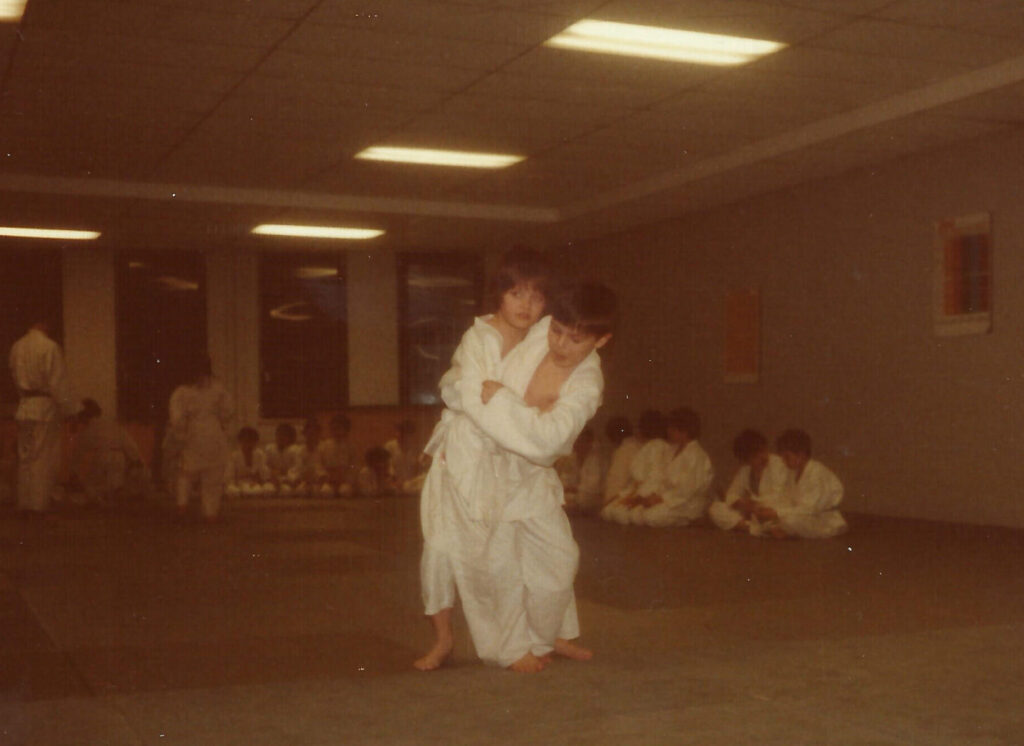
Childhood. As a kid, I had endless energy and did a lot of activities. My parents (my father was in the military) were transferred to West Berlin in February 1984. Once there, I had to start new activities on top of the others. My father took me to the French judo club, where the teacher was named Monsieur Delorme. From that very first day, judo became my priority. It was instantly my thing, my passion. My parents never pushed me – I’m the one who wanted it. Whenever I had to make choices, cut activities because of school, judo was always the one I kept.
As I remember it, we trained in a fairly… old-school dojo. To pass belt exams, you had to know the techniques and their names in both French and Japanese. I had Claude Fradet’s books for every belt exam. And I’d asked my parents to buy me the biggest possible practice dummy (a clown) so I could train at home.
The travel bug, meanwhile, comes from my father telling me lots of stories about adventurers, and watching pirate movies, westerns – a time people under twenty can’t really know [Smile]… Since I was very small, those stories and tales of adventure made me want to set off on the oceans and travel the world.
Later, when I wanted to join the Navy – out of a taste for travel and adventure, precisely – I prepared a whole bunch of things: psychometric tests, interviews, physical tests… and there was no internet to help us! So I wrote letters, did research. And then I had an interview during the selection tests. And THE question came: “Why join the Navy? You’re from Grenoble, why not go for the Alpine troops?” Since I’d prepared my answer, I went for it wholeheartedly: “France is a country with many maritime borders, an important history of explorers…” The reply came immediately: “Tell me instead why you want to join us, don’t recite a lesson!” So I answered: “I don’t know, I just want to do it!”
I want to, I want to discover things, live adventures… without wanting to do more than anyone else – I want to live MY life, MY adventures. And Dominique, my wife, is like me – or maybe I’m like her: we want to go, to challenge ourselves, to relive “first times.”
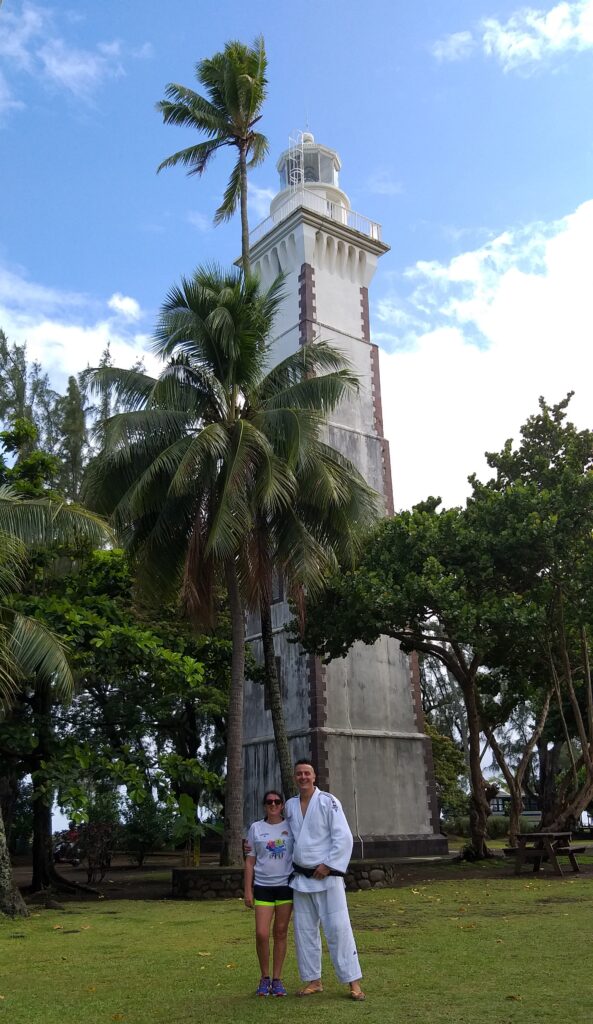
Dominique. This photo was taken at the foot of the Pointe Vénus lighthouse in Mahina (Tahiti) on December 8, 2018. It was the day of a promotional video shoot for the club, which had a trip to New Zealand planned. Since I’ve always been drawn to communication, I’d set up this project to present it and look for funding. My wife Dominique was there, and we took the opportunity to take a photo together.
As I told you, I always wanted to travel and I did it – but alone at first, in the professional context of the French Navy. One day, Dominique says to me: what if we traveled around the world? The first plan was to do it in a 4×4 Defender, with puzzle-piece tatamis, and travel the world for four years. We’d put a giant map of the world in the kitchen and started looking at where to go. Always doing judo along the way. Some countries drew me: Azerbaijan, Uzbekistan (the judoka there are strong), others for their history (the Silk Road), going to Moscow, crossing the Urals, going to Mongolia, the steppes… In short, living a true adventurer’s life, discovering isolated territories, exotic peoples and traditions… We were supposed to take a boat with the vehicle, work on boats that would take us to Japan, Australia, South Africa, Brazil, and France… But the budget let us down. So, change of plan. We sold our house after spending six years renovating it. Once it was finished, two months later, we sold it and crashed at a friend’s place with no plan at all. And my instructors from Brest (Béatrice de Souza and Hubert Moreau) told me about a job opening in Guadeloupe. I sent an email. The next day, a video call on Skype, and a week later, I was on a plane. A month later, we were both leaving for the start of an adventure we never could have imagined.
My wife Dominique had always wanted to travel but had never had the chance. And we found each other well. We have the same tastes, often the same thoughts at the same moment. So, even today, we feel like moving and challenging ourselves.
But we’ve also already wanted to settle down, open our own club, or even stop.
We spend a season in Guadeloupe, meet wonderful people. The club is very family-oriented, we fit in really well, and I put a lot of energy into developing it. I start with eighteen members and finish the season with a hundred and thirty-eight. I put a lot of things in place, find a lot of human and financial resources (+8,000 euros)… In short, a very good season. But I’m contacted by an African Union judo federation to become their national coach. I leave Guadeloupe, go back to mainland France, and then… nothing. The federation’s president in question gets removed, and I no longer have a job.
Dominique had always wanted to go to Argentina… So there we are in a travel agency to buy plane tickets. But it’s still too expensive, and the travel agent tells us Mexico is cheaper and that tourist visas for French citizens last six months. So… we leave a week later, with no plan.
Once in Mexico – where at that point I couldn’t even say hello in Spanish – I go to judo the very next day, and that’s the start of a wonderful adventure. We go from club to club, meet extraordinary people. But in the meantime, we head to Playa del Carmen near Cancún, since we’d contacted a Frenchman through a blog who agreed to host us. And there, I go to judo and meet a Canadian woman – now a friend – who tells me the school she works at is looking for a French teacher. So the next morning, there’s Dominique, doing an interview with a Chinese woman and an African man translating, and she gets the job!
This kind of wild, almost unbelievable turn of events keeps happening to us from that day on. The encounters are always surprising, and often lead either to genuine, lasting friendships or to some real adventures.
Throughout our journey, I’ve been offered some rather “strange” jobs. People call me, write to me, offer me positions, but not the plane ticket or the visa, and it’s not easy to get work visas. I won’t list all these opportunities that ultimately went nowhere, but it would have been extraordinary…
We wanted to settle permanently in Mexico. We started real paperwork, but it’s not simple without local support to set up a dojo… Sometimes we tell ourselves it would be nice to have a home base, our own house. But there’s still so much to do, to discover. We just stopped for three years in the same place: a record. But it’s time to move on. I can’t picture myself doing the same thing for thirty years at the same club. And I’m convinced a judo teacher needs to keep challenging themselves, to go back and forth between a club and the field.
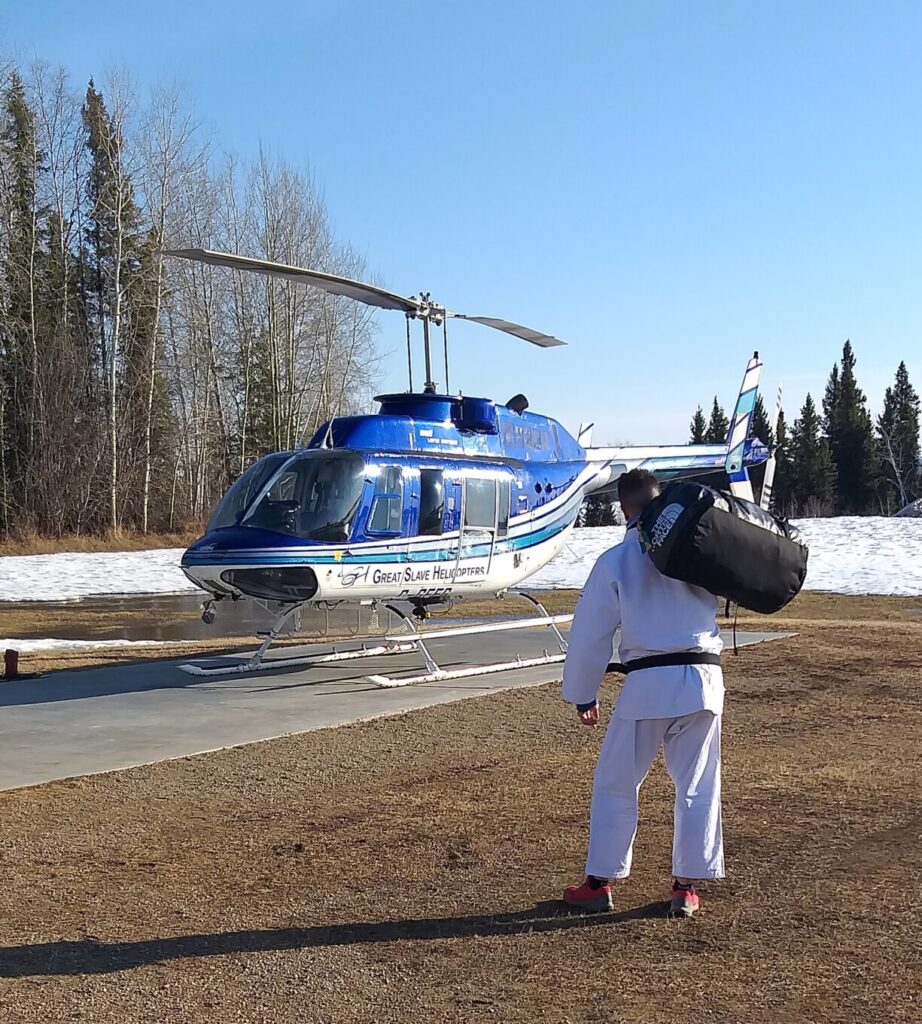
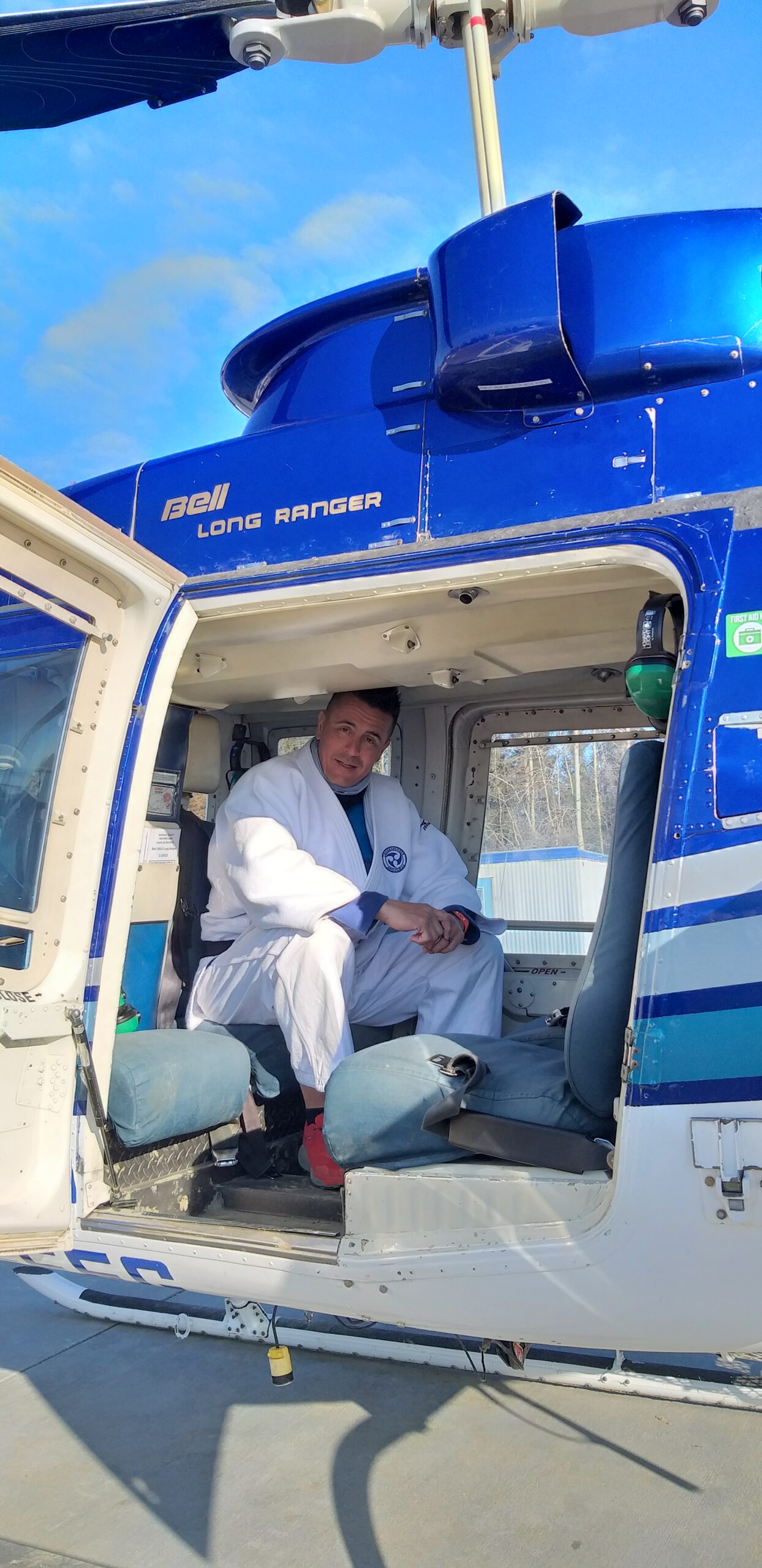
Helicopter. This photo was taken on April 24, 2021, in the Northwest Territories, Canada, in Fort Simpson, near Yellowknife.
At first, we leave Tahiti for a job in China. My wife and I have a contract with a judo club in Wuxi. We take Chinese lessons, we prepare, but… no visa! So we have to reorganize! Since my wife had always dreamed of going to Argentina, well, we decide to go… to Canada! Plane tickets are actually cheaper with multi-destination bookings. And we contact a Canadian friend from Toronto – Tami Dacks – who had already found my wife a job… in Mexico! She tells us to come see her. So we go to Toronto, and I do judo for two weeks and meet a lot of people.
Then we fly off to Argentina, then Bolivia… but that’s another story! While we’re in Bolivia, someone from Toronto sends me a job offer as head coach in the Northwest Territories (NWT). I apply and do a video interview with the judo officials in Yellowknife. Including a guy from Voiron, in Isère, just a few kilometers from where I’m originally from.
I get the job. And there we are, organizing the move to Canada. But covid shows up and everything gets turned upside down. The departure is postponed, but the contract is signed. In the meantime, I go work in Germany, video calls only. Finally, after countless twists and turns, we arrive in Yellowknife. I share the position with a Canadian, Josh Hagen. I’ll stay there six months.
What’s special about this territory is first of all administrative. It’s not a province, but a territory. It’s the size of Switzerland, but there are only forty thousand inhabitants, twenty thousand of them in the capital, Yellowknife, which sits on the shore of the Great Slave Lake and its four hundred fifty kilometers of length. That gives you a sense of how vast these territories are.
Then there’s the climate, which is very particular. It can be daylight all the time in summer, or night all the time in winter. And the temperatures are extreme. It snows very little since it’s too cold and everything is frozen several meters deep (there’s the ice road, and trucks drive on the lake just like on TV)… And since everything is frozen, there’s the thaw. Between the moment everything freezes and the moment everything thaws, you can’t drive across the lake or the rivers.
While in Yellowknife, one of my missions was to develop judo throughout the NWT, including in Fort Simpson. It’s several hours by road, you have to notify people when you leave and when you arrive, since there’s no communication network at all across the vast Canadian expanses. In April, I go to Fort Simpson, a former Far North trapper’s outpost with a small, isolated town. And the Mackenzie River, which is much bigger than a river, is in the middle of thawing. Impossible to cross by car. So we take a helicopter.
That’s something you only see in Canada: a judo teacher going to work by helicopter! Quite an experience, quite the memories, with bison, bobcats, bears, and all the Canadian wildlife…
Again, this taste for travel and adventure – I’ve always had it. I’ve always wanted to travel and live unforgettable experiences. I’ve read a lot of adventure novels that made me want it, motivated me, made me dream. And there are a few sayings that capture how I see life. Among others: “Live as if you were to die tomorrow, and learn as if you were to live forever.” When people ask me why I leave, why I don’t stay, my answer is that I’m not leaving, I’m going elsewhere. It’s a mindset that drives my wife and me. We want to discover, to meet new territories, new people, to learn new things.
I don’t consider myself indispensable to anything. I believe I can give, I can pass things on, but to keep going, I have to keep learning, always. And the judoka I coach also need to enrich themselves with new experiences, new knowledge.
Most recently, I settled for three years in Ennezat, met a fantastic club, and had a really beautiful project going. But you mustn’t fall asleep at the wheel, and you have to know how to take on new challenges.
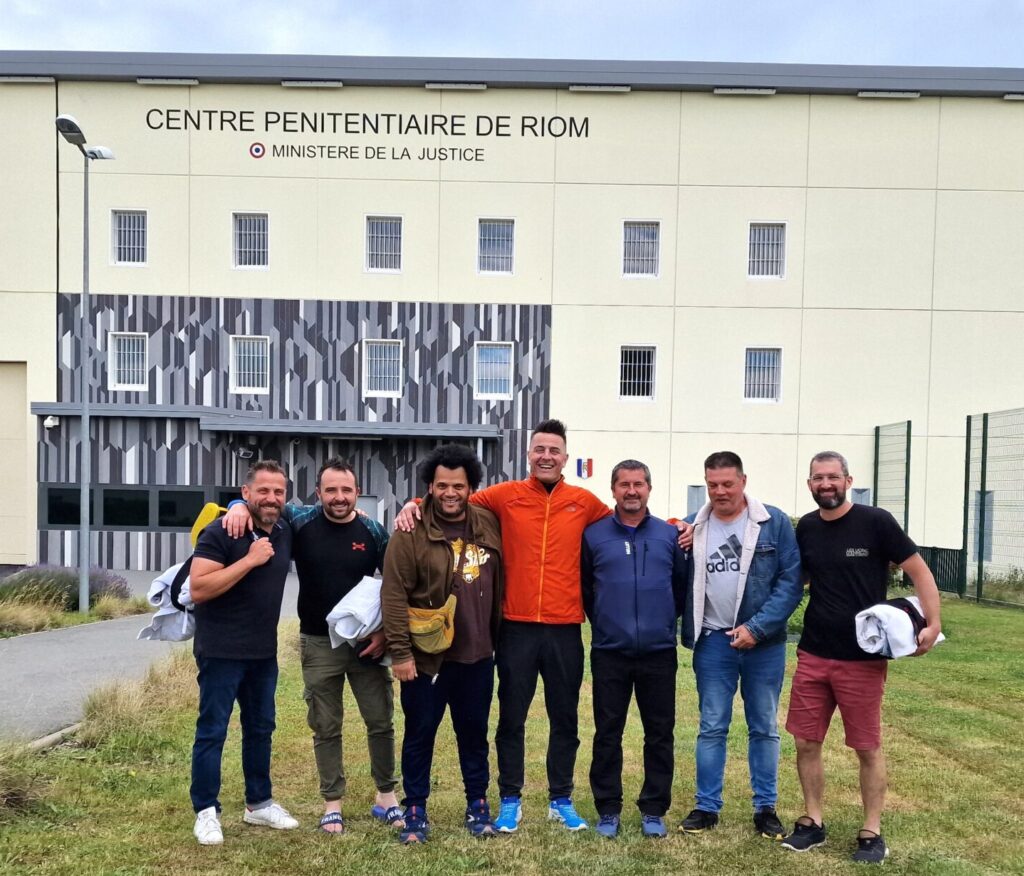
Projects. “This photo was taken in May 2025 in front of the Riom penitentiary center, in Puy-de-Dôme. It was before a session with the incarcerated people – that’s the specific administrative term – and members of the club.
I’d had a first experience like this in Brest in 2010–2011. Once in Riom, at the Ennezat club, I drove past the penitentiary center every day. I found a contact through a judoka from a neighboring club who works there, and I sent an email. The Sports department got back to me. We met, I talked about my first experience in Brest, and we set up the project. At first, we ran a trial cycle to test both the teacher and the incarcerated participants, and it all went well. So we were able to plan on continuing the adventure.
I then contacted the regional directorate in Lyon through the penitentiary center’s Sports department. I put together a project, and the regional directorate funded a hundred square meters of tatami, judogis, and judo lessons for two years. In the end, we did three years of judo. The incarcerated participants earned belts – yellow, then orange – a group formed, and there’s judo every Tuesday. The feedback has been very positive, the guys are motivated to keep going, even to reach black belt. Club members had some apprehension at first about doing joint sessions, but once the first one happened, they thought it was great.
Setting up a project like this takes real determination. I was lucky to find a contact at a neighboring club. Otherwise, you have to persevere, a lot. To find funding, you have to make a lot of calls, send a lot of emails… On the ground, the incarcerated participants tested me a bit at first. You have to know how to show without showing off, to be natural. The prison world can be intimidating for an outsider. Personally, I don’t want to know why people are there – I always get asked: “Do you know what they did?” It’s none of my business. My job is to do judo, develop a project, motivate people, help them become judoka.”
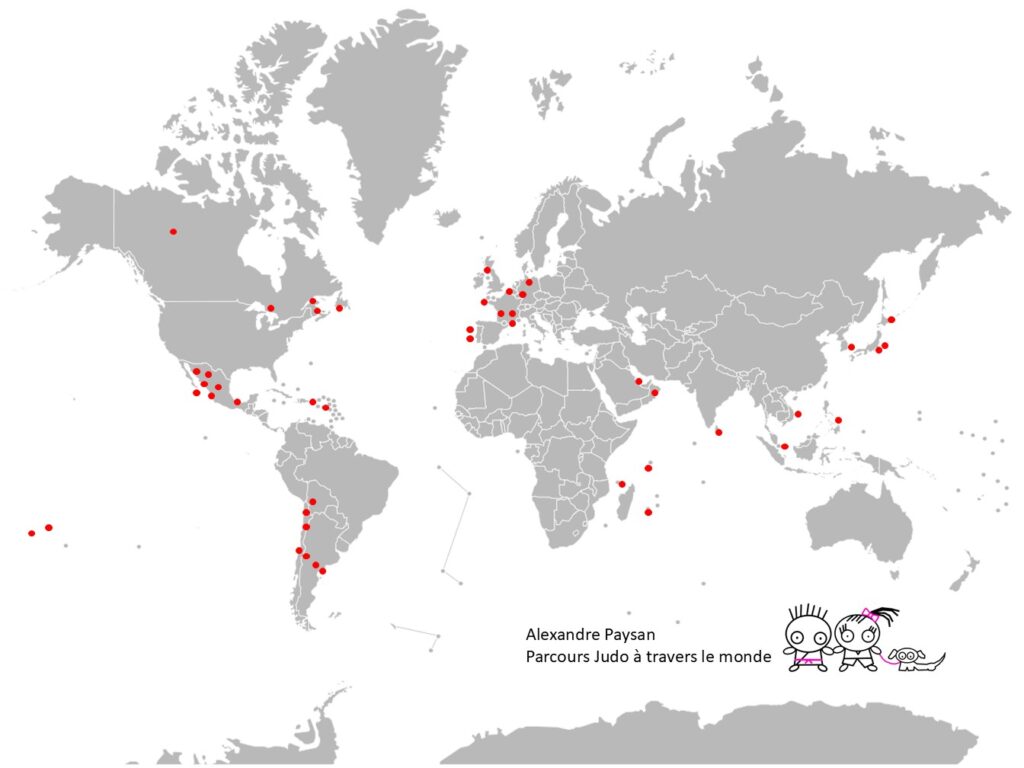
To-do list. “As you’ve understood, I first traveled through the French Navy, so by boat… meaning no judo inland. Then we left for Guadeloupe, by opportunity. As for the rest, it just followed on, one thing leading to another by chance.
We don’t have a plan. We leave on the fly and figure it out once we’re there. That’s our thing, ‘adventure.’ We struggle sometimes, but it’s fun to go without a safety net – otherwise it’s not really an adventure. I’ve had opportunities in Africa at times, but nothing ever came of them. As for Asia, we had to choose between Saint-Pierre-et-Miquelon and Bali… we chose Saint-Pierre-et-Miquelon!
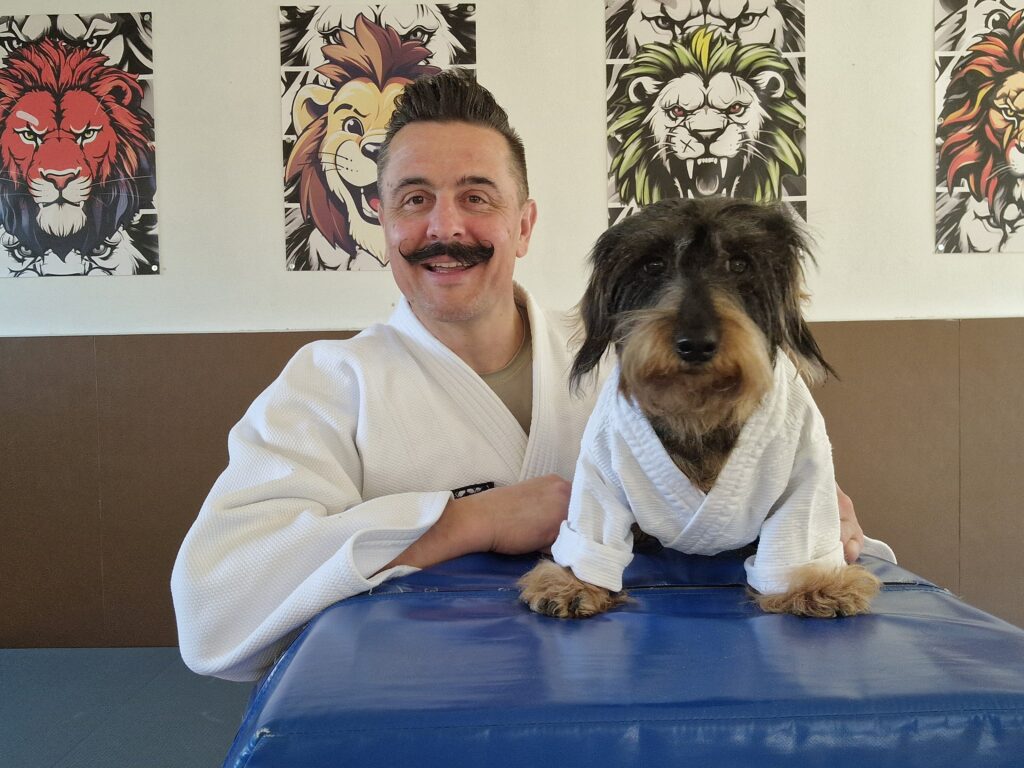
Of course, there are beautiful destinations that draw us. But we have a dachshund now! And I don’t want to put my dachshund in a crate and quarantine him in a kennel for thirty days just to go do judo. So, for now, we’re staying within driving distance (Europe).
I would have liked to go to Brazil to do BJJ or ne-waza for six months to a year, to learn. There are so many destinations that draw us. But you have to find work! Unfortunately, we don’t just travel [Smile].”
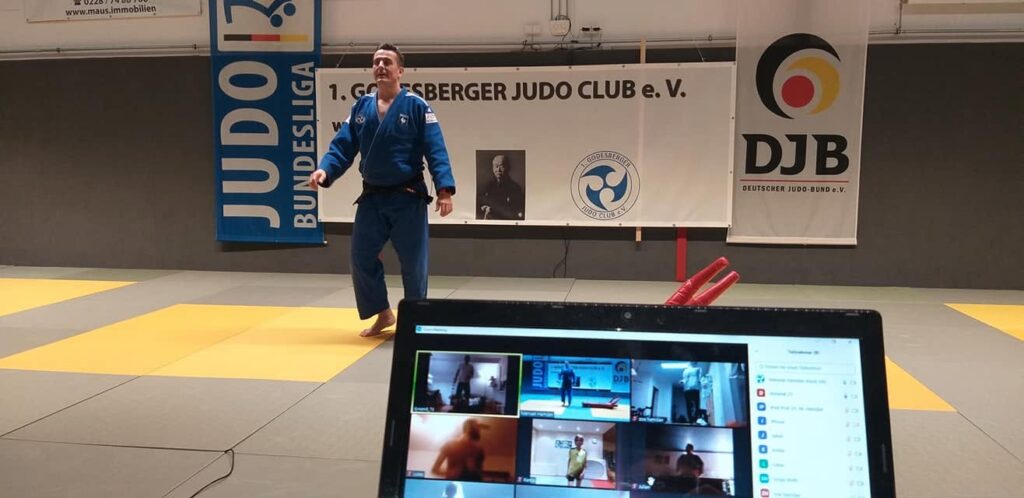
Mondos. “This photo was taken on November 4, 2020, in Germany. During covid, I only gave lessons over Zoom, in this dojo.
I virtually met Laurent Proumen from Décathlon, who asked me to share some of my experiences with the Décathlon team. We’d had some exchanges about judogis, in relation to climate and training conditions in certain parts of the world. Another time, Pierre, who had gone to Nepal with Morgan Girardeau, asked me to take part in his club’s anniversary event and share some of my experiences…
Honestly, it’s fairly rare for people to actually ask me questions. I rarely meet people who are truly curious. What I usually hear is: ‘You’ve traveled a lot, where are you off to next?’ Actually, I mostly sense confusion from people. They don’t understand ‘why we do this.’ I think some people find it impressive. I often get the comment: ‘You two really found each other, you and Dominique. What you’re doing is brave, I couldn’t do it.’
To me, it would be brave to stay twenty years in the same place – I can’t do that! That would be the real risk: saying, I’m staying for twenty years! And yet we just spent three years in the same place, because we felt good there. Actually, I could commit to a medium-term project – three or four years, for example. Some people think you have to commit for longer. I’m not convinced. For one thing, things can change, relationships can sour, results can be slow to come… Of course, it takes time. But I think having a mission and goals is motivating. Locking yourself into a long-term contract, staying purely for comfort’s sake – that’s not my thing.
Back to the topic at hand, it’s hard to share my experience. I meet a lot of judo teachers in particular who are quite hesitant to try this kind of adventure. There’s always an excuse. The travelers we meet always tell us the same thing: it’s not easy to leave, but there’s no regret once it’s done. And if they had to do it again, they would.
When we travel, almost every time, the people who welcome us into their clubs tell us: watch out, it’s different here, you’ll have to get used to it! But in reality, there’s no difference: people are different, just like here, on every street corner. You meet tall people, short people, funny ones, sad ones… The common thread is judo, of course! It lets me meet all kinds of people, from every background, every walk of life. The locals – not the ones from the tourist circuits.
I don’t think I make people want to leave. But I have convinced some people to try the adventure during their vacation time. And they do it regularly – they travel with or without a judogi, go to clubs during business or personal trips, or during vacation, to train and meet other judoka.”
Inspiration. “I love stories, tales, adventures. I watch shows or documentaries about adventures and dream of doing it, or I’m in awe. I like stories where things are hard. I don’t relate to the Instagrammers – I’ve got nothing against anyone, everyone travels the way they want – where everything is planned out, trips scheduled down to the minute… The books that spoke to me, among others: Frison-Roche’s L’Esclave de Dieu; Slavomir Rawicz’s The Long Walk; Mike Horn’s Latitude Zero… As a kid, I dreamed watching the Camel Trophy, the Raid Gauloises, the Paris-Dakar, no GPS, just compasses and maps… The adventures of the Silk Road, Christian Jacq’s stories about Egypt… I’m a dreamer, not an adventurer [Smile].
Morgan Girardeau [another famous French globe-trotting judoka, ed.] – I’ve never met him in person. But we talk on the phone very often, sometimes several times a day! He gave me his book, has often helped me find work – he’s actually the one who put me in touch with the Ennezat club. Julien Brulard [same, ed.] – I follow him on social media, but I don’t even know if he’s ever heard of me [Smile]. In reality, our experiences share one thing in common: a taste for travel. But just as some people travel by bike, others by boat or plane, we each have our differences.
In particular, I stay an average of one season in a given place. I work, I pay rent, taxes, do my grocery shopping… like everyone else. Morgan, on the other hand, did a world tour and moved from encounter to encounter, he was never employed as a teacher somewhere.
Honestly, I don’t compare our experiences at all. As for Morgan, we talk a lot, because we haven’t lived the same things, even though we’ve done judo in a lot of the same places, just not at the same time… As I always say: everyone has their own journey. Ours, with Dominique, is neither better nor worse than anyone else’s. It’s simply our way of life.
I’d love to meet Julien and Morgan. Do judo together, and above all talk and swap stories, because I’m sure each of us has quite a few!”
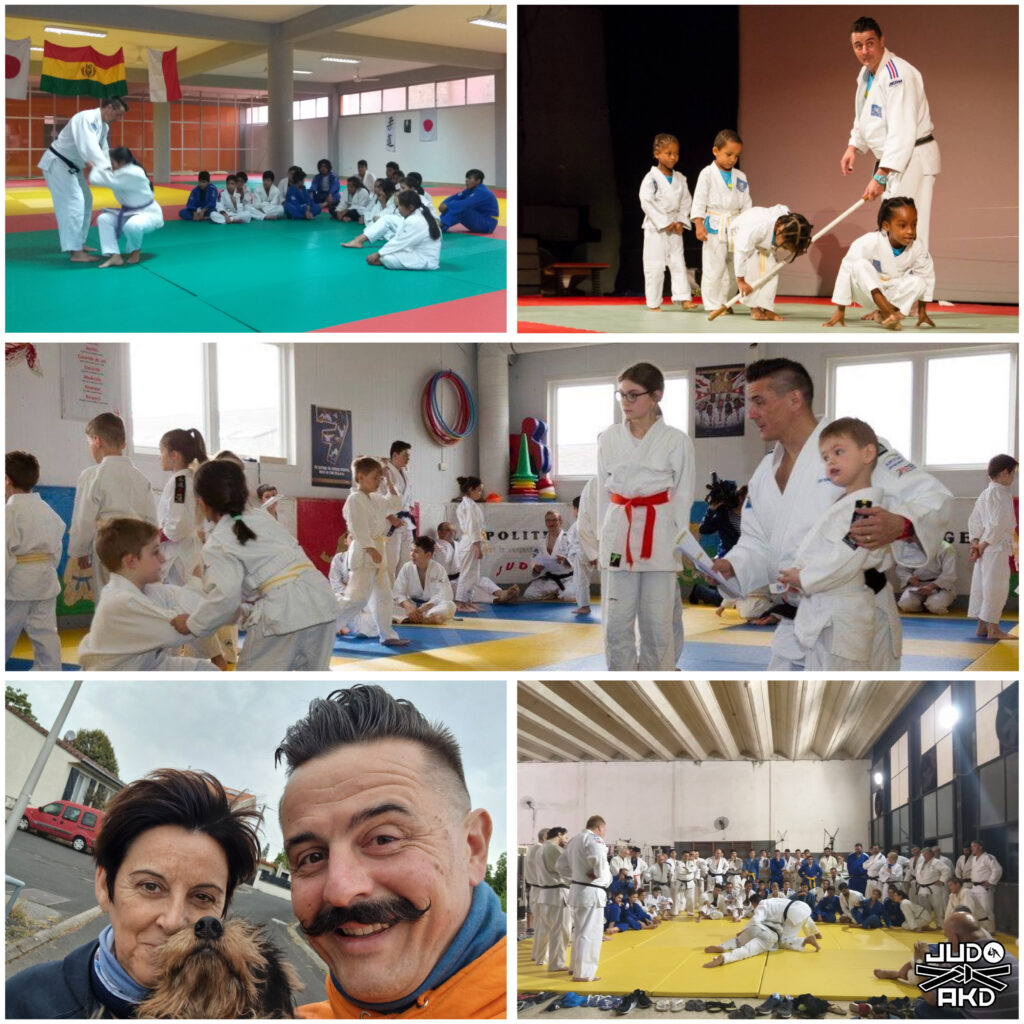
Anecdotes. “Here are a few anecdotes I’ve had the chance to live through my travels… In Mexico, first. Since I was French and a fifth dan, I was always held up as an example. But not speaking any Spanish at all at first, I didn’t understand everything. So I asked the people I met to write me messages instead of calling me, since I couldn’t follow phone conversations. One day, I get a message asking me to come teach a judo class at 2:00 pm. So I set off with my wife and tell her I’m going to teach a class. In the end, I stayed on the mat for six hours! And my wife on a bench the whole time. I hadn’t understood the request at all! We had a wonderful day (we still talk about it). People kept coming over to my wife to give her something to drink and check she was okay. Mexicans are extremely kind and take real pride in giving foreigners a warm welcome… And that’s just a glimpse of what we experienced there over a year and a half.
In the Philippines, next. I went twice, a week each time, in 2006 and 2007. Someone had found me a contact with the national team. So I go train with them. I was the tallest and heaviest. Everyone else was small-framed. So during randori sessions, no breaks for me. They all lined up one after another to fight me and try uchi-mata (among other things) under my legs. But it was very hot and humid. I was bright red and kept training even though it was tough. After a while, they pulled me off the mat, sat me on a bench, and put a bag of ice on my head. As soon as I said okay (a break from randori), they literally threw me back on the mat and off we went again! It’s a really great memory, because they all wanted a turn with me, and I get enormous pleasure doing judo with them.
In Singapore, too. I went to train at a club and had brought along another French judoka. As always, you had to do a lot of randori and set an example. The person who’d found us contacts in the Philippines and Singapore was of Asian background. My fellow judoka wasn’t showing much commitment – always had a pain somewhere. The local sensei went to speak with our contact – since she was of Asian background, he had a different kind of relationship with her. He told her: Alexandre can come back whenever he wants, but the other one has to leave, he doesn’t have the spirit of judo! I’m still in touch with that sensei, he’s really great and very welcoming. I’ve gone back several times, and each time it’s been a wonderful experience.
Another memory. During the covid period, we were repatriated from Bolivia. For quite a long stretch, no judo on the mat. But the clubs I’d met wanted to keep doing judo. So we set up video sessions. From my garden with Argentina – and I recently got a message about that experience, which people still remember – from a dojo with Bolivia or Mexico, and from my desk in Canada with Germany. Proof that you can train and travel through judo while staying home.
In Korea, finally. I couldn’t find a judo club and had neither Internet nor a contact. I set off into the city of Busan on the fly, with my judogi. After wandering around for a long time, I ended up following some kids in the street who were wearing taekwondo uniforms. I knocked on the door of their dojo. A very small child opened the door, and his instructor arrived right behind him – I still remember that image, the little one ready to fight, a real warrior. I explained that I wanted to do judo. He explained – in Korean – where I should go. I went there, tried to make myself understood because the sensei thought I wanted to join his club. I took the class, spent the whole evening in the center of the mat with everyone. And everyone was watching – I had to push my limits! At the end of the evening, we went to eat in the back room of a pizzeria owned by the club’s president. What struck me most was the bow at the end of class. Not in a line, but in columns. The oldest at the front, the youngest at the back, across several columns, and me right at the very back. What mattered here wasn’t the belt, it was age and respect for one’s elders.”
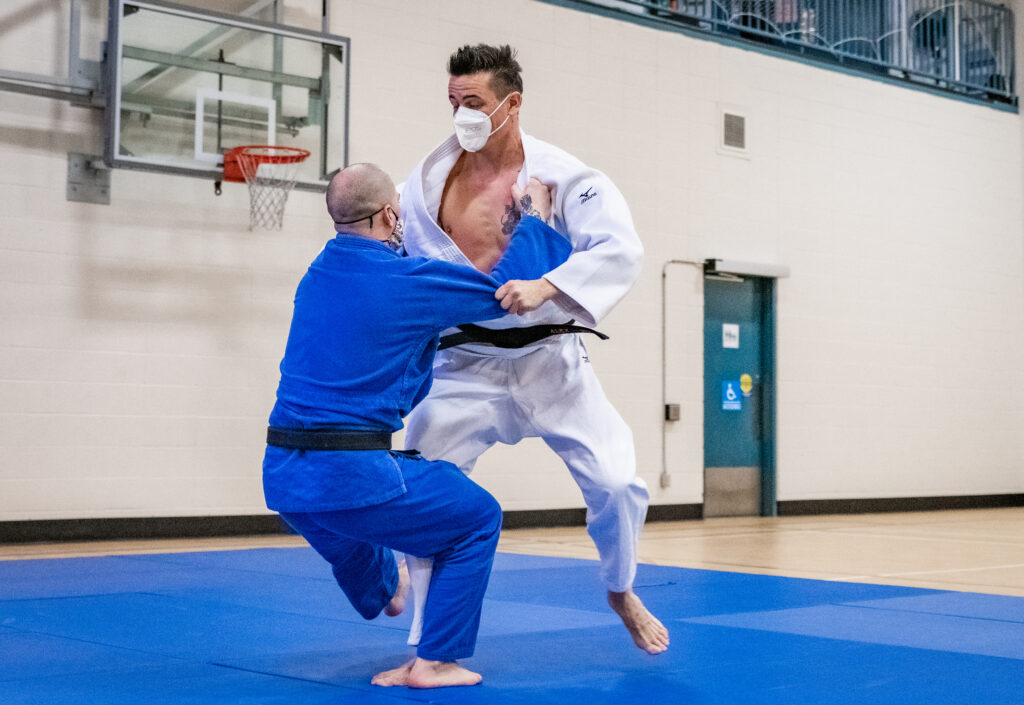
Lessons. “All these experiences make me say that judo is truly universal. It’s not just words, a nice-sounding phrase thrown in for effect. Everyone does their own judo and practices it however they see fit. Some travel during their vacations, others, like me, travel to work. But this common thread that judo provides makes it possible to discover people and ways of doing things outside the tourist circuits. And it doesn’t matter that I don’t speak the local language well: every time, people tell me ‘here we speak judo, so we speak the same language.’
If the Alexandre of 2026 could give a piece of advice to the Alexandre who started judo in 1984? I’d tell him: don’t change a thing. All the choices we make depend on the present moment. It’s like playing the lottery already knowing the numbers. You have to try, take risks, question yourself. Since 1984, I’ve seen a lot of judoka, a lot of dojos. I’ve often heard ‘when I was young,’ ‘it used to be different’… I think judo’s strength is adaptability. When you do randori, you don’t tell your partner to only do what you want! You have to adapt, you have to dodge, you have to attack, and sometimes you fall. It’s the same in life: sometimes, you fall. So that kid from 1984, he fell sometimes in life, and he fell sometimes on the tatami. But he always kept his enthusiasm and his drive. I’ve always kept the enthusiasm and the drive. And this idea that I wouldn’t be here today if I hadn’t made the choices I made.”– Interview by Anthony Diao, summer 2026. Opening photo: memories from Canada. ©Archives Alexandre Paysan/JudoAKD.
A French version of this article is available here.
More articles in English:
-
- JudoAKD#001 – Loïc Pietri – Pardon His French
- JudoAKD#002 – Emmanuelle Payet – This Island Within Herself
- JudoAKD#003 – Laure-Cathy Valente – Lyon, Third Generation
- JudoAKD#004 – Back to Celje
- JudoAKD#005 – Kevin Cao – Where Silences Have the Floor
- JudoAKD#006 – Frédéric Lecanu – Voice on Way
- JudoAKD#009 – Abderahmane Diao – Infinity of Destinies
- JudoAKD#008 – Annett Böhm – Life is Lives
- JudoAKD#010 – Paco Lozano – Eye of the Fighters
- JudoAKD#011 – Hans Van Essen – Mister JudoInside
- JudoAKD#021 – Benjamin Axus – Still Standing
- JudoAKD#022 – Romain Valadier-Picard – The Fire Next Time
- JudoAKD#023 – Andreea Chitu – She Remembers
- JudoAKD#024 – Malin Wilson – Come. See. Conquer.
- JudoAKD#025 – Antoine Valois-Fortier – The Constant Gardener
- JudoAKD#026 – Amandine Buchard – Status and Liberty
- JudoAKD#027 – Norbert Littkopf (1944-2024), by Annett Boehm
- JudoAKD#028 – Raffaele Toniolo – Bardonecchia, with Family
- JudoAKD#029 – Riner, Krpalek, Tasoev – More than Three Men
- JudoAKD#030 – Christa Deguchi and Kyle Reyes – A Thin Red and White Line
- JudoAKD#031 – Jimmy Pedro – United State of Mind
- JudoAKD#032 – Christophe Massina – Twenty Years Later
- JudoAKD#033 – Teddy Riner/Valentin Houinato – Two Dojos, Two Moods
- JudoAKD#034 – Anne-Fatoumata M’Baïro – Of Time and a Lifetime
- JudoAKD#035 – Nigel Donohue – « Your Time is Your Greatest Asset »
- JudoAKD#036 – Ahcène Goudjil – In the Beginning was Teaching
- JudoAKD#037 – Toma Nikiforov – The Kalashnikiforov Years
- JudoAKD#038 – Catherine Beauchemin-Pinard – The Rank of Big Sister
- JudoAKD#039 – Vitalie Gligor – « The Road Takes the One Who Walks »
- JudoAKD#040 – Joan-Benjamin Gaba and Inal Tasoev – Mindset Matters
- JudoAKD#041 – Pierre Neyra – About a Corner of France and Judo as It is Taught There
- JudoAKD#042 – Theódoros Tselídis – Between Greater Caucasus and Aegean Sea
- JudoAKD#043 – Kim Polling – This Girl Was on Fire
- JudoAKD#044 – Kevin Cao (II) – In the Footsteps of Adrien Thevenet
- JudoAKD#045 – Nigel Donohue (II) – About the Hajime-Matte Model
- JudoAKD#046 – A History of Violence(s)
- JudoAKD#047 – Jigoro Kano Couldn’t Have Said It Better
- JudoAKD#048 – Lee Chang-soo/Chang Su Li (1967-2026), by Oon Yeoh
- JudoAKD#050 – Hermann Monne – Burkina, a Land Already Peopled
- JudoAKD#051 – Mariana Esteves – A Chronicle of Life Passing By
- JudoAKD#052 – Tiphaine Gingelwein – Chechnya and the Caucasus, a Feminine Perspective in Nuance and Complexity
- JudoAKD#053 – Victor Scvortov – Born Again Under a Lucky Star
- JudoAKD#054 – Eric Gervasoni – From Moves to Movies
- JudoAKD#055 – Mihael Žgank – Coming Home Is Where the Real Journey Starts
- JudoAKD#056 – Patrick Grosperrin – Laterality, a Little-Known Lever of Performance
- JudoAKD#057 – Rest in Peace, René Nazaret (1936-2026)
- JudoAKD#059 – Habib Alouache – Teaching Joy
- JudoAKD#060 – Diyora Keldiyorova – Another Giant Leap for (Wo)Mankind
- JudoAKD#061 – Angelika Szymańska – With the Restraint of Those Still on Their Way
- JudoAKD#062 – Valentin Ménard – The Click (That Moment When Champions Just Know)
Also in English:
- JudoAKDReplay#001 – Pawel Nastula – The Leftover (2017)
- JudoAKDReplay#002 – Gévrise Emane – Turn Lead into Bronze (2020)
- JudoAKDReplay#003 – Lukas Krpalek – The Best Years of a Life (2019)
- JudoAKDReplay#004 – How Did Ezio Become Gamba? (2015)
- JudoAKDReplay#005 – What’s up… Dimitri Dragin? (2016)
- JudoAKDReplay#006 – Travis Stevens – « People forget about medals, only fighters remain » (2016)
- JudoAKDReplay#007 – Sit and Talk with Tina Trstenjak and Clarisse Agbégnénou (2017)
- JudoAKDReplay#008 – A Summer with Marti Malloy (2014)
- JudoAKDReplay#009 – Hasta Luego María Celia Laborde (2015)
- JudoAKDReplay#010 – What’s Up… Dex Elmont? (2017)
- JudoAKDReplay#011 – Zakopane, or Lives Passing By (2017)
- JudoAKDReplay#012 – Thierry Frémaux (1/2) – About The Legend of the Great Judo(2016)
- JudoAKDReplay#013 – Thierry Frémaux (2/2) – Judo in the Light (2021)
And also :
- JudoAKDRoadToLA2028#01 – Episode 1/13 – Summer 2025
- JudoAKDRoadToLA2028#02 – Episode 2/13 – Autumn 2025
- JudoAKDRoadToLA2028#03 – Episode 3/13 – Winter 2026
- JudoAKDRoadToLA2028#04 – Episode 4/13 – Spring 2026
- JudoAKDRoadToLA2028#05 – Episode 5/13 – Summer 2026
JudoAKD – Facebook – Instagram – X (Twitter).