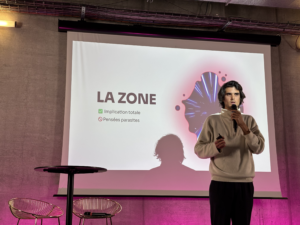
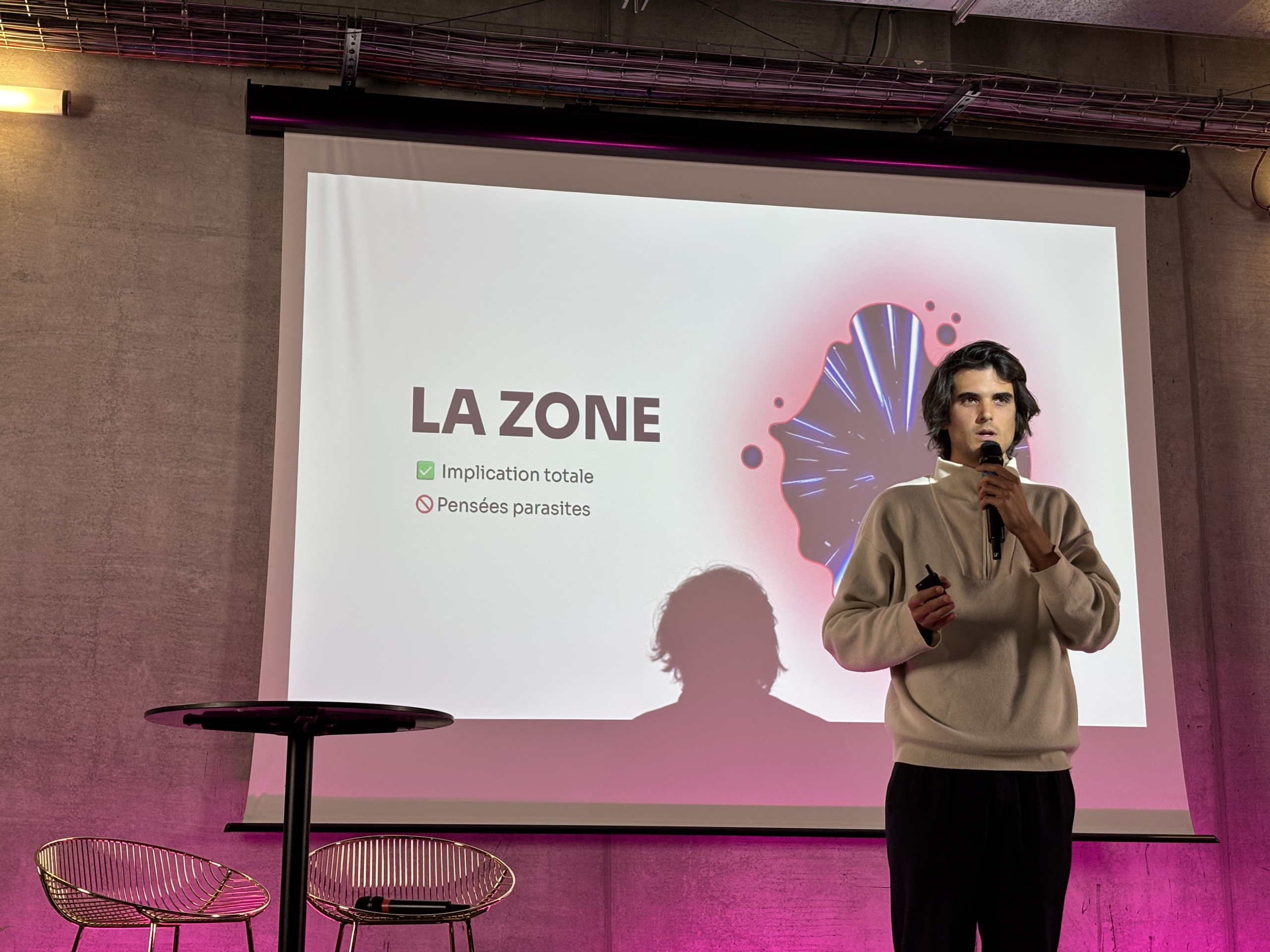
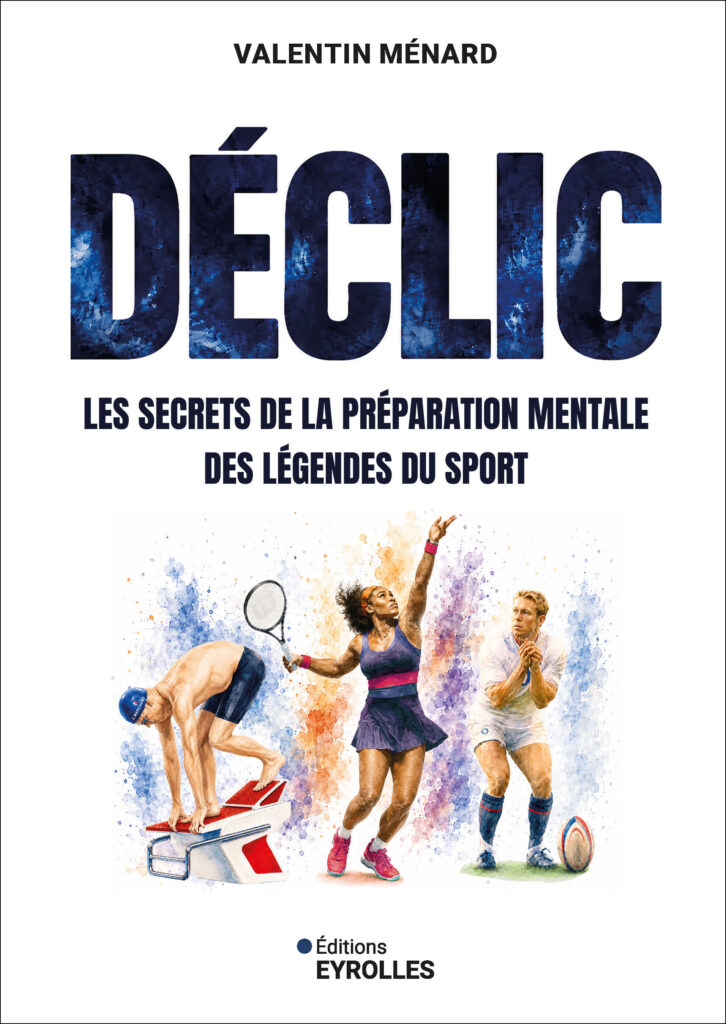
Born on 7 July 1992 in Saint-Germain-en-Laye (France), Valentin Ménard is a former work colleague of our friend Rémi Guyot. Déclic – Les secrets de la préparation mentale des légendes du sport [Click – The Secrets of Mental Preparation of Sports Legends], his essay due out on 1 October 2026 from Éditions Eyrolles, offers a tour of the cerebral side of those pivotal moments that punctuate the paths of most (very) great champions: the moment of decisive, no-going-back understanding. Before, they groped their way forward. Since, they know.
Among the many profiles and disciplines covered, from American tennis player Serena Williams to French swimmer Léon Marchand by way of New Zealand rugby player Richie McCaw, there’s no judo and no judoka. Valentin has a clear explanation for that, which he gives below when we come to the unavoidable figure of Teddy Riner: “The problem is that I didn’t have a story that was as clean, an association of a technique with a click, the way I wanted to write it up: the story, the click, the technique used, and how to put it into action yourself.” An excellent way to get the introductions started.
To prepare for this wide-ranging conversation as well as possible, besides carefully reading his two hundred pages, then still under embargo, we sent him a series of judo articles that could tie in with his research, from a famous portrait of Kosei Inoue spread over seven years to a few pieces well known to JudoAKD readers on Clarisse Agbégnénou or Teddy Riner, precisely. The meeting was then set for the heart of the summer, when, from his stronghold in Biarritz, he was just emerging from twelve months focused on his remarkable book.
A half-green belt after three years of practice, but a 4/6 level in tennis, his lifelong sport, and a wish to go back to it soon for a very simple reason: “The risk, when you’re just an advisor, is to embody the solution and forget that the problem is complicated.” Understanding where he’s speaking from to better gauge the weight of what he says: we had the backbone of a solid interview. – JudoAKD#062.
A French version of this interview is available here.
“Pier Gauthier, a leading mental coach in France, uses a similar question with tennis players. When a player complains that his opponent returns the ball too well and that there’s nothing he can do, Pier asks him: ‘Would he return it just as well if you served 30 km/h [about 19 mph] faster and with more precision?'” (p. 37)
Plenty of paths lead to mental preparation. How did you get there?
Before becoming a mental coach, I worked in tech product. That’s how I met Rémi Guyot. I joined BlaBlaCar early in my career, when he was there, and we got along really well. We’ve stayed in touch ever since.
Rémi’s a heavyweight. A sort of guardian angel for a lot of people, very discreet but very precise. He told me you’d submitted your book to him beforehand so he could take a look.
Yes, and his was actually the review that made me do the most corrections (laughs). He’s formidable… Ever since I was a little kid, I’ve been one of those people who have more questions than answers. I started seeing psychologists and, since I could see the good it was doing me, it became a very strong subject of curiosity. Psychology and personal development books quickly became my bedside reading.
No surprise you get along so well with Rémi, then [smiles]. He’s pretty well versed in these topics…
In tech product, the psychology of the user is truly fascinating. Understanding what people need, what they express or don’t express, knowing how to ask the right questions to uncover the real needs, understanding the people around you so you know how to influence them… In fact, I felt I had an affinity for putting even more of that into my job.
And where does sport come into all this?
I played a lot of competitive tennis when I was young, and I hit the mental wall head-on several times: seeing the difference from one day to the next, depending on the thoughts you have and the attitude you bring, it could be a dizzying gap in level. And performance, in general, was my common thread. Even at BlaBlaCar, what interested me beyond the projects was: how do we get better, day after day? How do we divide the job into big blocks, and how do we improve each of those blocks?
I discovered the profession of mental coach through sport, and it combines all of that: the passion of my youth, psychology and performance. There’s a very raw side to sporting performance: it works, or it doesn’t… When you see a Michael Jordan say, as I explain in the book, that he leans on his injuries and his “dark side,” and you see that it kept him going for so many years, even though most personal development literature says you shouldn’t do that… I think there’s something worth digging into there. Then again, you have to see at what cost. But I like that radicalism, “does it work or not?” It’s a bit like when you ship a product feature: it works or it doesn’t, period. It isn’t internal politics that decides.
And it so happens that mental preparation goes well beyond sport: I also coach artists, entrepreneurs, and even a member of parliament. But the foundation is always that very raw performance.
Concretely, how did you train?
It took me a long time to take the plunge, precisely because I was wondering how to train. My mother coaches executives, and she warned me: careful, if you show up without a particular angle, it’s going to be hard. And I didn’t want to add noise to the noise. So for nine months, I listened every day to half an hour of podcasts, interviews and articles on sport and mental preparation, to find people who inspired me. And I ended up discovering Pier Gauthier.
Oh, I remember him! He’s a former tennis player. I remember a Tennis Magazine or a Tennis de France that I read and re-read around autumn 1989. I remember him because he had just become French champion, if memory serves, and above all because it was the first time I’d seen “Pier” spelled like that. I didn’t know he’d gone on to build a whole path in mental preparation…
(Laughs.) You’re impressive, remembering that! Yes: he was seventeen with over ninety percent wins in juniors. He was promised a great future and he hit a mental glass ceiling. That led him to meet mental coaches at a time when it wasn’t at all mainstream: his coaches told him he was crazy. He eventually unlocked things in himself, then developed a method that allowed him to coach people like Gaël Monfils, Sébastien Grosjean and Ugo Humbert, but also others in football and poker. I’d listened to him, it was a huge crush, I did a short training with him, he then followed me personally, and today he’s a mentor I talk to regularly.
Alongside that, I did a psychology degree, started in parallel with work and finished recently. And then a one-year training with Thomas Sammut, the best-known person in mental preparation today – he’s the mental coach of Léon Marchand and Florent Manaudou, together with his associates. And plenty of small experiences on the side.
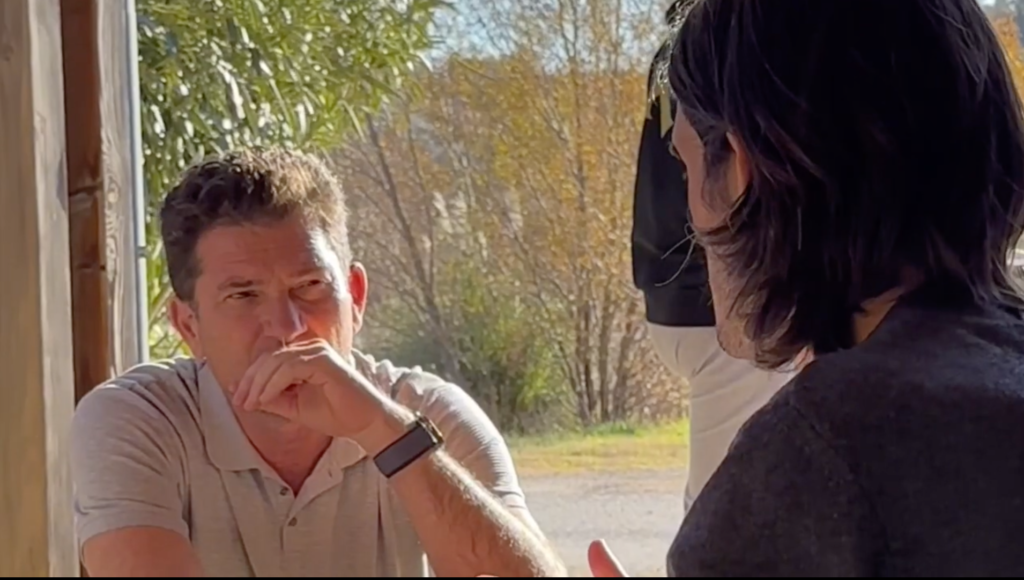
What was your starting intuition when you set out to write this book?
The starting intuition comes from Pier Gauthier, precisely. When he trained us, he used a lot of anecdotes. And what I found brilliant was that we didn’t feel like we were in class at all: it was captivating, like when someone tells you a story. Intuitively, you started to grasp the technique without necessarily having it explained to you, you were convinced because he told you what he’d lived through with someone and the click it had created. That immediately gives you confidence in the technique, and it’s also much easier to retell afterwards. When I’d taken more traditional courses on stress management, I’d get tangled up when talking about it to people. Whereas when I told anecdotes about people they knew, it really captivated them, and they took something away from it.
Interesting…
And yet there was always that one last little border: “OK, but a Djokovic, a Federer, they’ve always been super strong, super calm, able to handle their stress.” It’s said in the spirit of “yes, but not me.” And I thought: I doubt that’s the case. So if I can find the great mental clicks of the greatest legends of sport, the ones who dominated their discipline for at least ten years, where there’s no debate, then we’re drawing on the strongest inspiration.
What’s the goal?
The goal is to connect inspiration to action. And it helps break down that last barrier: don’t think you’re not cut from the same cloth as champions just because you’re struggling. What makes them who they are is that they had those difficulties and did something with them. When you’re facing a difficulty, don’t see it as a sign that you’re inferior to them. See it instead as the moment where it begins.
What criteria did you use to select your champions?
I first explored about sixty of them. The basic criterion: having utterly dominated their sport for at least ten years. Léon Marchand is the only one who’s a bit of an exception, with a bit less than ten years. Then: within those sixty, is there a story that’s truly a click, where the athlete himself talks about a before and an after? It’s never me who decrees there’s a before and an after, it’s the athlete who validates that technique as having been the breakthrough.
After that, there are assembly criteria: ten or eleven sports represented, varied countries, women and men, and a variety of both issues (confidence, focus, motivation, loss of enjoyment) and techniques. The same technique, like visualization, can serve motivation, the gaze of others or confidence. The idea is that by the end, you have a fairly light entry point into mental preparation, with the big issues, the big types of solutions and most of the great mental coaches. By the end, you can ask yourself: which chapters did I like? I can start an exercise, or dig deeper into either the athlete who fascinated me, or the technique, or the coach. It’s the start of an exploration.
Rémi told me you would have liked to include Teddy Riner. Why didn’t that happen?
There are two French people in the book, Léon Marchand and Tony Estanguet, out of sixteen athletes, fourteen of them foreign. Teddy absolutely belonged there, as the GOAT of a major sport. And he himself talks a lot about the impact that mental preparation and psychology with Meriem Salmi had. I read his biography, watched the documentaries… The problem is that I didn’t have a story that was as clean, an association of a technique with a click, the way I wanted to write it up: the story, the click, the technique used, and how to put it into action yourself. There are major moments, like when he falls after winning more than a hundred and fifty fights in a row, and I asked myself how he recovers from it. But despite everything I explored, I couldn’t find anything as linear.
Having followed him since he was a cadet, I think I can say there was a click in Tokyo, in 2010.
Oh really?
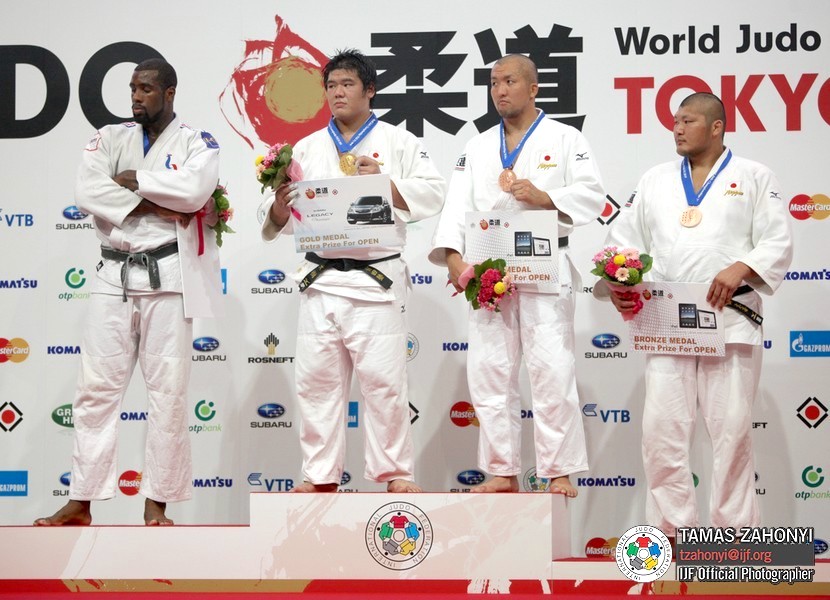
He’s twenty-one, he wins his fourth world title on the Thursday, then enters the open category on the Monday. Since the Japanese are the hosts, they field four judoka, and he goes through three of them in a single day. The last one, Daïkii Kamikawa, he meets in the final. It’s his twelfth fight in four days, whereas Kamikawa only competes in that Monday event, which isn’t without consequence for accumulated fatigue. He finds himself in golden score, thinking he’ll win as usual with small little pokes, but the other guy makes more of an impression with sudden, sharp changes of rhythm. In the end the Japanese wins on flags. On the podium, Teddy sulks, because defeat is then almost uncharted territory for him. But he draws a lesson from it: from that day on, no more leaving it to the referees’ goodwill. He’ll give himself the means to decide the outcome of the fight himself, by throwing – and throwing hard. He hires a sparring partner to take on the stance of his opponents, one day a lefty, one day a stocky one, and the following year at the Paris worlds, it’s a massacre… If there was a click for him, I think it can be located there.
Really interesting…
Back to the book. Correct me if I’m wrong, but you didn’t conduct any new interviews, did you?
Not with the foreign athletes, no. For the French ones, I interviewed Tony Estanguet, and had long exchanges with his mental coach, Sylvain Curinier. For Léon Marchand, I’d been trained by Thomas Sammut, who told us quite a bit about his work with him. I also interviewed his swimming coach, and I was in touch with his agent, who’s also his lawyer, and who told me the behind-the-scenes story. However, I had no direct interaction with Léon. That said, for Tony as for Léon, both had access to the final text and approved it.
The first one that makes me think of the judo world is climber Alex Honnold, with this very simple idea of accepting the possibility of the fall (potentially fatal, here) before starting a climb, especially when that climb is done free solo, that is, without ropes. In judo pedagogy, you first learn to fall to demystify the fear of falling, which then lets you dare to throw, and be a complete partner. Honnold is quite fascinating on that front…
It’s true that his amygdala, the part of the brain that detects danger, is less activated than in most people. There’s a debate over whether that’s why he climbs so well. He answers something else: if you also had to face your fear every day, you’d learn to keep it under control. It’s surely a mix: he’s less afraid than we are because he’s worked on his fear.
That’s a change from what you often hear in personal development, the famous “don’t listen to your fears”…
Exactly. What he says is: if I didn’t listen to my fears, I’d have been dead a long time ago. Explore what you’re afraid of and, if, sitting calmly, you see you’re not ready to take that risk, then don’t go. The hidden side of everyone who says “don’t listen to your fears” and who succeeded is all the people who did ignore them, who messed up and who regret it today.
Alex Honnold, for his part, says a life without risk isn’t worth living, but that he’s only comfortable if he has a 99.9% chance of succeeding. There’s an example where he’d completed a climb twenty times and failed once: he tells himself “I’m at 95%, I’m not comfortable,” and he trains for another year before doing it again. And he distinguishes between useful fear and harmful fear. Before starting, fear is important: am I really comfortable going for it? Once on the route, as long as he can still turn back, it may tell him to climb down. But when there’s no retreat possible, descending is as hard as finishing the climb, so the challenge is no longer to listen to it, it’s to calm it, because it can now only paralyze him. There, he uses breathing techniques and widening the field of vision.
So it’s a form of lucidity to be so well prepared that you listen to your own voice and not that of others.
Exactly. And I think it’s applicable, physically and metaphorically, to judo. Then again, in judo there’s perhaps less risk of getting hurt when playing against someone much stronger than in boxing. Tell me if I’m wrong.
There’s still some risk, you know… I remember a decisive fight in a team tournament where, weighing 92 kg, I found myself in golden score against a 165 kg guy. If you’re not careful, you know deep down it’s going to make or break. You’re in hyperextension, you push, you push, and bang, the muscle gives out…
Right. And for most people, the fall is also to be taken in the metaphorical sense: defeat. Are you comfortable, stepping onto the tatami, with the idea of losing the coming fight? It goes against the famous “you must hate defeat,” but if you’re comfortable with that idea beforehand, you’re not obsessed with it. If it starts badly, you don’t start anticipating scenarios or what people will say, all those thoughts that take you out of the fight. Whereas if you’ve told yourself beforehand: it’s not death, I want to win, but if I don’t, I know I’ll bounce back. And Honnold says it: if I didn’t do this work on the fear of death and that fear came to overtake me in the middle of the wall, it would take all my energy and all my focus, and I couldn’t get back to climbing.
That reminds me of the Kosei Inoue article I sent you beforehand, with his improbable dilemma on the eve of the Athens Games: whether or not to put the white judogi in his bag. Packing it means accepting that he might not be in the blue judogi all day, and therefore that he may have lost a fight and be in the repechage. It’s an unbearable thought for him, because it means preparing for the possibility of defeat, and he turned it over in his head for hours the night before, in the Fighting Films documentary.
That’s it. And there are also those who talk about creating a feeling of inevitability. As I tell in my book, rugby player Jonny Wilkinson did endless visualizations of the penalty he was going to take, of how the match would unfold, to put himself in a state of mind where it could only go one way. It has its virtues: the more your brain is wired for a situation that will happen in a certain way, the calmer you are when that situation arrives.
You can see a contradiction with accepting defeat. I think you settle it by noticing that Wilkinson, despite all that, couldn’t free himself from the anguish that it might still go badly. Even when he nails the decisive penalty in the 2003 World Cup final, he isn’t satisfied: he built so much on doubt and fear that things would go wrong that he can’t savor it. That anguish makes him always overdo it, get injured, and at some point he has to change his software.
The other pitfall would be locking yourself into scenarios where it goes wrong. I think you reconcile the two like this: first imagine what happens if I lose, with an outcome where life goes on, where I can do something that makes me proud, whatever happens, by moving toward the vision I want to create. Once that’s defined, project the victory. That way you get both benefits.
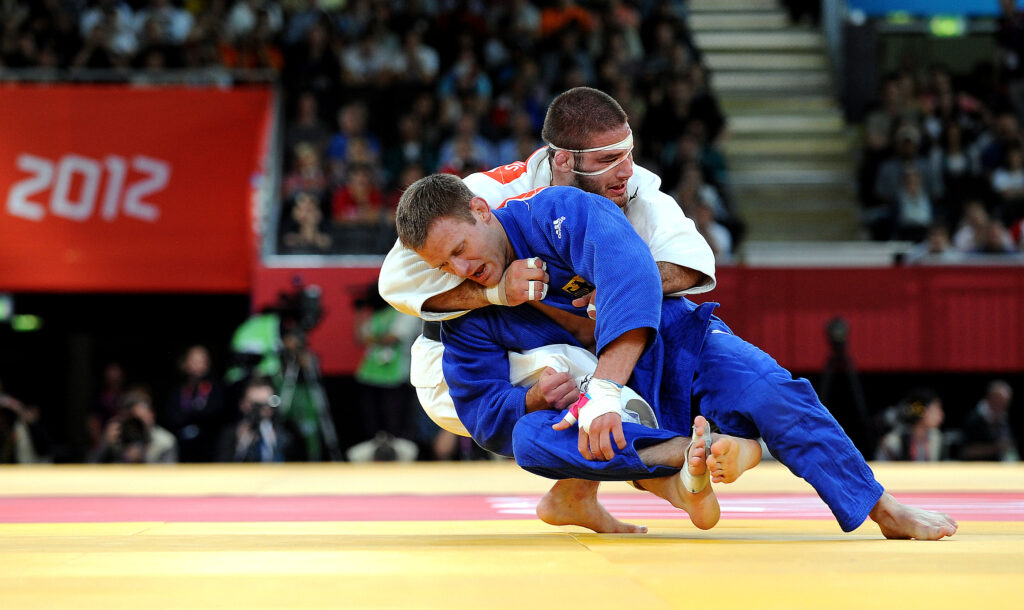
That evokes the American Travis Stevens at the London Games, with a merciless semi-final against German Ole Bischof, the reigning Olympic champion. The brawl was memorable. Stevens ended up with tape everywhere and a bloody face, and he loses on flags… The thing is that he’d mentally conditioned himself for the Olympic title and nothing else. Jimmy Pedro, his coach, worked with mantras, but he hadn’t prepared for losing. Twenty minutes later, for bronze against Canadian Antoine Valois-Fortier, whom he’d beaten seven times out of seven, he loses: impossible to recover that fast. Once again, he had seen himself as Olympic champion, and nothing else.
That’s exactly it: when you haven’t prepared for defeat, it cuts your legs out from under you for the next fight.
Many Japanese fighters are wired that way: either gold medal or fifth. Inoue says it: losing is dying. And winning is continuing for one more round.
Completely. And there’s almost a sense of shame when they lose, isn’t there? And not necessarily joy in victory: you survive, that’s all.
You also cite Novak Djokovic or Richie McCaw on managing thoughts…
Yes, and that’s what I like in the book: each one shares approaches that can be contradictory. When Djokovic has negative thoughts, he meditates: he observes them without engaging, and they lose their power. Others, like McCaw, tend to use mantras to redirect them toward something else. It’s up to each person to test what works for them.
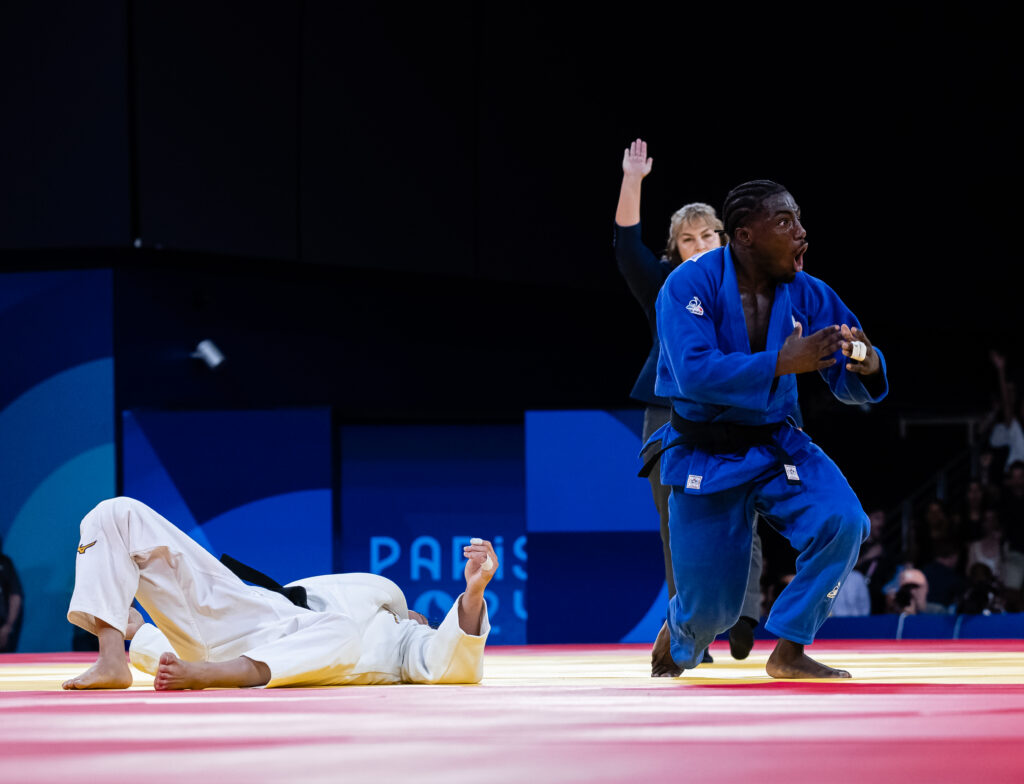
That makes me think of Joan-Benjamin Gaba, who came out of anonymity at the Paris Games: individual Olympic silver medalist and, in the team event, back against the wall, he turns around Japan’s Hifumi Abe in the final, who hadn’t lost an international fight in five years. I later interviewed him for Libé. His pleasure is feeling the others gradually lower their flag. He wears them down. At every matte, he basically tells himself: “The demolition site is moving forward.” He isn’t looking for the ippon like Kosei Inoue, but for attrition, and at the end of attrition, the opening… Henk Grol, a Dutchman with multiple Olympic and world medals, also told me once: “Ippon or shido (the smallest penalty in judo, editor’s note), it’s the same, if a shido is enough to be Olympic champion, I’ll take it.”
I think you find that in every sport: the distinction between pure performance and beauty. In football, Didier Deschamps was often reproached for it: is France a beautiful champion or not? For me, we’re champions. And when Mbappé was asked, at the end of the World Cup, whether this 2026 France team was better than the 2018 one, he answered that the 2018 team had won, whereas we’re in the semi-final, we haven’t won anything, so we’re less strong. There, you have a real difference between artistic expression and competitive performance.
Mbappé is brilliant in interviews, with real clarity of analysis. Does he work with a mental coach?
I don’t know. In football it’s very discreet: I don’t know a single mental coach who publicizes the players they work with. I get the feeling most people don’t say they work with a mental coach, or even with a shrink or a coach.
Another question that comes up constantly in sport, a bit like the chicken-and-egg one: is it better to work on your strengths or your weaknesses?
(He thinks.) I don’t think it’s my role, as a mental coach, to have that answer. What you do need, though, is to sprinkle into your training a dose of what you enjoy, to have the right energy. Léon Marchand is very strong in breaststroke and butterfly, if I’m not mistaken, and his coach Nicolas Castel said that one year, one of the gaps they built was precisely by emphasizing his weaker strokes. With the same effort, that’s where he’d make up the most time.
Conversely, Tony Estanguet said: you win a project through its strengths, you lose it through its shortcomings. For the Paris Games, the strength of the French bid was the beauty of the city, the closeness, the slogan “Come home,” against Los Angeles, its stars and its bling-bling side. They told themselves: we won’t win on that terrain, so no point putting too much effort into it. He tells in his book, which is exceptional, that they welcomed delegation members with a personalized gift for each: a Saint-Étienne fan found a jersey from the year they’d won, and so on.
So there are times when it’s more relevant to go to your strengths, and others to your weaknesses. And I hear very different discourses: some say you have to go all-in on your strengths, others look at tennis today where the very best have no weaknesses. On that, I have no opinion. The technical coach is best placed to decide. What matters, however, is to always have some energy, a drive.
And that’s where Sylvain Curinier, Tony’s coach, talks about the “averagist” and the “extremist,” using Nassim Taleb’s concepts. The averagist is the domain of skills: I did everything right, my physical training, my nutrition, my knowledge of my equipment. The extremist is how much I’m inhabited by an inner force that carries me through the moments that count. He says that Tony, at his third Olympics, had done everything better than in previous years, but had less of that force, because he had less enjoyment. So if working on your weaknesses always puts you in an unpleasant zone where you don’t enjoy yourself, you risk losing the vital energy needed to succeed at the highest level. You have to be aware of where you stand with your energy, your desire, and if needed, alter the program a little to rekindle the flame.
Ole Bischof, the one from the London semi-final, once told me that after a cruciate ligament operation, he decided that, since he couldn’t fight standing for months, he’d take advantage of it to become “the best groundwork judoka in the world.” He worked on sequences he’d never taken the time to work on, and by the end of his career he was a machine on the ground… without being any weaker standing.
Very interesting!
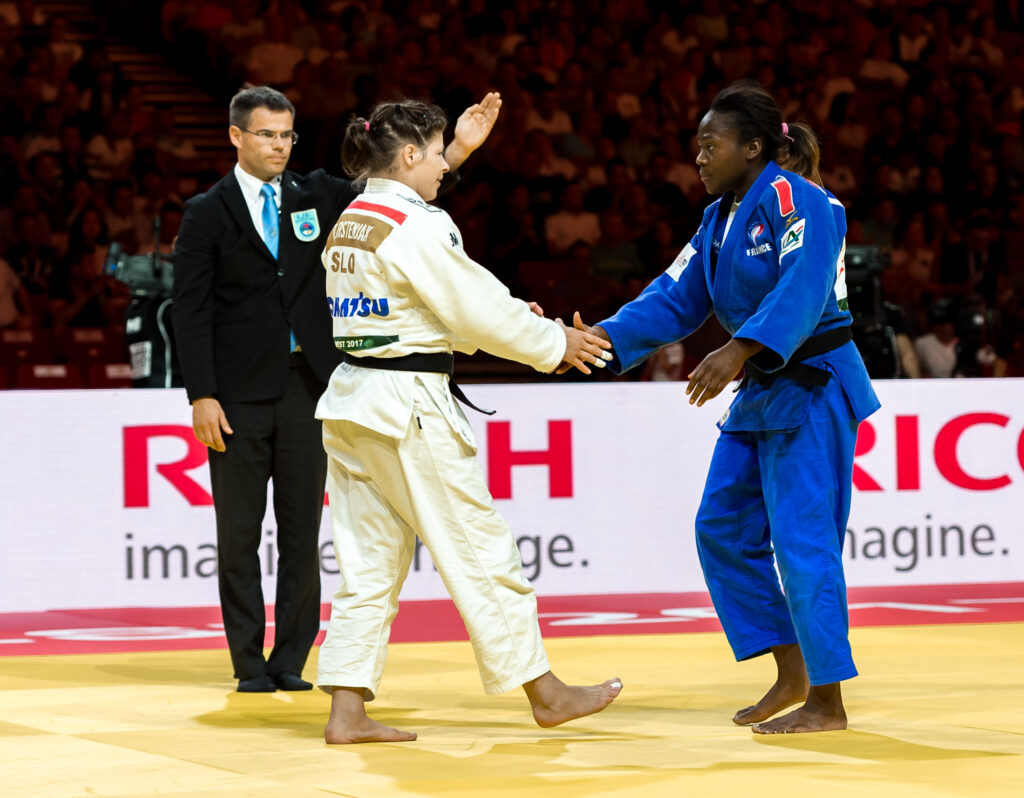
Same with Clarisse Agbégnénou: to improve on the ground, where Slovenia’s Tina Trstenjak had beaten her three or four times in a row, she went to explore Brazilian jiu-jitsu, notably. She worked on a weakness, but in a way that gave her energy, by adding novelty, a new framework.
Exactly. Working on a weakness doesn’t have to be a heavy cross to bear.
Yes, because Clarisse also needed to step out a little from the INSEP fold, which was becoming a bit of a gilded cage for her. She needed to go find skills outside. When you’ve won that much, you go through the same September back-to-school every year, you see new faces arrive, and the age gap widens: Teddy arrived at fifteen among guys of thirty, and today, at thirty-seven, he’s with guys of eighteen. They have nothing in common anymore. To prepare for the 2024 Games, he built a whole cell with a dedicated staff, notably a former French team physiotherapist who followed him to training camps in Kazakhstan, Brazil… Their pleasure? Playing ludo! But playing ludo as a group in the four corners of the world for three years, that’s also where the pleasure comes back.
(He smiles.) Right: he rebuilt himself through enjoyment.
You describe well, in Michael Jordan, the “it became personal” side that already radiated in the documentary The Last Dance. To come back to Teddy Riner, since you yourself identified him as the emblem of the discipline, I see at least two examples. At the end of December 2008, at the Open World Championships in Levallois, he beats Russia’s Mikhaylin in the final, a three-time world champion ten years his senior. The latter then says in the press everything bad he thinks about his young rival’s personality. Legend has it that Teddy plastered the article in his locker room to motivate himself daily. At the following Paris tournament, in February 2009, the two men meet in the final. The Frenchman ends up throwing the Russian and yells at him on the ground, which just isn’t done. The two men get dressed again, look each other in the eye, step toward each other as if for a street fight, and Bercy holds its breath…
Indeed!
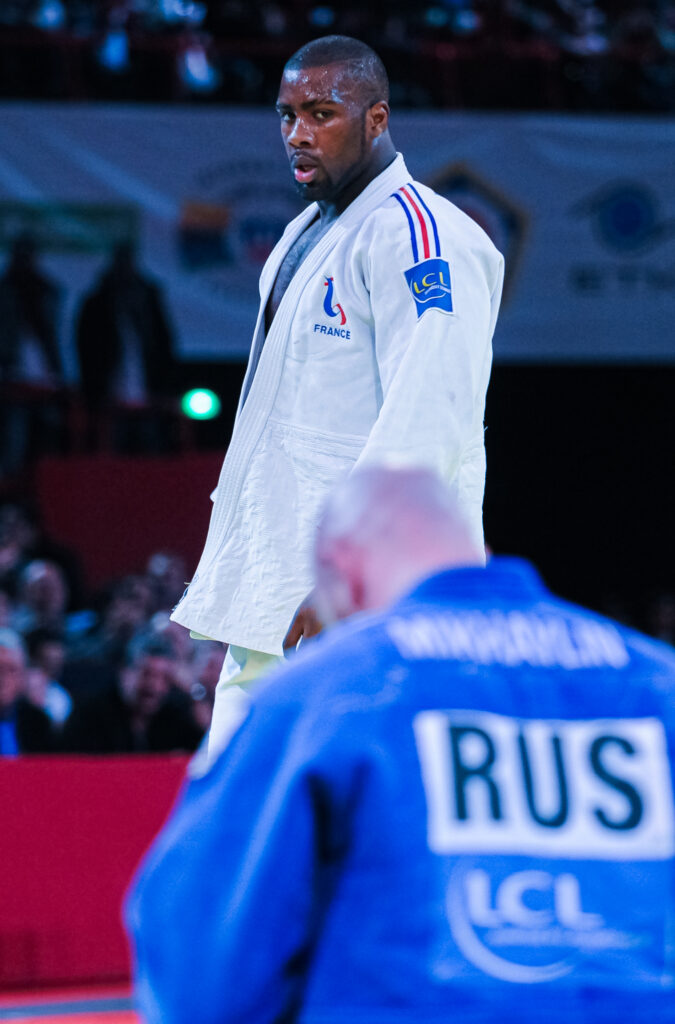
The other time was at the World Championships in Chelyabinsk, Russia. An Israeli, Or Sasson, had thrown him at the Castelldefels training camp a few weeks earlier. That feat is rare, and had raised high hopes in the Israeli camp. That was without counting on Riner’s pragmatic and rational side, who, having identified the danger, had prepared accordingly. On the day, the fight lasted 49 seconds: grip locked, sweep, ippon. Lesson for the competition: avoid throwing Teddy in training and save your ammunition for the big day.
That’s the Jordan side, yes. I didn’t know it was that much of an engine for him.
And he wrote it from his very first biography: he never tries to be buddy-buddy with his opponents, whereas Clarisse kisses everyone on the cheek. He may have known them for twenty years, but for him they remain opponents first and foremost. I say a few words about it in the piece on Riner, Krpalek and Tasoev, the three champions who never met at the Olympics.
That restraint, it wouldn’t surprise me if it’s also so as not to soften: continuing to see them as opponents so friendship doesn’t dull the rage to win. If he lowers his guard once, he lowers it for everyone, and he’s so well known that this reserve is understandable.
What you write about Michael Jordan and the sources of his motivation also reminds me of what Italy’s Fabio Basile said less than a year before the Rio Olympic Games. He’s twenty-one, has just won the European U23 Championships, and answers a journalist who tells him he embodies the Tokyo 2020 generation – in four years, that is. And Fabio says: “What, 2020? I’ll do Rio and I’ll be Olympic champion.” He crisscrossed every qualifying tournament on motivation alone, qualified by the skin of his teeth at the last tournament, ranked twenty-ninth in the world. Nobody believed in him, and he said: “I’ll prove them wrong.” And he became Olympic champion in August 2016 in Rio… Ten years later, it’s a bit harder, especially as one of his big national rivals is Manuel Lombardo, who comes from the same club as him.
Exactly, if his energy leans heavily on frustration, on the rage to prove others wrong, and the person he has to beat is someone he likes a lot, that can put out the fire.
On that same energy, I like what you write about the fine line between ambition and stubbornness…
The “believe against all odds” side has brought enormous successes, but how can you be sure you’re on the side of ambition and not blind stubbornness? In football, for example, it’s common: parents cling to the trajectory of Antoine Griezmann, rejected by several academies, and don’t hear it when the coach tells them not to put all their eggs in one basket. The subtlety, for me, is often in accepting failure. If you’re comfortable with the idea that there’s little chance it will work, and with the consequences, then it’s no longer really stubbornness but lucidity. Pure stubbornness is a total refusal to see the situation where it wouldn’t work, with no plan B, or because there’s a very deep self-esteem at stake, and it can send you completely off the road.
That ties in with a subject I worked on with the Canadians, long-term athlete development: what dose of training at twelve, at fourteen, depending on whether you’re a boy or a girl? At what point do you stop doing two or three sports in parallel? You can be a judoka all your life, as a referee or an administrator, yet many champions don’t put on a judogi for years because they associate it with suffering. And I wonder: Léon Marchand, will he still be swimming at sixty for pleasure?
Funny, I was about to cite that example. His idol was Caeleb Dressel. After magnificent Games in 2021 in Tokyo, he announced he was in a deep depression, as Michael Phelps himself had been after the London Olympics. Being aware of that allowed Léon to step back and tell himself: just because I win doesn’t mean I’m happy; my priority is to be happy even if I lose. And that’s where the work with mental coach Thomas Sammut is interesting: sport wasn’t the end goal, but a means to a state he wants to live in. The classic version says: I sacrifice my well-being because once I’m Olympic champion, I’ll feel good in my skin. He says: let’s see how swimming can help me feel good in my skin, day after day. And if that translates into “not being Olympic champion, why not?” On top of that, Thomas showed him the two could go together: this quest for well-being took pressure off the result. When you’re in an Olympic final, even if you lose, it’s not four years of your life lost.
Then again, if he’s someone drawn to adventure, to the way he pushes his limits, maybe once swimming has been explored, swimming in a club will amuse him less than exploring a new field. Federer, on the other hand, you get the impression, listening to him, that he’ll play his whole life. In him there’s a pleasure of the game beyond self-transcendence. It all depends on the deep motivation.
You’re touching on the heart of martial arts. Competitive sport conditions you to see the other person as an opponent. The martial approach makes you understand that the other is first and foremost a partner. Your opponent is you and your inner brakes… The guys I take the most pleasure in meeting again are the ones I “rolled around” with the most years ago, notably on Monday evenings at Daniel Ray’s. There’s real mutual gratitude for having pushed each other to surpass ourselves. Recently, in an interview, a former Egyptian international told me, about the coach who helped him qualify for the Olympics despite a lot of adversity: “I didn’t win the Olympic Games, but I gained a brother.”
That’s beautiful. And it often comes back with hindsight, yes.
“According to Bob Rotella, a mental coach whose clients include basketball player LeBron James and many golfers, champions have the particularity of not remembering things the way they really happened. ‘The champion doesn’t care about keeping an exact record of what happens to him. He thinks and remembers in a way that builds and maintains a confident image of himself.’
This isn’t complacency, it’s strategy. Bob Rotella defines the image we have of ourselves as ‘the archive of all the thoughts we’ve had about ourselves.’ By forgetting failures and anchoring successes, champions reinforce a competent image of themselves and feed their confidence.” (p. 80)
Your book also mentions basketball player Kobe Bryant and his rather intimidating work ethic. In everything you read and analyzed for this book, who impressed you most with their approach?
What touched me most were the most counter-intuitive things. Not ultra-trail runner Courtney Dauwalter, whom I discuss in the book, who symbolically digs a cave and perceives each stride as a pickaxe blow that helps her enlarge her comfort zone. Conceptually, I found it very clever, but it was an extension of visualization and anchoring techniques I already knew. What worked on me the most was the concept of selective memory. You see it in Serena Williams, but especially in Stephen Curry, and it’s Bob Rotella, a mental coach, who talks about it the most.
Can you elaborate?
The idea is that champions don’t try to have an exact memory of what happened. They understood that their self-image is the archive of all the images they already have, and that to perform, they need to be confident, so they need to feed a positive image. In everyday life, we tend rather to ruminate on what we missed and to consider our successes as normal. We hold onto a lot of negative images, which we counterbalance very little, hence our tendency to underestimate ourselves. The great champions, on the other hand, very quickly analyze what needs correcting, then forget the failure so it doesn’t generate doubt. What goes well, they really anchor, especially since there are as many lessons to draw from a success as from a failure. They’re uncompromising about learning, but their memory management means they’re mostly surrounded by good images of themselves. I don’t know if it’s revolutionary, but it changed my approach a lot. I thought the goal was to be as objective as possible, and in the end, no. The goal is to learn the most and be in the best frame of mind when you fight.
That speaks to me. At a team Final Four in Switzerland, my club found itself in the final in a very hostile atmosphere – I wasn’t fighting because I needed two years of licence. We were down six to zero, it was over. In the last fight, for honor, our U81 kg Florent Martelet landed a big throw on his opponent and celebrated as if he’d won the World Cup, arms wide open and an enormous smile. It was so spontaneous and infectious that it thawed the whole hall, which cheered him as if he’d won the championship. It remained the last image of that final. We lost 6-1, but we had a great evening, followed by a proper bender in Geneva, and it created a team momentum for the next competitions.
(He smiles.) That’s exactly it: it was humor, but you stayed with that positive image. You see, we often hear that you learn more from a defeat than from a victory, but there’s also plenty to take from what went well, from what I can reuse.
Without falling into the excess of a Jonny Wilkinson, who couldn’t be satisfied even as the World Cup’s top scorer.
Right.
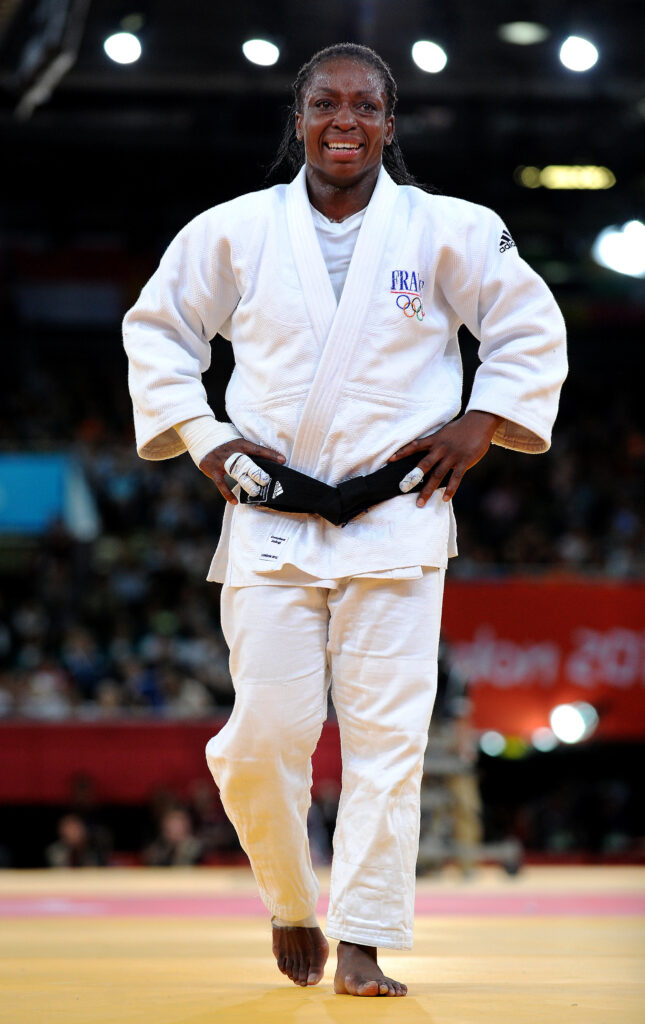
What you also write about the impostor syndrome felt by a Serena Williams reminds me of Gévrise Émane’s experience at the London Games, who had a panic attack the morning of her competition. She told me about it one day in the stands in Rio de Janeiro and, years later, we turned it into an article…
It’s crazy: in moments of tension, it awakens the zone of doubt within us. The more tension there is, the more it feeds on our deep doubts. Léon Marchand talks about it when he says how liberating it was to work on his self-esteem: being comfortable with his body as it is, with his personality, knowing that the people around him love him even if he loses. It’s as if reserves of potential tension had disappeared and, in the stress of the event, it no longer draws as deep. You see how much work on performance goes further than performance itself. With quite a few of the people I coach, we resolve issues that are peripheral to their sports practice but which, in the moment of performance, are what disturbs them.
That’s why I liked the passage on Curry, who explains that his way of letting go is deciding not to think, to empty himself. The late Cuban coach Ronaldo Veitía (1947-2022) once told me: “The warrior’s only moment of rest is the time of the fight.” He had so many things to manage, plane tickets, hotels, weigh-ins, that when the fight started, everything else was done, and he relaxed. I brought it up in an interview with Teddy Riner: he has companies, businesses on all sides, a family to manage, and when he steps onto the mat, he only has himself to think about. Paradoxically, that’s where he’s at peace.
And there’s all the work on automatisms. That’s what Daniel Kahneman, the psychologist and Nobel laureate in economics, talks about: our brain has two systems. System one, unconscious, very fast, which gets caught by cognitive biases. And system two, more analytical, more reflective, but less instinctive. In competition, the idea is for your system one to express itself as much as possible. The metaphor is that system one is your horse and system two the rider. If you pull too hard on the reins trying to think too much, you release less of your power. Especially in a sport where at some point you have to unleash the beast.
That’s a bit what you tell in your book about Michael Phelps’ routines…
Exactly. Michael Phelps automated everything he does so thoroughly that there’s no doubt left when he launches himself: the rider can hold the reins very lightly, because the horse follows the marked path.
He even ritualizes the gesture of taking off his headphones!
Yes, he ritualizes everything, but it’s easier in swimming: at the whistle, you know what you have to do. Where there are interactions, as in tennis or judo, it’s harder. Djokovic considers configurations: if I put the ball there, if we get into that position, here’s the shot I know I have to play. And then, he concentrates solely on freeing the instinctive. Some techniques, as Timothy Gallwey tells in his books on the inner game, consist of focusing on your breathing or a sensory element that takes up all the space, to be in sensation rather than in thought.
In your book, I also liked the passage on Felix Baumgartner, when he says, about the suit he had to get used to wearing for his extreme jump: fear wasn’t the problem. The problem was avoidance.
Yes: he wasn’t able to tell those around him that he was anxious about putting on that suit. And then finally, by working a little each time, gaining a few minutes here, a few minutes there, he managed to handle it. These extreme guys are fascinating, because they too have those ruminations, those panic points, and they say so honestly. Someone from the extreme world even told me: “The moments when I don’t feel fear, I don’t jump. I tell myself there’s a problem.”
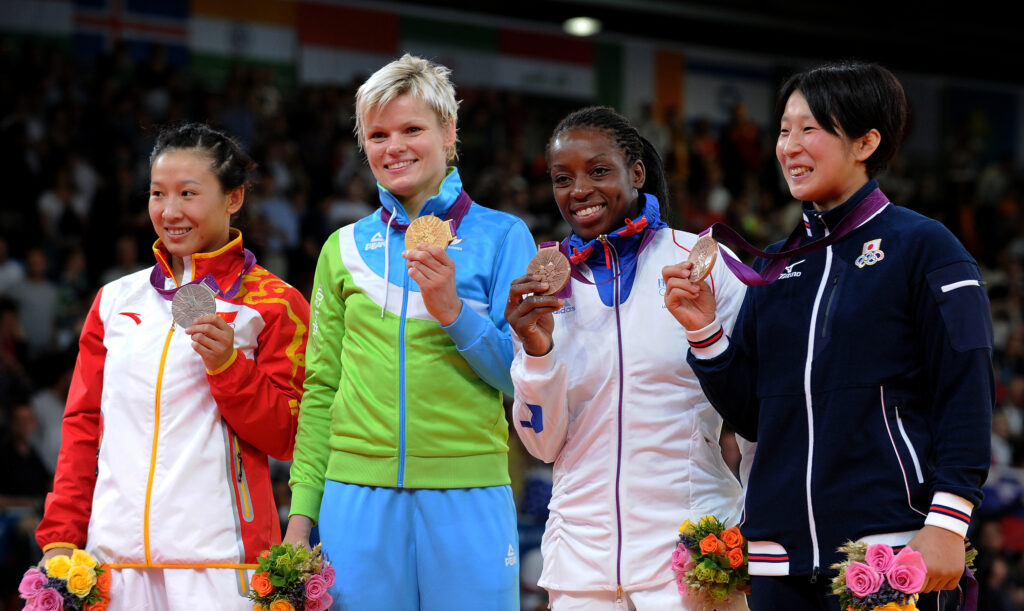
Slovenia’s Urska Zolnir had based most of her career on leg grabs. These were banned in 2010 and punished with direct disqualification at the time. Despite that, she became Olympic U63 kg champion in 2012 in London. What does that inspire in you?
It’s the cliché “in difficulty, see an opportunity,” which can be annoying because it’s so worn out. To avoid being annoyed and keep the value of that advice, you first have to accept that you would have preferred not to have that difficulty. Tom Brady, whom I discuss in the book, had a specialty for creating comebacks: down 21-3 at halftime, he isn’t at all happy with that situation, and at the same time he tells himself it’s the chance to create one of the most unforgettable moments in his sport. If you have a burnout at work or you got injured in judo, obviously you would have preferred not to be. But now, what can you create from this situation that could turn into an advantage later?
That takes me back to the Dutchman Henk Grol, whom I quoted earlier for his indifference to winning with a big throw or a small penalty. He was on a streak of two Olympic medals and three world medals when we crossed paths in the hall of the Chelyabinsk World Championships. All smiles, he says to me: “This is the first time I’ve come to a championship without being injured.” He was known for his toughness against pain and his ability to perform despite big injuries picked up beforehand or on the day. Well, that year he goes out in the quarter-finals and isn’t repêchaged. It’s almost as if he lacked his usual excuse to hold on to…
You can have plenty of nasty little crutches that help you perform. There, he no longer had an excuse, so he struggled to admit the other guy was better.
Your book also mentions swimmer Katie Ledecky and her way of displaying her ambitions. In sport, there’s a very superstitious side: you don’t want to announce too much. It’s the Guy Roux syndrome, named after that French football coach who started every season by saying he was aiming to avoid relegation when he had a team that could compete for the title. She, on the other hand, announces big times, and it keeps her going.
And on the other side, there’s William Trubridge, the New Zealand freediver, who preferred to keep his goals to himself: as soon as he said them, people would exclaim “wow, you’re so good,” and a part of his brain already had the reward before he got there. He preferred it to materialize only when he really got there. What I mean is that there’s no universal method. Ledecky, during her career, only told her coaches, while others, like Mbappé, announce them publicly. The advantage is that, like someone who wants to quit smoking and tells everyone, you’re more motivated. It creates opportunities, because people who know what you want can come to you.
What I find truly interesting is the inversion of what we usually do: we set ourselves small goals so as not to be disappointed, like “it would be nice to be promoted within the next year and a half,” and we tell ourselves we absolutely have to reach it. Result: an unmotivating goal and a lot of pressure. Ledecky, on the other hand, tells herself: it would be incredible to qualify for the Olympics, but since it’s a bit crazy, it’s OK if I don’t make it. That gives enormous energy without the pressure. The role of the goal becomes to give energy, not to validate whether I’m a good person. I judge it by how much it made me progress in a direction that matters to me, and how much it gave me pleasant energy day to day.
That brings us back to the Paris Games in judo. Stéphane Nomis, the president of the French Federation, had announced very early a target of ten medals, which was bold. He knew there were fourteen automatic qualifiers, seven boys and seven girls, but he was betting mainly on the girls, with that famous women’s dream team. Yet they only won “just” five bronzes when seven titles were openly hoped for. Conversely, the boys, struggling for years, brought in a slightly commando-style coach, Baptiste Leroy, a hyperactive who thinks judo twenty-four hours a day. To everyone’s surprise, they were the ones who carried French judo, with Teddy Riner of course, but also Joan-Benjamin Gaba who blossomed, Maxime-Gaël Ngayap Hambou whom nobody knew, Luka Mkheidze… And the cherry on top, the mixed team title, at home, against Japan. The ten medals were achieved.
It illustrates well what I was saying: aim very high, while accepting it might fail.
Same for Kosei Inoue. In 2003, he wins the worlds in Japan in U100 kg. It’s his third title in a row, but his federation doesn’t let him try the double in the open category two days later, on the grounds that he might get injured. The line is sometimes thin between displaying an ambition and appearing immodest. But maybe it would have made him go up another notch, and perhaps would have spared him from doubting the following year, in Athens. There’s a whole domino theory between causes and consequences…
Yes, and all of that depends, again, on what deeply motivates us. Léon Marchand, in his France TV documentary with his journalist father, says that what motivates him is the taste for adventure, exploring how far he’s capable of going. Setting ambitious goals is exactly that. A priori, the logic is that it shouldn’t work, otherwise it wouldn’t be ambition. When he aimed for two finals in one hour at the Olympics, which had never been done, Thomas Sammut said that if he’d only done one, he might not even have won it. It’s the adrenaline, living something that’s never been done, that gave him an extra surge of energy. I think many great champions are drawn to that “go see what’s beyond” side, and ambition resonates strongly with that mindset.
If the Valentin of 2026 could give advice to the Valentin of 1996 or 1997 who was starting tennis, knowing everything you learned while writing this book, what would he say?
I think it would have been: focus on yourself. In an hour of tennis, about twelve minutes are actually played. The rest of the time, you’re ruminating. I put too much pressure on myself about rankings, about progressing as fast as the people in my group. I think a part of me believed that by paying very close attention to what they were doing, it created an invisible rope with them and that I’d rise at the same time as they did. Whereas the challenge was: they progress at their own speed, maybe faster than you, and that’s life. It’s not by flogging yourself and being frustrated that you’ll go faster. Focus on your game, on the specifics that can make you progress the most.
Regarding what you experienced in your professional life before mental preparation: are there things you wish you’d discovered earlier?
Yes, working on this book: accepting failure. Believing that negativity moves you forward, flogging yourself with self-attacking thoughts, “you should be better, you should do this, you should do that,” not only does it pollute, but if we do it, it’s also because there’s a pleasant part to doing it. We say “I know it’s not good to do it,” so why do we do it? Because by flogging ourselves we free ourselves from the discomfort of the action. From the moment we punish ourselves for not having done it, we get the illusion of getting closer to action, as if, by punishing ourselves, we’d be more likely to do it next time. In fact, you just have to do it right now. So it’s a bit the same thing: accepting not progressing as fast as others, accepting what failure meant to me at that time, and focusing on concrete actions rather than on the formulas that flogged me. – Interview by Anthony Diao, summer-autumn 2026. Opening photo: ©Archives Valentin Ménard/JudoAKD.
A French version of this interview is available here.
More articles in English:
-
- JudoAKD#001 – Loïc Pietri – Pardon His French
- JudoAKD#002 – Emmanuelle Payet – This Island Within Herself
- JudoAKD#003 – Laure-Cathy Valente – Lyon, Third Generation
- JudoAKD#004 – Back to Celje
- JudoAKD#005 – Kevin Cao – Where Silences Have the Floor
- JudoAKD#006 – Frédéric Lecanu – Voice on Way
- JudoAKD#009 – Abderahmane Diao – Infinity of Destinies
- JudoAKD#008 – Annett Böhm – Life is Lives
- JudoAKD#010 – Paco Lozano – Eye of the Fighters
- JudoAKD#011 – Hans Van Essen – Mister JudoInside
- JudoAKD#021 – Benjamin Axus – Still Standing
- JudoAKD#022 – Romain Valadier-Picard – The Fire Next Time
- JudoAKD#023 – Andreea Chitu – She Remembers
- JudoAKD#024 – Malin Wilson – Come. See. Conquer.
- JudoAKD#025 – Antoine Valois-Fortier – The Constant Gardener
- JudoAKD#026 – Amandine Buchard – Status and Liberty
- JudoAKD#027 – Norbert Littkopf (1944-2024), by Annett Boehm
- JudoAKD#028 – Raffaele Toniolo – Bardonecchia, with Family
- JudoAKD#029 – Riner, Krpalek, Tasoev – More than Three Men
- JudoAKD#030 – Christa Deguchi and Kyle Reyes – A Thin Red and White Line
- JudoAKD#031 – Jimmy Pedro – United State of Mind
- JudoAKD#032 – Christophe Massina – Twenty Years Later
- JudoAKD#033 – Teddy Riner/Valentin Houinato – Two Dojos, Two Moods
- JudoAKD#034 – Anne-Fatoumata M’Baïro – Of Time and a Lifetime
- JudoAKD#035 – Nigel Donohue – « Your Time is Your Greatest Asset »
- JudoAKD#036 – Ahcène Goudjil – In the Beginning was Teaching
- JudoAKD#037 – Toma Nikiforov – The Kalashnikiforov Years
- JudoAKD#038 – Catherine Beauchemin-Pinard – The Rank of Big Sister
- JudoAKD#039 – Vitalie Gligor – « The Road Takes the One Who Walks »
- JudoAKD#040 – Joan-Benjamin Gaba and Inal Tasoev – Mindset Matters
- JudoAKD#041 – Pierre Neyra – About a Corner of France and Judo as It is Taught There
- JudoAKD#042 – Theódoros Tselídis – Between Greater Caucasus and Aegean Sea
- JudoAKD#043 – Kim Polling – This Girl Was on Fire
- JudoAKD#044 – Kevin Cao (II) – In the Footsteps of Adrien Thevenet
- JudoAKD#045 – Nigel Donohue (II) – About the Hajime-Matte Model
- JudoAKD#046 – A History of Violence(s)
- JudoAKD#047 – Jigoro Kano Couldn’t Have Said It Better
- JudoAKD#048 – Lee Chang-soo/Chang Su Li (1967-2026), by Oon Yeoh
- JudoAKD#050 – Hermann Monne – Burkina, a Land Already Peopled
- JudoAKD#051 – Mariana Esteves – A Chronicle of Life Passing By
- JudoAKD#052 – Tiphaine Gingelwein – Chechnya and the Caucasus, a Feminine Perspective in Nuance and Complexity
- JudoAKD#053 – Victor Scvortov – Born Again Under a Lucky Star
- JudoAKD#054 – Eric Gervasoni – From Moves to Movies
- JudoAKD#055 – Mihael Žgank – Coming Home Is Where the Real Journey Starts
- JudoAKD#056 – Patrick Grosperrin – Laterality, a Little-Known Lever of Performance
- JudoAKD#057 – Rest in Peace, René Nazaret (1936-2026)
- JudoAKD#058 – Alexandre Paysan – We Saw Him in the Vercors, Bungee Jumping…
- JudoAKD#059 – Habib Alouache – Teaching Joy
- JudoAKD#060 – Diyora Keldiyorova – Another Giant Leap for (Wo)Mankind
- JudoAKD#061 – Angelika Szymańska – With the Restraint of Those Still on Their Way
Also in English:
- JudoAKDReplay#001 – Pawel Nastula – The Leftover (2017)
- JudoAKDReplay#002 – Gévrise Emane – Turn Lead into Bronze (2020)
- JudoAKDReplay#003 – Lukas Krpalek – The Best Years of a Life (2019)
- JudoAKDReplay#004 – How Did Ezio Become Gamba? (2015)
- JudoAKDReplay#005 – What’s up… Dimitri Dragin? (2016)
- JudoAKDReplay#006 – Travis Stevens – « People forget about medals, only fighters remain » (2016)
- JudoAKDReplay#007 – Sit and Talk with Tina Trstenjak and Clarisse Agbégnénou (2017)
- JudoAKDReplay#008 – A Summer with Marti Malloy (2014)
- JudoAKDReplay#009 – Hasta Luego María Celia Laborde (2015)
- JudoAKDReplay#010 – What’s Up… Dex Elmont? (2017)
- JudoAKDReplay#011 – Zakopane, or Lives Passing By (2017)
- JudoAKDReplay#012 – Thierry Frémaux (1/2) – About The Legend of the Great Judo(2016)
- JudoAKDReplay#013 – Thierry Frémaux (2/2) – Judo in the Light (2021)
And also :
- JudoAKDRoadToLA2028#01 – Episode 1/13 – Summer 2025
- JudoAKDRoadToLA2028#02 – Episode 2/13 – Autumn 2025
- JudoAKDRoadToLA2028#03 – Episode 3/13 – Winter 2026
- JudoAKDRoadToLA2028#04 – Episode 4/13 – Spring 2026
- JudoAKDRoadToLA2028#05 – Episode 5/13 – Summer 2026
JudoAKD – Facebook – Instagram – X (Twitter).