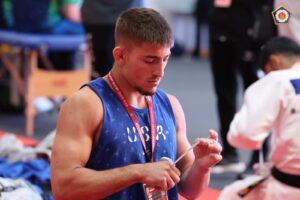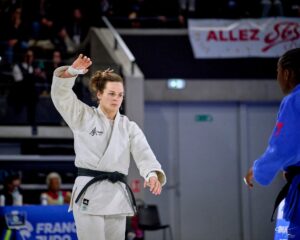
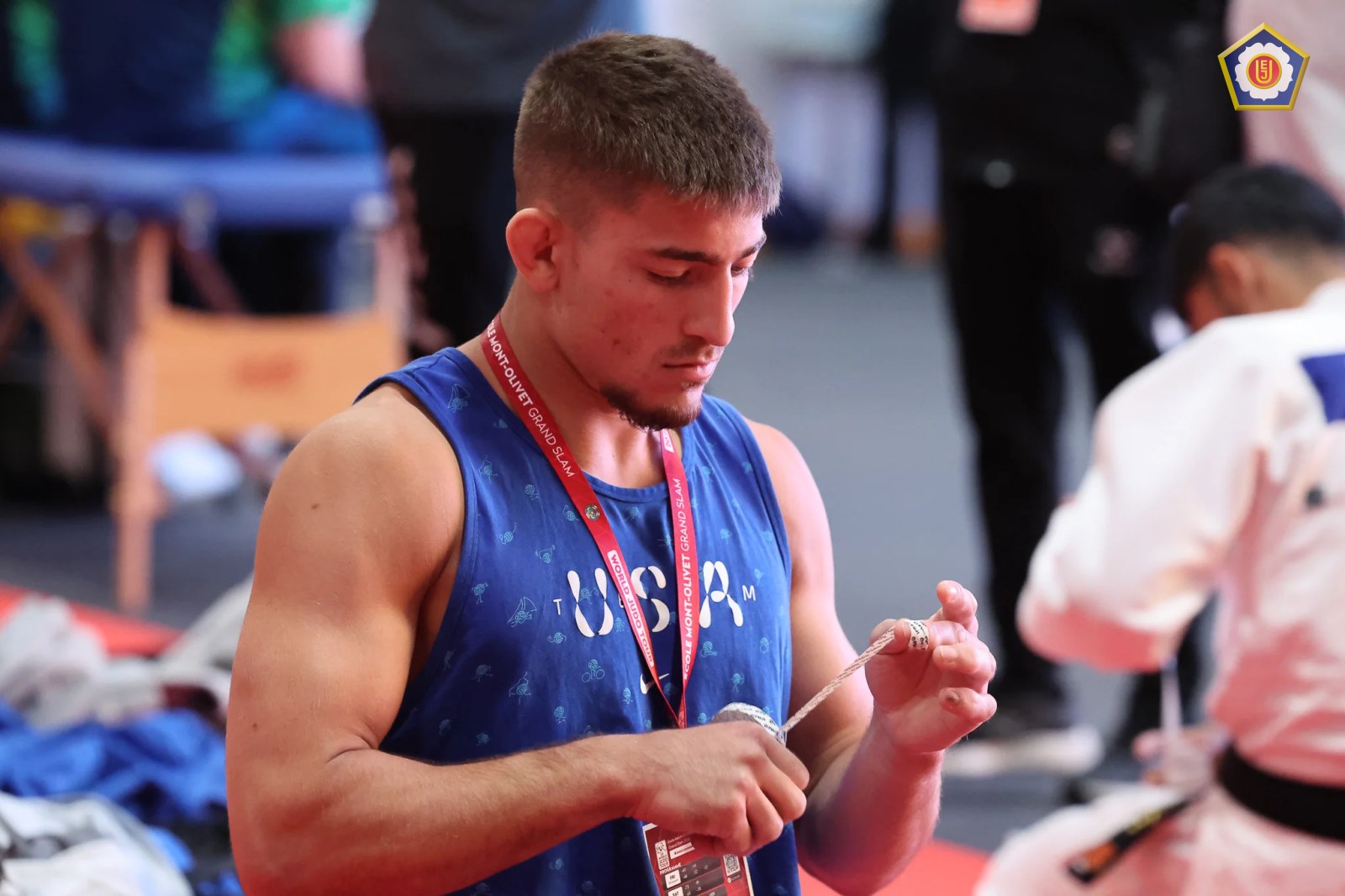
Born on May 20, 2003 in West Long Branch, New Jersey (United States of America), Jack Yonezuka is the current figurehead of a US judo scene in eternal reconstruction, nearly a year and a half away from an Olympic deadline that is slowly turning into an obsession for an entire generation. It is a generation raised in the shadow of glorious elders, the most famous being the trident of Kayla Harrison, Marti Malloy and Travis Stevens, with eight Olympic and world medals between them from 2010 to 2016. They were themselves pulled upward by many self-taught predecessors, foremost among them the unavoidable Jimmy Pedro, 1999 world champion, double Olympic medallist in 1996 and 2004, and one of their mentors during that golden period.
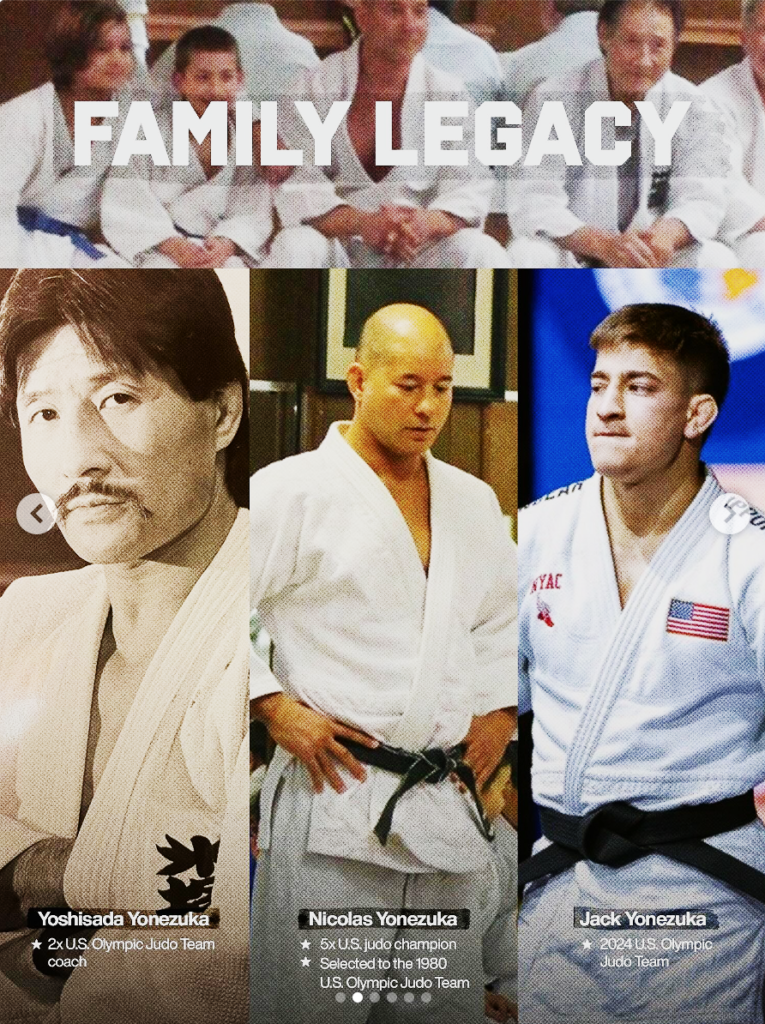
The Yonezuka family is quite a lineage, too. On a subcontinent with a complex history in its relations with Japan, the birthplace of the discipline, this collective journey commands a bow. Yoshisada Yonezuka (1937–2014), the grandfather, arrived in the United States in 1959 and in 1962 founded the future family stronghold, the Cranford Judo and Karate Center in New Jersey. He also coached the US Olympic team at the Seoul and Barcelona Games. Nick Sr., Jack’s father and coach, belongs to the generation that should have competed at the 1980 Moscow Games but had to give up at the last moment after the boycott decided early that year by the Carter administration. Aged sixteen at the time, he also had to mourn a potential record for precocity… Finally, Jack’s brother Nicolas, a year his senior, competed at the 2022, 2023 and 2024 World Championships in the U81kg category.
A starter at twenty-one at the Paris Games, Jack did more than symbolically “avenge” his father’s thwarted destiny on that occasion. He laid down markers for Los Angeles 2028, even Brisbane 2032, where he will “only” be twenty-nine. At the moment this article begins, he is, along with Cuban exile Maria-Celía Laborde, one of the highest-ranked athletes in US judo – and the title nods to Terrence Malick’s The Thin Red Line and Hans Zimmer’s score. – JudoAKD#067.
A French version of this article is available here.
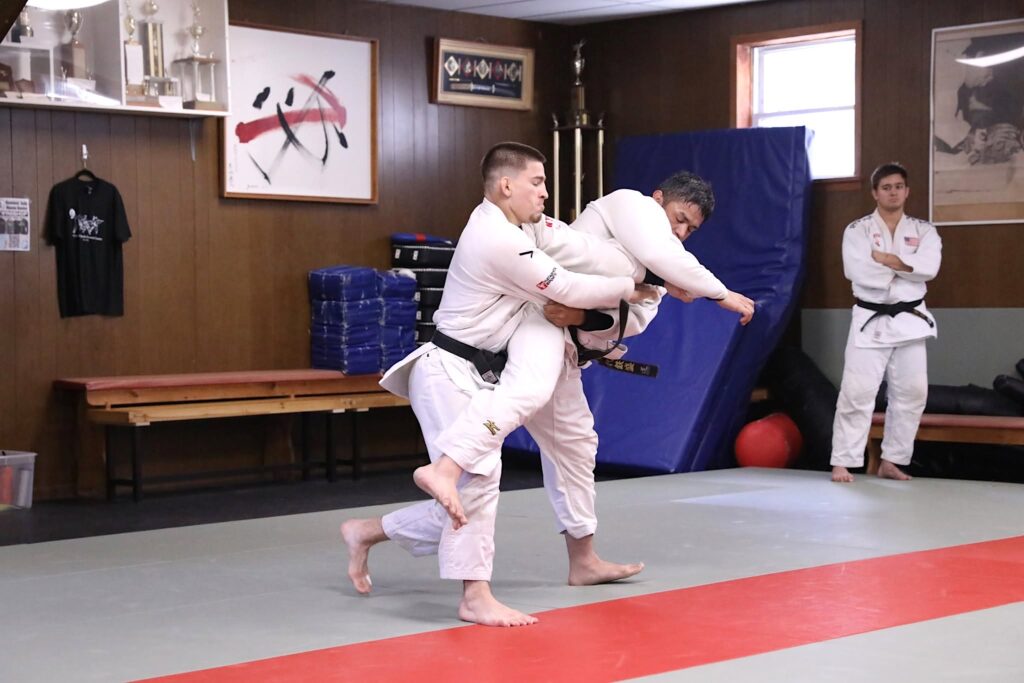
No judo without Japan, and no Japan without judo. In early June 2026, as this summer-long narrative begins, Jack Yonezuka is training flat out around Meiji, Nittai Dai and Park24. Two intense weeks in Tokyo, first alone, then joined by his teammate Johan Silot, a U81kg category fighter from Jimmy Pedro’s stable. The goal is the Ulaanbaatar Grand Slam, one time zone further west. On June 20, Jack launches his Olympic qualification campaign there, like everyone else on the international circuit. “It’s my sixth stay in Japan,” he confides, in a tank top between two training sessions, “the first since November 2025. I do up to eighteen randoris per session, sometimes up to four in a row with the same partner. I talk to my father on the phone every day to debrief and prepare the next session as well as possible. My goal is to improve my hand work and to come back from here as precise as the Japanese are in that part of the fight.”
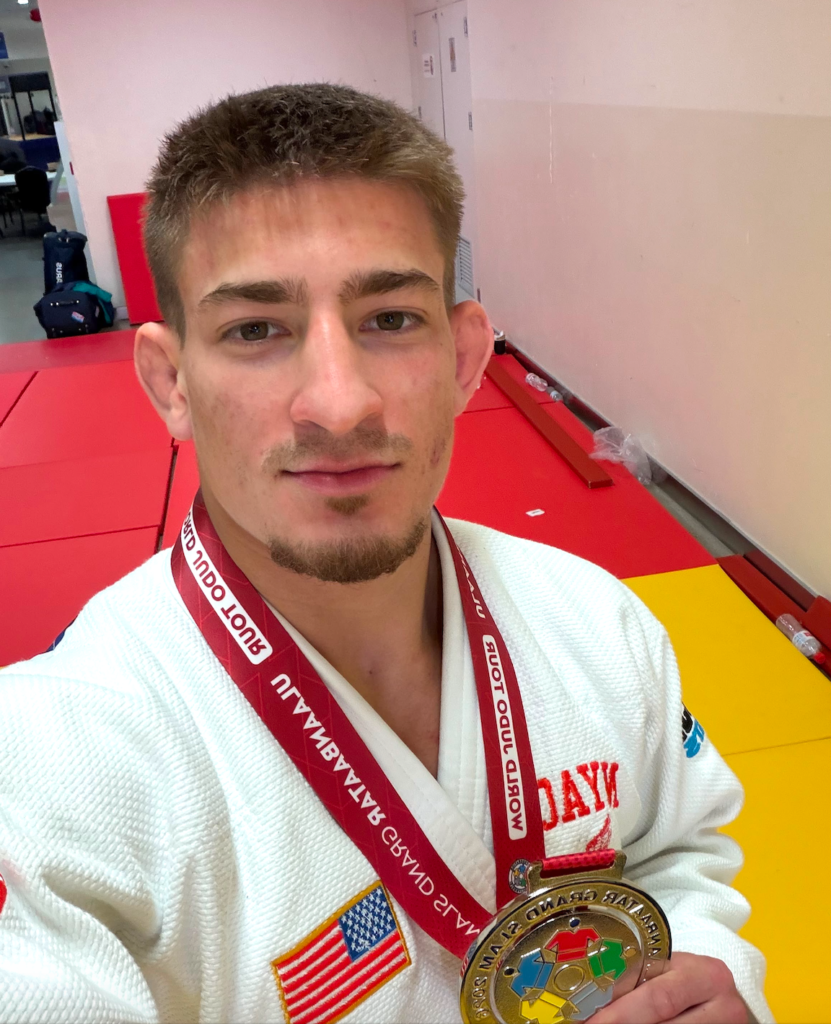
In Mongolia, the start is rather good. The favorites are overweight, like Olympic champion Hidayat Heydarov, still feeling the after-effects of his tremendous 2024 treble, or devouring one another, like the Emirati Makhmadbek Makhmadbekov and the Italian Manuel Lombardo. For the first time in his career, the two-time junior world medallist (2022 and 2023) reaches the final of a Grand Slam. He is the first American man to do so since Travis Stevens in 2012. “Before arriving in Ulaanbaatar, Yonezuka had competed in twenty-five Grand Slams,” the International Judo Federation’s website lists, “with a fifth place and two seventh places as his best results. His breakthrough in Mongolia perfectly illustrates that perseverance and patience pay off.”
On the mat, he strings together a Huizinga, knee-down o-uchi-gari in the style of Guillaume Chaine, and above all a long-awaited rematch against the French firecracker Dayyan Boulemtafes, four months after the latter had turned him into a wall poster at the Paris Grand Slam. That was act one of a season that will lead the former Givors athlete to a European bronze in April and a world bronze in October, never mind his glorious elder Joan-Benjamin Gaba. With his father unable to make the trip, Jack fine-tunes with him by phone as soon as he returns to the warm-up room. “As at every competition, I took one fight after another. Three of the guys I was beating had already beaten me in the past [the Frenchman Boulemtafes, but also the Moroccan Hassan Doukkali and the Mongolian Uranbayar Odgerel, ED.]… I had already played, and lost, a semi-final this season, at the Linz Grand Prix in March. So when my buddy Johan Silot reminded me in the warm-up room that it had been fourteen years since an American had won a Grand Slam medal, I told myself that losing this semi-final was not an option. That’s what I focused on.”
Beating a Mongolian in Mongolia validates all the work done in Japan in the preceding weeks. Beating another one right afterwards, in this case 2024 world medallist Ankhzaya Lavjargal in the final? The step remains a little too high this time. “What still separates me from gold? My ability to stay mentally in the fight. No matter how long it takes. Staying patient, waiting for the right moment, whether it comes from an opponent’s mistake or from my ability to launch the right attack. This time, I rushed and he took advantage. Patience is the key.”
A week later, at the Qingdao Grand Prix, Jack finishes fifth. He builds up a penalty lead against the Pole Wiktor Mrowczinsky, then beats the Moroccan Doukkali again (future winner, at the end of October, of the Abu Dhabi Grand Slam, the first from his country at that level). But he takes a cruel third shido in the quarter-finals against the Swede Narek Vardanian, 2025 junior European vice-champion, who is competing in the very first Grand Prix of his promising career. In the repechage, he beats the Azerbaijani Rashid Mammadaliyev, who will reach the world podium on home soil four months later, then loses the bronze-medal match to the Russian-born, Emirati-naturalized Makhmadbek Makhmadbekov, to a flawless o-soto-gari. Although he could this time count on a coach in the coach’s chair, the former Japanese international Yasuo Otoguro, now based in Las Vegas, Nevada, the trip from Mongolia to China was made without his teammate Johan Silot. “Is it because he was born in Cuba? Anyway, he couldn’t get his visa in time,” laments the U73kg category fighter.
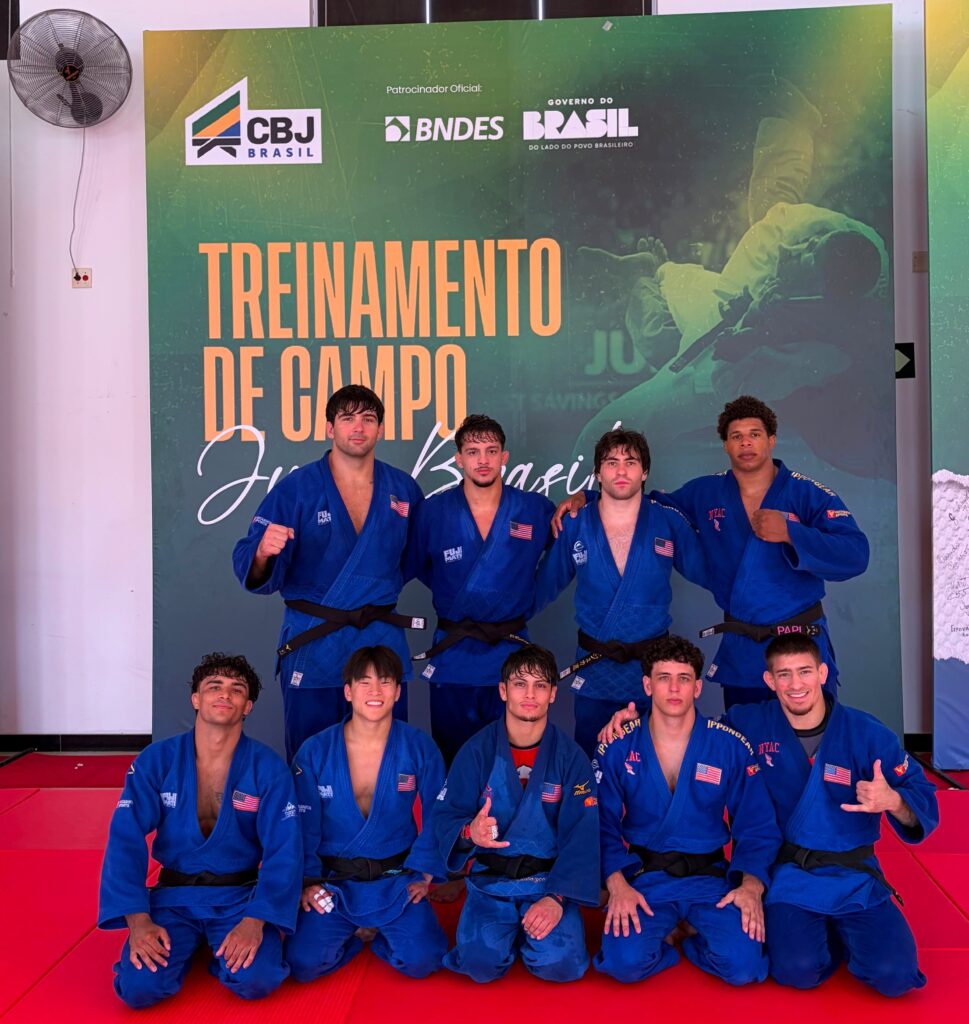
And then summer arrives. While the rest of the circuit stirs between Italy, Spain, Japan or Kazakhstan, and the recently retired Toma Nikiforov records a reality TV show in utmost secrecy in Bulgaria, Jack, on the Atlantic side this time, continues the rise in form that will take him to fourth in the world rankings in August. He prepares at home in New Jersey, in Florida and in Brazil. He takes the time to rebuild his fundamentals, notably those standing-to-ground transitions that are hurting more and more on the circuit. He sees the upcoming competitions only as stages in his preparation, first for the October World Championships, and over the longer term for the 2028 Games.
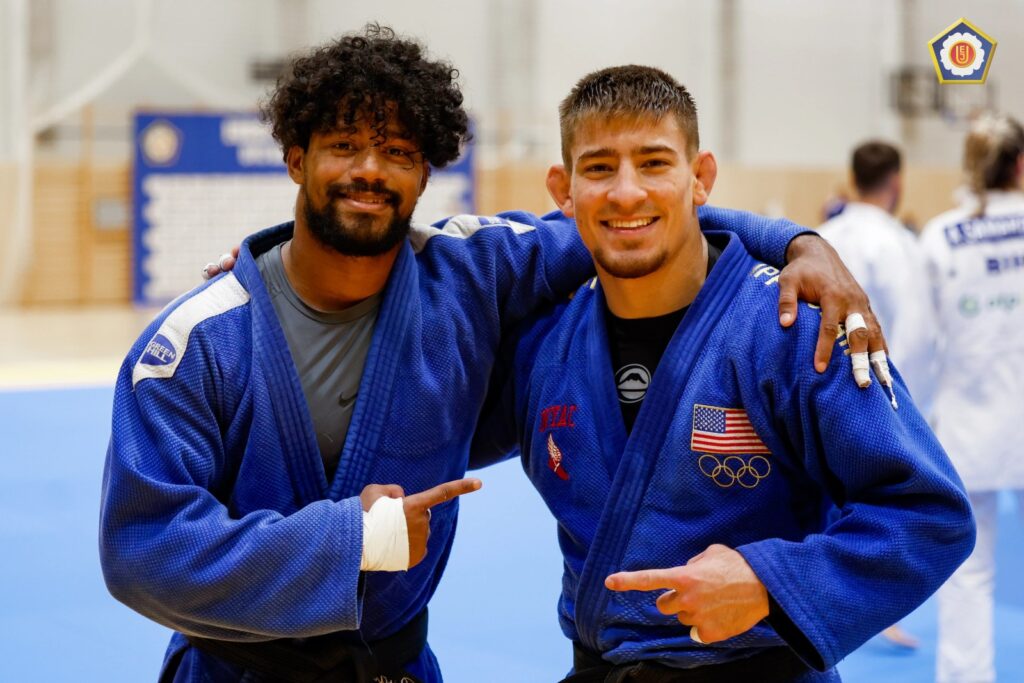
In Lima on August 15, Jack reaches the final of the Peru Grand Prix, five months after taking bronze at the Austrian one. Though he again delivered pure gold in ne-waza, notably with his formidable Huizinga-roll, the centerpiece of his groundwork system, which worked in the semi-final against the Italian Giovanni Esposito, his lack of reach probably cost him gold in the final against the giant Vlad Mitru, one of the five medallists of a particularly fruitful Moldovan men’s team at the start of the summer. This new consistency, with six top-five finishes in seven international outings since February, including the final at the Pan American Championships in Panama in April, reinforces his belief in “[his] ability to compete over the long term with the best in the category.” A year earlier, he still didn’t quite know whether to be pleased or frustrated at having lined up three consecutive top-seven finishes over the same summer period at the Qingdao, Lima and Guadalajara Grand Prix. Above all, the fine cluster of results by his compatriots (Maria-Celía Laborde, beaten only in the U48kg category final by Italian world champion Assunta Scutto; Jonathan Yang and Christopher Velazco, respectively silver and bronze in the U60kg category; Johan Silot, bronze in the U81kg category) hints at a possible “Yonezuka effect” on the overall US dynamic. The Yang case is a separate one, since the nineteen-year-old prodigy is already used to bringing the crowds to their feet in Lima: it was in that same Peruvian capital that he won gold at the 2025 cadet World Championships, then bronze at the 2026 junior Worlds… “We spend more time together,” Jack stresses. “A dynamic is taking shape, and that’s how I think we can aspire to be a strong team in Los Angeles.” Since judo became an Olympic discipline in 1964, only Canada, in 1976, has endured the sad privilege of being both host nation and a team leaving empty-handed in judo, a blessing in disguise, since that failure would be year one of a total overhaul of its sports model.
The fine run ends for him in Lausanne on August 29, despite the presence of his father Nick in the coach’s chair and Jimmy Pedro in the warm-up room, back to lend a hand between trips for his company Fuji Mats. After an opening win over the Azerbaijani Kamran Suleymanov, Jack loses to the Ukrainian Saïd-Magomed Khalidov, who ends up with bronze. “I didn’t have the same inner ‘fire’ as usual,” he admits afterwards. “I’m in a cycle of training camps and preparation competitions. My goal at this stage of the Olympic cycle is first to learn and improve. Winning is the icing on the cake.” The same feeling comes two weeks later at the Budapest Grand Slam where, after a few days of camp in Lausanne, as much to train as to avoid a costly round trip to the United States, he is, as in Qingdao, knocked out by Narek Vardanian, this time in his very first match. The eighteen-year-old Swede is on fire that Saturday, as he is only beaten in the final, by the future world medallist, the Azerbaijani Rashid Mammadaliyev, who long lived in the shadow of his glorious elders Rustam Orujov and Hidayat Heydarov.
After three weeks in Europe punctuated by the solid Bratislava camp (where he takes on several potential direct rivals from Israel, Turkey, Moldova and Hungary), Jack returns home for his final preparation, before crossing the Atlantic for the fourth time since the start of the summer.
The Baku Worlds, then. On the morning of the first day, October 4, his compatriot Jonathan Yang fires the opening shots in the U60kg category, with two thunderclaps against the Turk Salih Yildiz and then, above all, against local world No. 1 Balabay Aghayev. It takes all the experience of two men ten years his senior, his Taiwanese namesake Yung Wei Yang, Tokyo Olympic runner-up and two-time world medallist, then the Russian Ayub Bliev, 2025 European and world medallist, to cool the ardor of the Californian, youngest of the three Yang brothers who moved in the summer of 2024 from California to North Carolina to be closer to their coach, the former Cuban double Olympic medallist Israel Hernandez…
On October 6, it is as No. 6 seed, and thus exempt from the first round, that Jack Yonezuka begins his fifth consecutive senior World Championships. And as in Doha in 2023, Abu Dhabi in 2024 and Budapest in 2025, he starts with a win. Focused, rigid as a teak board when it comes to defending in standing-to-ground transitions, he launches his low o-uchi and beats the Moroccan Hassan Doukkali for the third time in a row, taking the lead 3–2 in their head-to-head against the four-time African medallist, now coached by the Egyptian Ramadan Darwish… In the next round, it isn’t defending champion Joan-Benjamin Gaba waiting for him. Injured in the shoulder early in the summer, the French hero of the last Olympic mixed team final was too far off the pace to get past his first round against the Bulgarian Victor Skerlev. And it is the latter’s conqueror, the Israeli Yehonatan Elbaz, coached by the Frenchman Alain Schmitt, who ends Jack’s hopes with a counter on his side one minute from the end, first called waza-ari then upgraded to ippon.
The return to the United States is swift. Although Jack says he was still ready to fight, USA Judo did not enter a mixed team for Sunday’s event. The World Championships week is not even over when Jack is already back to training at home in New Jersey. Dwell on it? What for. The arithmetic is implacable: “I wanted to win a medal but, even though I’ve made a lot of progress in recent months, I’m coming back without one.” The reasons for hope, though, are many: “I’ve already beaten all four fighters who met for the bronze medals. The day everything falls into place, I’ll be at home on the podium. Against the Israeli, everything was going well until the second shido. I had a second of letting up and he took advantage. Moral of the story: when a pattern is working, you have to keep going and stay mentally engaged until the end.”
So, time to train. Back to the daily routine that forms the foundation of a structured judo before the great swing, again, toward airports, hotel lobbies and those multicultural locker rooms where people size each other up at first, then salute each other with a wink while taking off their straps, in memory of a good scrap together and to show they are ready for the next one… For Jack, what follows is the Tokyo Grand Slam and then the Dushanbe Masters in December, before turning to 2027 and 2028, aware, as Jimmy Pedro painfully acknowledged in mid-October on The Vancrux Podcast, of the merit in managing to stand out in a global circuit that is more and more multi-speed by the day. As the Cuban coach Ronaldo Veitía (1947–2022), with his eighty-one Olympic and world medals, wrote to us as early as the turn of the 2010s: “My priority for now is to resolve our economic difficulties. These difficulties are starting to reach First World countries. I take no pleasure in it, but I believe more and more people now understand what I’ve been saying for years.” If the name Yonezuka climbs onto the podium in Los Angeles on July 17, 2028, we will here have known a little of the many obstacles he had to overcome along the way, and of the sincere emotion that such an achievement would represent for all those who crossed his path, supported him and preceded him… As Ennio Morricone set to music in Tonino Valerii’s film My Name Is Nobody, a subtle variation on a conquest of the West so often presented in its heroic light while it contains, by its very nature, authentic melancholy: ‘Good Luck, Jack’. – Anthony Diao, summer–autumn 2026. Opening picture: Carlos Ferreira-EJU/JudoAKD.
A French version of this article is available here.
More articles in English:
-
- JudoAKD#001 – Loïc Pietri – Pardon His French
- JudoAKD#002 – Emmanuelle Payet – This Island Within Herself
- JudoAKD#003 – Laure-Cathy Valente – Lyon, Third Generation
- JudoAKD#004 – Back to Celje
- JudoAKD#005 – Kevin Cao – Where Silences Have the Floor
- JudoAKD#006 – Frédéric Lecanu – Voice on Way
- JudoAKD#009 – Abderahmane Diao – Infinity of Destinies
- JudoAKD#008 – Annett Böhm – Life is Lives
- JudoAKD#010 – Paco Lozano – Eye of the Fighters
- JudoAKD#011 – Hans Van Essen – Mister JudoInside
- JudoAKD#021 – Benjamin Axus – Still Standing
- JudoAKD#022 – Romain Valadier-Picard – The Fire Next Time
- JudoAKD#023 – Andreea Chitu – She Remembers
- JudoAKD#024 – Malin Wilson – Come. See. Conquer.
- JudoAKD#025 – Antoine Valois-Fortier – The Constant Gardener
- JudoAKD#026 – Amandine Buchard – Status and Liberty
- JudoAKD#027 – Norbert Littkopf (1944-2024), by Annett Boehm
- JudoAKD#028 – Raffaele Toniolo – Bardonecchia, with Family
- JudoAKD#029 – Riner, Krpalek, Tasoev – More than Three Men
- JudoAKD#030 – Christa Deguchi and Kyle Reyes – A Thin Red and White Line
- JudoAKD#031 – Jimmy Pedro – United State of Mind
- JudoAKD#032 – Christophe Massina – Twenty Years Later
- JudoAKD#033 – Teddy Riner/Valentin Houinato – Two Dojos, Two Moods
- JudoAKD#034 – Anne-Fatoumata M’Baïro – Of Time and a Lifetime
- JudoAKD#035 – Nigel Donohue – « Your Time is Your Greatest Asset »
- JudoAKD#036 – Ahcène Goudjil – In the Beginning was Teaching
- JudoAKD#037 – Toma Nikiforov – The Kalashnikiforov Years
- JudoAKD#038 – Catherine Beauchemin-Pinard – The Rank of Big Sister
- JudoAKD#039 – Vitalie Gligor – « The Road Takes the One Who Walks »
- JudoAKD#040 – Joan-Benjamin Gaba and Inal Tasoev – Mindset Matters
- JudoAKD#041 – Pierre Neyra – About a Corner of France and Judo as It is Taught There
- JudoAKD#042 – Theódoros Tselídis – Between Greater Caucasus and Aegean Sea
- JudoAKD#043 – Kim Polling – This Girl Was on Fire
- JudoAKD#044 – Kevin Cao (II) – In the Footsteps of Adrien Thevenet
- JudoAKD#045 – Nigel Donohue (II) – About the Hajime-Matte Model
- JudoAKD#046 – A History of Violence(s)
- JudoAKD#047 – Jigoro Kano Couldn’t Have Said It Better
- JudoAKD#048 – Lee Chang-soo/Chang Su Li (1967-2026), by Oon Yeoh
- JudoAKD#050 – Hermann Monne – Burkina, a Land Already Peopled
- JudoAKD#051 – Mariana Esteves – A Chronicle of Life Passing By
- JudoAKD#052 – Tiphaine Gingelwein – Chechnya and the Caucasus, a Feminine Perspective in Nuance and Complexity
- JudoAKD#053 – Victor Scvortov – Born Again Under a Lucky Star
- JudoAKD#054 – Eric Gervasoni – From Moves to Movies
- JudoAKD#055 – Mihael Žgank – Coming Home Is Where the Real Journey Starts
- JudoAKD#056 – Patrick Grosperrin – Laterality, a Little-Known Lever of Performance
- JudoAKD#057 – Rest in Peace, René Nazaret (1936-2026)
- JudoAKD#058 – Alexandre Paysan – We Saw Him in the Vercors, Bungee Jumping…
- JudoAKD#059 – Habib Alouache – Teaching Joy
- JudoAKD#060 – Diyora Keldiyorova – Another Giant Leap for (Wo)Mankind
- JudoAKD#061 – Angelika Szymańska – With the Restraint of Those Still on Their Way
- JudoAKD#062 – Valentin Ménard – The Click (That Moment When Champions Just Know)
- JudoAKD#063 – Loïc Pietri (II) – “Talking Is for Laughs. Doing Shuts People Up.”
- JudoAKD#064 – Two Stories of Judo and Empathy
- JudoAKD#065 – Tiphaine Gingelwein (II) – Baku 2026, In and Out
- JudoAKD#066 – Clémence Émé – Love (É)mé Do
Also in English:
- JudoAKDReplay#001 – Pawel Nastula – The Leftover (2017)
- JudoAKDReplay#002 – Gévrise Emane – Turn Lead into Bronze (2020)
- JudoAKDReplay#003 – Lukas Krpalek – The Best Years of a Life (2019)
- JudoAKDReplay#004 – How Did Ezio Become Gamba? (2015)
- JudoAKDReplay#005 – What’s up… Dimitri Dragin? (2016)
- JudoAKDReplay#006 – Travis Stevens – « People forget about medals, only fighters remain » (2016)
- JudoAKDReplay#007 – Sit and Talk with Tina Trstenjak and Clarisse Agbégnénou (2017)
- JudoAKDReplay#008 – A Summer with Marti Malloy (2014)
- JudoAKDReplay#009 – Hasta Luego María Celia Laborde (2015)
- JudoAKDReplay#010 – What’s Up… Dex Elmont? (2017)
- JudoAKDReplay#011 – Zakopane, or Lives Passing By (2017)
- JudoAKDReplay#012 – Thierry Frémaux (1/2) – About The Legend of the Great Judo(2016)
- JudoAKDReplay#013 – Thierry Frémaux (2/2) – Judo in the Light (2021)
And also :
- JudoAKDRoadToLA2028#01 – Episode 1/13 – Summer 2025
- JudoAKDRoadToLA2028#02 – Episode 2/13 – Autumn 2025
- JudoAKDRoadToLA2028#03 – Episode 3/13 – Winter 2026
- JudoAKDRoadToLA2028#04 – Episode 4/13 – Spring 2026
- JudoAKDRoadToLA2028#05 – Episode 5/13 – Summer 2026
JudoAKD – Facebook – Instagram – X (Twitter).